

Last updated August 2026. Italy in autumn means near-summer weather in September, the year's best food calendar in October as the harvest and truffle season peaks, and steadily falling prices as the August crowds go home. November turns quiet, wet and cheap, then the Christmas markets begin opening in its last week and the cycle restarts.
September Is the Best-Value Month in Italy
The case for autumn rests almost entirely on September. Sea temperatures are still warm, daytime highs are comfortable rather than dangerous, the coast has not yet closed, and the crowds that made August unbearable go home in the first week as Italian schools return.
The season then declines in a predictable way. September is summer without the penalty. October is the food month — harvest, truffles, new wine, and the densest run of sagre in the calendar. November is genuinely low season: wet, short-dayed, with some coastal businesses closing, but also the cheapest month before the Christmas markets lift prices again at the end of it.
Anyone who found summer too hot and winter too closed should look here first.
What Autumn Looks Like on the Ground
The change shows up in the landscape before it shows up on a thermometer. Through October, vineyards across Piedmont, Tuscany and the Veneto turn from green to burgundy and gold, chestnut and beech woods in the Alps and the Apennines shift to red and orange, and a low mist settles into valley floors most mornings.
Street vendors selling roasted chestnuts appear on city corners from October onward — one of the season's most recognisable signs. In rural Tuscany and Umbria, agriturismi (working farm stays) open their harvests to visitors, building grape-picking, olive-picking and cooking sessions around whatever came in that week. None of this depends on a festival calendar; it is simply the backdrop autumn travel happens against.
September: Water Festivals and City Seasons
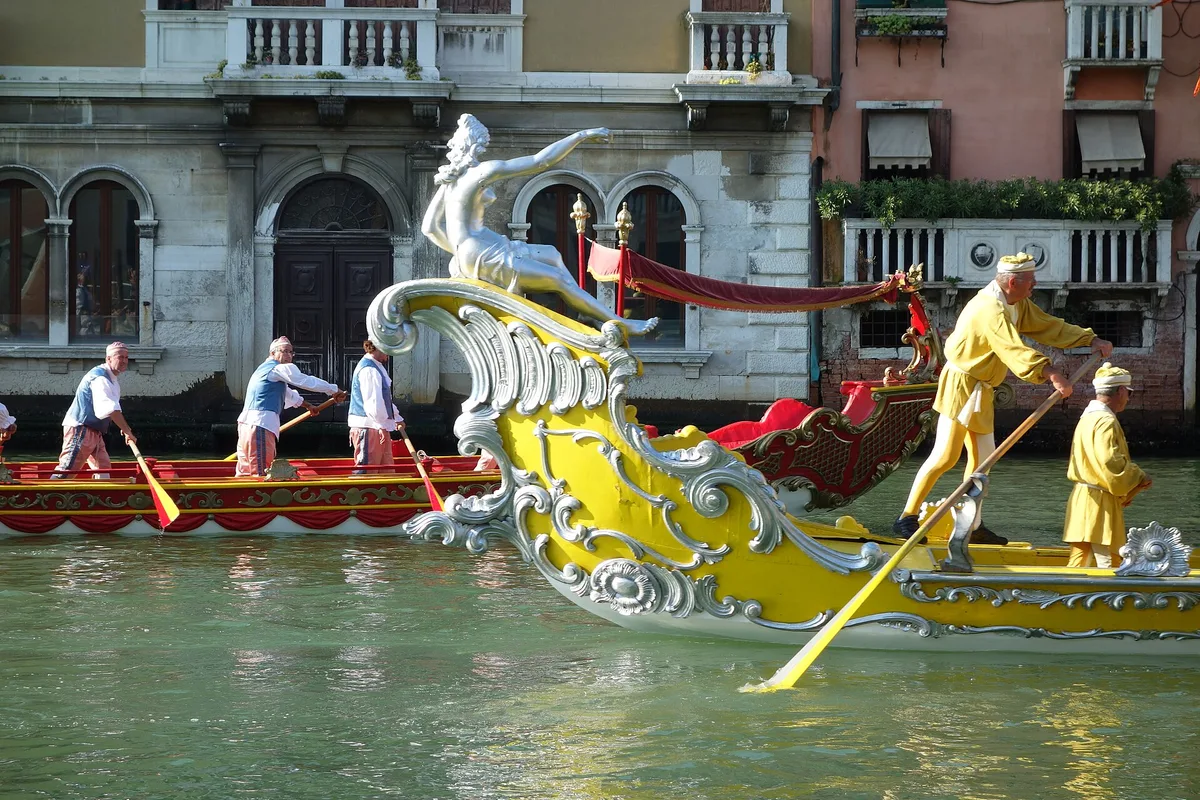
Venice runs the Regata Storica on the first Sunday of September — a historical water pageant of decorated sixteenth-century-style boats down the Grand Canal, followed by competitive gondola races. It is free to watch from the banks, and it is the last of the city's four great water festivals in the year.
The Venice Film Festival straddles the month boundary, opening on the Lido in late August and running about eleven days into September. Naples marks San Gennaro on 19 September, when the crowd in the Duomo waits for the saint's blood to liquefy — one of three such days each year, the others falling in May and December. Naples also carries Piedigrotta from September into October.
Florence lights the Festa della Rificolona on 7 September, the eve of the Nativity of the Virgin, when children carry paper lanterns on poles through the streets. Verona holds Tocatì, three days of traditional street games in the Veronetta district in mid-September. Milan and Turin share MITO SettembreMusica across about two weeks, and Rome's Romaeuropa Festival opens in early September and runs to mid-November across more than twenty venues.
Several summer programmes are still running into September as well: the Arena di Verona opera season continues to early September, as do Estate Fiorentina, Estate al Castello and the Ravello Festival.
October: Truffles, Harvest and the Sagra Season
October is the reason to come to Italy for food rather than for festivals. The Alba truffle fair in Piedmont runs on weekends from early October into early December — a working white truffle market rather than a spectacle, held in a region that also happens to produce Barolo and Barbaresco. It is the anchor of the Italian autumn food calendar, and the small-town sagra circuit builds up around it (below).
Rome holds the Festa del Cinema di Roma for about ten days in mid-to-late October at the Auditorium Parco della Musica — a public-facing film festival rather than an industry market, so tickets are genuinely available to visitors. Estate Romana, despite the name, runs its programme to around mid-October.
The Sagra Season, Explained
A sagra is a small-town food festival built around one local product — chestnuts, porcini, wild boar, new olive oil, a particular wine, sometimes a single pasta shape. Most run on weekends from August through October, organised by a local committee rather than a tourism board, and staged as outdoor communal dining with folk music rather than a ticketed event.
They are the most reliable way to eat regionally in autumn, because the menu is whatever the harvest brought in that week. The chestnut sagra (sagra delle castagne) is the most common type across the north and centre, running alongside wine sagre tied to the vendemmia and truffle events in Piedmont and Umbria. There is no single national listing — sagre are advertised locally rather than through a central calendar — so the practical approach is to ask at the tourist office in the trip's base town. Food festivals and sagre in Italy covers how the system works region by region.
November: Lucca, Rain, and the Markets Arrive
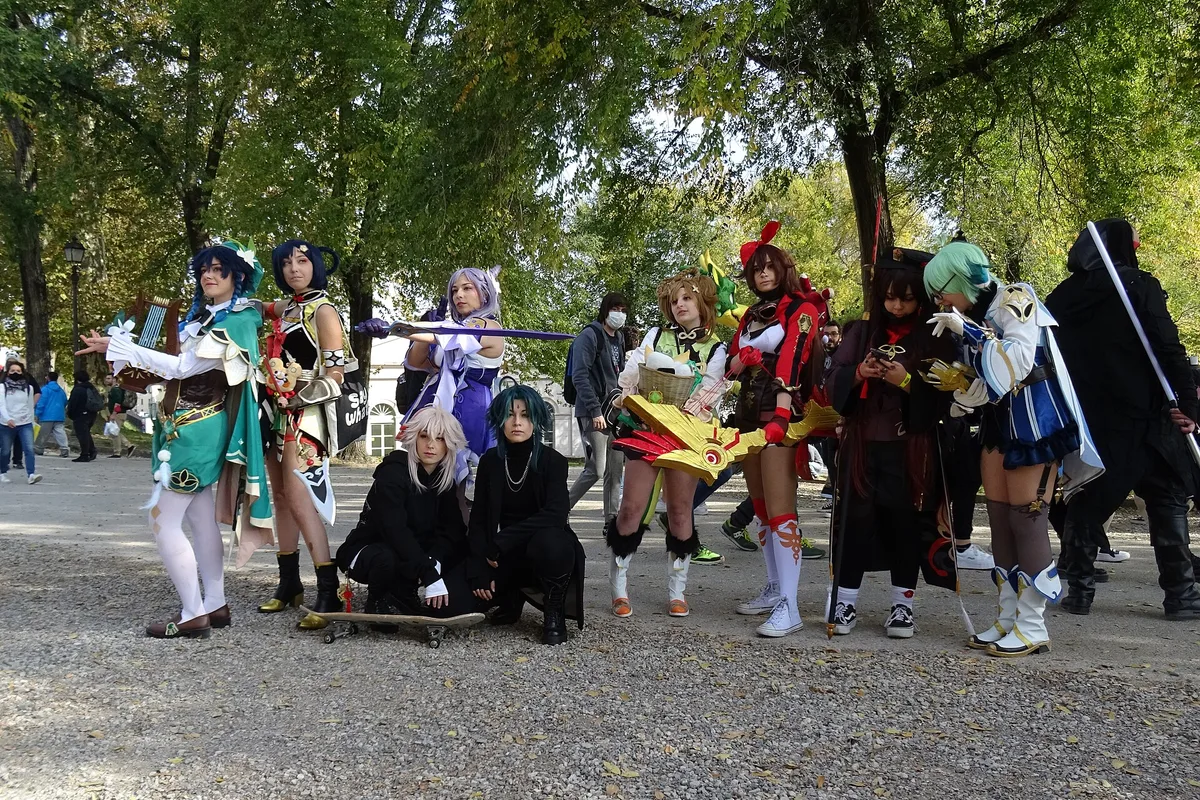
Lucca Comics & Games opens the month — five days spanning 1 November, All Saints' Day, and one of the largest comics and gaming festivals in the world. The entire walled city becomes the venue, cosplayers included, and accommodation across Tuscany tightens for it. Note that 1 November is itself a national holiday.
After that, November is the quietest and wettest month of the Italian year. It is genuinely low season: the lowest prices outside mid-January, short daylight, real rain, and seasonal closures beginning along the coast. Venice's acqua alta season is at its most active. For city sightseeing without queues it is excellent value; for anything involving the sea it is the wrong month.
Then the season turns. From mid-to-late November the Christmas markets begin opening — Verona from mid-November, Bolzano, Merano and the Alto Adige markets from late November, and most others with the start of Advent. The country-wide guide compares them, and December in Italy covers the month they run into.
The Vendemmia: Italy's Real Autumn Event
The grape harvest — the vendemmia — is the largest thing happening in Italy in autumn, and it is not a festival at all. It runs from roughly late August in the south to October in the north and at altitude, moving with grape variety and elevation rather than a calendar.
For visitors it changes what a wine region is like. Estates are working rather than hosting, so tastings can be curtailed at the busiest moments — but many producers run harvest experiences, and the countryside is at its most active and photogenic. Piedmont's Langhe, Tuscany's Chianti and Montalcino, and the Veneto's Valpolicella are the obvious destinations, and all three overlap with the food calendar rather than competing with it.
Piedmont is the strongest single pairing in the Italian autumn: the Alba truffle fair runs its weekend market in the same weeks and the same hills that produce Barolo and Barbaresco. A single base near Alba covers both.
New olive oil follows in November — olio nuovo, pressed within days and served on bread, is a Tuscan and Umbrian autumn fixture that most visitors never encounter because it is over by December.
Where Autumn Works Best
| Region | Best window | Why |
|---|---|---|
| Piedmont | October–November | Truffles, Barolo and the harvest converge |
| Tuscany and Umbria | September–October | Harvest, sagre, and the countryside without summer coaches |
| Rome and the south | September–October | Warm long after the north turns; Romaeuropa runs to November |
| Sicily and the islands | September–October | Sea still swimmable; the last genuinely warm corner |
| Venice | September | Regata Storica and film festival; November brings acqua alta |
| Alto Adige | October | Autumn colour and Törggelen, the local new-wine season |
The regional divergence is sharper in autumn than in spring, because the north turns in late October while the south holds warmth into November. A September trip can go anywhere; a November trip should go south or accept that it is a city-and-museum trip.
Autumn Is When Italy's Indoor Season Restarts
Italy's summer festivals are overwhelmingly outdoor and temporary — a Roman amphitheatre, a lakeside stage, a piazza. Autumn inverts that. As the open-air seasons close in September, the permanent institutions come back, and the country's cultural programme moves indoors for eight months.
Rome's Romaeuropa Festival is the clearest example: contemporary dance, theatre and music across more than twenty venues from early September to mid-November. MITO SettembreMusica splits about two weeks of classical programming between Milan and Turin in September, running the same works in both cities.
The opera houses matter more than visitors usually realise. Italian opera seasons are autumn-to-spring affairs, which means the great houses — Rome, Naples' San Carlo, Florence, Turin, Venice's La Fenice — are all working from autumn onward, with ordinary ticketing and none of the festival premium. This is the inverse of the summer festivals at Verona and Torre del Lago, which are outdoor, seasonal and heavily booked. If opera is the point of the trip, autumn and winter are cheaper and easier than summer.
The one date to know is that Milan's La Scala opens its season on 7 December, the feast of Sant'Ambrogio — a national event rather than a normal first night, covered in Sant'Ambrogio in Milan.
Weather, and the Sharp Turn in Late October
Autumn does not decline evenly — it drops. September across most of Italy is warm and settled. The second half of October is when the north turns: fog appears in the Po valley, the Alps get their first snow, and rain becomes frequent. The south holds warmth considerably longer, and Sicily and the southern coast can stay swimmable into October.
Regionally: Milan, Turin and the Po valley basin feel the turn first, with morning fog a near-daily feature by late October. Tuscany and Umbria stay mild longer, which is why the harvest and truffle season concentrates there. Rome and Naples hold warmth longest on the mainland, and only the high peaks of the Alps and Dolomites — not the valleys below — see snow before December.
The practical read: for a September trip, pack much as you would for summer with one warm layer for evenings. For late October and November, pack for winter with waterproofs, and expect the north and south to feel like different countries again.
Daylight shortens quickly through the season, and clocks go back in late October, which pulls sunset into the late afternoon for November. Outdoor sightseeing windows narrow accordingly.
Pros and Cons of an Autumn Trip
The case for autumn is straightforward: comfortable temperatures once September's heat breaks, the strongest food calendar of the year, and crowds that thin steadily from the August peak. Unlike Christmas or Carnevale, none of autumn's fixed dates move hotel prices much on their own — the Regata Storica and the Venice Film Festival draw a crowd, not a citywide price spike.
The trade-off is reliability. Early autumn overlaps with the tail of high season, so late-September crowds and prices in Rome, Venice and Florence sit closer to August than most visitors expect. From late October, the risk flips to weather: outdoor plans — hiking, the Cinque Terre coastal trails, day boats — can be rearranged by a single wet forecast, and some seasonal transport quietly stops for the year. The ferries linking the Amalfi Coast towns to Capri, for example, typically stop running in mid-to-late October, leaving Naples or Sorrento as the only route across. The practical response is to build in slack: an indoor alternative for a rained-out day, and flexible dates if the trip depends on good weather.
Autumn Public Holidays and What They Close
Italy carries one national public holiday through the season: 1 November, Ognissanti (All Saints' Day) — a family and cemetery-visiting occasion rather than a festival, when many Italians travel home to tend family graves. It happens to land in the same week as Lucca Comics & Games, which is coincidence rather than connection. Expect the usual pattern of an Italian public holiday: banks, offices and many small shops close, while hours at museums and major sights vary by venue and are worth confirming beforehand. On its own, 1 November does not meaningfully move hotel or flight prices nationally — the Lucca spike above comes from the comics festival sharing its week, not the holiday. The guide to Italy's public holidays covers the rest of the year.
Costs, Crowds and When to Go
| Window | Cost | Why |
|---|---|---|
| Early September | High but falling | Still peak-adjacent; Venice film festival |
| Mid-to-late September | Moderate | The value sweet spot: summer weather, autumn prices |
| October weekends | Moderate | Sagre and truffle season lift rural Piedmont and Tuscany |
| Around 1 November | High in Lucca | Lucca Comics & Games plus a national holiday |
| Mid-November | Lowest of the season | Genuine low season before the markets open |
The best single recommendation in the Italian year, for travellers who can choose freely, is the second half of September. The full calendar is on the Italy festival calendar; summer in Italy covers the season before and winter in Italy the one after.
Frequently Asked Questions
Is autumn a good time to visit Italy?
September is arguably the best month of the entire year — warm sea, comfortable temperatures, and crowds that thin sharply once Italian schools return in the first week. October brings the truffle and sagra season and is the strongest month for food. November is genuinely low season: cheap and quiet, but wet with short days and coastal closures.
What is the best month to visit Italy in autumn?
The second half of September. It keeps most of summer's weather, the coast and lakes are still open, the August crowds have gone home, and prices have dropped from their peak. If food is the priority rather than weather, October is the better choice for the harvest, truffle and sagra season.
What is a sagra?
A small town food festival dedicated to a single local product — chestnuts, porcini, wild boar, new olive oil, a particular wine. Thousands run across Italy, mostly on weekends from August through October, organised by local committees rather than tourism boards. They are inexpensive, aimed at locals rather than visitors, and are the most reliable way to eat regionally in autumn.
When does truffle season start in Italy?
The white truffle season centres on autumn in Piedmont, and the Alba truffle fair runs on weekends from early October into early December. It is a working market rather than a staged festival, and it sits in the same region as Barolo and Barbaresco, which makes a combined food and wine trip straightforward.
When do Christmas markets start in Italy?
They begin appearing in the second half of November. Verona typically opens from mid-November and the Alto Adige markets at Bolzano and Merano from late November, while most others start with Advent. So a late-November trip can catch both genuine low-season prices and the opening of the market season.


