

Last updated August 2026. Estate Romana is not a festival in the sense of a single event with a gate and a lineup. It is the umbrella the city government puts over several hundred summer events — open-air cinema, riverside bars, concerts in archaeological sites, theatre, literature evenings — running roughly mid-June to mid-October. Understanding that distinction is the whole trick to using it, because you cannot buy a ticket to Estate Romana. You find the individual thing you want inside it.
What Estate Romana Is, and What It Is Not
Estate Romana began in 1977 as a municipal initiative to keep the city culturally alive through the months when Romans traditionally left it, and it has run in some form ever since. It is coordinated by Roma Capitale's culture department, which issues an open call, selects proposals, and publishes them as one programme. That means the identity is administrative rather than artistic: the events inside it share a funding route and a season, not a theme.
The programme has a specific origin point rather than a vague civic tradition. On 25 August 1977, the city's culture councillor, architect Renato Nicolini, opened the first season with a free open-air screening of Luchino Visconti's "Senso" at the Basilica di Massenzio, under mayor Giulio Carlo Argan. What began as a few hundred spectators at one screen grew within days into a crowd of thousands, and the format it set — free, outdoor, in a monumental Roman setting — is still the template the cinema strand follows. Critics at the time labelled the approach "l'effimero," the ephemeral, for funding temporary events rather than permanent infrastructure; the label stuck, and the same debate about whether temporary culture is worth the public money resurfaces whenever the city reviews the programme's budget.
Practically, this changes how you plan. There is no festival site, no wristband, no single schedule to memorise. Some events inside the programme are free, some are ticketed by their own organisers at their own prices, and quality ranges from world-class contemporary dance to a neighbourhood outdoor screening. The recurrence rule holds — a mid-June to mid-October window, every year — but the contents are rebuilt annually and only confirmed when Roma Capitale publishes the season's programme, usually in late spring. Treat the window as expected and the lineup as unknown until then.
What Is Inside the Programme
The recurring strands are stable enough to plan around even before a given year's programme drops. Open-air cinema is the largest and most reliably free component, and it's the strand most directly descended from the 1977 launch. Screens go up at dozens of locations each season, from Villa Borghese's Casa del Cinema to parks and squares in the outer districts, and the original model — a big screen in a monumental or green setting, free or near-free to walk into — still shapes new sites even as the specific venues rotate from year to year. If you want one thing from Estate Romana that costs nothing and feels genuinely Roman, this is it.
Casa del Jazz runs its own summer concert season in the garden of a villa near Porta Ardeatina, and it trades the open-air cinema's crowd size for a smaller, seated, evening format built around live jazz. It's a year-round venue, so its summer programme is an extension of a permanent institution rather than a pop-up — worth knowing if you're weighing it against the more improvised, walk-up feel of the neighbourhood screenings.
Away from the river and the big parks, a network of municipal theatres carries programming into districts well outside the historic centre — the parts of the city a first-time visitor rarely reaches. Travelling opera plays neighbourhood squares from a mobile stage, a literature strand stages readings and talks in monumental settings closer to the centre, and archaeological-site concerts and performances are ticketed independently by whichever company or promoter is staging them. That spread into the periphery echoes the programme's founding intent under Nicolini, which was as much about carrying culture into outlying neighbourhoods as about filling the historic centre with events. The Romaeuropa Festival also sits partly inside the Estate Romana window, though it is a serious festival in its own right with its own tickets and its own identity.
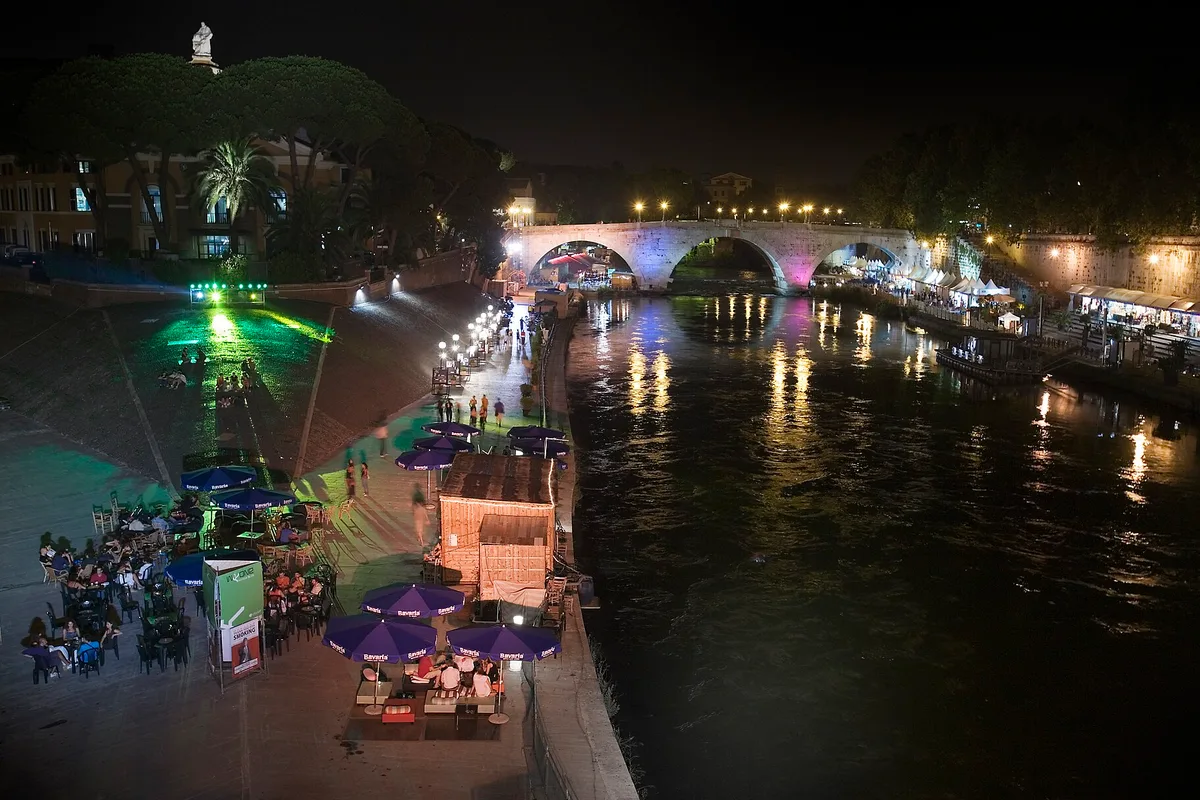
The Tiber riverside strip — bars, food stalls, and small stages strung along the river for the summer — is what most visitors picture when they hear "Estate Romana." It runs as a concession-based operation rather than a Roma Capitale production, has changed name and organiser more than once, and has been scaled back or skipped some seasons. Confirm it's actually operating before building an evening around it.
- Open-air cinema — the largest strand, mostly free, spread citywide
- Casa del Jazz summer concerts in a villa garden near Porta Ardeatina
- Literature and reading evenings staged in monumental venues
- Travelling opera and neighbourhood theatre through the municipal theatre network
- Archaeological-site concerts and performances, ticketed by their own organisers
- Riverside bars and stages along the Tiber, when the season's concession is running
Which Part of the Programme Fits Your Trip
A visitor with one free evening gets the most reliable payoff from open-air cinema. It's free or nearly free, needs no advance planning, and is spread widely enough that there's almost always a screening within reach of wherever you're staying. Travellers who already know they want live music are better served building a night around Casa del Jazz instead, where the smaller seated format and fixed venue make it easier to plan and book than the scattered, weather-dependent cinema schedule.
Families with children tend to do best with the riverside programming when it's running, since food stalls and casual seating tolerate a less rigid evening than a subtitled film or a seated concert does. Anyone chasing a specifically local, non-touristy night should look instead to the neighbourhood theatre network or a municipal-theatre listing outside the centre — the audience there skews heavily Roman rather than visiting, the opposite experience from the river strip or the big cinema sites. None of these strands require choosing just one: because Estate Romana has no central ticket, mixing a cinema night with a jazz evening later the same week costs nothing beyond planning around each venue's own schedule.
How to Find the Current Schedule
Because the programme is municipal, the reliable sources are municipal. Roma Capitale publishes the season's programme on its institutional site, and the city tourism board mirrors the highlights in English on Turismo Roma. Both are organised by year, so check that you are looking at the current season and not an archived one — this is the most common mistake with Estate Romana listings, and third-party sites recycle old programmes freely.
Individual events keep their own ticketing. Once you have identified something you want, book through that organiser rather than looking for a central box office, because there isn't one.
Is Rome in Summer Worth It?
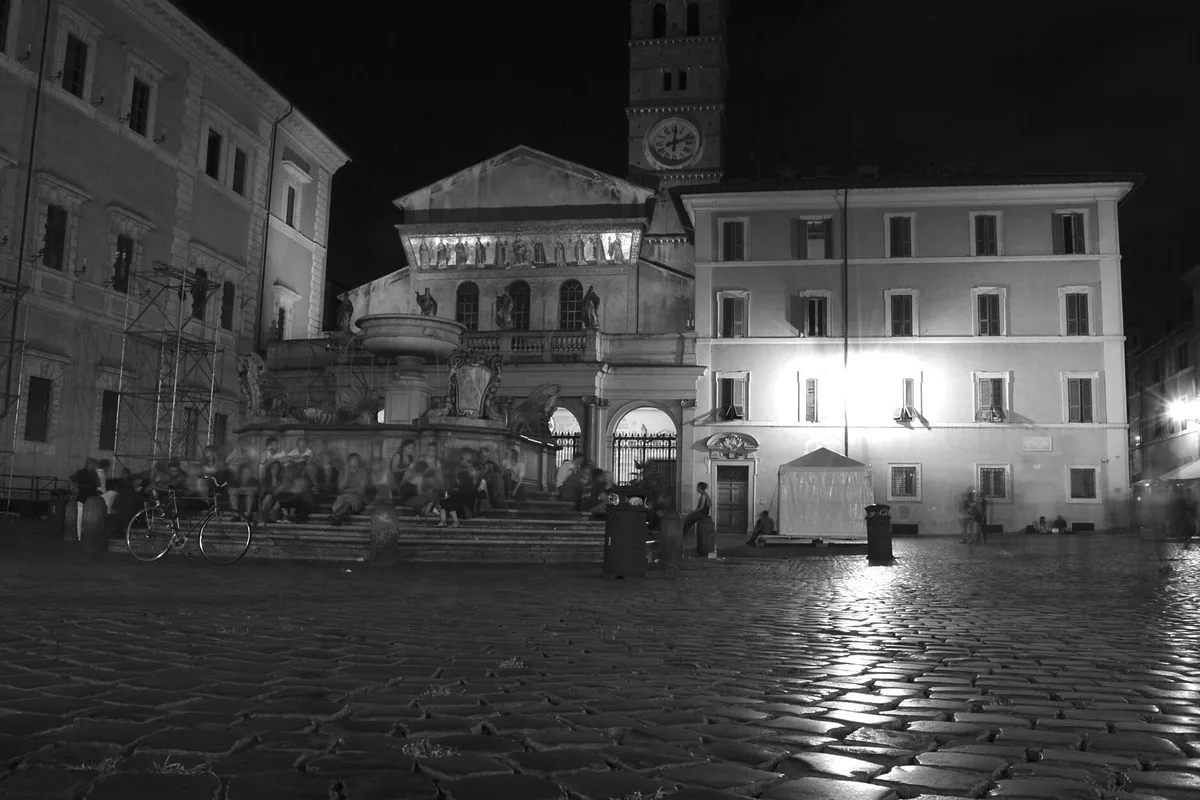
July and August in Rome are genuinely hot — regularly into the mid-thirties Celsius — and the classic sightseeing circuit is punishing in that heat. Estate Romana is the reason the season works anyway: it moves the city's cultural life into the evening, outdoors, when the temperature finally drops. A summer Rome trip built around late dinners and open-air screenings is a different and better trip than one built around midday queues at the Vatican Museums.
The caveat is August. Ferragosto on 15 August is the point where Rome empties: residents leave, neighbourhood restaurants and shops shut for a fortnight, and parts of the city feel genuinely closed. Estate Romana keeps running through it, but the ordinary life around it thins out considerably. Early July and September are the stronger halves of the window — September in particular gives you the programme, workable temperatures, and a city that is back at work — and it runs straight into Rome's strongest festival season, mapped out in the Rome festival calendar. Milan's Estate al Castello is the northern equivalent, concentrated on one venue rather than spread across a city.
| Period | What it's like |
|---|---|
| Mid-June to early July | Programme ramping up, warm but manageable, city still fully open |
| Mid-July | Hot; Festa de' Noantri adds a genuine neighbourhood feast in Trastevere |
| August | Hottest, emptiest; Ferragosto closures peak around 15 August |
| September to mid-October | Best balance — full programme, bearable heat, Romaeuropa begins |
Frequently Asked Questions
What is Estate Romana?
It is the umbrella programme Rome's city government puts over several hundred summer cultural events — open-air cinema, concerts, theatre, literature evenings — running roughly mid-June to mid-October. It has run since 1977. It is a funding and coordination framework rather than a single festival, so there is no central ticket or venue.
Is Estate Romana free?
Partly. Many events, especially the open-air cinema screenings, are free or low-cost. Others are ticketed independently by whoever organises them, at their own prices. There is no single admission that covers the programme.
When does Estate Romana run each year?
The recurring window is roughly 15 June to 15 October. That pattern is expected from the annual recurrence rather than confirmed in advance — Roma Capitale publishes each season's actual dates and lineup in late spring, and the contents change completely year to year.
Where do you find the Estate Romana programme?
On Roma Capitale's institutional site, with English highlights mirrored on the Turismo Roma tourism site. Both organise listings by year, so confirm you are reading the current season — third-party sites frequently republish old programmes.
Is August a bad time to visit Rome?
It is the hottest and emptiest month. Around Ferragosto on 15 August many neighbourhood shops and restaurants close for a fortnight and residents leave the city. Estate Romana events continue, but the ordinary life around them thins out. September offers the same programme with better temperatures and a working city.
