

Last updated August 2026. Rome's festival calendar works differently from the rest of Italy's, and it is worth understanding why before you plan around it. Siena has the Palio, Venice has Carnival, Viareggio has its floats — single events that define a city's year. Rome has no equivalent, because Rome's calendar is dominated by two things that are not festivals at all: the liturgical year of the Catholic Church, and a municipal summer programme. This guide maps what actually happens, month by month, and is honest about which dates justify a trip and which are simply good reasons to pick one week over another.
How Rome's Festival Year Is Structured
Three forces shape the Roman calendar, and almost everything worth planning around belongs to one of them.
The first is the liturgical year. Holy Week and Christmas are the two moments when Rome does something no other city can, and both are governed by the Vatican's own schedule rather than a festival organiser's. These are the dates that genuinely justify building a trip around them. The second is Estate Romana, the municipal summer programme that has run since 1977 and turns the city's ruins, parks and riverbanks into venues from roughly mid-June to mid-October. It is not a festival so much as a season. The third is a small set of standalone cultural festivals — the Rome Film Fest and Romaeuropa chief among them — that behave like festivals anywhere else, with programmes, tickets and confirmed dates.
What Rome conspicuously lacks is the civic-competition tradition that drives central Italy's best festivals. There is no contrada rivalry here, no historic race, no equivalent to Florence's Calcio Storico or Siena's Palio. The one date that gestures at it — the city's birthday on 21 April — is a reenactment staged for an audience rather than a contest between neighbourhoods.
Rome Month by Month
The table below is the quick version. Each entry links to the full guide where one exists, and the sections after it explain the seasons in more detail.
| Period | What's on | Date certainty |
|---|---|---|
| 6 January | Epiphany closes the Christmas market season; Befana at Piazza Navona | Fixed |
| February–March | Carnival — small and diffuse in Rome (see below) | Easter-relative |
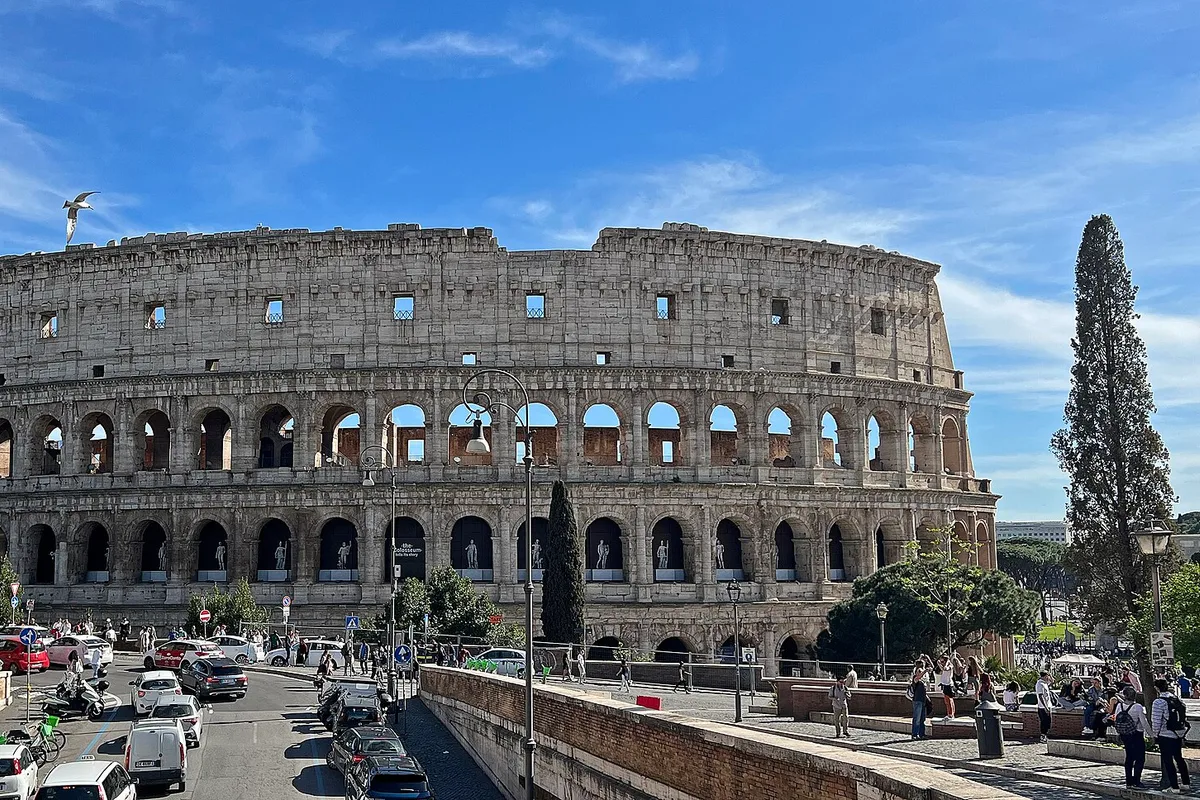
| March–April | Holy Week and Easter — papal ceremonies, Via Crucis at the Colosseum | Easter-relative |
| 21 April | Natale di Roma — the city's birthday, free reenactments at the Circus Maximus | Fixed |
| 25 April | Liberation Day — national holiday, bridges with 21 April | Fixed |
| June–October | Estate Romana — open-air cinema, concerts, riverside programming | Annual window |
| Mid-July | Festa de' Noantri — Trastevere's neighbourhood feast | Rule-based |
| 15 August | Ferragosto — the city empties; widespread closures | Fixed |
| September–November | Romaeuropa Festival — contemporary performing arts, 20+ venues | Confirmed for 2026 |
| October | Festa del Cinema di Roma — public-access film festival | Confirmed for 2026 |
| December–January | Christmas markets — Piazza Navona and ticketed newcomers | Annual window |
Spring: The Two Dates That Matter
Holy Week is the single most significant week in the Roman year and the one most worth arranging travel around — if the ceremonies are the point. The Good Friday Via Crucis at the Colosseum needs no ticket, the Urbi et Orbi blessing on Easter Sunday needs no ticket, and the seated papal celebrations need free tickets requested in advance from the Prefecture of the Papal Household. Easter is Easter-relative, so it moves between late March and late April; Easter Sunday 2027 falls on 28 March, computed from the recurrence rule. The full Easter in Rome guide covers which ceremonies need what.
Natale di Roma on 21 April is the counterweight: fixed, free, and entirely secular. The Gruppo Storico Romano builds a Roman military camp on the Circus Maximus and stages a parade of around two thousand costumed participants. It is a spectacle rather than a participatory festival, but it costs nothing and lands in the best walking month of the Roman year.
21 April and Liberation Day on 25 April sit four days apart. When they fall either side of a weekend, Italians bridge the gap and travel, tightening accommodation across the city for that whole stretch. In years when Easter also falls late, all three stack into one very expensive fortnight.
Summer: Estate Romana and the August Problem
From mid-June the city's cultural life moves outdoors and into the evening, which is the only way summer in Rome works — July and August routinely push into the mid-thirties Celsius, and the classic sightseeing circuit is punishing in that heat. Estate Romana is the umbrella over several hundred events: dozens of open-air cinema screens, many free, plus jazz seasons, literature evenings, travelling opera and archaeological-site concerts.
Mid-July brings Festa de' Noantri, Trastevere's fortnight-long neighbourhood feast, anchored to the first Saturday after 16 July. It is the most genuinely local thing that happens in central Rome and it is free throughout.
Then August arrives. Ferragosto on 15 August is the point where Rome empties — residents leave, neighbourhood restaurants and shops close for a fortnight, and parts of the city feel shut. Estate Romana keeps running, but the ordinary life around it thins out badly. If you have a choice within the summer window, early July and September are materially better than August.
Autumn: Rome's Best Festival Season
September to November is when Rome's calendar is strongest and its weather is best, and almost nobody plans around it. Two serious festivals overlap.
Romaeuropa is Italy's leading contemporary performing-arts festival, confirmed for 8 September to 15 November 2026 across more than twenty venues — dance, theatre, music and digital art, with roughly ninety productions. The Festa del Cinema di Roma, confirmed for 14 to 25 October 2026 at the Auditorium Parco della Musica, is unusual among major film festivals in selling tickets to the general public by design rather than gating behind industry accreditation.
Mid-October is the sweet spot: both festivals running, summer crowds gone, and the weather still good enough for long days on foot. If you want one week in Rome that combines serious programming with a comfortable city, this is it.
Winter: Christmas, and What Carnival Really Is
Rome's Christmas market season runs Advent to Epiphany, with the historic Piazza Navona fair alongside larger ticketed villages elsewhere in the city. Rome's version leans on nativity scenes and the Befana tradition rather than the wooden-hut, mulled-wine format — for that, Bolzano and the Alto Adige markets are the real thing. Epiphany on 6 January closes the season.
Carnival deserves a straight answer, because a lot of published material implies more than exists. Rome's historic Carnevale Romano was one of Europe's great carnivals — the Berber horse races down Via del Corso were its centrepiece — and it was abolished in 1874 after a spectator death. A modern revival ran for some years but the organised historic reenactment has not been staged in recent seasons. What remains today is genuinely small: scattered costumed events, children's activities and some neighbourhood programming around Piazza Navona and Via del Corso.
Do not plan a carnival trip around Rome. If Carnival is the reason you are coming to Italy, Venice, Viareggio and Ivrea are the three that deliver, and the Italian carnival guide compares them.
Is Rome a Festival City?
Not in the way Siena or Venice is — and it is worth saying plainly, because plenty of listicles pretend otherwise. Rome's search demand for festivals is a fraction of what its individual named events pull, and that reflects reality: people come to Rome for Rome, and the calendar is something they fit around a trip they were taking anyway.
Used that way, though, the calendar is genuinely useful. Holy Week and Christmas offer something unrepeatable. Autumn gives two serious festivals in the city's best weather. Summer gives an evening culture that makes the heat survivable. And 21 April gives a free, fixed, unmistakably Roman spectacle in the best month of the year. The practical skill is knowing which weeks to seek out and which — mid-August, and the Easter–Liberation Day bridge if you are not there for the ceremonies — to avoid.
For how Rome's dates sit against the rest of the country, see the Italy festival calendar, or Venice's festival year for the contrast with a city whose calendar genuinely does drive its tourism.
Where to Stay for Rome's Events
Rome is large enough that the right base changes with the event, and the obvious choice is usually the wrong one. The pattern that catches people out is Holy Week: everyone books Prati or Borgo to be near the Vatican, those neighbourhoods price hardest, and then the road closures that come with papal ceremonies bite exactly there.
| Event | Best base | Why |
|---|---|---|
| Holy Week | Monti or Celio | Walk to the Colosseum for the Via Crucis, Metro B for everything else, without the Vatican-adjacent price and closures |
| Natale di Roma | Aventino or Celio | Both walk to the Circus Maximus; quieter than the centro and cheaper over the 25 April bridge |
| Rome Film Fest | Flaminio or Parioli | Removes the late-night transport problem from the Auditorium entirely |
| Festa de' Noantri | Trastevere or the Oltrarno side | The festival is the neighbourhood; staying in it is the point |
| Christmas markets | Centro storico | Piazza Navona and the Pantheon are one walkable cluster |
Book Holy Week months out — it is the one week of the Roman year where late availability genuinely does not appear. Everything else in this calendar can be booked on ordinary timelines, because Rome's hotel stock is deep enough to absorb a single event.
Getting Around, and What Closes
Transport is the more consistent constraint. Rome's Metro is only three lines, so an event that closes streets pushes everyone onto the same two of them.
- Vatican closures. Palm Sunday and Easter Sunday bring rolling road closures around St Peter's, with buses diverted and taxis unable to reach the cordon. Walk the last kilometre by design, not by accident.
- Colosseum closures. The Good Friday Via Crucis shuts the area around Piazza del Colosseo and Via dei Fori Imperiali for the evening. Metro B runs but the station is under crowd control before and after.
- Late-night limits. The Auditorium in Flaminio is served by tram 2 rather than the Metro, and late screenings can outlast it. Check last departures for the specific evening.
- National holidays. 25 April, 1 May and 15 August close the most; the public holiday guide separates the national closures from the local ones. Turismo Roma publishes event-day transport notices.
On cost: almost everything on this calendar is free. Natale di Roma, the Via Crucis, the Urbi et Orbi and most of Estate Romana carry no ticket at all. The paid exceptions are Rome Film Fest screenings, Romaeuropa performances, and the ticketed Christmas villages. Rome's real cost is accommodation in the peak weeks, not admission.
Every Rome Guide
Fixed and religious calendar
- Holy Week and Easter in Rome
- Natale di Roma — the city's birthday
- Festa de' Noantri, Trastevere
- Italian public holidays and closures
Seasonal programmes and festivals
Going deeper on this theme? Our 8 Things to Know About the Roma Jazz Festival's 50th Edition guide covers it in detail, with the practical planning this page leaves out.
Frequently Asked Questions
What is the biggest festival in Rome?
Rome has no single defining festival the way Siena has the Palio or Venice has Carnival. The largest events are religious rather than civic: Holy Week and Christmas, both governed by the Vatican's liturgical calendar. Among secular events, the Rome Film Fest in October and Romaeuropa from September to November are the most substantial.
When is the best time to visit Rome for events?
Mid-October. The Festa del Cinema di Roma and the Romaeuropa Festival overlap, the summer heat and crowds have gone, and the weather still supports long days walking. Holy Week is more remarkable but far more crowded and expensive.
Does Rome have a carnival?
Only a small one. The historic Carnevale Romano, famous for Berber horse races down Via del Corso, was abolished in 1874, and the modern organised revival has not run in recent seasons. What remains is scattered costumed and children's events. For Italian carnival, Venice, Viareggio and Ivrea are the destinations.
What happens in Rome on 21 April?
Natale di Roma, the city's founding anniversary, marking 21 April 753 BC. The Gruppo Storico Romano builds a reconstructed Roman military camp at the Circus Maximus and stages combat demonstrations and a parade of around 2,000 costumed participants. Admission is free and the date never moves.
Is August a bad time to visit Rome?
It is the weakest month. Temperatures peak, and around Ferragosto on 15 August many residents leave while neighbourhood shops and restaurants close for a fortnight. Estate Romana programming continues, but the city around it is noticeably shut. September delivers the same summer programme in a working city.


