Last updated August 2026. Holy Week is the single busiest week of the Roman year, and almost every question about it comes down to one thing: which ceremonies need a ticket, and how you get one. The short answer is that papal tickets are free but must be requested from the Prefecture of the Papal Household, and the two events most visitors actually want — the Good Friday Via Crucis at the Colosseum and the Urbi et Orbi blessing — need no ticket at all. This guide separates the ticketed from the open, and explains what the week does to the rest of the city.
When Easter Falls, and Why It Moves
Easter is a movable feast computed from the ecclesiastical lunar calendar, which is why it swings between late March and late April. Holy Week is the week before it, running Palm Sunday to Holy Saturday, with Easter Monday — Pasquetta — a public holiday the day after.
Applying that rule, Easter Sunday 2027 falls on 28 March, putting Palm Sunday on 21 March and Good Friday on 26 March. Those dates are computed from the recurrence rule rather than confirmed by any organiser: the Vatican publishes its calendar of papal liturgical celebrations separately, and individual times and venues are only certain once that appears. The date of Easter itself is not in doubt; the schedule of who celebrates what, where and at what hour is. For how the same rule plays out elsewhere in the country, see Easter in Italy.
Which Ceremonies Need a Ticket, and Which Do Not
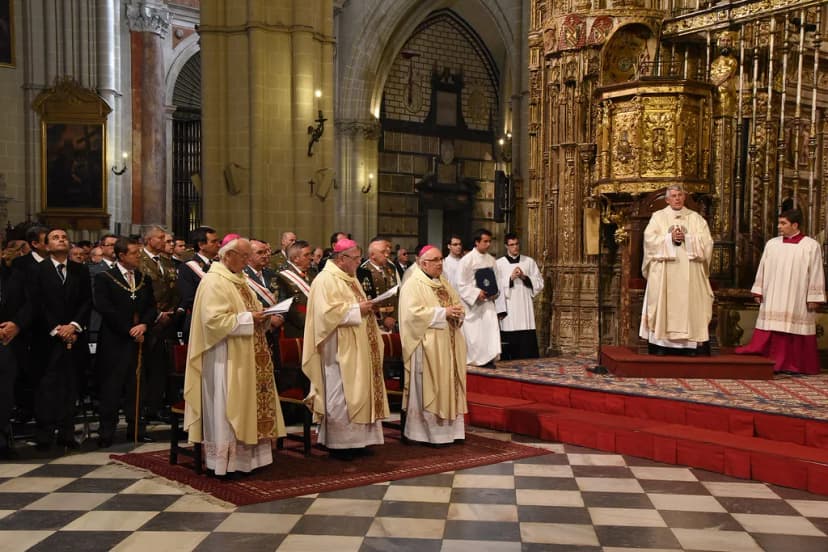
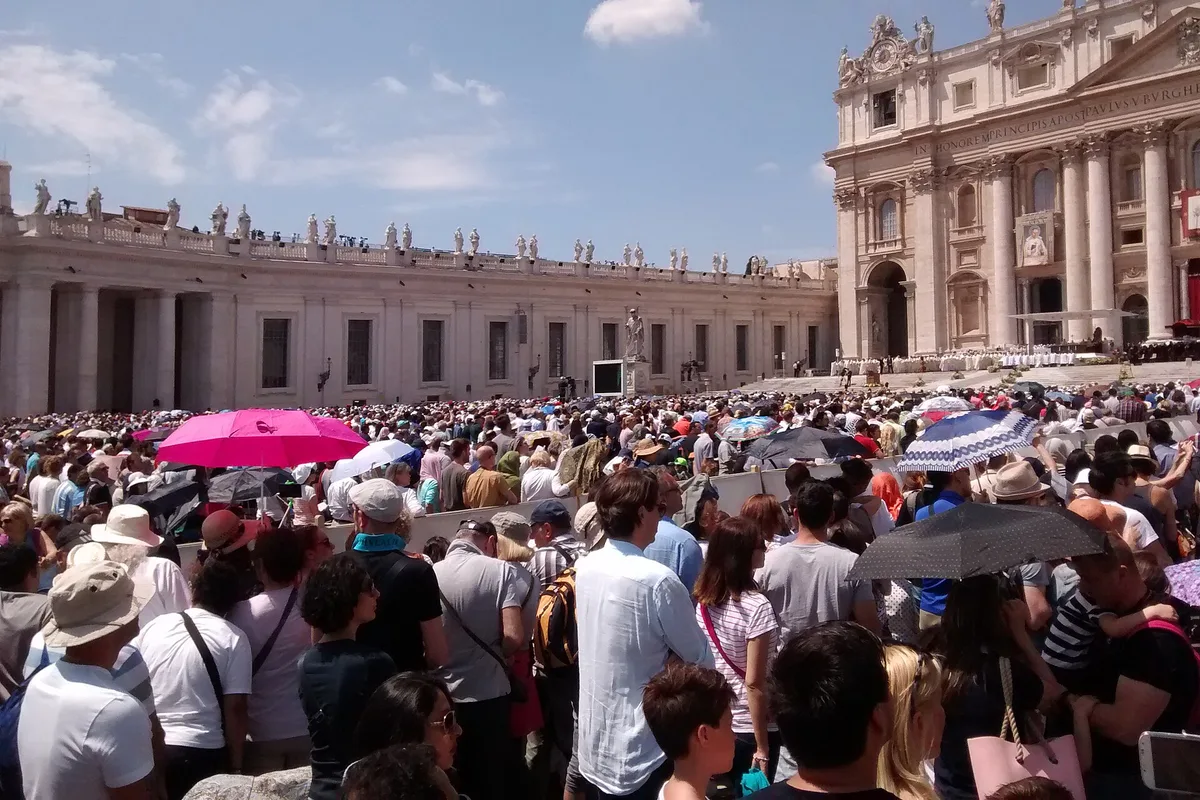
This is the part most guides get muddled. Papal ceremony tickets are always free — nobody legitimately sells them — but the seated celebrations are ticketed because capacity is limited, and the open-air blessings are not.
Tickets are issued by the Prefecture of the Papal Household, which accepts written requests by post, email or fax. For Holy Week you should request well in advance rather than days before — this is the highest-demand week in the Vatican calendar, alongside Christmas. Once granted, tickets are collected in person, typically from the Swiss Guards at the Bronze Door in St Peter's Square in the days before the celebration.
A ticket is admission, not a seat. Ticketed papal celebrations are general admission within a controlled area, so arrival time still decides where you end up. Anyone charging you for a papal ceremony ticket is reselling something that is free.
| Ceremony | Where | Ticket needed? |
|---|---|---|
| Palm Sunday Mass | St Peter's Square | Yes — free, from the Prefecture |
| Chrism Mass (Holy Thursday morning) | St Peter's Basilica | Yes — free, from the Prefecture |
| Mass of the Lord's Supper (Holy Thursday evening) | Varies by year | Yes — free; venue confirmed annually |
| Via Crucis (Good Friday night) | Colosseum | No ticket |
| Easter Vigil (Holy Saturday night) | St Peter's Basilica | Yes — free, from the Prefecture |
| Easter Sunday Mass | St Peter's Square | Yes — free, from the Prefecture |
| Urbi et Orbi blessing (after Easter Mass) | St Peter's Square | No ticket |
Because the papal schedule is set year by year — and has changed venue and timing in recent years — treat the table above as the shape of the week rather than a fixed programme. Confirm each celebration against the Vatican's published calendar before you build a day around it.
The Via Crucis at the Colosseum
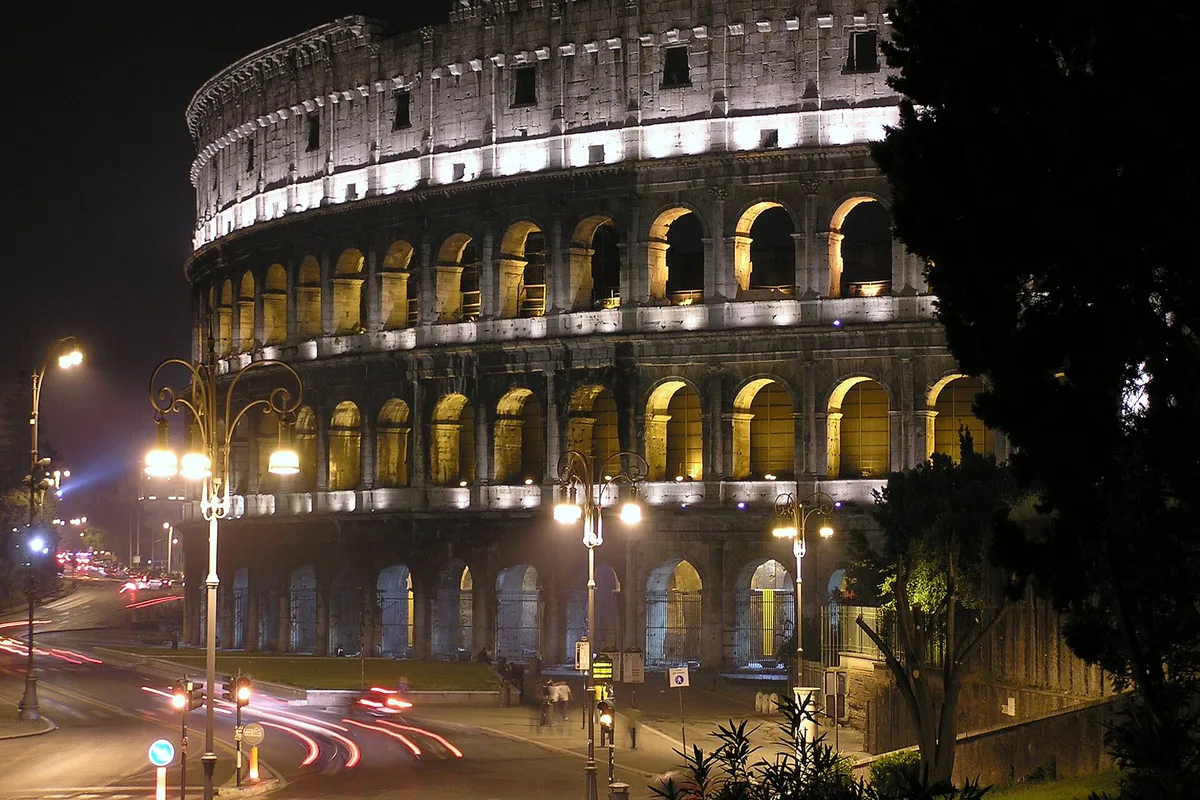
The Good Friday Way of the Cross is the most atmospheric thing that happens in Rome all year, and it is the one major papal event that asks nothing of you administratively. The procession moves through the fourteen Stations of the Cross by torchlight on the slope between the Colosseum and the Palatine, with meditations read between stations. It runs at night and lasts roughly an hour and a half.
No ticket, no reservation, no seating. Access is by standing area, managed by police cordons that close as sections fill, and the approaches around Via dei Fori Imperiali and Piazza del Colosseo tighten well before the start. Arriving an hour ahead is the minimum; two is more realistic if you want to see rather than hear it. Metro Line B serves Colosseo directly, but expect the station and the surrounding streets to be under crowd control both before and after.
If the crowd is impassable, the ceremony is broadcast live by Vatican Media — and Roman bars and churches near the Forum often have it on. That is a genuine fallback rather than a consolation: much of the Via Crucis is spoken word, and the audio carries the event.
How Crowded Rome Gets During Holy Week
Holy Week has a reputation as Rome's most crowded stretch of the year, and the reputation is only half right. The crush concentrates around specific flashpoints — St Peter's Square during the papal ceremonies, the approaches to the Colosseum on Good Friday night, the queue for the Vatican Museums — rather than spreading evenly across the whole city. Step outside those flashpoints and Holy Week in Rome can feel more manageable than the reputation suggests, because a large share of the extra visitors are pilgrims travelling in organised groups who fill specific ceremonies and specific streets rather than every restaurant and piazza in the centro storico.
The heaviest days are usually the run-up to Easter — Palm Sunday through Holy Saturday — rather than Easter Sunday itself. Once Pasquetta arrives, Romans leave the city for the countryside and the wider centre thins out even as the ceremonies stay full. Some of that Holy Week volume also comes from organised pilgrimage groups whose itineraries extend beyond Rome entirely, linking the city with stops such as Assisi or Norcia in Umbria — worth knowing if the crowd you're picturing is bigger than the one you'll actually meet on an ordinary street corner.
What the Weather Is Like at Easter
Because Easter's date moves within roughly a five-week window, the weather you get depends more on where in that window this year's date falls than on Easter itself. An Easter in late March sits closer to Rome's cooler, more unsettled early spring; an Easter in late April is closer to the steadier warmth of early summer. Either way, Roman spring is unpredictable enough that packing for a dry week is a gamble — a spell of rain over part of the weekend, even if brief, is common rather than exceptional.
Pack layers and something waterproof, and keep in mind that the outdoor ceremonies — the Via Crucis in particular — run rain or shine. A poncho does more for you at the Colosseum on Good Friday night than an umbrella will, since the standing areas are dense enough that opening one is impractical.
What Closes, and How the City Moves
Easter Sunday and Easter Monday are both public holidays in Italy, and Pasquetta is when Romans leave the city for countryside picnics rather than staying in it. The practical effects are uneven: major state museums and archaeological sites generally keep holiday hours, while neighbourhood shops and many family-run trattorias close outright, sometimes for several days.
Traffic and transport around the Vatican and the Forum are the bigger constraint. Expect rolling road closures around St Peter's Square on Palm Sunday and Easter Sunday, and around the Colosseum on Good Friday evening, with bus routes diverted and taxi access cut off inside the cordons. Build in walking time you would not normally need. The Italian public holiday guide covers which closures are national and which are local.
Individual sites layer their own rules on top of the public holidays. The Vatican Museums, and with them the Sistine Chapel, close to visitors on both Easter Sunday and Easter Monday every year, regardless of what else shifts on the papal calendar — if the Sistine Chapel matters to your trip, book Holy Thursday, Good Friday morning, Holy Saturday, or the Tuesday after Easter instead. The Colosseum archaeological area — the Colosseum, Roman Forum and Palatine Hill together — usually stays open on Easter Sunday and Monday but closes around midday on Good Friday to clear the site for that evening's Via Crucis, so a Good Friday visit there needs to happen in the morning.
Smaller ticketed sites set their own Easter hours rather than following the Colosseum's pattern, and some open for only part of the weekend. Galleria Borghese, the Capitoline Museums and the Doria Pamphilj Gallery are the ones most visitors add to a Holy Week itinerary; each publishes its own holiday calendar, so confirm the specific days before booking a timed entry rather than assuming standard hours apply.
- Easter Sunday and Easter Monday are both national public holidays
- State museums and sites usually open on holiday hours; independent shops often do not
- Road closures around the Vatican on Palm Sunday and Easter Sunday
- Vatican Museums and Sistine Chapel close on Easter Sunday and Easter Monday every year
- Colosseum archaeological area closes around midday on Good Friday to prepare for the evening Via Crucis
- Pasquetta empties the city centre as Romans head out of town
What to Eat at Easter, and Where It's Open
Easter Sunday marks the end of Lent, and the Roman table treats it that way. Lunch typically opens with salami and hard-boiled eggs, moves on to lamb and carciofi alla romana — Roman-style braised artichokes — as the main course, and closes with colomba, a dove-shaped Easter cake similar in texture to the panettone Romans eat at Christmas. Lamb turns up all over Italy at Easter, but the artichokes and the colomba are the two things that mark the meal as specifically Roman.
Finding a table for that meal takes more planning than usual. Many family-run trattorias close for Easter Sunday and Monday, sometimes for the whole long weekend, which is part of why the closures above matter as much for dinner plans as for sightseeing. Trastevere keeps more of its restaurant life running through the holiday than the centro storico does, and hotel restaurants or larger, tourist-oriented kitchens near the Vatican and the Colosseum are generally a safer bet than counting on a specific neighbourhood spot to be open. Reserve ahead for Easter Sunday lunch specifically — it is one of the few dates on the Roman calendar where a table without a booking can be genuinely hard to find.
Where to Stay, and When to Book
Holy Week is the hardest week of the year to book well in Rome, and the pattern is predictable: Prati and Borgo, the neighbourhoods flanking the Vatican, go first and price hardest, because everyone wants to walk to St Peter's. That premium is worth less than it looks. The ceremonies that need early arrival need it whether you are ten minutes away or forty, and the areas immediately around the Vatican are exactly where road closures bite.
Monti and Celio put you within walking distance of the Colosseum for the Via Crucis and on Metro Line B for everything else, usually at a lower rate than Prati during Holy Week. Trastevere is further from both but keeps its restaurant life going through the holidays better than the centro storico does — useful on the days when much of the city shuts. Book Holy Week accommodation months out; this is not a week where late availability appears.
Is Easter a Good Time to Visit Rome?
It depends entirely on whether the ceremonies are the point. If they are, nothing else compares — this is the week Rome does what only Rome can do, and the Via Crucis in particular is worth arranging a trip around. If they are not, Holy Week is close to the worst week to see the city: the Vatican Museums and the Forum absorb the same crowds as always plus a pilgrimage surge, prices peak, and closures interrupt ordinary sightseeing.
The compromise most travellers miss is the week after Easter. Prices drop sharply once Pasquetta passes, the weather is the same, and the city is emptier than in the run-up. If you want April in Rome without the crowd, that is the window — and it often catches Natale di Roma on 21 April as a free bonus. For the opposite approach to the same week — confraternities and islands instead of papal ceremonies — see Holy Week in Naples and Campania. The Rome festival calendar covers what else the city stages across the year; for festivals elsewhere in Italy that week, see the Italy festival calendar. The other date that reshapes central Rome is December, when the Piazza Navona Christmas market runs from Advent to Epiphany.
Frequently Asked Questions
Do you need tickets for Easter Mass at the Vatican?
Yes, but they are free. Tickets for seated papal celebrations, including Easter Sunday Mass and the Easter Vigil, are issued by the Prefecture of the Papal Household on written request and collected in person in Rome. Nobody legitimately sells them. The Urbi et Orbi blessing that follows Easter Mass needs no ticket.
Is the Via Crucis at the Colosseum ticketed?
No. The Good Friday Way of the Cross is open to the public with no ticket or reservation. Access is by standing area and police close sections as they fill, so arriving one to two hours early is the practical requirement instead.
When is Easter in Rome in 2027?
Easter Sunday 2027 falls on 28 March, which puts Palm Sunday on 21 March and Good Friday on 26 March. Those dates are computed from the Easter recurrence rule. The individual papal ceremony times and venues are set separately and only become certain when the Vatican publishes that year's liturgical calendar.
What closes in Rome over Easter?
Easter Sunday and Easter Monday are national public holidays. Major museums and archaeological sites generally open on holiday hours, but independent shops and many family-run restaurants close, sometimes for several days. Roads around the Vatican and the Colosseum close for the ceremonies themselves.
Where should you stay in Rome during Holy Week?
Prati and Borgo next to the Vatican price highest and sell out first, but the proximity buys less than expected because ceremonies need early arrival regardless and closures restrict the area. Monti and Celio give walking access to the Colosseum plus Metro Line B, usually cheaper. Book months ahead — late availability is rare in Holy Week.