
Last updated August 2026. Planning a Rome Christmas market visit means choosing between a shrunken but still-standing tradition in Piazza Navona and a cluster of larger, ticketed newcomers built for crowds. This guide compares the free piazza markets against the paid theme-park-style villages, so you can decide which ones earn the Metro ride before Epiphany closes the season on 6 January. Rome's other great religious calendar moment comes at the opposite end of winter — see Holy Week and Easter in Rome for how the papal ceremonies reshape the city. The markets are one stop on Rome's full festival calendar.
Rome Christmas Market Basics: Dates and Style
Rome's Christmas market season generally opens with Advent, sometime between 1 and 8 December, and runs through Epiphany on 6 January, the day locals call Befana. Confirm exact opening dates each year on Rome's official tourism site, since the recurrence rule sets the window but individual markets can shift by a week. Rome's version of a Christmas market centers on nativity scenes and the Befana witch, not the wooden-hut mulled-wine culture visitors associate with German-style markets. That harder-edged Glühwein tradition belongs to Alto Adige and Bolzano in the north, where the first northern-European-style market in Italy opened in 1990. If a hut-lined, Bolzano-style market is what you want, Rome will disappoint. If you want piazza atmosphere, nativity displays, and Roman street food, keep reading. For a wider comparison of where Italy's markets sit on that spectrum, see Italy's Christmas markets.
Piazza Navona: Rome's Traditional Market
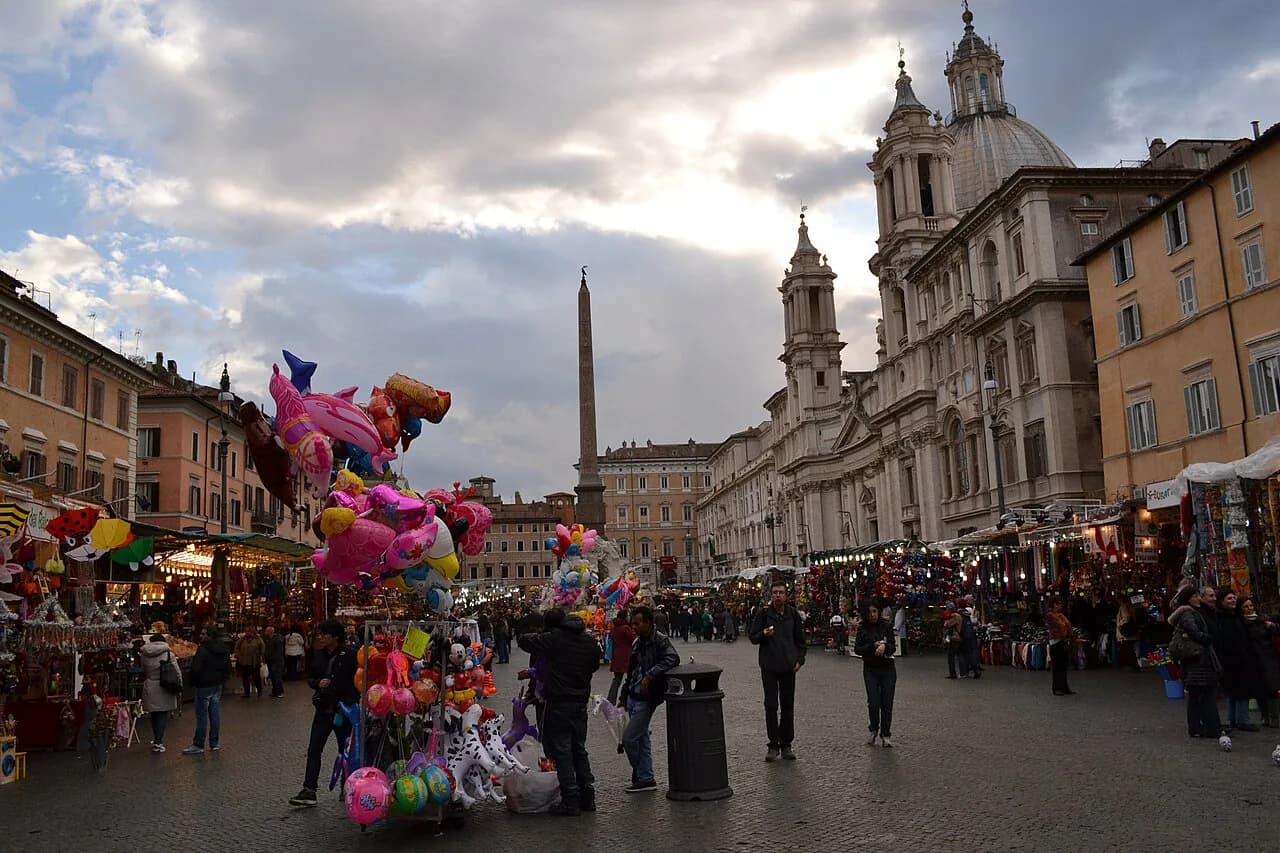
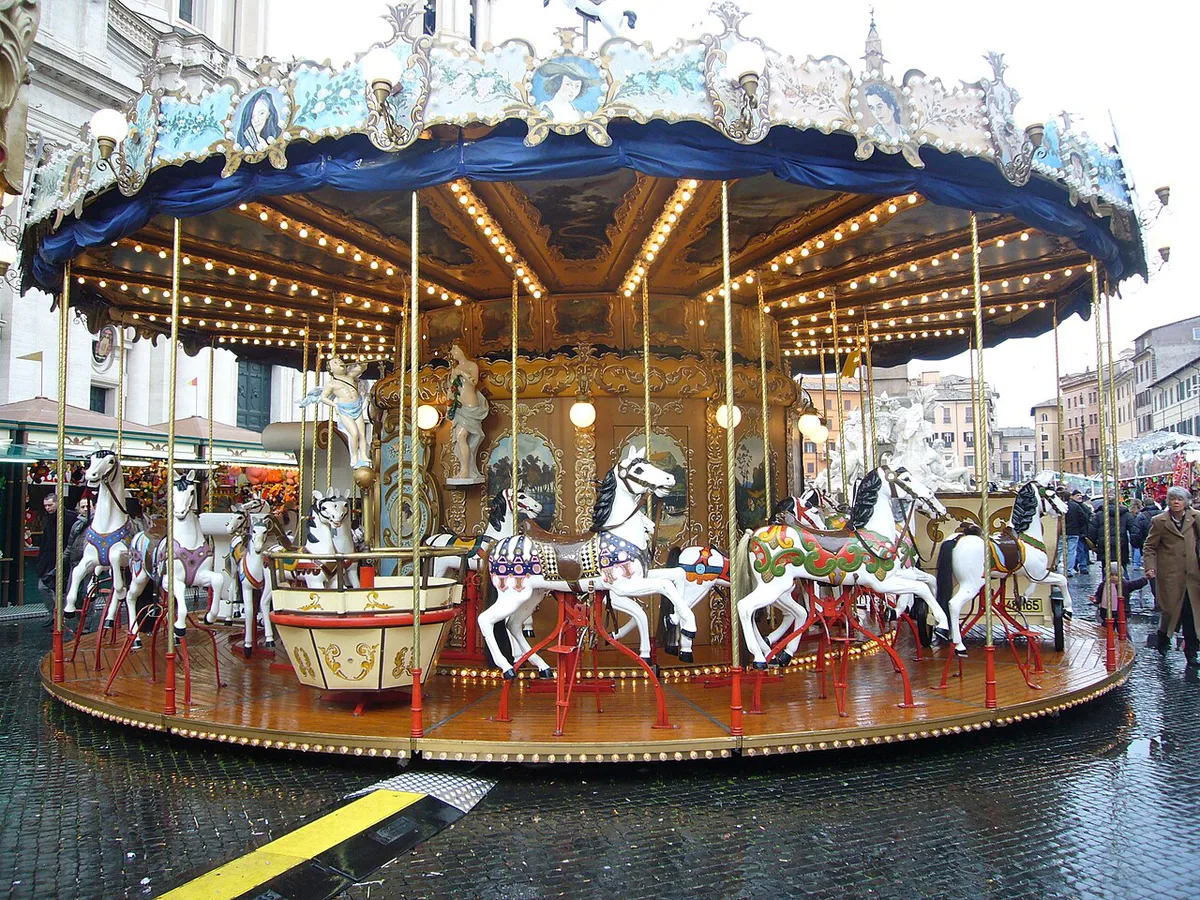
Piazza Navona hosts Rome's oldest Christmas fair, tracing back to a food market that moved into the square in 1477 and later became a seasonal-only event. Expect a carousel, a nativity scene, and stalls selling sweets, chestnuts, and handmade crafts near Bernini's Fontana dei Quattro Fiumi. Set expectations before you go: the market shrank sharply after 2014, when stall numbers dropped from around 115 to 72 amid a crackdown on non-local vendors. Some recent seasons also opened later than planned or ran with just a handful of stands. Treat any specific season's stall count as unconfirmed until you arrive. Last season's official window ran 1 December to 6 January. The next edition is expected to follow the same Advent-to-Epiphany pattern, though official dates for the coming season have not been published yet.
Piazza Navona shrank from around 115 to 72 stalls after 2014's crackdown, but now coexists with ticketed alternatives like Christmas World (ice skating) and Natale all'Eur (Ferris wheel), giving visitors diverse market choices beyond the historic piazza.
- Carousel and small rides for children
- Nativity scene (presepe) near the fountain
- Sweets, chestnuts, and handmade craft stalls
- Stall count varies by season — confirm current numbers before visiting
Christmas World at Villa Borghese: The Ticketed Spectacle
Christmas World turns part of Villa Borghese into an international-style market with ice skating and street food. Reach it via Metro A to Flaminio, then walk into the park. Entry is ticketed, unlike Piazza Navona, so budget for admission on top of anything you buy inside. Last season's edition ran into early January. Dates for the next one were not yet official at the most recent listing. Confirm the current window and ticket price on the operator's site before picking a day. The trade-off is simple: a more polished, photo-friendly setup with ice skating, against Piazza Navona's free but thinner offering.
- About 40 vendor stores across a 50,000-square-meter exhibition area
- Ice skating rink
- International street food stalls
- Ticketed entry — check current price before visiting
Natale all'Eur: The Modern Christmas Village
Natale all'Eur centers on Viale America in the EUR district, reachable via Metro B to Palasport. A 50-meter Ferris wheel anchors what organizers call the Natale Diffuso concept, a set of roughly thirteen festive stops spread across the city. Recent seasons opened around 26 November and ran through 6 January, with a permanent Christmas village on Viale America and a Santa's House area for children. 8 December typically brings the busiest single day, with the Ferris wheel lighting, the Viale Europa tree lighting, and evening performances clustering around the Immaculate Conception holiday. Expect heavier crowds that afternoon.
Local and Vintage Markets Worth the Detour
Three markets reward travelers who want actual shopping rather than a stroll past nativity scenes. Giftland suits travelers hunting for a specific gift. Piazza Mazzini suits collectors. Japan Days suits anyone who wants something different from the standard nativity-and-carousel format.
Giftland concentrates 200 exhibitors into 6,000 square meters for dense gift shopping, while Christmas World spreads 40 vendor stores across a 50,000-square-meter space, letting visitors choose between vendor density and spacious attractions like ice skating.
- Giftland — San Paolo District, Via A. Severo 48: over 200 exhibitors across roughly 6,000 square meters, with weekend dates clustered around the first two weekends of December
- Piazza Mazzini Christmas Fair — Rome's year-round vintage and antiques market adds festive stock for the season, open roughly 9am to 7:30pm into early January
- Japan Days Christmas Edition — Ippodromo delle Capannelle: Japanese street food alongside collectibles and crafts; confirm this season's exact dates before visiting, since past editions ran a single mid-December weekend
Cinecittà World: Is the Theme Park Christmas Village Worth It?
Cinecittà World converts its film-studio theme park into a full Christmas Village, with illuminated paths, themed rides, live shows, and a Santa Claus meet-and-greet. Recent seasons ran from early November through 6 January, with markets selling handicrafts and gifts woven between the attractions. This only makes sense as a full-day trip. Budget transit time to reach the park, whether by shuttle bus or car. Plan to arrive near opening and stay late to justify the trek. It suits families chasing rides and a Santa visit more than travelers who want a quick market browse. Check the park's official site for current hours, shuttle details, and ticket prices before booking, since these change year to year.
Rome Christmas Markets Compared: Decision Matrix
Group markets with sites you already plan to see, to avoid crossing the city twice in one day. Pair Piazza Navona with the Pantheon, since both sit inside the same walkable core. Combine Christmas World with a Spanish Steps visit, since Metro A connects Flaminio and Spagna directly. Save Natale all'Eur and Cinecittà World for a day with fewer central-Rome plans, since both sit outside the historic center. Travelers building a longer Italian Christmas trip often add the Milan Christmas Market Guide: Dates, Locations, and Local Tips to their itinerary. Milan runs its own official Christmas market listings, useful for cross-checking dates. Some also swing through the Florence Christmas Market: Dates, Locations, and Local Tips on the way to or from Rome. Florence publishes current dates on the city's official tourism site.
| Market | Best For | Entry | Closest Access |
|---|---|---|---|
| Piazza Navona | Free traditional atmosphere, carousel, nativity scene | Free | Central; walk from Corso Vittorio Emanuele II or Campo de' Fiori |
| Christmas World (Villa Borghese) | Ice skating, international stalls, photos | Ticketed — check current price | Metro A to Flaminio |
| Natale all'Eur | Ferris wheel, Santa's House, families based near EUR | Village free; Ferris wheel likely ticketed | Metro B to Palasport |
| Giftland | Actual gift shopping, 200+ exhibitors | Free | San Paolo District (bus/tram) |
| Cinecittà World Christmas Village | Full-day theme-park trip with kids | Ticketed park admission | Shuttle bus or car — check operator site |
| Piazza Mazzini | Vintage and antique finds | Free | Prati area |
Seasonal Food and Christmas Shopping in Rome
Seasonal Roman kitchens turn out a few dishes worth seeking out. Pangiallo romano, a dense spiced fruit-and-nut cake, appears in bakeries from early December. Abbacchio al forno, oven-roasted lamb, shows up on trattoria menus around Christmas Eve and Christmas Day. Chestnut vendors and mulled wine stalls fill in the gaps at most of the markets above. For ornament shopping beyond the market stalls, look to Rome's dedicated Christmas shops, which stay open year-round with blown-glass and handcrafted pieces. If food is the main draw of the trip, cross-reference the Italian food festivals guide for where seasonal specialties turn up elsewhere in the country.
Mistakes to Avoid and Practical Tips
Most museums close on 25 December, though churches keep normal hours and some hold services. Check the Vatican Museums and Colosseum directly, or Italy's national tourism site, for the current holiday closure list before building a Christmas Day plan around them. 8 December, the Immaculate Conception holiday, draws heavy crowds to the Spanish Steps and pushes extra visitors into the markets that same afternoon. 6 January, the Befana finale, brings a similar crowd to Piazza Navona as the season winds down; Florence marks the same day with a 700-strong costumed procession to its Duomo. Book Cinecittà World and Christmas World tickets in advance during peak weeks, to skip the walk-up queue lines that build in late December. Rome in December runs damp and gray more often than snowy. Pack waterproof shoes rather than snow boots, and bring a compact umbrella for the piazza markets, which have no cover.
A 3-Day Rome Christmas Market Itinerary
Use Rome’s Metro lines and walkable historic center to avoid wasting time crossing the city between markets.
- Day 1: Start at the Pantheon, then walk five minutes to Piazza Navona before dusk. Continue across Ponte Sant’Angelo for evening views of Castel Sant’Angelo.
- Day 2: Take Metro A to Flaminio for Christmas World and Villa Borghese. Walk through the park toward the Pincian Terrace, then descend to Piazza del Popolo. Spagna station provides an easy return after visiting the Spanish Steps.
- Day 3: Take Metro B to Palasport for Natale all’Eur and its Ferris wheel. Combine the visit with the nearby Laghetto dell’EUR. Choose Cinecittà World instead if rides and Santa activities are the priority.
Reserve a separate day for Cinecittà World because the park requires longer travel and several hours inside. Piazza Mazzini fits best before a Vatican-area visit, while Giftland works well when exploring the San Paolo district.
Frequently Asked Questions
When do Rome's Christmas markets open each year?
Rome's Christmas market season generally follows Advent through Epiphany, opening between 1 and 8 December and closing 6 January. Individual markets set their own exact dates within that window, so confirm the current season on Rome's official tourism site before you book travel.
Is the Piazza Navona Christmas market still worth a visit?
Yes, though it is smaller than it was before 2014, when stall numbers dropped from around 115 to 72. You'll still find a carousel, a nativity scene, and craft and chestnut stalls around Bernini's fountain, just fewer of them than in past decades.
How do you get to Christmas World and Natale all'Eur?
Take Metro A to Flaminio for Christmas World at Villa Borghese. Take Metro B to Palasport for Natale all'Eur in the EUR district.
Which Rome Christmas markets are free to enter?
Piazza Navona, Piazza Mazzini, and Giftland charge no entry fee. Christmas World at Villa Borghese and the Cinecittà World Christmas Village are ticketed, so budget for admission on top of any shopping.
How is Rome different from Alto Adige for Christmas markets?
Rome's markets lean on nativity scenes and the Befana tradition rather than wooden huts and mulled wine. Alto Adige, where Bolzano opened Italy's first northern-European-style market in 1990, is the region that actually matches the German hut-market template.
