

Last updated August 2026. The Milan Christmas market season runs from the start of Advent through 6 January, spread across five neighborhoods instead of one central square. Piazza Duomo anchors the tourist crowd, while Castello Sforzesco keeps the older Oh Bej! Oh Bej! tradition alive from 7 December. Milan follows the Ambrosian rite rather than the Roman one, which is also why its carnival runs on later than the rest of Italy's. The season really opens on 7 December with Sant'Ambrogio and the Oh Bej! Oh Bej! fair; the Milan festival calendar covers the whole year.
Milan Christmas Market Dates: 2026 Season Outlook
Milan's holiday season follows a fixed civil calendar instead of one fair with a single opening night. That spread mirrors the city's broader character: a fashion and design capital layering festive stalls onto its existing neighborhoods rather than building one purpose-made market town. The Piazza Duomo market and most neighborhood markets run on the Advent-to-Epiphany pattern, opening in late autumn and closing 6 January. Oh Bej! Oh Bej! works differently. It ties to the Feast of Sant'Ambrogio on 7 December, Milan's patron saint day, and runs only a few days around that date each year.
- Piazza Duomo (Mercatino di Natale): last ran 1 December 2025 to 6 January 2026, per Milan's official events listings. The 2026/27 dates are expected, computed from that recurrence pattern, and are typically confirmed on the city site in November.
- Villaggio delle Meraviglie (Village of Wonders): last ran 15 November 2025 to 6 January 2026. The organiser's own site lists the next edition as November 2026 to January 2027, confirmed by the organiser, though exact daily dates were not yet posted as of this update.
- Oh Bej! Oh Bej!: last ran 5-8 December 2025 at Castello Sforzesco. Future editions are expected, computed from the Sant'Ambrogio recurrence rule, to open around 7 December each year.
- Banco di Garabombo: last ran 1 October 2025 to 6 January 2026. A similar window is expected for 2026/27, pending official confirmation.
The Best Christmas Markets in Milan: Which One to Choose
Milan spreads its Christmas markets across five districts rather than concentrating everything in one square. That decentralized format means budgeting one neighborhood per day works better than trying to cover every market in a single afternoon. Families tend to head for Porta Venezia and the ice rink. Foodies gravitate to Castello Sforzesco for roasted chestnuts and old-town atmosphere. Shoppers split time between Piazza Duomo's crafts stalls and the fair-trade stands on Via Mario Pagano. Matching neighborhood to travel style upfront saves a day of crossing the city.
Villaggio delle Meraviglie charges €25 for ice-skating lessons, not included in the free park entry. When scaled across multiple children or repeat visits, the rink quickly becomes the outing's biggest expense.
| Market | Best For | Location | Typical Dates |
|---|---|---|---|
| Piazza Duomo (Mercatino di Natale) | Iconic photos and crafts | Duomo, M1/M3 Duomo stop | 1 Dec – 6 Jan |
| Oh Bej! Oh Bej! | Local tradition | Castello Sforzesco, M1 Cairoli stop | 5–8 Dec |
| Villaggio delle Meraviglie | Kids and ice skating | Porta Venezia, M1/M3 | Mid-Nov – 6 Jan |
| Artigiano in Fiera | Serious shopping | Rho Fiera, M1 (extra fare zone) | Early Dec, about 9 days |
| Darsena/Navigli | Nightlife and atmosphere | Navigli, M2 | 1 Dec – 6 Jan |
Mercatino di Natale at Piazza Duomo: Milan's Cathedral Market
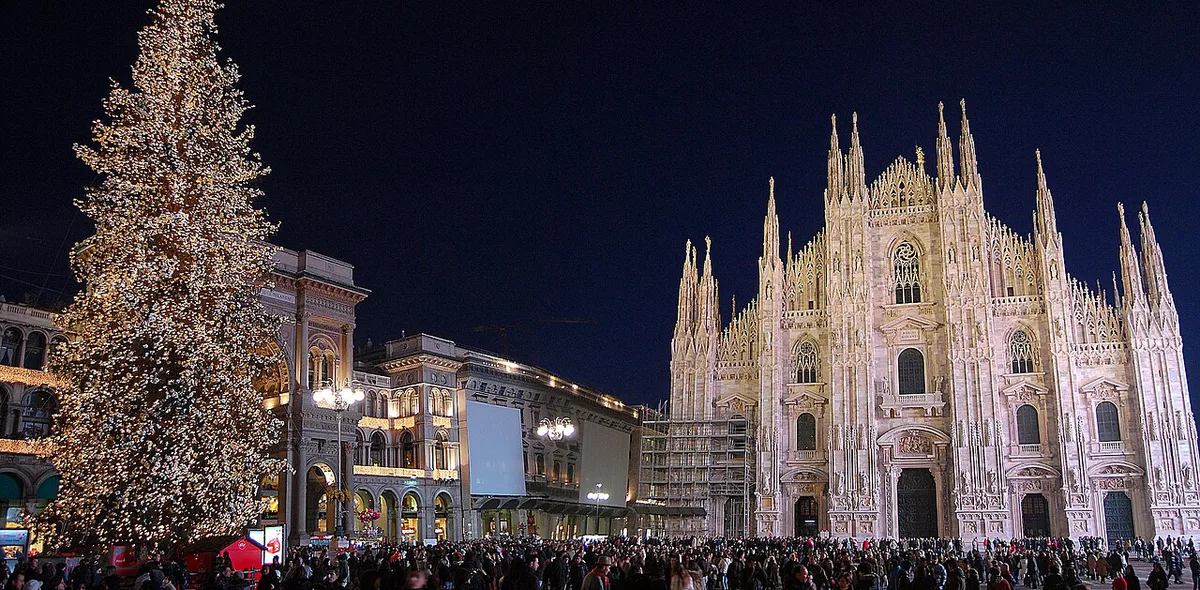
Wooden stalls wrap around the base of the Duomo in the Mercatino di Natale, encircling the cathedral square with sweet and savory food, textiles, and artisan crafts. Some listings count more than 60 individual wooden huts around the perimeter. Per Milan's official listings, the market runs daily from 9:00 to 21:00 and includes a nativity scene plus a grotto set up for younger visitors. Reach the square via the M1 or M3 line to the Duomo stop, then walk straight into the market from the metro exit. Weekend afternoons draw the largest crowds, and queues for the cathedral rooftop and terraces build fast during that window. A paid priority-access option for the cathedral is worth booking ahead if a rooftop visit matters. The stalls stay lit well into the evening, and the atmosphere shifts noticeably once dusk sets in. Galleria Vittorio Emanuele II, Milan's 19th-century shopping arcade next door, gets decorated for the season and works well as a stop before or after the market.
Oh Bej! Oh Bej! at Sforza Castle: The Traditional Choice
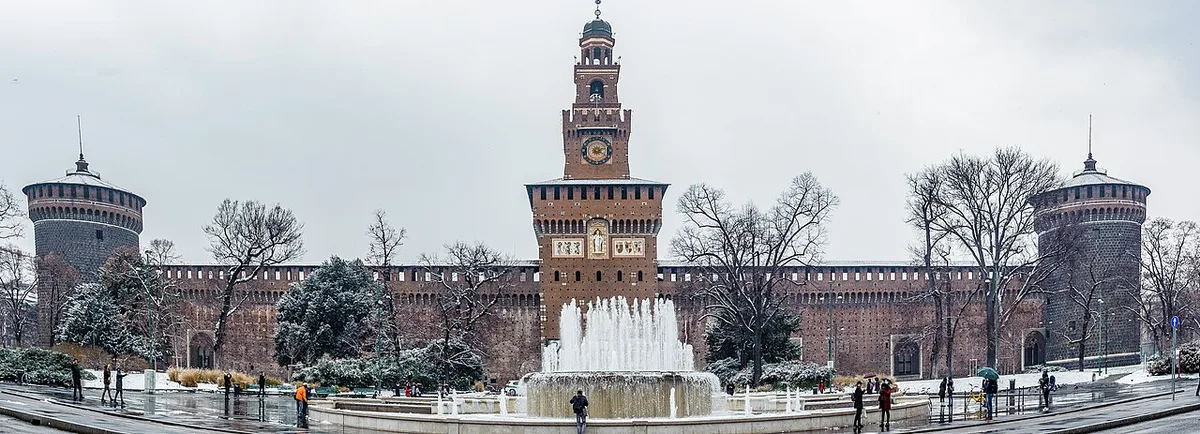
Oh Bej! Oh Bej! is Milan's oldest Christmas fair, running for more than five centuries around the Feast of Sant'Ambrogio on 7 December. Stalls circle Castello Sforzesco with antiques, artisan crafts, and gastronomic stands. Firunatt, strings of roasted chestnuts, is the signature street food and worth seeking out specifically. Unlike the month-long Duomo market, this one runs for only a handful of days each year. Build it into a trip on purpose rather than assuming it overlaps with a longer Milan stay. Cairoli, on the M1 line, is the closest stop to the market perimeter.
Oh Bej! ran 5-8 December 2025, typically a 4-8 day window around Sant'Ambrogio, unlike month-long Piazza Duomo. Plan itineraries around these specific dates rather than assuming December coverage.
Villaggio delle Meraviglie: Best for Families and Ice Skating
Villaggio delle Meraviglie sits inside the Indro Montanelli Gardens in Porta Venezia and is built around families rather than souvenir shopping. Entry to the park itself is free; only the rides and the ice rink carry a charge.
- Ice skating: a 30-minute private lesson plus 30 minutes of free skating costs €25, per the operator's own pricing.
- Pista Baby: a separate, smaller rink sized for younger children sits alongside the main rink.
- Access: leashed dogs are welcome, the park is stroller-accessible, and a heated nursery is on site.
- Transit: M1 to Palestro or Porta Venezia, M3 to Repubblica or Turati, trams 1 and 9, or buses 61 and 94.
- Parking: blue-line street parking runs along the Porta Venezia Bastioni and the streets bordering the gardens, per the city of Milan's mobility guidance.
Alternative Markets: Navigli, Artigiano in Fiera, and Ethical Gifts
Three more markets round out the season, each solving a different problem: nightlife, serious shopping, or ethical gift-buying.
- Darsena/Navigli Christmas Village: runs roughly 1 December to 6 January along the Navigli canal district, reachable via the M2 line. Expect fewer crafts stalls here and more bars, restaurants, and canal-side lighting than at the other markets.
- Artigiano in Fiera: an indoor international crafts fair at Rho Fiera, typically held over about nine days in early December. It sits in a separate fare zone, so buy an extra-zone metro ticket before boarding the M1 line. Entry to the fair itself is typically free.
- Banco di Garabombo: Milan's fair-trade and ethical-shopping market, set up in a marquee off Via Mario Pagano. Per the city's official listings, last season ran 1 October 2025 to 6 January 2026, daily from 9:00 to 20:00, reachable via the M1 line to Pagano or buses 67 and 85.
What to Eat, Drink, and Buy in Milan Christmas Markets
Panettone is Milan's own contribution to the Italian Christmas table, and stalls sell it whole or by the slice alongside other Lombard sweets. Firunatt, the roasted chestnuts sold at Oh Bej! Oh Bej!, is a Milan-specific tradition rather than a generic market snack. Mulled wine and hot chocolate show up at every market, and the food stalls at Villaggio delle Meraviglie lean toward stuffed panini, churros, and polenta. For readers building a wider northern Italian winter food trip, the Italian food festivals guide covers panettone's origins and other regional specialties. The Alba truffle fair guide profiles a different northern Italian winter event built entirely around food. On the shopping side, leather goods and artisan crafts turn up across Piazza Duomo, Oh Bej! Oh Bej!, and Artigiano in Fiera. Banco di Garabombo is the place to look for fair-trade cosmetics, ethical fashion, and imported specialty foods like couscous and Medjool dates.
Milan vs Alto Adige: Which Christmas Market Region Fits Your Trip
Alto Adige leans into the Alpine Christmas market look many travelers picture first. Expect wooden chalets, red-and-white striped tents, and a German-Italian food tradition in towns like Bolzano, Merano, Bressanone, and Trento. Milan does not try to replicate that. Its markets are urban additions to a fashion capital, spread across neighborhoods instead of concentrated in one purpose-built festive town. The feel runs closer to a city pop-up than an Alpine village. Choose Alto Adige for the postcard Alpine market experience. Choose Milan for a shorter, easier-to-combine stop that pairs with cathedral sightseeing, shopping, and a wider Italian city break. The two are not really competing for the same trip, and travelers weighing the whole country's options can compare regions in the Italy Christmas markets guide.
Logistics: How to Get Around and Where to Stay
Milan's three metro lines cover every market in this guide, and knowing which line reaches which stop saves backtracking across town. A standard ticket covers travel within the city center. Rho Fiera sits in a separate fare zone and needs an extra-zone ticket, best bought before boarding rather than at the fair. Staying near Duomo puts the flagship market and the Galleria within walking distance. A base near Porta Venezia or the Navigli canals trades some central convenience for a shorter walk to the Village of Wonders or the Darsena market. A stay near Castello Sforzesco or Cairoli works well for trips timed around Oh Bej! Oh Bej! specifically. Travelers building a longer Italian Christmas market trip often pair Milan with Rome and Florence. For Rome, the Rome Christmas market guide covers dates and logistics. For Florence, the Florence Christmas market guide does the same.
- M1 (red line): Duomo, Cairoli, Pagano, Palestro, and Rho Fiera.
- M2 (green line): the Navigli district.
- M3 (yellow line): Duomo, Repubblica, and Turati.
Practical Tips and Mistakes to Avoid
A few planning mistakes come up often enough to flag directly.
| Visit Window | Atmosphere | Crowd Level | Best For |
|---|---|---|---|
| Weekday mornings | Quiet, functional | Low | Shopping and unhurried browsing |
| Weekend evenings | Lights, music, full atmosphere | High | Photos and first-time visits |
- Assuming every market shares one calendar: Oh Bej! Oh Bej! is a four-day window, not a month-long one like Piazza Duomo.
- Skipping the extra fare-zone ticket needed to reach Rho Fiera for Artigiano in Fiera.
- Leaving cathedral rooftop access to the day of the visit, when weekend queues build fast.
- Trying to fit Rho Fiera into the same day as the city-center markets, when the extra travel time works better as its own outing.
- Packing for a mild Italian city break instead of layered, weatherproof winter wear for an outdoor market crawl.
How to Visit Milan’s Christmas Markets in One Day
Start at Piazza Duomo on a weekday morning, when the stalls are easier to browse. The cathedral market opens earlier than Milan’s nightlife-focused areas, making it the most practical first stop.
Take the M1 from Duomo to Cairoli for Castello Sforzesco. This stop is worthwhile only when Oh Bej! Oh Bej! is operating around the Feast of Sant’Ambrogio. Outside that short December window, continue to Porta Venezia instead.
- Duomo to Cairoli: two stops on the M1.
- Cairoli to Palestro: use the M1, changing direction toward Sesto 1° Maggio.
- Porta Venezia to Navigli: take the M1 to Cadorna, then change to the M2 for Porta Genova.
Allow the afternoon for Villaggio delle Meraviglie in the Indro Montanelli Gardens. Families should reserve more time if skating or rides are part of the plan.
Finish around Darsena and the Navigli canals after dark, when the lights, restaurants, and bars create the strongest atmosphere. Keep Artigiano in Fiera for another day because Rho Fiera requires a longer M1 journey and a separate fare-zone ticket.
Frequently Asked Questions
Is Milan good for Christmas markets compared to Bolzano or Trento?
Milan works well as a 1-2 day add-on to a city break, but it is not the destination for an Alpine Christmas market look. Bolzano, Merano, Bressanone, and Trento run the wooden-chalet, German-Italian style markets most travelers associate with Italian Christmas markets. Milan's own markets stay closer to city-neighborhood pop-ups tied to shopping, cathedral sightseeing, and the Oh Bej! Oh Bej! tradition.
What is the Oh Bej! Oh Bej! market?
Oh Bej! Oh Bej! is Milan's oldest Christmas fair, held around Castello Sforzesco to mark the Feast of Sant'Ambrogio on 7 December. It has run for more than five centuries, per Milan's official events listings, and its signature food is Firunatt, roasted chestnuts sold in strings. Unlike the month-long Duomo market, it typically lasts only a handful of days.
Do you need tickets for the Milan Christmas Village (Villaggio delle Meraviglie)?
Entry to the park inside the Indro Montanelli Gardens is free; only the rides and the ice rink carry a charge. A 30-minute private skating lesson plus 30 minutes of free skating costs €25, per the operator's own pricing.
How do you get to the Artisans Fair (Artigiano in Fiera)?
Artigiano in Fiera runs at Rho Fiera, reachable via the M1 line. Rho Fiera sits in a separate fare zone from central Milan, so budget for an extra-zone ticket rather than a standard city ticket. The fair itself is indoors and typically runs about nine days in early December.
What should you buy at a Milanese Christmas market?
Panettone is the obvious pick, since it originated in Milan and shows up whole or by the slice at nearly every stall. Leather goods and artisan crafts are strong at Piazza Duomo, Oh Bej! Oh Bej!, and Artigiano in Fiera. For fair-trade and ethical gifts, Banco di Garabombo on Via Mario Pagano specializes in sustainable cosmetics, ethical fashion, and imported specialty foods.
How much time should you plan for a Milan Christmas market visit?
One full day covers Piazza Duomo and the Galleria comfortably. Two days allow time to add Villaggio delle Meraviglie or the Navigli district without rushing. A third day only makes sense if the trip lines up with the short Oh Bej! Oh Bej! window or an Artigiano in Fiera date.
