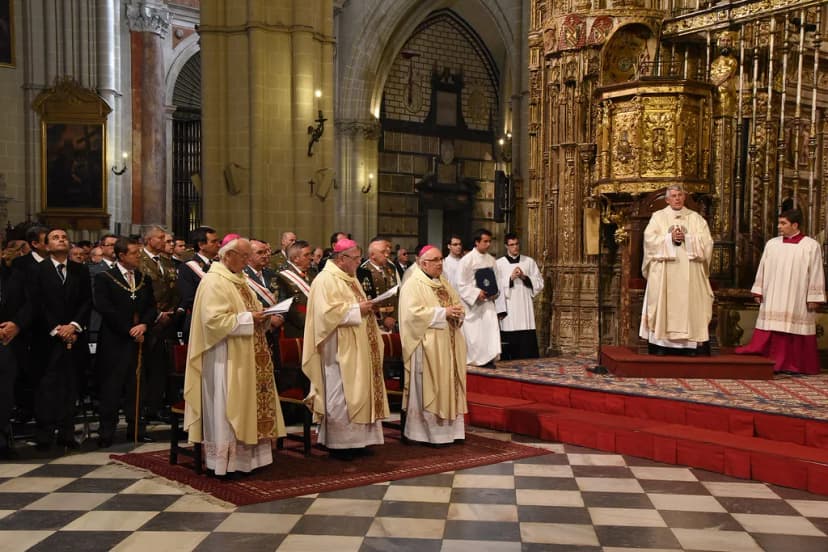
Last updated August 2026. On 6 January, roughly seven hundred costumed participants ride and walk from Piazza Pitti across the Arno to the Duomo, led by three Magi on horseback in silk robes copied from a fifteenth-century fresco a few streets away. It is free, it is the largest thing that happens in Florence in winter, and it lands in the emptiest week of the Florentine tourist year.
The Date and the Route
6 January, Epiphany, every year — a fixed date and a national public holiday in Italy, so it never moves and never needs confirming. The procession is organised by the Opera di Santa Maria del Fiore, the body that has looked after the cathedral since the fourteenth century.
The column forms in Piazza Pitti on the Oltrarno side and departs at around 14:00, crosses the river and works through the historic centre, reaching Piazza del Duomo at roughly 15:30. There the Magi present their gifts at a living nativity in front of the cathedral. Timings are the established pattern rather than a guarantee — the Opera publishes the year's programme in advance, and a procession of this size runs to its own clock.
The Fresco Behind the Costumes
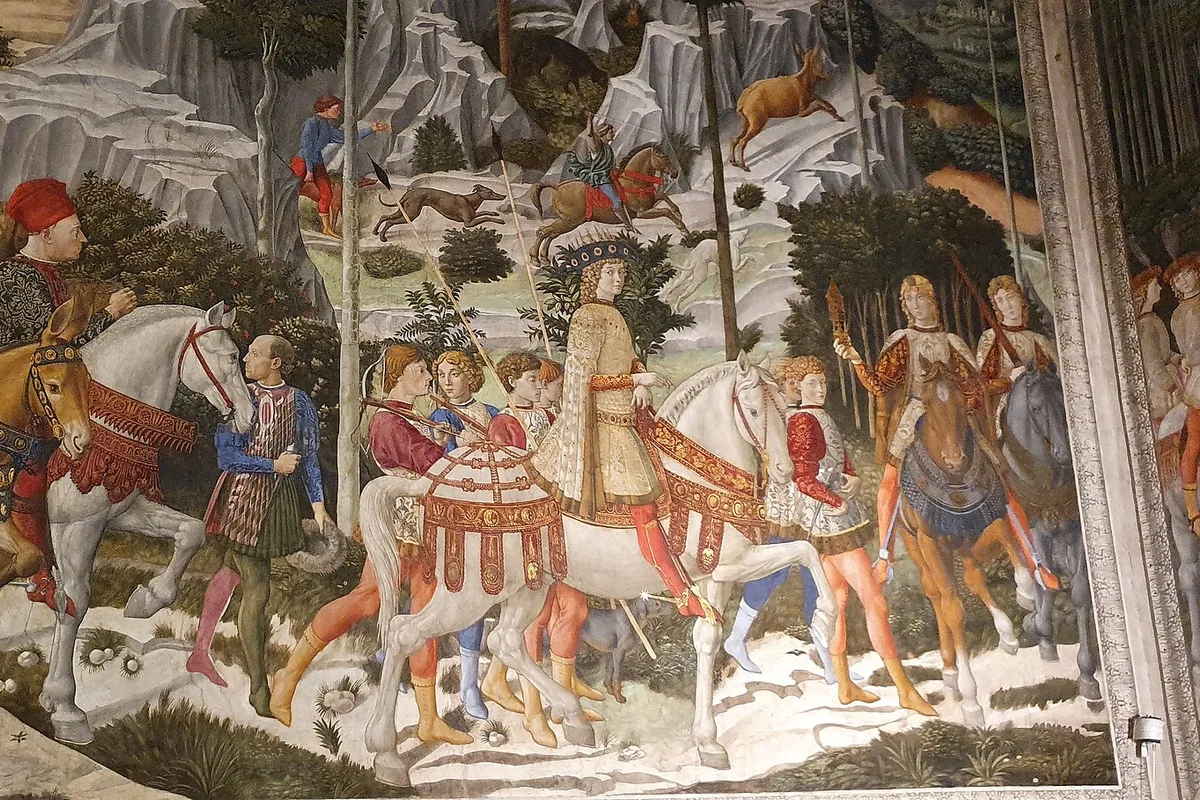
The costumes are not generic medieval dress. They are modelled on Benozzo Gozzoli's Procession of the Magi, painted in 1459 across the walls of the Cappella dei Magi in the Palazzo Medici Riccardi — a fresco cycle that shows the Medici and their circle riding through a Tuscan landscape in the guise of the three kings.
That makes the chapel the single best thing to do either side of the procession. It is a ten-minute walk from the Duomo, admission is ticketed and timed, and seeing the fresco before the cavalcata turns the afternoon from a costume parade into something you can actually read — the silks, the horses and the retinue on the street are a deliberate reconstruction of what is on those walls.
Book the Cappella dei Magi in advance if you want it on the same day. It is a small room with timed entry, and 6 January is a public holiday when Florentines visit their own city.
Where to Stand
The procession is long and slow, which means you can see it well from several points rather than competing for one. Three sensible choices:
| Vantage point | Arrive by | Best for |
|---|---|---|
| Piazza Pitti | 13:30 | Costumes and horses at rest — the best photographs |
| Ponte Vecchio and Oltrarno lanes | 14:15 | The river crossing, riders close to the crowd |
| Piazza del Duomo | 15:00 | The arrival and the living nativity; densest crowd |
- Piazza Pitti, before 14:00. The column forms here, so you see the costumes and horses at rest and close up — much the best option for photographs.
- The bridges and the Oltrarno lanes. The crossing of the Arno is the most atmospheric stretch, and the narrow streets on the south bank put the riders close to the crowd.
- Piazza del Duomo, from around 15:00. The arrival and the presentation at the nativity. The densest crowd of the day, and worth arriving early for.
January in Florence is genuinely cold and often wet — this is a standing-outdoors-for-two-hours event in the coldest part of the year. Dress accordingly, and note the procession goes ahead in most weather.
A Tradition That Lapsed, Then Came Back
The Festa dei Magi was a major fifteenth-century Florentine event, staged under Medici patronage — three separate processions converging at the Baptistery of San Giovanni before continuing to Piazza San Marco. It faded after the Medici were expelled at the turn of the sixteenth century and eventually died out entirely.
The modern cavalcata is a revival, brought back in the second half of the 1990s. That is worth knowing rather than glossing over: this is a reconstruction of a Renaissance civic ritual, not an unbroken line back to it — which puts it in the same category as Rome's Natale di Roma reenactment rather than alongside genuinely continuous traditions like the Palio or San Gennaro.
January in Florence
Epiphany closes the Italian Christmas season nationally — it is the day the markets shut and the Befana arrives — and in Florence it is essentially the only event of the winter. February is empty, and the city's calendar does not restart properly until the Scoppio del Carro at Easter.
The compensation is that this is the cheapest and quietest week to see Florence. Museum queues that run for hours in June are short in January, the Christmas market has just finished, and accommodation is at its annual floor. If the Renaissance rather than the festival is your reason for coming, 6 January gives you a free spectacle on top of the best conditions of the year for everything else. The Florence festival calendar sets out the rest.
Frequently Asked Questions
When is the Cavalcata dei Magi in Florence?
6 January, Epiphany, every year — a fixed date and an Italian national public holiday. The procession leaves Piazza Pitti at around 14:00 and reaches Piazza del Duomo about 15:30, though the Opera di Santa Maria del Fiore publishes the exact programme each year.
Is the Cavalcata dei Magi free?
Yes. It is a public street procession with no ticket or reservation. The only cost is if you pair it with the Cappella dei Magi in the Palazzo Medici Riccardi, which has timed, ticketed entry.
What route does the procession take?
It forms in Piazza Pitti on the Oltrarno, crosses the Arno, works through the historic centre and arrives in Piazza del Duomo, where the Magi present gifts at a living nativity. Around 700 people take part, including nobles, soldiers and flag-bearers alongside the three kings on horseback.
Why are the costumes based on a painting?
They reproduce Benozzo Gozzoli's 1459 Procession of the Magi in the Cappella dei Magi at the Palazzo Medici Riccardi, which depicts the Medici circle as the three kings. Seeing the fresco before the procession makes the costumes legible as a deliberate reconstruction.
How old is the tradition?
The original Festa dei Magi was a major fifteenth-century Florentine event under Medici patronage, but it faded after the Medici were expelled around 1500 and died out. The present cavalcata is a revival staged from the second half of the 1990s — a reconstruction rather than an unbroken tradition.