

Last updated July 2026. The Palio di Siena runs twice a year, not once, with Siena's Piazza del Campo hosting the Palio di Provenzano on 2 July and the Palio dell'Assunta on 16 August. Ten of the city's 17 Contrade race bareback around the dirt-covered piazza for roughly 90 seconds, and this guide covers the four-day schedule, viewing options, and logistics for both dates. The race only makes sense against the contrada system that produces it, and the Siena festival calendar covers what the city does the rest of the year.
8 Things to Know About the Palio di Siena Before You Go
Before booking a trip around either race, it helps to separate the 90-second spectacle from everything that surrounds it. These eight essentials cover the history, the schedule, the viewing trade-offs, and the etiquette that first-time visitors miss most often.
- It Runs Twice a Year, Not Once
- The Palio di Provenzano runs on 2 July in honor of the Madonna di Provenzano, and the Palio dell'Assunta follows on 16 August, tied to the Feast of the Assumption.
- Siena's official Palio portal, run by the Comune di Siena, confirms these as fixed annual dates rather than a single yearly event.
- A rare third, additional Palio is sometimes added between May and September for a major anniversary. The most recent was in 2018. Unlike the two fixed dates, a third race is never confirmed until the Comune di Siena announces one.
- Only 10 of the 17 Contrade Race Each Time
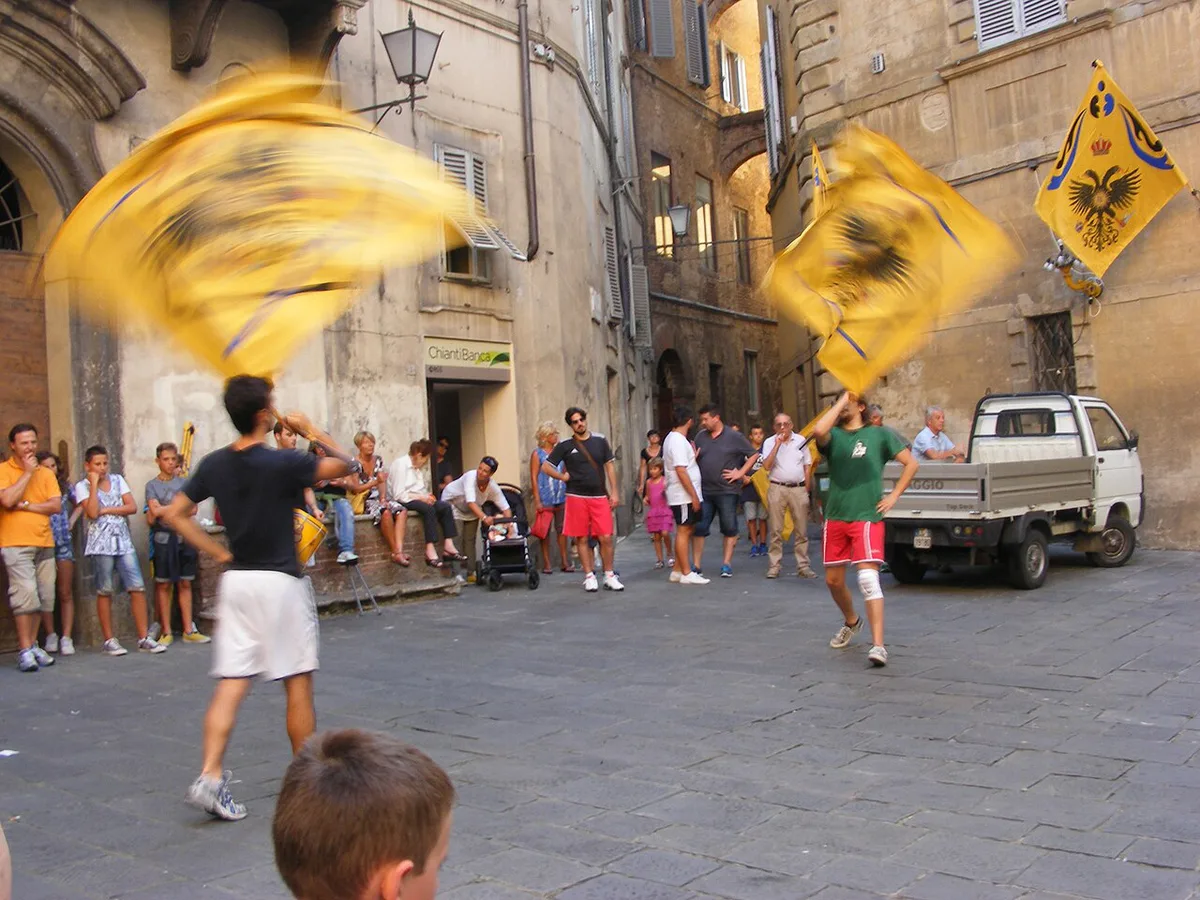
- Siena is divided into 17 historic Contrade, each with its own colors, patron saint, and animal or object emblem.
- Seven Contrade that sat out this same race last year run automatically, and three more join by lottery, for ten total.
- Capitani, the Contrada captains, choose from horses that passed trial races and a veterinary exam, and a lottery then assigns one horse to each racing Contrada.
- The Race Lasts About 90 Seconds
- Jockeys, known as fantini, ride bareback for three laps of Piazza del Campo on a dirt track laid over the stone paving.
- Riders fall regularly at the tightest bend, the San Martino curve. A horse can still win riderless, because only the horse has to cross the line first.
- Silence matters most during the mossa, the rope procedure that starts the race, which can take longer than the race itself.
- The Real Event Is a Four-Day Build-Up
- Day one is the Tratta, the public drawing that assigns each Contrada its horse for that Palio.
- Days two and three bring the Prove, morning and evening trial races open to the public and far less crowded than race day.
- Prova Generale, the final trial, runs the evening before the race, followed by open-air Contrada dinners that fill neighborhood streets after dark.
- Free Viewing Exists, but It Costs You Comfort
- The center of Piazza del Campo, known as the shell, has no admission charge.
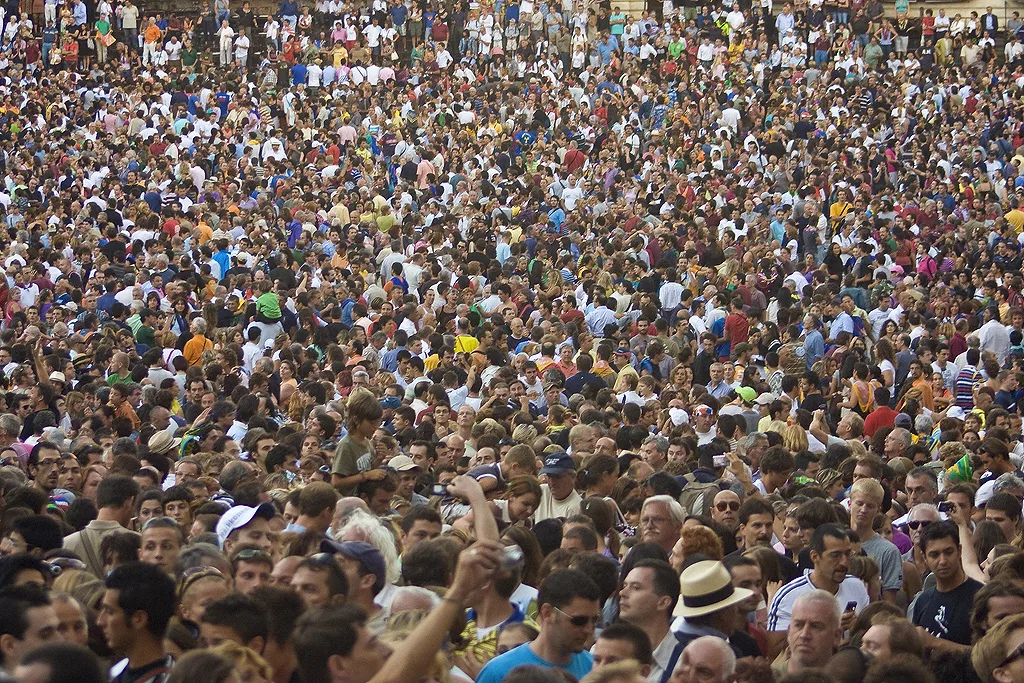
- Expect more than five hours of standing with no shade, no seating, and no toilets before the race starts. Once the gates close, there is no exit until after the race.
- Palchi, the grandstand seating along the piazza's edge, and balcony or window seats in the surrounding buildings cost considerably more. Both sell through private vendors rather than one official ticket office.
- The Drappellone and the Te Deum Close the Day
- The prize is not a cup but the drappellone, a silk banner hand-painted for that specific race.
- After the win, the victorious Contrada carries its horse and jockey to the Duomo di Siena for the Te Deum, a hymn of thanks sung inside the cathedral.
- Losing Contrade can treat the result as seriously as the winners do, especially when a historic rival takes the banner.
- Etiquette Rules First-Timers Miss
- Avoid wearing another Contrada's colors or scarf unless you understand the local rivalries. The wrong colors near the wrong crowd draw unwanted attention.
- Once you're inside the piazza's center before the race, there is no exit, so plan food, water, and restroom stops beforehand.
- Crowd silence is expected during the mossa. Talking or cheering during that pause is treated as a real breach of etiquette.
- Is It Worth It for a First-Timer?
- The 90-second race is short, but the four-day build-up around it is not, and it rewards visitors who arrive early.
- Visitors who want atmosphere without a multi-hour wait often prioritize the trial races and the Corteo Storico parade over race day itself.
- If a single dramatic moment matters more than crowd comfort, budget for a palco or balcony seat instead of the free shell.
How the Palio Began
Public games filled Piazza del Campo long before horses did. Medieval Siena staged pugna, a many-sided boxing brawl, along with jousting and, by the 16th century, bullfights. When the Grand Duke of Tuscany outlawed bullfighting in 1590, the Contrade turned to bufalate, races on buffalo-back, held in the piazza itself. Donkey races, called asinate, briefly replaced them before horse racing took over. The first modern race, run alla tonda around the piazza rather than across the whole city, took place in 1633. A single yearly race on 2 July continued for decades before the city added the August date in 1701. That second race was originally organized and funded by whichever Contrada had won in July, and only became a fixed, city-funded event after 1802. Some form of the August race is recorded as early as 1581, when 15-year-old jockey Virginia Tacci became the first woman to ride in the Palio, according to historical accounts.
Horse Selection and the Fantino's Role
Horses reach the Palio through months of vetting, not a simple entry list. Private owners, and sometimes jockeys themselves, offer horses from their stables for consideration. Each candidate runs trial races, including Palio-style races held elsewhere in Italy, and passes a veterinary examination. Capitani, the Contrada captains, then judge the horses roughly equal in quality before choosing ten, three days before the race. A lottery assigns one horse to each racing Contrada. Jockeys, or fantini, are typically professionals hired from outside Siena, since Sienese tradition holds that the horse represents the Contrada more than the rider who happens to be on it. A Contrada can still celebrate a win even when its jockey falls partway through the race, because only the horse has to cross the finish line first.
Horses can win the Palio even without their riders, since only the horse has to cross the finish line first. This emphasis on the animal extends to the pre-race ritual, where each competing Contrada brings its horse into a church or oratory for a brief blessing.
The 17 Contrade of Siena
Contrade date to medieval Siena, when city wards organized for defense and local governance. Governor Violante of Bavaria fixed the number at 17 in 1729. That same set of reforms capped the number of Contrade allowed to race at ten, a limit that followed a run of serious accidents in earlier races. Each Contrada carries its own colors, patron saint, and emblem. Its imagery and traditions fall under the Consorzio per la Tutela del Palio, which oversees commercial use outside the race itself. Siena is not the only Italian city where neighborhood identity plays out through a historic contest. Oristano's Sartiglia joust pits mounted riders against a suspended star each Carnival. Gubbio's Corsa dei Ceri sends three neighborhood teams racing wooden pillars through the streets every May.
Only 10 of Siena's 17 Contrade compete each race—a safety measure put in place when Governor Violante of Bavaria fixed the number at 17 in 1729 following a run of serious accidents in earlier races.
| Contrada | Symbol | Colors |
|---|---|---|
| Aquila (Eagle) | Double-headed eagle with imperial symbols | Yellow with black and blue bands |
| Chiocciola (Snail) | Snail | Yellow and red with blue bands |
| Onda (Wave) | Dolphin wearing a crown | White and blue |
| Pantera (Panther) | Rampant panther | Red and blue with white bands |
| Selva (Forest) | Rhinoceros beneath a tree hung with hunting tools | Green and orange-yellow with white bands |
| Tartuca (Tortoise) | Tortoise | Yellow and blue |
| Civetta (Owl) | Owl | Black and red with white bands |
| Leocorno (Unicorn) | Unicorn | White and orange-yellow with blue bands |
| Nicchio (Shell) | Sea shell | Blue with yellow and red bands |
| Torre (Tower) | Elephant carrying a tower | Dark red with white and blue bands |
| Valdimontone (Ram) | Rampant ram | White and yellow with red bands |
| Bruco (Caterpillar) | Caterpillar | Yellow and green with blue bands |
| Drago (Dragon) | Flying dragon | Red and green with yellow bands |
| Giraffa (Giraffe) | Giraffe | White and red |
| Istrice (Porcupine) | Porcupine | White, red, black, and blue bands |
| Lupa (She-Wolf) | Roman she-wolf suckling the twins | Black and white with orange-yellow bands |
| Oca (Goose) | Crowned goose | White and green with red bands |
Photographing the Corteo Storico
The Corteo Storico precedes the race, moving through the city to the sound of the Marcia del Palio, with participants representing each Contrada. This pageant offers longer, more predictable photo opportunities than the race itself, which lasts only about 90 seconds and moves fast around the piazza. Positioning near the parade route, or inside the piazza well before the procession starts, gives clearer sightlines than arriving right as the horses take the track. The parade itself moves at a walking pace, unlike the race, which makes it easier to frame a shot without chasing a fast-moving subject.
Free vs Paid Viewing: Where to Watch the Palio di Siena
Where you stand shapes the whole day, not just the final 90 seconds. The center of Piazza del Campo is free but physically demanding, while paid seating trades comfort for a higher cost and less flexibility.
| Viewing Spot | Cost | What to Expect |
|---|---|---|
| Piazza del Campo shell | Free | 5+ hours standing, no shade, no toilets; gates close before the race and stay shut until after it |
| Palco (grandstand) | Paid, sold by private vendors | Bench seating along the piazza's edge; no single official ticket office |
| Balcony or window | Paid, the highest tier | Private view from a historic building, often arranged directly with the property or a local agent |
- Where Prices Come From
- Neither the Comune di Siena nor the Contrade publish one central price list for palchi or balconies.
- Contact a ticket vendor or a Contrada directly in the weeks before the date you want, and compare at least two offers before paying.
- Balcony packages sometimes bundle catering and dedicated service, while palco seating is simpler bench seating without food included. The free shell remains the only guaranteed no-cost option.
Getting to Siena Without a Car
Both Palio dates draw enough visitors that trains, buses, and hotel rooms fill well before race week. The August date also falls during Italy's peak summer holiday season, which adds extra competition for trains and rooms beyond the Palio crowd itself. Regional trains link Florence and Siena regularly across the day, and coach services run the same route. Both fill up as the Palio nears, especially on departures timed for the afternoon race. Booking earlier in the day, or the night before, leaves more buffer than trying to arrive right as the piazza fills. Driving in is not realistic on Palio day. Vehicle access is restricted around the historic center, and there is effectively nowhere to park near the walls by the afternoon of the race.
Where to Stay and Eat Around the Palio
Booking inside Siena's walls puts Piazza del Campo a short walk from your door, but rooms sell out early and rates climb well above a normal week. Contrada celebrations can run loud into the night, especially along a winning district's home streets, so a room away from the main squares sleeps better. A town in the Val d'Orcia with a bus connection into Siena is a calmer, cheaper alternative once central rooms are gone, trading a short commute for a normal rate. Eating around race day takes planning too. Many restaurants inside the walls close early or reserve their tables for Contrada members hosting private street dinners. Book a table near Piazza del Campo well ahead, or plan to eat somewhere outside the historic center that evening. Streets and shops right around the piazza also close to normal traffic well before the race, so confirm opening hours for anything else you planned nearby.
Horse Safety and the Modern Palio
The Palio's safety record has drawn scrutiny for decades, particularly around falls and injuries on the piazza's tightest turns. In response, the Comune di Siena has added padding at the sharpest corners, including San Martino, and now requires veterinary screening before any horse is approved to race. Track composition has also changed over time as part of the same safety effort. Debate continues on both sides. Welfare advocates keep pressing for further changes, while city officials argue that modern precautions have reduced risk without abandoning a centuries-old tradition. Treat any specific injury statistics you encounter online with caution unless the Comune di Siena or the Consorzio per la Tutela del Palio publish them directly.
The Blessing of the Horse Before the Race
On race afternoon, each competing Contrada brings its horse into its own church or oratory for a brief blessing. The priest traditionally dismisses the horse with the hope that it will “go and return victorious.” This intimate ritual connects the race with Siena’s neighborhood identity and religious traditions.
Space inside the Contrada oratories is limited, and local members take priority. Visitors should arrive early, remain quiet, and follow instructions from Contrada officials. Avoid flash photography, touching the horse, or blocking the doorway. The animal may be unsettled by bells, crowds, and the confined interior.
After the blessing, the horse and its attendants join the movement toward Piazza del Campo. The Corteo Storico also progresses through central Siena before entering the square. Ask locally which streets remain accessible, because crowd controls and temporary closures change pedestrian routes. Seeing the blessing is never guaranteed, but respectful visitors may find it more personal than watching the parade from a packed piazza. Both races fall inside the busiest stretch of the Italian calendar — the summer guide covers what else is running. Siena's other summer institution is quieter and easier to attend — the Chigiana International Festival runs classical concerts through the same July-to-September window.
For trip-planning details, see Palio di Siena official source and Il Palio di Siena city portal.
Continue planning with Carnival of Ivrea: Battle of the Oranges Travel Guide.
Continue planning with Viareggio Carnival.
Continue planning with Luminara di Pisa: A Complete Guide to Pisa.
Frequently Asked Questions
Is the Palio di Siena held every year?
Yes, twice. Fixed dates put the Palio di Provenzano on 2 July and the Palio dell'Assunta on 16 August, and the Comune di Siena's official Palio portal confirms both every year. A rare third race is added only for major anniversaries and is never confirmed until the city announces one.
How much does it cost to watch the Palio di Siena?
Standing in the center of Piazza del Campo is free. Palchi and balcony seats are sold privately and cost significantly more, so compare offers from a vendor or a Contrada close to the date rather than expecting one official price.
How long does the Palio di Siena race actually last?
About 90 seconds for three laps of Piazza del Campo. The mossa, the rope start that lines up the ten horses, can take considerably longer than the race itself.
Where should you stay for the Palio di Siena?
Book inside Siena's walls early if budget allows and you want to walk to the piazza. A Val d'Orcia town with a bus link into Siena is a calmer, cheaper alternative once central rooms sell out.
Do you need a ticket to attend the Palio di Siena?
Not for the free center of the piazza. Palchi and balcony seats do require a paid ticket, bought through a private vendor or a Contrada contact rather than a central box office.
What is the drappellone?
The hand-painted silk banner awarded to the winning Contrada. A new one is produced for every race, and the winning district carries it home through the streets in celebration.
What is the Corteo Storico?
The historic pageant that precedes the race, with participants representing each Contrada moving through the city to the sound of the Marcia del Palio before the horses take the track.
Italy's Historic Contests
Horse races, jousts and uphill relays that predate the country itself.