

Last updated July 2026. Ferragosto in Italy falls on 15 August every year, a fixed national holiday that empties cities toward the coast while family-run shops shutter behind chiuso per ferie signs. This guide breaks down what actually closes, what stays open, and how to plan a trip around one of Italy's most disruptive travel weeks. Rome shows the effect most starkly — see the Rome festival calendar for how mid-August compares with the rest of the city's year.
What Is Ferragosto in Italy? The Fast Answer
Ferragosto is Italy's national public holiday on 15 August, marking the peak of summer. It carries two identities: a secular rest day descended from the ancient Feriae Augusti, and the Catholic feast of the Assumption of Mary. Locals greet each other with Buon Ferragosto, and because the date is fixed by law, it never moves. That makes it different from movable festivals such as Italian Carnival celebrations, which shift with the church calendar every year. The name also works as shorthand for the wider mid-August break, which can stretch into a four-day ponte weekend or run most of the month.
From Emperor Augustus to Mussolini: A Short History of Ferragosto
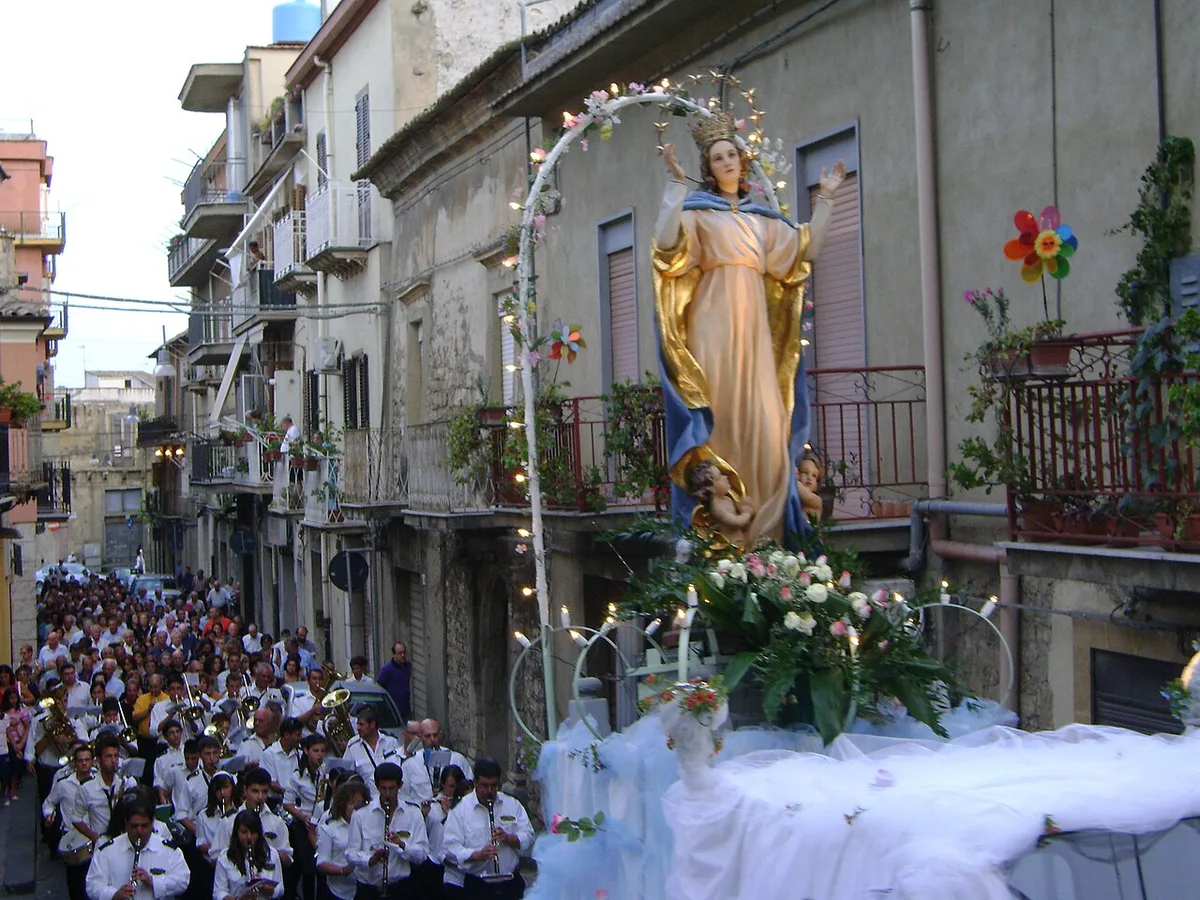
Emperor Augustus established the Feriae Augusti in 18 BC, giving agricultural workers a rest after the summer harvest. Horse races were held across the Roman Empire, and oxen, donkeys, and mules were freed from work and decorated with flowers for the day. Centuries later, the Catholic Church moved the date from 1 August to 15 August, aligning the holiday with the Assumption of Mary. That religious layer is why Assumption Day processions still fill town squares across the country. Several other countries with strong Catholic traditions, including Austria, France, Greece, and Poland, mark the same Assumption feast as a public holiday. Benito Mussolini's Fascist government gave the holiday its modern shape in the 1920s and 1930s. Fascist organizers arranged discounted People's Trains of Ferragosto, valid on 13, 14, and 15 August, to send working-class families to cities, the coast, or the mountains. Historical accounts describe two ticket options, listed below. Food and lodging were not included, which is why packed lunches and barbecues, known as scampagnata, remain tied to Ferragosto today. That three-day travel window from the 1920s is also the direct ancestor of the modern three-day rule covered further down this guide.
- One-Day Trip: travel within roughly 50 to 100 km of home, valid for a single day.
- Three-Day Trip: travel within roughly 100 to 200 km, valid 13 through 15 August.
What Actually Closes in Italy on 15 August
Public offices, banks, and most small family-run shops close for Ferragosto. Until 2010, about 90 percent of Italian companies, shops, and industries shut down entirely for the holiday, according to historical accounts. Today, most businesses close for roughly one to two weeks around the 15th instead, not the whole month. Major tourist sites generally stay open, and large supermarket chains in cities keep their regular hours. One notable exception: the Vatican Museums typically close on 15 August itself, since it is a religious holiday. Cities can feel like ghost towns as residents leave for the coast, but that quiet does not strand tourists. Hotels, major attractions, and seaside businesses keep running through the holiday.
- Closed: public offices, banks, and many family-run restaurants and neighborhood shops.
- Usually open: the Colosseum, large city supermarket chains, hotels, and seaside businesses.
- Typically closed on 15 August: the Vatican Museums, since it's a religious holiday.
The Ghost Town Reality: What Still Works in Quiet Cities
Rome and Florence do feel emptied out on Ferragosto, since many residents leave for the coast or mountains. That quiet is real, but it does not mean the cities stop functioning for visitors. Hotels keep normal service, headline museums like the Colosseum and the Uffizi Gallery generally stay open, and public transit keeps running on its regular schedule. What closes is the layer aimed at locals: neighborhood trattorias, corner cafés, and small independent shops that need a break as much as their owners do. The trade-off works in a visitor's favor. Expect shorter lines at major sights, easier tables at restaurants that do stay open, and calmer streets for walking between them.
Where to Celebrate Ferragosto: Rome, Siena, Naples & the Countryside
Rome hosts the Gran Ballo di Ferragosto, a city-wide dance party that fills streets and squares. In the capital, Assumption Day Mass draws crowds to landmark basilicas, and the historic center empties out enough for an easy wander. Food stalls and live music continue along the river at the Lungo il Tevere festival, which runs through the holiday. Siena holds the Palio dell'Assunta, a historic horse race in Piazza del Campo, on 16 August. Naples and other coastal towns stage fireworks displays over the water on Ferragosto night. Away from the cities, rural tradition centers on the scampagnata, a packed lunch or barbecue shared outdoors with family and friends. In small towns, look for sagre, local food festivals, alongside open-air dances that run late into the night. Ferragosto sits inside a fuller summer festival calendar, so check nearby dates before locking in travel.
The scampagnata tradition originated because food was not included with Mussolini's People's Trains valid on 13, 14, and 15 August. The practice persists as a central element of rural Ferragosto celebrations today.
Quieter Alternatives to the Busiest Ferragosto Beaches and Trails
Famous coastal names get crowded first. If Ferragosto week needs a quieter beach, consider Maremma in Tuscany, Salento in Puglia, Bonassola or Framura in Liguria, Sampieri or Punta Secca in Sicily, or Tropea and Capo Vaticano in Calabria. For cooler air without the coast's density, Abruzzo National Park and the volcanic trails on Mount Etna offer hiking away from the Dolomites' peak crowds. Lake Orta and Lake Iseo add a boating option that's calmer than the coastline during the same week.
- Quieter beaches: Maremma (Tuscany), Salento (Puglia), Bonassola or Framura (Liguria), Sampieri or Punta Secca (Sicily), Tropea and Capo Vaticano (Calabria).
- Quieter outdoor options: Abruzzo National Park, Mount Etna's volcanic trails, Lake Orta, Lake Iseo.
Cities, Coast, or Mountains: A Ferragosto Decision Matrix
Cities, coast, and mountains deliver different Ferragosto experiences. In our editorial assessment, cities trade a few closed restaurants for quiet piazzas and thinner crowds. Coast destinations trade convenience for maximum crowds and peak pricing. Mountains split the difference, offering cooler temperatures and busy trails without the coast's ombrellone shortages. Rome and Florence hotels can run cheaper in mid-August than in June or September, since business travel and many local diners disappear for the holiday. Coastal towns hit their annual price ceiling instead. Stabilimenti, Italy's beach clubs, may raise rates or require a seasonal membership for the Settimana di Ferragosto, the Ferragosto week.
| Where | Crowd levels | Price | Vibe |
|---|---|---|---|
| Rome & Florence (cities) | Thinner local crowds, though tourists remain | Hotel rates can dip below June or September levels | Quiet piazzas, some shuttered neighborhood restaurants |
| Amalfi Coast & Sicily (coast) | Maximum crowds, ombrellone shortages at popular beach clubs | Peak-season rates; some stabilimenti add a seasonal fee for Ferragosto week | High energy, book beach spots ahead |
| Dolomites & Abruzzo (mountains) | Busy trails but lighter than the coast | Generally below coastal peak pricing | Cooler air, traditional scampagnata picnics |
Getting Around: Trains, Highways & the Bollino Nero
High-speed trains on Trenitalia and Italo fill up fast around 13 to 16 August, so book seats as early as the schedule allows. Roughly half of Italians head to the coast during August, according to travel guides, which is part of why both trains and highways peak hardest across this same window. Italy's road authorities flag the period with bollino nero, or black-sticker, warnings, the country's standard system for marking its heaviest highway traffic days. Avoid driving on 14, 15, and 16 August if the itinerary allows flexibility. A booked private transfer or public transit holds up better than self-driving through the peak. Since the 15th is a fixed date, some years position it back-to-back with a weekend, while a Tuesday or Thursday turns it into a four-day ponte instead. Either way, expect the 13th through the 16th to run at full capacity.
Survival Tips for International Travelers
A few adjustments keep a Ferragosto trip on schedule instead of stuck outside a shuttered restaurant.
The three-day window of 14, 15, or 16 August traces back to Mussolini's 1920s and 1930s People's Trains. Those trains operated on 13, 14, and 15 August, establishing the same congestion pattern that persists today. The shutdown around it shapes the whole month; how summer runs in Italy covers how to plan around it.
- Reserve dinner tables two to four weeks ahead, especially outside major cities.
- Apply the three-day rule: avoid switching hotels or cities on 14, 15, or 16 August.
- Call ahead to confirm hours instead of trusting a map app's live status.
- Pack a backup picnic for smaller towns, since local kitchens may be the ones closed.
- Double-check timetables the day before travel, since regional transit sometimes runs a reduced holiday schedule on 15 August itself.
For trip-planning details, see Ferragosto official source and Italian National Tourism Agency.
Explore guides in other cities
Frequently Asked Questions
What does Ferragosto mean in Italy?
Ferragosto refers to Italy's national public holiday on 15 August, and by extension the whole mid-August vacation period. The word comes from the Latin Feriae Augusti, the rest days Emperor Augustus introduced in 18 BC. It also marks the Catholic feast of the Assumption of Mary, so the date blends a secular and a religious tradition.
Is everything closed in Italy on Ferragosto?
No. Public offices, banks, and many family-run shops close, but major attractions and large supermarket chains generally stay open. Hotels and seaside businesses keep running through the holiday. Confirm hours directly with any specific restaurant or museum before visiting, since coverage varies by town.
Should travelers visit Italy during Ferragosto?
It depends on the trip. Cities like Rome and Florence feel quieter and can even offer cheaper hotel rates than in June or September. Coastal spots deliver the opposite: maximum crowds, peak pricing, and possible ombrellone shortages at popular beach clubs, so weigh which trade-off fits the itinerary.
What is the Ferragosto three-day rule?
It's a planning shortcut for avoiding Italy's heaviest travel congestion. Skip switching cities, hotels, or long highway drives on 14, 15, and 16 August. Trains and roads see their heaviest demand across exactly those three days, a pattern that traces back to the original 1920s People's Trains schedule.
When is Ferragosto, and does the date ever change?
Ferragosto is fixed on 15 August every year, unlike movable festivals such as Carnival. Because the date is set by law rather than announced annually, it stays confirmed indefinitely into the future rather than shifting with a religious or lunar calendar.
What is a ponte di Ferragosto?
Ponte means bridge in Italian, and a ponte di Ferragosto is an extended weekend built around 15 August. Depending on which weekday the 15th falls on, some years stretch the holiday into a four-day break instead of a single day off. The term is also used loosely for the broader mid-August vacation period.
