Last updated August 2026. Carnival in Italy is not one festival but a season of regional celebrations that opens in January and closes on Shrove Tuesday, the day before Ash Wednesday. It picks up almost exactly where Italy's Christmas markets leave off at Epiphany, so a late-January trip can catch the tail of one season and the opening of the other. Venice draws masked crowds to St Mark's Square, Ivrea stages a citywide orange battle, and smaller towns from Puglia to Sardinia run their own parades and folklore — Oristano's Sartiglia is the most spectacular of them, a masked equestrian tournament rather than a parade. This guide compares the major celebrations by cost, crowd size, and family suitability, and it sits inside the wider Italy festival calendar for planning trips across the year.
How Carnival in Italy Works: Dates, Season, and the Movable Shrove Tuesday Rule
Most Italian towns open their Carnevale season two to three weeks before Ash Wednesday and run parades across several weekends. Giovedì Grasso, or Fat Thursday, and Martedì Grasso, or Fat Tuesday, are the two peak days, with the largest parades, masked balls, and street food. A phrase you will hear across the country sums up the mood: a Carnevale ogni scherzo vale, meaning almost any prank or costume is fair game before Lent begins.
The whole season is tied to Easter rather than a fixed calendar date, because it always ends on Shrove Tuesday, 47 days before Easter Sunday. That link is why Carnival lands in early February in some years and early March in others. The most recent edition closed on 17 February 2026, based on that year's Easter date. Applying the same 47-day rule, the next Shrove Tuesday is expected around 9 February 2027; the dates guide works the rule forward to 2036. That date is computed from the recurrence rule, not confirmed by any organiser. Host cities typically announce full festival-week schedules the preceding autumn, so confirm exact dates closer to the season.
Not every town follows the same calendar. Milan and other towns in the Archdiocese of Milan observe the Ambrosian rite, which extends Carnival four days past Shrove Tuesday and closes it the following Saturday instead. That late finish is genuinely useful: Carnevale Ambrosiano lets you catch Venice or Viareggio through Shrove Tuesday and still reach Milan's Sabato Grasso on the same trip.
The Big Three: Venice, Viareggio, and Ivrea Compared
Three cities dominate any list of Italy's best Carnival celebrations, and each rewards a different kind of traveler. Venice suits romance and people-watching in costume. Viareggio suits families who want parade spectacle without Venice's density. Ivrea suits travelers who want to get physically involved instead of just watching. The table below compares them on the details that shape a trip.
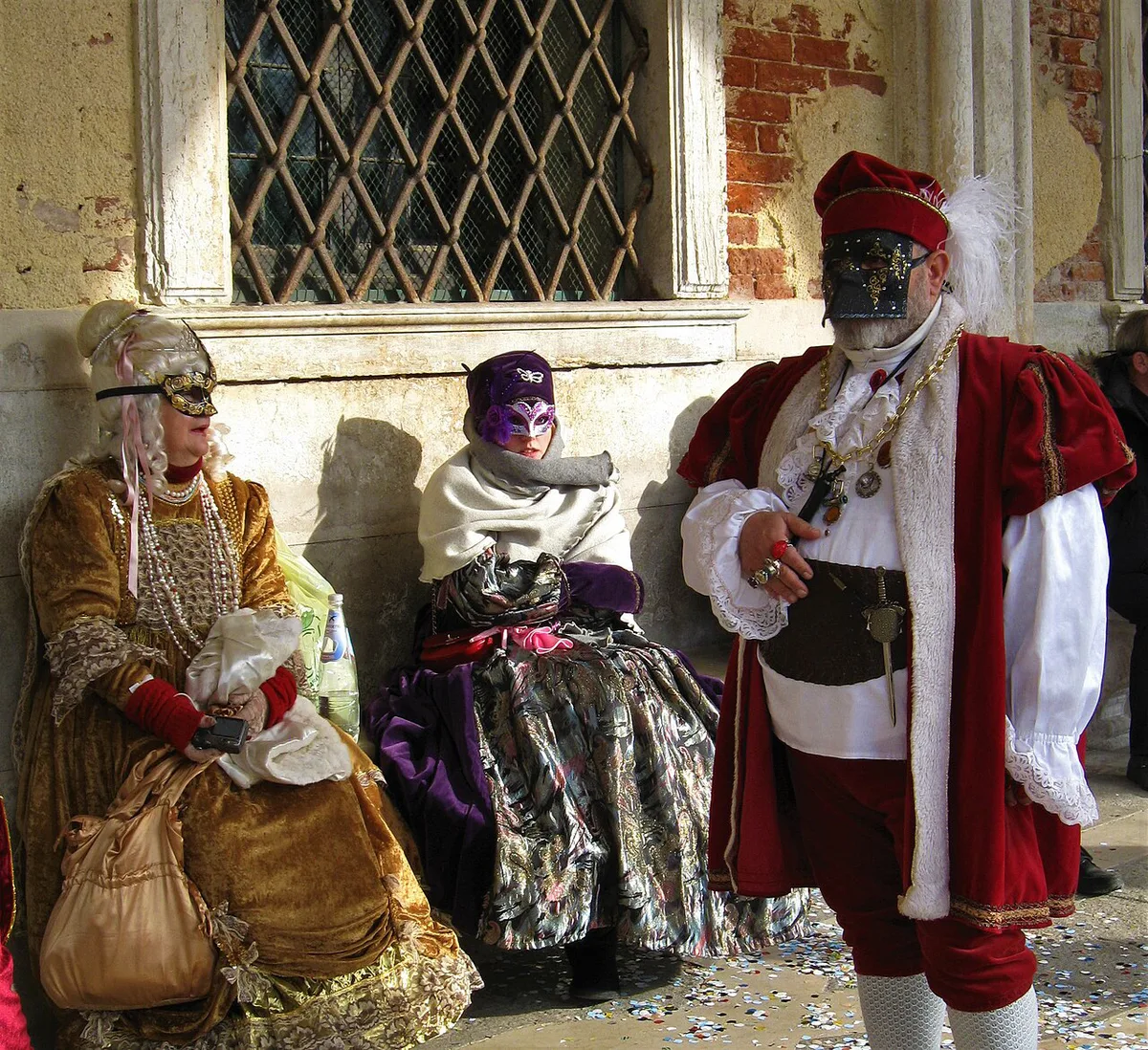
Venice's Carnival traces back to a Senate proclamation first documented in 1296, and the masked tradition survived until Austrian rule banned it in 1797. It returned in 1979 and has run every year since. The Flight of the Angel, held on the second Sunday, sends the previous year's Festa delle Marie winner down a wire from the bell tower to the Doge's Palace. Venice's most recent edition ran 31 January to 17 February 2026, and its 2025 theme honored Casanova's 300th birth anniversary; the city sets a new theme most years and announces it the preceding autumn. Roughly 3 million people attend against a resident population of about 50,000. Book central accommodation well ahead, since St Mark's Square becomes the most crowded point in the city.
Venice's mask-making guild, the mascherari, operated under its own statute dated 1436 and worked separately from painters and sign-makers. Traditional masks are still made from leather, porcelain, or glass, finished with gesso, gold leaf, feathers, and gems. Cheaper imported masks are widely sold alongside them, so budget accordingly if you want a handmade piece.
Viareggio's Carnival began in 1873 and now fields papier-mâché floats built by roughly 23 to 25 artisan workshops in the town's Citadel district, involving more than 1,000 people each season. The floats can reach about 66 feet high and 39 feet wide, roughly 20 by 12 meters, and the parade runs on the seafront promenade across four Sundays plus the closing Fat Tuesday, ending with fireworks. Burlamacco, the official mask since 1931 and a Commedia dell'Arte character, is the event's symbol. Viareggio is a straightforward day trip from Florence, a lower-commitment alternative to a multi-night Venice stay.
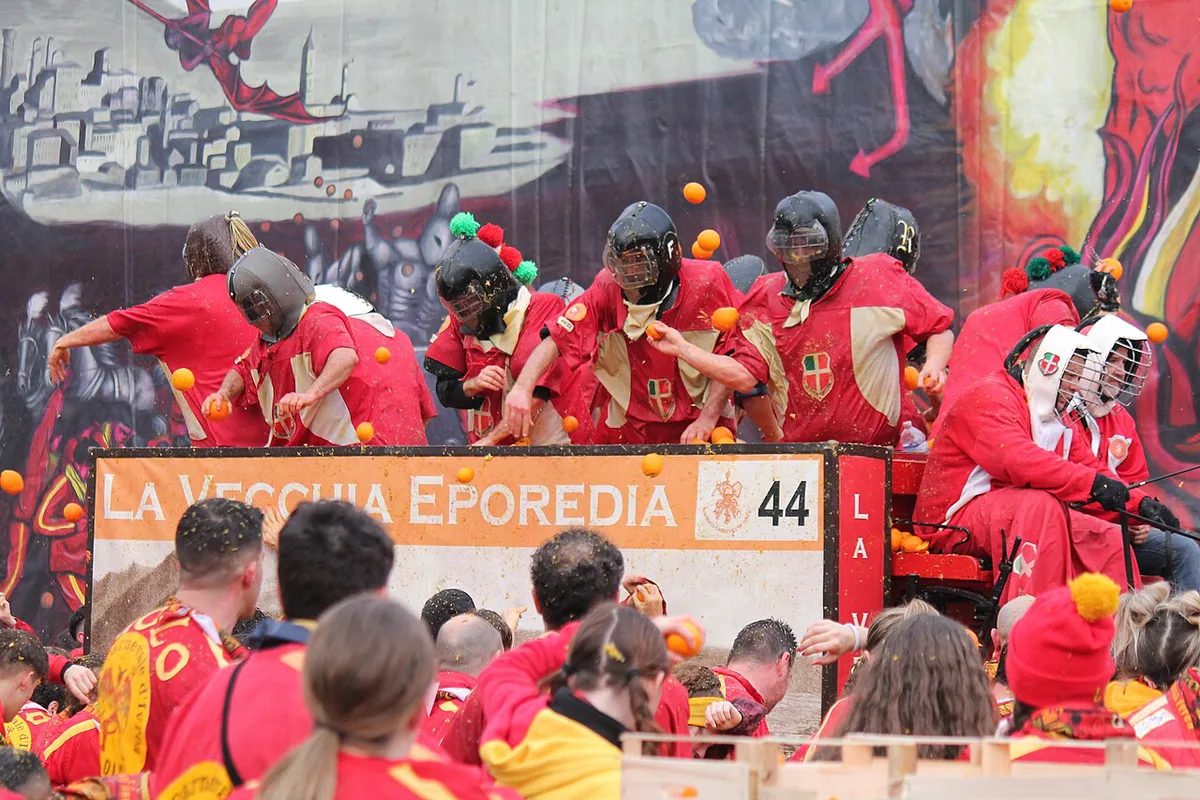
Ivrea, a small city near Turin in Piedmont, stages Italy's most physical Carnival: the Battle of the Oranges, a reenactment of a medieval uprising against a feudal tyrant. It is staged over the three days around Mardi Gras. Two sides face off: aranceri a piedi, foot teams representing the townspeople, and tiratori di arance, cart teams representing the tyrant's guard. A related ceremony, the Preda in Dora, has been documented since 1608 and bars any new building on the ruined tyrant's castle site. The one rule every visitor needs: wear the berretto frigio, a red cap sold around town. It marks you as a spectator and keeps the orange teams from targeting you. Skip good clothing entirely; citrus juice stains do not come out. On the morning of the battle, parishes hand out a free bean stew called the fagiolata, a charity tradition dating to medieval confraternities. Ash Wednesday itself is marked with polenta e merluzzo, polenta with cod.
| City & Region | Signature Moment | Best For | Trade-off |
|---|---|---|---|
| Venice, Veneto | Flight of the Angel over St Mark's Square | Romance, masks, and luxury travel | About 3 million visitors and premium accommodation prices |
| Viareggio, Tuscany | Papier-mâché floats up to about 66 feet high and 39 feet wide on the seafront | Families who want spectacle without Venice's crowds | Ticketed parade viewing; parking is tight on parade Sundays |
| Ivrea, Piedmont | Battle of the Oranges between foot teams and cart teams | Active participants who want to get involved, not just watch | Wear old clothes; battle zones are not suited to small children |
Regional Carnivals Worth the Detour: Puglia to Sardinia
Beyond the Big Three, regional Carnevale traditions range from centuries-old folk ritual to modern float engineering. Each has its own character, and travel time varies sharply, so weigh access against how deep into the tradition you want to go. The five below cover the extremes, from Sardinia's masked ritual processions to Emilia-Romagna's Rio-style float parade.
While most towns open Carnival two to three weeks before Ash Wednesday, Putignano extends the season dramatically, opening on 26 December even though themed parades don't start until 17 January.
- Putignano, Puglia: the season opens 26 December and continues with a themed parade every Thursday, starting 17 January on the feast of Sant'Antonio Abate, through Martedì Grasso. According to local tradition, the celebration traces to 1394, when pilgrims arriving with relics dusted their faces with flour. Themes run from Monsignori and Priests to Widows and Mad People, ending with the Thursday of the Cuckolded and its horn-cutting ritual. The mascot Farinella wears a green-and-white three-pointed hat, and the local dish of the same name is made from toasted barley and chickpeas.
- Acireale, Sicily: papier-mâché floats and flower-covered floats parade through the town's Baroque streets, a tradition dating to the 16th century. An early version of the festival involved throwing oranges and lemons; once that was banned, it was replaced by abbatazzi, folk poets who improvise satirical verse in the crowd.
- Mamoiada, Sardinia: this Nuoro-province Carnival skips floats entirely for two folk masks. Mamuthones wear sheepskins, carved wooden masks, and roughly 66 pounds of bells, moving in a slow, weighted procession. Issohadores wear white masks and red waistcoats and use ropes to symbolically catch spectators as the Mamuthones pass.
- Fano, Le Marche: first documented in 1347 and billed as one of Italy's oldest carnivals, Fano runs a getto tradition where floats up to about 52 feet tall shower crowds with candy and chocolate over the three Sundays before Mardi Gras, backed by musica arambita, a local dialect brass-and-improvised-instrument band. The mask Vulon leads the parade.
- Cento, Emilia-Romagna: twinned with Rio de Janeiro's Carnival, Cento runs a gettito, where costumed characters throw gadgets and inflatable toys from the floats. The mascot Tasi is symbolically burned in Piazza Guercino, and the program includes performances by Brazilian dance troupes alongside the float parade.
What to Eat During Carnevale
Carnevale food follows the same logic as the season itself: rich, fried, and meant to use up indulgent ingredients before Lent's restrictions begin. A few sweets turn up at nearly every celebration under slightly different regional names, and a couple of savory dishes are specific to one town's traditions.
- Frittelle (or fritole): fried rice or dough fritters, sometimes filled with raisins, custard, chocolate, or apple, sold at bakeries across the country.
- Castagnole: small fried dough balls dusted with powdered sugar.
- Cenci, chiacchiere, or frappe: thin strips of fried dough dusted with powdered sugar, the same sweet under a different regional name.
- Fagiolata: a free bean stew distributed by Ivrea's parishes on the morning of the Battle of the Oranges, a charity tradition from medieval confraternities.
- Polenta e merluzzo: polenta with cod, traditionally eaten in Ivrea on Ash Wednesday once the parades stop.
- Farinella: a Putignano specialty made from toasted barley and chickpeas, named for the carnival's mascot character.
Planning Your Trip: Costs, Tickets, and Getting There
Ticketing varies by town, so check this before you build a budget. Confirm current prices on each event's official site before travel, since neither city publishes a fixed multi-year rate.
The 6 months ahead booking window for central Venice accommodation reflects the tension between 3 million annual visitors and the city's 50,000 resident population living without car access.
Access differs just as much as cost. Viareggio is a straightforward day trip from Florence, so it suits a shorter visit. Mamoiada sits deep in Sardinia's Nuoro province. Reaching it means a flight or ferry to the island, plus further driving inland, so treat it as a dedicated trip rather than an add-on. Parking is tight in both Viareggio and Venice on peak weekends, so factor in extra time or plan to arrive by train. Venice's historic core has no car access and narrow calli, so build in extra walking time around St Mark's Square during the Flight of the Angel.
Carnevale is not Italy's only major seasonal closure to plan around. Italy's other big shutdown period is covered separately in the Ferragosto travel guide, useful if your itinerary also touches mid-August.
- Venice: free public celebration; only private masquerade balls, such as the Doge's Ball, require tickets.
- Viareggio: paid admission to view parades; many surrounding festivals, concerts, and masked balls are free.
- Cento: paid admission required for the main parade.
Mistakes to Avoid at Carnevale
A handful of planning mistakes come up again and again across Carnevale destinations, and each one is easy to avoid once you know about it.
- Booking Venice accommodation late: rooms near St Mark's Square sell out fast, so reserve at least 6 months ahead of your travel dates.
- Wearing good clothes to Ivrea: citrus juice from the Battle of the Oranges stains permanently, so wear old clothes and the mandatory red cap.
- Expecting festivities on Ash Wednesday: the mood shifts to solemnity the moment Lent begins, so plan celebrations for the days before, not after.
- Assuming next year's dates match this year's: because Carnevale is tied to Easter, exact dates shift annually, so reconfirm before locking in travel.
How to Navigate Venice Carnival Crowds
Venice Carnival concentrates its heaviest crowds around St Mark’s Square, the Rialto Bridge, and the main routes connecting them. Allow extra walking time because narrow calli and small bridges quickly become bottlenecks. Large costumes, wheeled luggage, and strollers can make these routes especially slow.
Arrive at St Mark’s Square early for major ceremonies, then leave by a different route instead of retracing the busiest path. From Santa Lucia railway station, walking through Cannaregio usually feels less compressed than following the most direct signs toward Rialto. Vaporetto services remain useful, but central stops can develop long queues before scheduled events.
For easier photography and costume viewing, explore quieter squares in Castello, Cannaregio, or Dorsoduro between headline events. Keep your accommodation address available offline because mobile coverage can become unreliable in dense crowds. Venice’s historic center has no road transport, so every detour adds walking. Comfortable waterproof shoes are more practical than formal footwear on damp paving stones and crowded bridges. Carnival is the last act of the Italian winter; the Italian winter season sets out the season it closes.
For trip-planning details, see Carnival in Italy official source.
Explore carnival in other cities
Frequently Asked Questions
When does Carnival happen in Italy?
Carnevale season opens two to three weeks before Ash Wednesday and always ends on Shrove Tuesday, 47 days before Easter Sunday. The most recent Shrove Tuesday fell on 17 February 2026. Using the same recurrence rule, the next one is expected around 9 February 2027, though host cities confirm exact festival-week dates the preceding autumn.
Which Italian Carnival is best for families?
Fano and Viareggio both suit families. Its getto parades shower crowds with candy and chocolate rather than confetti, while Viareggio's seafront floats deliver spectacle without Ivrea's orange-throwing intensity. Ivrea's battle zones are explicitly not recommended for small children.
What is the Battle of the Oranges, and do you have to join in?
It is Ivrea's re-enactment of a medieval uprising, fought with oranges between foot teams and cart teams over three days around Mardi Gras. You do not have to participate. Wearing the red berretto frigio marks you as a spectator, so the orange teams leave you alone.
Is Venice Carnival free to attend?
Walking the public celebration, including St Mark's Square and the calli, is free. Paid tickets only apply to private events, such as masquerade balls inside venues like the Doge's Palace.
What food should you try during Carnevale?
Look for frittelle, fried dough fritters sometimes filled with cream or chocolate, and cenci or chiacchiere, thin fried strips dusted with powdered sugar. In Ivrea, try the free fagiolata bean stew handed out on the morning of the orange battle.
Why do some Italian towns celebrate Carnival on different dates?
Most of Italy follows the Roman rite, where Carnival ends on Shrove Tuesday. Milan and other towns in the Ambrosian rite, named for the Archdiocese of Milan, extend the season and close it the following Saturday instead.