Last updated August 2026. The carnival of Ivrea turns this Piedmont town near Turin into the site of the Battle of the Oranges, a reenactment of a medieval revolt widely described as Italy's largest food fight and the most physical of Italy's carnivals, closing on the same Easter-derived Shrove Tuesday as every other Italian carnival. This guide covers the team rules, the red Phrygian cap that keeps spectators safe, ticket costs, and how to reach Ivrea for the next edition.
What Is the Carnival of Ivrea? The Battle of the Oranges Explained
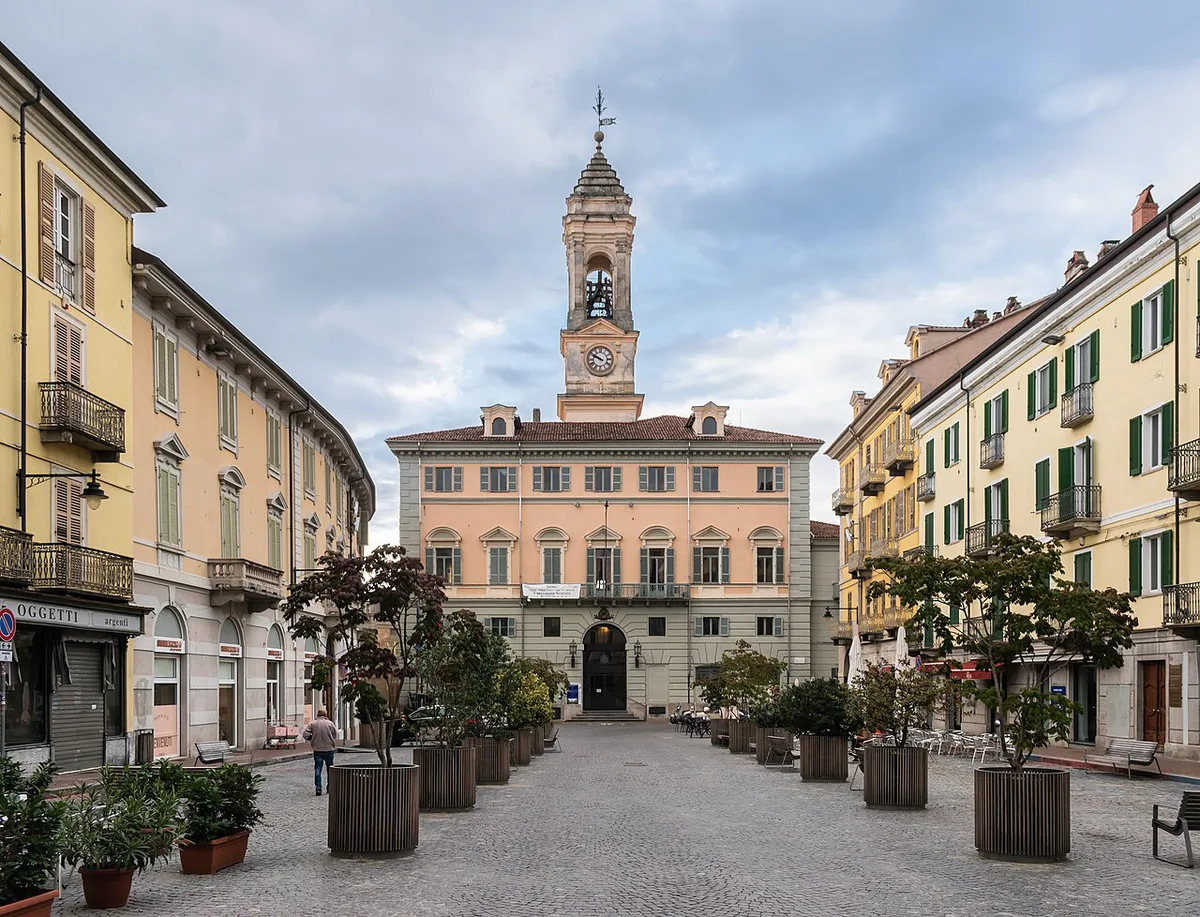
Ivrea sits in Piedmont, about a 40-minute drive from Turin, not Venice, even though several Italian carnivals run during the same February weeks. The event is commonly described as Italy's largest food fight, built around teams of aranceri, or orange handlers, who battle for three days each carnival season. Foot teams representing the townspeople face carts of throwers representing a medieval tyrant's guards, and both sides pelt each other with oranges instead of the beans and apples used in earlier centuries. Locals call the festival the Storico Carnevale di Ivrea, and the Fondazione dello Storico Carnevale di Ivrea runs the official program and ticketing. The town also carries UNESCO World Heritage recognition for its 20th-century Olivetti industrial district, according to Visititaly.eu, giving the area a reason to visit beyond carnival week. Wartime cancellations (1915-18, 1940-45) and a 2021 pandemic pause are the only breaks in the tradition; the battle returned in 2023.
The Legend of the Mugnaia: Violetta and the Tyrant
According to Wikipedia and the festival's official telling, a medieval tyrant in Ivrea claimed droit du seigneur, the right to spend a bride's wedding night with her. When he tried to force himself on a miller's daughter named Violetta, she beheaded him instead and showed the head to the crowd from the castle balcony. Furious citizens then stormed and burned the tyrant's castle, and Ivrea has replayed that uprising every carnival since. Each year, organizers select a young woman to play Violetta, the Mugnaia, and keep her identity secret until she appears on the town hall balcony on Carnival Saturday, per Visititaly.eu. A Napoleonic-era authority figure known as the General leads the historical parade on horseback with staff officers; the role dates to 1808, when the city's district festivals were unified under French rule. Ten children called the Abbà, two chosen from each district, ride alongside in period costume carrying small swords tipped with an orange, a symbol of the tyrant's severed head.
Battle of the Oranges Teams: On Foot vs. On the Carts
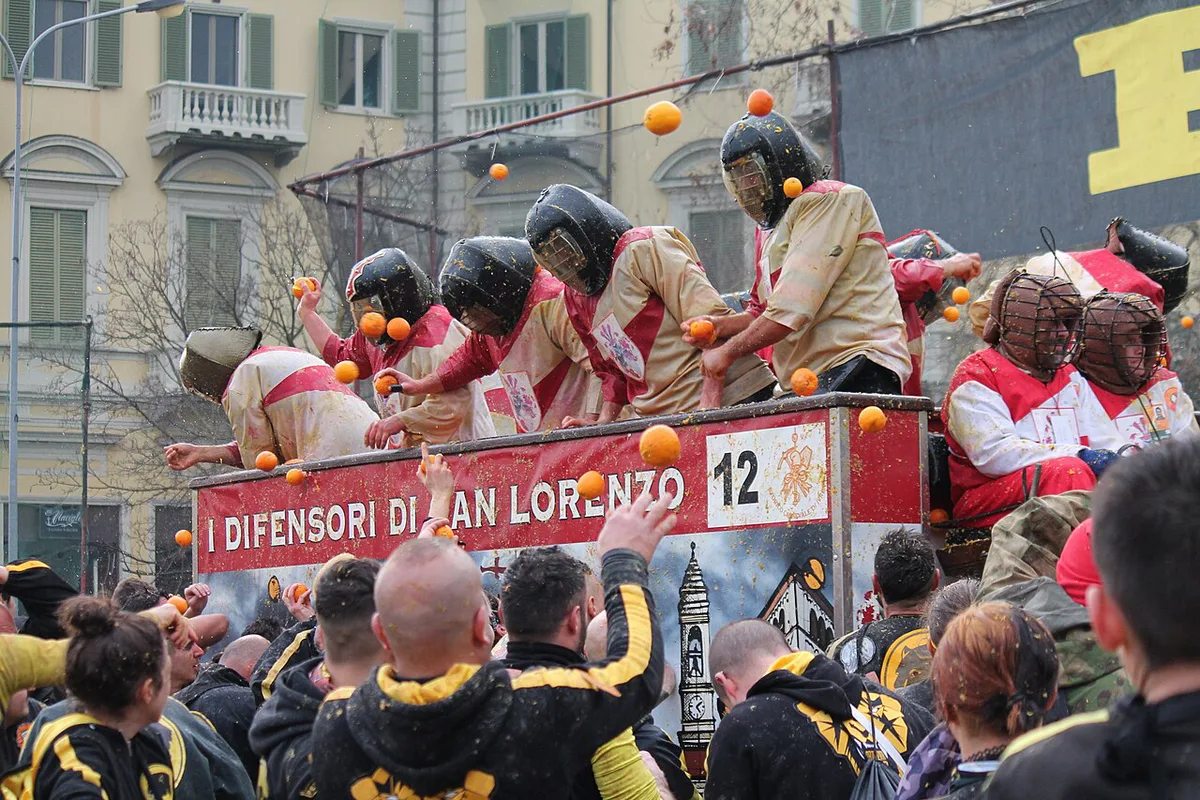
Nine historical teams throw oranges on foot, each with a fixed piazza and jersey color, facing roughly forty horse-drawn carts of throwers protected by leather helmets, according to the Fondazione's official site. Cart throwers work in pairs of two horses or quadrilles of four, rotating into each team's square for a few minutes before moving on. The Tuchini del Borghetto are the only team that throws from the right bank of the Dora Baltea, the river that splits Ivrea's historic center.
| Team | Colors | Home Square | Founded |
|---|---|---|---|
| Asso di Picche | Red and blue jersey, black neck scarf | Piazza di Città | 1947 |
| Aranceri della Morte | Black jersey, red pants | Piazza di Città | 1954 |
| Tuchini del Borghetto | Green jersey, red pants | Right bank, Dora Baltea | 1964 |
| Scacchi | Black-and-white check jersey | Piazza Ottinetti | 1964 |
| Pantera Nera | Black jersey, panther patch | Piazza del Rondolino | 1965 |
| Scorpioni d'Arduino | Yellow jersey, green pants | Piazza Ottinetti | 1966 |
| Diavoli | Red and yellow jersey | Piazza del Rondolino | 1973 |
| Mercenari | Maroon jersey, yellow pants | Piazza del Rondolino | 1974 |
| Credendari | Blue jersey, yellow pants | Piazza Freguglia | 1985 |
Why Oranges? The Symbolism and Scale of the Ammunition
Early Ivrea carnivals saw crowds throw beans, then apples, from balconies at passersby. Oranges took over in the 19th century, standing in for the stones once hurled at the tyrant's castle walls; some tellings also read them as a symbol of the tyrant's removed testicles. Oranges do not grow in the foothills of the Alps, so every crate ships in from Sicily and southern Italy's winter surplus. Widely cited figures put the 1994 edition alone at an estimated 584,000 pounds, or 265,000 kilograms, of oranges, a scale that makes slippery cobblestones as much a part of the day as the throwing.
The 1994 edition required 265,000 kilograms of oranges shipped from Sicily to maintain the medieval legend, a feat of logistics sustained despite wartime cancellations (1915-18, 1940-45) and a 2021 pandemic pause—proving the tradition's historical resilience.
Carnival Food and Music Traditions
Sunday morning opens with a fagiolata, a communal bean feast, before the historical parade and first Battle of the Oranges begin that afternoon, per Turismo Torino's program. Pipes and drums, known locally as Pifferi e Tamburi, accompany the costumed characters from the General's January 6 proclamation onward, playing the traditional Carnival Song that recounts the Violetta legend, according to Visititaly.eu. A dedicated food area, the Villaggio Arancio, runs alongside the parades and battle squares, per the Fondazione dello Storico Carnevale di Ivrea's own event listings. A dialect farewell closes the week: the General says arvedse a giobia a 'n bot, promising to see the town again next Carnival Thursday, a phrase recorded as part of the closing ceremony.
Ivrea Carnival Dates: When Is the Next Battle of the Oranges?
The most recently confirmed program, per Visititaly.eu, opened on Sunday, February 1, 2026, and closed on Ash Wednesday, February 18, 2026. Its main battle days ran from Fat Thursday, February 12, through Carnival Tuesday, February 17. The Fondazione dello Storico Carnevale di Ivrea has already confirmed the next General's proclamation for January 6, 2027, on its official site. Exact battle dates for the 2027 edition were not yet published at the time of writing. Because the core days always fall Sunday through Shrove Tuesday, the three days before Ash Wednesday, expect the 2027 Battle of the Oranges sometime in February, with precise dates announced closer to the January proclamation. That's a projection based on the festival's recurrence pattern, not a confirmed schedule.
- Thursday: transfer of powers and a children's festival by day, a costume festival and team parties by night, per Turismo Torino's program.
- Saturday evening: presentation of the Mugnaia, the historical parade, and team parties.
- Sunday: a bean feast and the Podestà's swearing-in in the morning, the historical parade and first Battle of the Oranges in the afternoon, fireworks at night.
- Monday: planting of the Scarli, the ceremonial bonfire poles, in the morning; the parade and battle continue in the afternoon.
- Tuesday: the parade and final battle run in the afternoon; the Scarli burn and the Carnival's funeral close the week that night.
Tickets and Costs: Watching vs. Joining the Battle
Turismo Torino's official listing for the most recent Carnival Sunday priced city-center entry at €15 for the ticketed hours that day. Admission is free for several groups, per Turismo Torino. Buy tickets online through the Fondazione dello Storico Carnevale di Ivrea or in person at Turin's Piazza Castello tourist office and Ivrea's Piazza Ottinetti office, per Turismo Torino. Confirm the current-year rate on the Fondazione's ticketing page before you travel, since published prices can shift between editions. Joining a foot team costs more. A long-running account on Bel Piemonte cites roughly €90 to €100 for aranceri a piedi membership across the three days of battle. Check each team's own registration page for the current fee before you commit. Simply watching from behind the Phrygian cap is the cheaper route, and it's what most first-time visitors choose.
- Children under 12
- Ivrea residents
- People with disabilities
- Registered Aranceri wearing the current year's patch
- Anyone marching in historical costume
Safety Rules: The Phrygian Cap and Where to Stand
Every spectator inside the battle zones needs the red Berretto Frigio, the sock-shaped Phrygian cap, which signals to throwers that you are not a target. The Fondazione's official rules require the cap from Maundy Thursday onward, and vendors sell them at stalls near the entrances to the old town. Skip the cap and you become fair game for a direct hit from a foot thrower or a cart. Protective netting lines several of the battle squares, giving spectators a way to watch the Scacchi, Tuchini, and other teams up close without stepping into range. Stand behind that netting rather than at open intersections, and keep clear of the horse-drawn carts' turning paths, since the animals and heavy wheels move fast between squares. Leave expensive camera gear in a bag or hotel room unless it has real weatherproof housing, since a direct orange hit can end a lens on the spot.
Getting to Ivrea from Turin and Milan
Turin is Ivrea's closest hub, about a 40-minute drive, according to Visititaly.eu. Regional trains from Torino Porta Nuova cover the same route; check Trenitalia's timetable for carnival-weekend schedules, since services can run extra departures during the battle days. Milan sits farther out, roughly 75 to 90 minutes away by car or train. A day trip from Milan is possible, but it leaves less flexibility if you want to stay through an evening parade. Driving into Ivrea during carnival week means parking well outside the historic center, since streets around the battle squares close to traffic.
Where to Stay and What to Wear
Staying inside Ivrea puts you in the middle of the parades, team parties, and orange-scented streets, but rooms book up early and cost more during carnival week. Basing in Turin instead trades that immersion for a wider hotel selection and an easy 40-minute return trip, useful if you'd rather retreat from the noise each night. Either way, book lodging as soon as dates firm up, since carnival week draws visitors from across Piedmont and beyond. Wear closed shoes with real grip; crushed orange pulp turns the cobblestones slick within the first hour of fighting. Choose clothes you don't mind staining or throwing away afterward, and pack a change for the trip home.
The 75 to 90 minutes away by car or train journey from Milan makes early accommodation booking essential if you want to experience multiple days of parades and evening festivities without daily commutes.
Carnival of Ivrea vs. Venice and Viareggio: Which Italian Carnival Fits You
Ivrea's carnival is physical and participatory, built around a real, bruising food fight rather than costume display. If elaborate masks, canal-side balls, and a quieter pace matter more, the 7 Best Things to Do at Venice Carnival: Free Events, Balls and Masks is the aristocratic, mask-focused alternative on the other side of northern Italy. If you'd rather watch giant papier-mâché floats and political satire than dodge oranges, the Viareggio Carnival centers on parade floats instead of street combat. Travelers chasing adrenaline and medieval history tend to pick Ivrea; those chasing photography and elegance tend to pick Venice, and families often gravitate toward Viareggio's floats.
Mistakes to Avoid at the Battle of the Oranges
A few avoidable errors account for most bad Carnival of Ivrea experiences, according to the safety guidance published across the festival's official channels and tourism partners.
- Standing in an open square without a Phrygian cap, which marks you as fair game for throwers.
- Bringing an uncovered camera or phone into a throwing zone instead of protective housing or a sealed bag.
- Ignoring posted horse and cart lanes; the carriages move faster than they appear.
- Wearing shoes without grip on cobblestones covered in orange pulp.
- Booking accommodation late, since rooms in Ivrea and nearby Turin fill up before carnival week.
- Assuming Ivrea is close to Venice; it's in Piedmont, about 40 minutes from Turin.
How to Join an Aranceri Foot Team
Joining the Battle of the Oranges is not a walk-up activity. Contact one of Ivrea’s nine foot-team associations before carnival and complete its registration process. Fees, deadlines, and membership availability vary by team, so check the association’s official page directly.
Registered aranceri wear their team uniform and the current carnival patch. They fight from their assigned square against helmeted throwers on horse-drawn carts. The red Berretto Frigio is for non-combatants and does not replace participant registration.
The battle involves repeated throwing, close-range impacts, crowded movement, and several hours on orange-covered cobblestones. Foot-team members do not receive the same helmet protection as cart crews. Anyone with limited mobility or shoulder, neck, or balance problems should watch from behind protective netting instead.
- Register with a specific team before the event.
- Bring the required uniform and current-year participant patch.
- Wear sturdy, closed shoes with strong grip and clothes suitable for heavy staining.
For trip-planning details, see Storico Carnevale di Ivrea official source and Visit Piemonte regional tourism.
Continue planning with Palio di Siena: 8 Things to Know Before You Go.
Frequently Asked Questions
What is the Battle of the Oranges at the Carnival of Ivrea?
It's a three-day mock battle between nine foot teams representing the townspeople and roughly forty horse-drawn carts representing a medieval tyrant's guards, fought with oranges.
When is the next Carnival of Ivrea?
The Fondazione dello Storico Carnevale di Ivrea has confirmed the next General's proclamation for January 6, 2027, on its official site. Exact battle dates for that edition were not yet published at the time of writing. Expect the core Sunday-to-Shrove-Tuesday battle days in February 2027, based on the festival's usual recurrence pattern rather than a confirmed calendar.
How much does it cost to watch the Carnival of Ivrea?
Turismo Torino's most recent published rate set Sunday entry at €15, with free admission for several visitor groups including children under 12 and Ivrea residents. Confirm the current rate on the Fondazione's ticketing page before you travel.
Do you need to wear a red hat at the Carnival of Ivrea?
Yes. The Phrygian cap, or Berretto Frigio, is required inside the battle zones from Maundy Thursday onward and signals to throwers that you're not a combatant; going without one makes you a target.
Is the Carnival of Ivrea safe for tourists?
It can be, if you follow a few basic rules. Wear the red cap, stand behind the protective netting instead of at open intersections, and stay clear of the horse-drawn carts' paths. Spectators who skip those basics are the ones most likely to get hit.
How do you get from Turin to Ivrea for the carnival?
Turin is about a 40-minute drive or regional train ride from Ivrea, according to Visititaly.eu. Check Trenitalia for carnival-weekend timetables, since parking and driving into the historic center get restricted during the battle days.