

Last updated August 2026. Siena is a one-festival city, and saying so is not a criticism — the one festival is the most intense civic event in Italy, and it runs all year. The Palio is two horse races, on 2 July and 16 August, lasting about ninety seconds each. Everything else on this page is either part of the structure that produces them, or something scheduled around it.
The Palio Is Not an Event, It Is a Structure
The most useful correction to make about Siena is that the seventeen contrade are not teams assembled for a race. They are districts with their own territory inside the city walls, their own elected government, statute, church, museum, patron saint and baptismal fountain. Everyone born or living in Siena belongs to one, for life, and the affiliation outranks the city itself in local sentiment.
The Palio is what that structure does twice a year. Ten of the seventeen run in each race — seven that missed that month the previous year, plus three drawn by lot — while all seventeen are caught up in the build-up. That is why ninety seconds of horse racing carries a year of consequence, and why the atmosphere in the days beforehand is unlike anything else on this site.
Siena Month by Month
| Period | What's on | Date certainty |
|---|---|---|
| Year-round | Contrada life — feast days, processions, communal dinners across the calendar | Continuous |
| Late June | Palio trial heats and the drawing of contrade for the July race | Rule-based |
| 2 July | Palio di Provenzano — the first race | Fixed |
| July–early September | Chigiana International Festival — classical concerts | Annual window |
| Mid-August | Trial heats and drawing for the August race | Rule-based |
| 16 August | Palio dell'Assunta — the second race, the day after Ferragosto | Fixed |
| 15 August | Ferragosto — national holiday, immediately before the August Palio | Fixed |
Which Palio to Choose
Both races are the same event with different weather and different crowds. The 2 July Palio di Provenzano is marginally the easier of the two: July is hot but not peak, and it sits clear of the August holiday period. The 16 August Palio dell'Assunta falls the day after Ferragosto, which stacks a national holiday and the year's heaviest domestic travel week directly onto the race.
If you are choosing on logistics alone, take July. If you want the fuller version — the Assunta is the older and more prestigious of the two — accept August and book much further ahead.
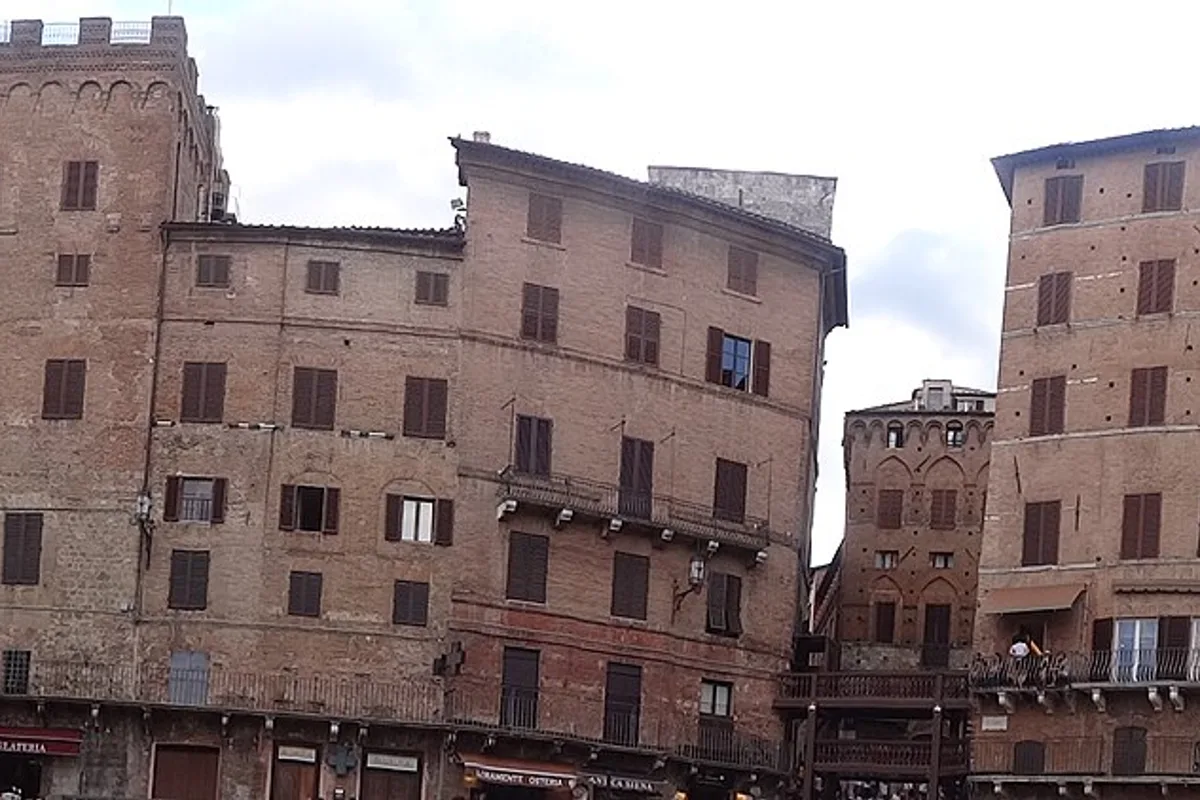
The centre of Piazza del Campo is free and unticketed, and it is where most people watch from. It is also enclosed once full, several hours before the race, with no exit and no shade. Balcony and stand seats are sold privately by the building owners, not by the city, which is why pricing is opaque and why booking runs through agencies.
Siena Outside Palio Week
Here is the honest position: outside the Palio and its build-up, Siena does not have a major festival calendar. There is no equivalent to Florence's spread of civic set pieces or Rome's layered religious and municipal programming. What it has is the contrade running continuously — feast days, processions and dinners spread across the year — plus one genuine cultural festival.
That festival is the Chigiana International Festival, a classical music season running July into early September from the Palazzo Chigi Saracini, combining public concerts with an international summer academy. It is largely invisible to Palio visitors and is the strongest reason to be in Siena in the shoulder weeks — late July, or the second half of August after the 16th, when the race has passed and prices fall back.
For anything else, Siena works better as a base than as a calendar. It sits an hour and a half from Florence, and the Tuscan festival year — Calcio Storico, Viareggio's carnival, the Luminara in Pisa — is reachable from here.
When to Visit Siena for Events
For the Palio: 2 July. The easier of the two races logistically, clear of the August holiday crush. Book accommodation months ahead regardless.
For the atmosphere without the price: a contrada feast day. Spread across the calendar, unticketed, and much closer to how the system actually runs day to day than Palio week is.
For music: late July or after 16 August. The Chigiana programme continues, the Palio premium has gone, and the city is not being day-tripped as hard.
Avoid 15–16 August unless the Assunta is specifically what you came for — Ferragosto and the second Palio land on consecutive days and it is the single most congested moment of the Sienese year.
See the Italy festival calendar for the national picture, or Venice and Naples for the other cities whose calendars genuinely define them.
Where to Stay for the Palio
Siena's accommodation question has one answer for four days of the year and a different one for the other 361. Palio week is the constraint; everything else is straightforward.
| When | Best base | Why |
|---|---|---|
| Palio week (2 July, 16 August) | Inside the walls, booked months ahead | The Campo closes hours before the race and the centre is under crowd control. Being inside the walls is the difference between attending and watching from a screen |
| Palio week, booked late | Florence or a Chianti town | Siena is 90 minutes from Florence by bus. A day trip works for the race itself if you accept the free Campo centre rather than a seat |
| Chigiana season | Inside the walls | Concerts run in the evening after the day-trip coaches leave — the best reason to stay over outside Palio week |
| Any other week | Inside the walls | Siena is small, cheap outside Palio week, and best in the evening once the day-trippers have gone |
Contrada dinners — the long communal tables before and after the race — run on membership and invitation, not sale. No amount of booking gets you into one; they are the part of Palio week visitors see from the outside.
Getting Around, and What Closes
Siena has no useful railway. The station sits below the hill and the line is slow; the practical connection is the coach from Florence, which takes about 90 minutes and drops you near the centre. That single fact shapes most Palio logistics.
- The Campo is closed and packed hours before the race. Once you are inside the ropes you cannot leave until it is over — no shade, no exit, no facilities.
- The historic centre is pedestrian and steep. Everything on this page is walkable, but Siena is built on three ridges and the walking is not flat.
- Trial heats run in the days before each race and close the Campo repeatedly, not just on race day. The four days before 2 July and 16 August are the real window.
- Contrada feast days spread across the year close individual streets for processions and dinners — much smaller in scale and far easier to come across by accident. The Palio's own information site carries the contrada calendar, with the Comune di Siena as the institutional source.
On cost: the centre of the Campo is free and always has been, which is where most spectators stand. Everything else is a private market — balcony windows and grandstand seats are sold by the owners of the surrounding buildings rather than by the city, which is why pricing is opaque and booking runs through agencies. The Chigiana is conventionally ticketed per concert.
Every Siena Guide
Frequently Asked Questions
What is the main festival in Siena?
The Palio, two bareback horse races around Piazza del Campo on 2 July and 16 August. Each lasts about ninety seconds, but the contrada system that produces them operates year-round, which is why the event carries the intensity it does.
Which Palio is better to attend, July or August?
July is easier logistically — hot but clear of the August holiday period. The 16 August Palio dell'Assunta is the older and more prestigious race, but it falls the day after Ferragosto, stacking a national holiday and peak domestic travel onto the same days.
Does Siena have festivals besides the Palio?
One significant cultural festival: the Chigiana International Festival, a classical music season running July into early September from the Palazzo Chigi Saracini. Beyond that, the seventeen contrade hold patron feast days and processions across the year. Siena does not have a broad civic festival calendar like Florence or Rome.
Is it free to watch the Palio?
The centre of Piazza del Campo is free and unticketed, and it is where most spectators stand. It fills and is closed several hours before the race, with no exit and no shade. Balcony and grandstand seats are sold privately by the owners of the surrounding buildings rather than by the city.
When is Siena cheapest to visit?
Any week clear of the two Palio windows — the four days before and including 2 July and 16 August. Late July and the second half of August after the 16th are particularly good, since the Chigiana concert programme is still running once the Palio premium has gone.


