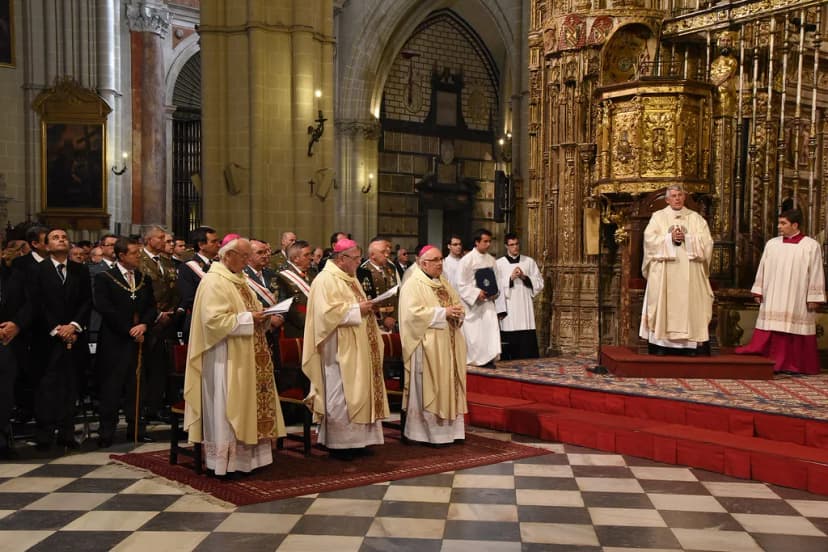
Last updated July 2026, Easter in Italy splits into two distinct holidays. Pasqua is the solemn Sunday itself; Pasquetta is the countryside picnic day that follows on Monday, and the right itinerary depends on which one matters more to the trip. Rome and Florence deliver the recognizable spectacle, from the Pope's Easter blessing to Florence's Scoppio del Carro fireworks, while Sicily's Trapani and Enna keep centuries-old processions with far fewer international visitors. If Rome is the plan, the Holy Week guide to Rome covers which papal ceremonies need free Vatican tickets and which you can simply walk up to; Naples and Campania do the opposite, with the sepolcri circuit and Procida's dawn Misteri procession, none of it ticketed.
Is Easter the Right Time to Visit Italy?
Easter in Italy rewards travelers chasing culture and spring weather, but it punishes anyone chasing a bargain or an empty piazza. Pasqua, Easter Sunday itself, centers on Mass, processions, and a family lunch; Pasquetta, the Monday that follows, empties cities as Italians head to the countryside for picnics. Rome and Florence hit their fullest capacity of the spring during this stretch, so travelers who want fewer crowds should look toward Umbria or Abruzzo instead of the headline cities. Weather across late March and April is typically mild, giving a practical reason beyond the festivities to time a trip around the holiday. Anyone booking around Easter needs both dates locked before anything else, since hotel and restaurant availability tightens fastest in the weeks before the holiday.
How Italy Calculates Easter's Date Each Year
Unlike a festival with an announced schedule, Easter's date is fixed years in advance by the computus. This is the church calculation that sets Easter Sunday as the first Sunday after the first full moon following the spring equinox. The formula explains why the holiday drifts across late March and April instead of landing on a fixed day. Easter Sunday fell on April 5 in 2026, and the next occurrence is expected on March 28, 2027, computed from that same rule. Palm Sunday and Pasquetta shift with it too, landing one week before and one day after Easter Sunday. Exact liturgy and event times, especially for papal ceremonies, are usually confirmed by the Holy See only in the weeks immediately before Holy Week, so treat any specific time as a planning estimate.
| Year | Easter Sunday | Status |
|---|---|---|
| 2026 | April 5 | Already passed |
| 2027 | March 28 | Expected, computed from the Easter computus |
The Holy Week Timeline: Palm Sunday to Holy Saturday
Settimana Santa, Holy Week, runs from Palm Sunday through Holy Saturday, and each day carries its own ritual. Some towns start even earlier, with processions beginning the Thursday or Friday before Palm Sunday. The four days below set the framework that every regional variation builds on.
- Palm Sunday
- The Pope leads the year's largest Palm Sunday Mass in St. Peter's Square, including the blessing of palms and a procession.
- Admission is free, but the event draws heavy crowds and requires an advance ticket request through the Holy See.
- Holy Thursday (Maundy Thursday)
- Churches hold special evening Masses that include the washing of the feet, followed by processions in many towns.
- This is typically the quietest of the Holy Week ceremonies for visitors, with more local than tourist attendance.
- Good Friday
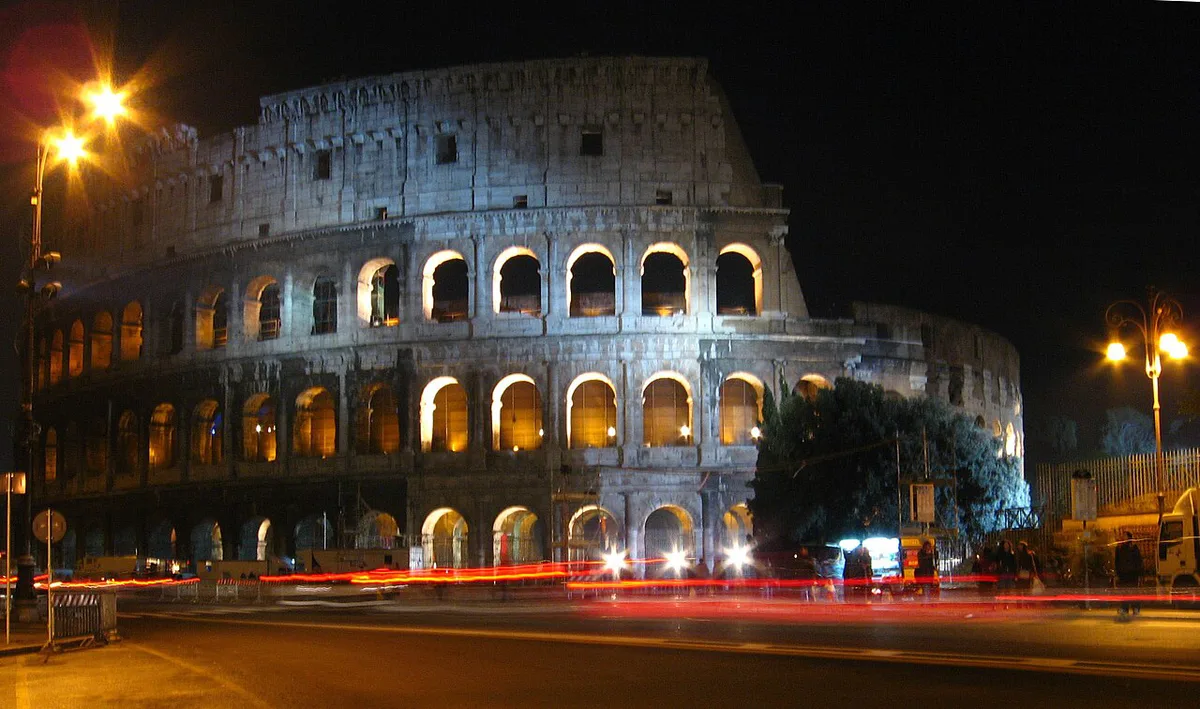
- The Via Crucis reenacts the 14 Stations of the Cross, with Rome's Colosseum procession usually starting around 9:15 PM under a torch-lit cross.
- The Colosseum's stations were placed in 1744 by Pope Benedict XIV, and the bronze cross was added in 2000 during the Jubilee year.
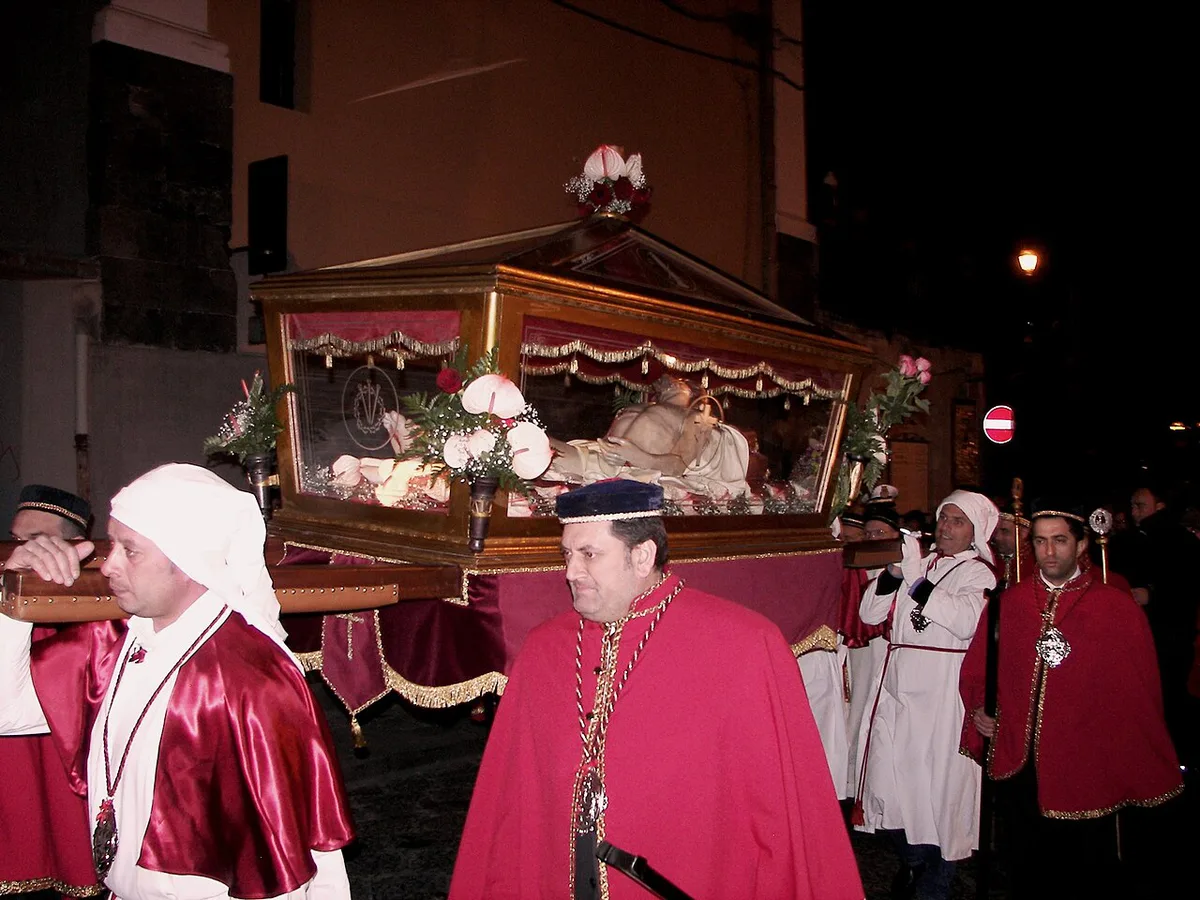
- Sicily hosts the day's most dramatic versions: Trapani's 24-hour Misteri procession and Enna's march of more than 2,000 friars.
- Holy Saturday
- The Easter Vigil Mass takes place Saturday night, marking the formal end of Lent.
- Many parishes bless hard-boiled eggs at the Saturday Mass, which then appear on Sunday's lunch table.
The 8 Best Places for Easter and Holy Week in Italy
Where to spend Easter in Italy depends on whether the trip is built around spectacle, pilgrimage, deep-rooted tradition, or a quieter countryside pace. Each of the eight places below covers one of those angles, from Rome's papal ceremonies to a cheese-rolling contest in Umbria.
- Rome and Vatican City
- The Pope's Palm Sunday Mass in St. Peter's Square includes the blessing of palms; admission is free but requires an advance ticket request through the Holy See.
- On Good Friday, the Via Crucis at the Colosseum usually begins around 9:15 PM, narrating the Stations of the Cross beneath a torch-lit cross.
- Easter Sunday's Holy Mass at St. Peter's Basilica draws the Vatican's largest crowd of the year, followed by the Pope's midday blessing from the central loggia.
- Florence
- A decorated ox-drawn cart travels through central Florence to Piazza del Duomo, positioned between the Baptistery of San Giovanni and the Cathedral of Santa Maria del Fiore.
- During Easter Sunday Mass, the Archbishop lights a dove-shaped rocket that slides along a wire into the cart, setting off the Scoppio del Carro fireworks.
- A parade of participants in medieval costume follows the explosion, making Florence the pick for spectacle over solemnity.
- Trapani, Sicily
- Trapani's Processione dei Misteri runs continuously for 24 hours starting Good Friday, one of the longest Holy Week processions in Italy.
- Twenty floats of life-like wood, canvas, and glue sculptures depict individual scenes from the Passion, carried by local guild members through the historic center.
- Expect the procession to dominate the entire town for its full duration, with the route closed to traffic.
- Enna, Sicily
- Enna's Good Friday procession includes more than 2,000 friars from the town's historic confraternities, dressed in ancient hooded costumes.
- The scale sets it apart from Trapani's sculpture-float format, built instead around sheer numbers of robed participants.
- Both processions fall on the same Good Friday date, so most travelers choose one Sicilian town rather than both.
- Sulmona, Abruzzo
- Sulmona runs several Holy Week processions with a more local, less internationally touristed atmosphere than Rome or Florence.
- Abruzzo's inland towns generally trade spectacle for intimacy: smaller crowds, easier last-minute lodging, and processions run by centuries-old confraternities.
- This is the choice for travelers who want the religious tradition without Rome's Easter Sunday density.
- Panicale, Umbria
- On Pasquetta, the walled town of Panicale holds a cheese-rolling contest around its town walls, one of the region's more unusual Easter Monday traditions.
- Umbria's Easter Monday events lean toward games and picnics rather than religious observance, since Pasquetta sits outside the church calendar.
- Pair a Panicale stop with a wider Umbria countryside picnic to match how locals actually spend the day.
- Bormio, Lombardy
- Bormio's Pasquali parade takes place on Easter Sunday, with residents carrying palanquin-style floats through the town center in traditional Valtellina costume.
- The event is smaller and more folkloric than Florence's fireworks or Rome's papal Mass, built around local identity rather than liturgy.
- Confirm the day's route and start time with Italia.it or the Comune di Bormio closer to the date, since details shift year to year.
- Courmayeur and the Aosta Valley
- Every Easter Monday, Courmayeur fills its streets with stalls for the Foire de la Pâquerette, selling Aosta Valley sculpture, wood carving, lace, and handmade garments.
- The fair gives Pasquetta a market-day structure instead of a pure picnic, useful for travelers who want an organized activity rather than open countryside.
- It sits at the opposite end of Italy from Sicily's processions, so it pairs better with a northern itinerary than a Rome-Florence-Sicily route.
More Easter Traditions Across Italy
Beyond the eight destinations above, dozens of smaller Italian towns run their own distinct Easter customs. Several are built around games or courtship rituals rather than solemn processions, and they rarely appear on a first-time visitor's itinerary.
- Ballo dei Diavoli, Prizzi (Sicily)
- On Easter morning, dancers dressed as red devils and a yellow-costumed figure representing death try to stop statues of the risen Christ and the Madonna from meeting in the piazza.
- A group dressed as angels drives the devils away to the sound of bells, and the traditional cannatedde pastry is handed out during the festival.
- Punta e Cul, Fiorenzuola d'Arda (Emilia-Romagna)
- After Easter Mass, participants tap the tip or bottom of a hard-boiled egg against an opponent's egg, and whoever's egg survives keeps both.
- Noza da paur, Val Badia (South Tyrol)
- In the days before Easter, young men in this Dolomites hamlet ask local women for eggs, and tradition holds that collecting at least a dozen predicts a marriage within the year.
- Canté j'euv, Langhe and Roero (Piedmont)
- Groups of young people sing door to door at farmhouses in the weeks before Easter in exchange for eggs, which go into a shared omelet cooked on Pasquetta.
- Procession of the Twelve Apostles, Procida (Campania)
- From Holy Thursday to Holy Saturday, this island near Naples holds a procession representing the Twelve Apostles, one of the region's older Holy Week traditions.
Pasquetta: Surviving Italy's Easter Monday Shutdown
Pasquetta, Little Easter, sends most Italians out of town for a countryside picnic, and that migration changes how the day works for visitors. Shops and many restaurants close, streets in Rome and Florence thin out, and regional trains and buses run on a sparser holiday schedule. Roads leading out of major cities see heavy traffic through the afternoon, so factor extra time into any Monday transfer or day trip. Two strategies work for Pasquetta. Join the picnic culture at a park or countryside site, or stay put and treat the quiet as an advantage for sightseeing without lines. Most major tourist sites stay open on Pasquetta, and some that are normally closed on Mondays lift that closure for the holiday.
| What | Status on Pasquetta |
|---|---|
| Major ruins and museums (e.g., the Colosseum) | Generally open; some Monday closures are lifted for the holiday |
| Small shops and boutiques | Closed |
| Parks and countryside sites | Open, and the default destination for picnicking Italians |
| Regional trains and buses | Reduced holiday-schedule frequency |
What to Eat During Easter in Italy
Food marks Easter in Italy as clearly as any procession, split between a savory Sunday lunch and sweets that show up in shop windows weeks in advance. Abbacchio, young roast lamb, anchors the main meal, often alongside artichokes and, in Naples, the savory bread Casatiello. The dish carries religious symbolism tied to purity and sacrifice, and the Roman preparation is protected in the European Union with a PGI designation. Breakfast on Easter morning can include coratella, made from lamb heart, lungs, and liver, a dish that marks the end of Lenten fasting. Easter also opens Italy's outdoor festival calendar, which continues months later with events like the Festival dei Due Mondi in Spoleto.
- Abbacchio (roast lamb)
- The centerpiece of the Easter Sunday table across much of Italy, roasted with herbs and served with seasonal vegetables like artichokes.
- Casatiello
- A savory Neapolitan Easter bread studded with cheese and cured meat, distinct from the sweet breads served for dessert.
- Colomba Pasquale
- A dove-shaped sweet bread topped with almonds and sugar, Italy's Easter counterpart to Christmas's panettone and pandoro.
- Pastiera Napoletana
- A Naples specialty pie made from ricotta, cooked wheat, eggs, and candied fruit, usually served after the main Easter meal.
- Chocolate eggs
- Large chocolate eggs with a small toy sealed inside fill shop windows weeks before Easter and disappear from shelves immediately after Pasquetta.
Planning an Easter Trip to Italy: Booking, Transport, and Closures
Easter logistics reward early planning more than almost any other Italian travel window. Hotels in Rome and Florence should be booked six months or more ahead of the holiday. Rates during Easter week tend to sit closer to summer peak pricing than the shoulder-season rates typical of early spring. Restaurants taking reservations for Pranzo di Pasqua, the Easter Sunday lunch, fill up months in advance too, especially in smaller towns with limited seating. High-speed trains on Italo and Trenitalia sell out on routes into Rome, Florence, and Sicily over the Easter weekend. Lock in seats as soon as travel dates are fixed, rather than waiting for closer-in fares. The Vatican Museums typically close on Easter Sunday and Monday, so plan that visit for earlier in the week instead. Church interiors are also decorated with flowers for the holiday, a preview of Italy's dedicated flower festivals later in the season, including the Infiorata flower festival in Noto.
Budget travelers face Easter's double squeeze: hotel and restaurant availability tightens six months before the holiday, and Easter-week rates match summer peak pricing rather than typical spring shoulder-season costs.
- Book accommodation early
- Reserve Rome and Florence hotels at least six months before Easter weekend, since both cities hit peak spring occupancy.
- Reserve Pranzo di Pasqua
- Restaurants taking bookings for the Easter Sunday lunch often fill up months ahead, especially in smaller towns with limited seating.
- Book trains early
- Italo and Trenitalia seats on routes to Rome, Florence, and Sicily sell out fastest for the Easter weekend; book as soon as dates are set.
- Check museum closures
- The Vatican Museums typically close on Easter Sunday and Monday, so schedule that visit earlier in Holy Week and confirm current hours before travel.
How to Attend Easter Mass at the Vatican
Tickets for papal Easter liturgies are free, but a place is never guaranteed. Request them only through the official Vatican channels listed by the Prefecture of the Papal Household. Avoid unofficial sellers offering paid “Mass tickets.”
Easter Sunday Mass usually takes place in St. Peter’s Square, followed by the Urbi et Orbi blessing from the basilica’s central loggia. The blessing can be watched from the square without a separate ticket, although security controls still apply.
- Submit the request as early as possible and list every attendee by name.
- Check the Holy See calendar for confirmed times, collection instructions, and possible schedule changes.
- Bring identification and arrive several hours early for airport-style screening.
- Cover shoulders and knees, since Vatican dress standards apply to religious ceremonies.
A ticket does not provide reserved seating. Entry remains subject to capacity and security decisions. Travelers without tickets can still experience the midday blessing from St. Peter’s Square or follow the ceremony through Vatican Media. Easter is the pivot of the Italian spring, and spring in Italy covers the season it anchors.
For trip-planning details, see Easter in Italy official source and Vatican News.
Continue planning with 15 Best Festivals in Italy: The Month-by-Month Event Calendar.
Frequently Asked Questions
When is the next Easter Sunday in Italy?
The next Easter Sunday is expected on March 28, 2027, computed from the standard Easter recurrence rule known as the computus. Confirm exact liturgy and event times with the Holy See or local dioceses closer to Holy Week, since they are typically finalized only in the weeks before.
What is the difference between Pasqua and Pasquetta?
Pasqua is Easter Sunday itself, centered on Mass, processions, and a family lunch. Pasquetta is the following Monday, a separate public holiday when Italians leave cities for countryside picnics and many shops close.
Do the Vatican Museums close for Easter?
Yes, the Vatican Museums typically close on Easter Sunday and Easter Monday. Plan that visit for earlier in Holy Week and confirm current hours before travel, since museum schedules can shift.
Is Easter a good time to visit Italy?
For culture, spring weather, and processions, yes; for budget travel or solitude, no. Rome and Florence reach peak capacity over the holiday, while smaller towns in Umbria and Abruzzo offer a quieter alternative with fewer international visitors.
Where are the most dramatic Easter processions in Italy?
Sicily holds the most dramatic Holy Week processions, particularly Trapani's 24-hour Misteri procession and Enna's Good Friday march of more than 2,000 friars. Both fall on Good Friday, so most travelers choose one town rather than both.
How far ahead should travelers book a hotel in Rome or Florence for Easter?
Reserve Rome or Florence hotels at least six months ahead of Easter weekend, since both cities reach some of their highest spring occupancy of the year. Booking a table for the Easter Sunday lunch, Pranzo di Pasqua, deserves the same lead time in smaller towns with limited seating.
Spring and Early Summer
Holy Week, the flower carpets and the festival season opening in the hill towns.