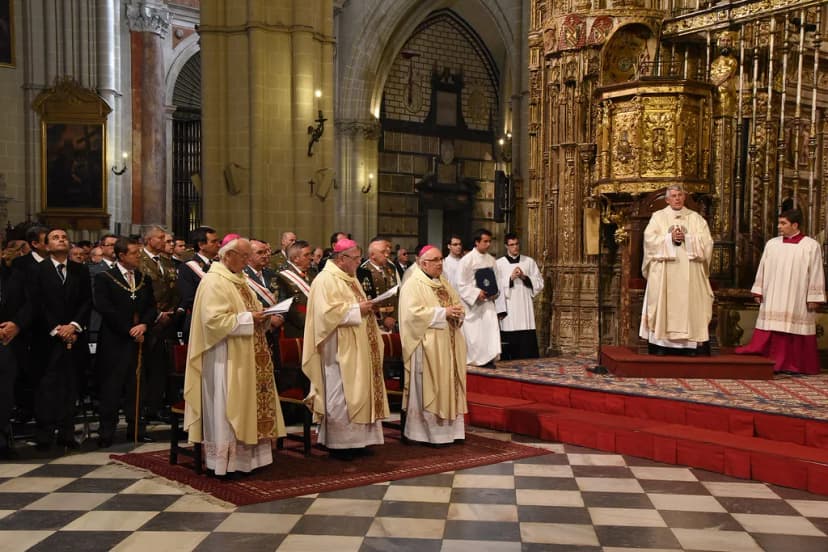
Last updated August 2026. Campania does Easter differently from Rome. There is no single papal centre of gravity here; instead the week belongs to neighbourhoods and islands — Neapolitans walking a circuit of churches on Holy Thursday evening, and, an hour offshore, the island of Procida carrying dozens of hand-built tableaux through its streets before dawn on Good Friday. Both are free, neither is staged for visitors, and the Procida procession is one of the most remarkable things that happens in Italy all year.
When Holy Week Falls
Easter is computed from the ecclesiastical lunar calendar and moves between late March and late April. Easter Sunday 2027 falls on 28 March, which puts Palm Sunday on 21 March and Good Friday on 26 March — dates computed from the recurrence rule rather than confirmed by any organiser. The individual parish and confraternity programmes are published locally much closer to the week. Expect a typical Campanian spring — mild by day, cool after dark — and pack a layer for early Masses and the pre-dawn wait on Procida.
The same rule drives Holy Week in Rome and Florence's Scoppio del Carro; the date rules guide explains how the whole Easter-relative half of the Italian calendar is derived.
Naples: the Sepolcri on Holy Thursday
The central Neapolitan tradition is the struscio — walking a circuit of churches on Holy Thursday evening to visit the sepolcri, the altars of repose decorated for the night after the Mass of the Lord's Supper. Custom holds that you visit an odd number, and the churches of the centro storico are close enough together that a circuit of five or seven is an evening's walk rather than an expedition.
It is the most accessible thing in this guide: no ticket, no route to follow, no crowd control. Start anywhere on Spaccanapoli or Via dei Tribunali and the churches are minutes apart. The altars themselves are often elaborate — flowers, candles, and in some parishes sprouted wheat grown in the dark to blanch it, a tradition older than the Christian layer on top of it.
Holy Thursday evening is the one night of the year when the centro storico's churches are open late and full of people who live there. If you only do one thing from this page and you are in Naples, do this — it costs nothing and needs no planning beyond turning up.
Naples' Own Good Friday Processions
Naples runs its own Good Friday processions too, separate from Procida's. Neighbourhood confraternities in the historic centre and in areas like Chiaia and Posillipo carry effigies of Christ and the Madonna through the streets in a Via Crucis reenactment, accompanied by candlelight and slow drumming. These processions move at a normal evening hour rather than before dawn, which makes them the easier of the two to see if an overnight stay on Procida isn't possible.
Streets along each route close for the length of the procession, and modest dress — shoulders and knees covered — is expected for church visits through the week. Exact routes and start times are set parish by parish and published locally in the days beforehand, the same way Procida's own programme is.
Procida: the Misteri on Good Friday
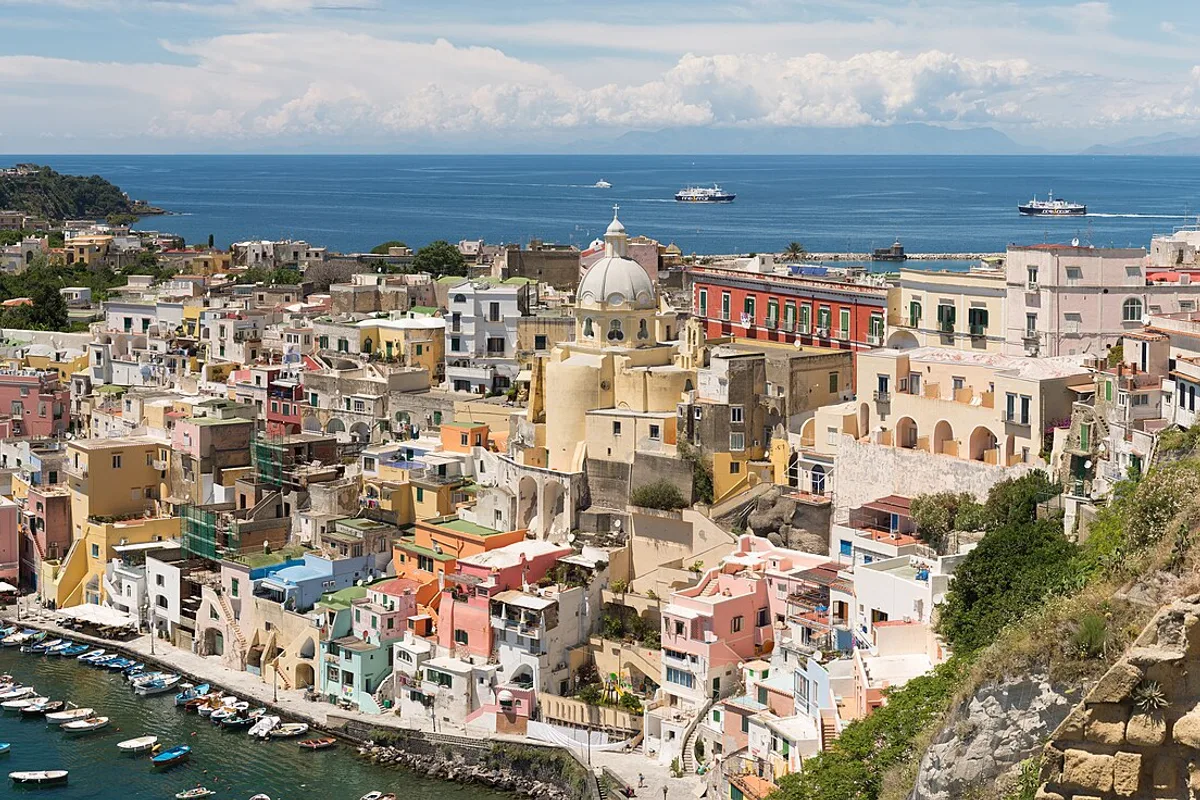
Procida is the smallest of the Bay of Naples islands and about an hour by ferry from the city. Its Good Friday procession has run for more than three centuries, organised by the Confraternita dei Turchini, founded in 1629 — originally a procession of flagellants through the medieval borough of Terra Murata.
What makes it extraordinary is the misteri themselves: between forty and sixty tableaux depicting scenes from the Old Testament and the Gospels, built each year from papier-mâché, wood and other materials by islanders — much of the work done by young people through a dedicated association — and carried by hand through the streets. They are made new, and the making is a months-long communal project rather than a props store.
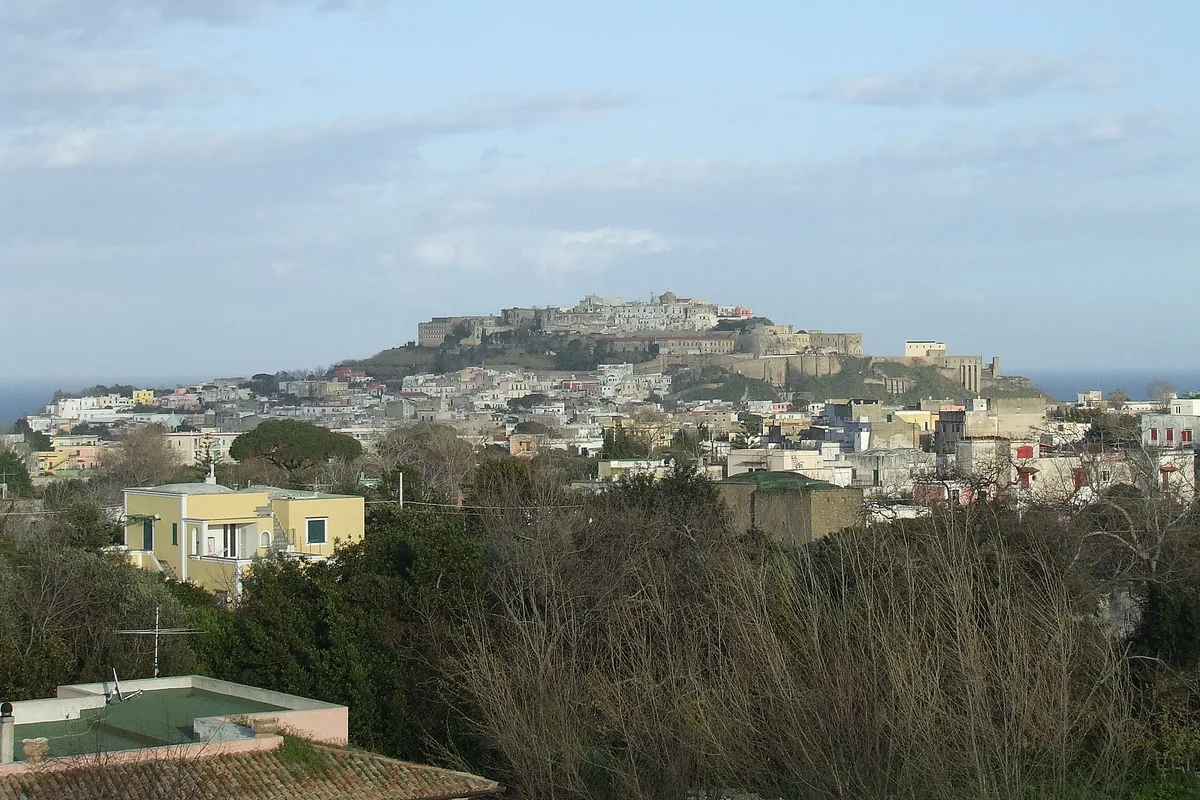
The timing is the other thing to know. The week builds from Holy Thursday evening, with the Washing of the Feet and a procession of hooded apostles. Then on Good Friday at around 05:00, the Turchini bring the Dead Christ and the Sorrowful Madonna up to the monastery of San Michele Arcangelo at Terra Murata, and the Procession of the Mysteries sets off from there. A five o'clock start on an island is a real logistical commitment — and the reason the crowd is overwhelmingly local.
How to Actually Do Procida
Stay on the island. This is the whole practical answer. Ferries from Naples and Pozzuoli do not run early enough to get you there for a dawn procession, and a Good Friday day trip means arriving after the thing you came for has finished.
| Plan | Works? | Why |
|---|---|---|
| Stay on Procida from Thursday | Yes | The only way to be there for a 05:00 start; book months ahead |
| Day trip from Naples on Good Friday | No | No ferry arrives before the procession has finished |
| Naples sepolcri on Holy Thursday instead | Yes | Free, walkable, needs no planning beyond turning up |
- Book accommodation on Procida months ahead. The island is small, Easter is its busiest weekend, and beds are finite in a way Naples' are not.
- Arrive Thursday to catch the evening ceremonies and be in place for the Friday start.
- Terra Murata is uphill. The medieval borough sits above the harbour, and the procession works down from it — expect steep walking in the dark.
- Nothing is ticketed. The constraint is where you sleep, not what you buy.
If staying over is not possible, the Neapolitan sepolcri on Holy Thursday are the better use of the week. Procida done as a day trip is Procida missed.
Easter Sunday and Pasquetta
After the processions, Easter Sunday is a family lunch built around two dishes that turn up on nearly every Campanian table: casatiello, a savoury bread studded with cured meats, cheese and whole eggs baked into the crust, and pastiera Napoletana, a wheat-and-ricotta tart flavoured with orange blossom water that many families bake days ahead so the filling can set. In some households, zuppa di cozze — a mussel soup — is the dish for Holy Thursday rather than Sunday. Restaurants fill for Easter Sunday lunch, so a reservation matters for anyone eating out rather than at a family table.
Easter Monday, Pasquetta, is the region's collective day off. Neapolitans traditionally leave the city for a picnic, heading to the islands, the Amalfi Coast or Vesuvius National Park rather than staying in for church. Anyone who spent Good Friday on Procida can use Pasquetta to island-hop onward to Ischia or Capri before heading back to Naples.
How Campania's Easter Compares
Rome's Holy Week is institutional — papal ceremonies, free but ticketed through the Prefecture, internationally attended, and centred on the Vatican. Campania's is the opposite: confraternities, parishes and islands, nothing ticketed, and an audience that lives there.
The trade is straightforward. Rome gives you the Via Crucis at the Colosseum and the Urbi et Orbi — spectacle at world scale, with the crowd that implies. Campania gives you a hillside village carrying handmade tableaux at five in the morning. Both are worth doing; they are not substitutes for each other, and Naples and Rome are close enough by high-speed rail that an ambitious Holy Week could take in both.
The wider Bay of Naples keeps its own Good Friday customs too. On Ischia, the town of Forio holds La Corsa dell'Angelo — the Angel's Run — on Easter Sunday, when a statue of the Golden Angel is carried through the streets. Capri marks Good Friday with a procession through the Piazzetta and follows it with a traditional Easter concert. Neither is a substitute for Procida's dawn Misteri, but both are within easy ferry reach for anyone based in the area for the full week rather than a single Good Friday morning.
Easter also sits days before the busiest stretch of the Neapolitan year — COMICON at the turn of April into May, then Maggio dei Monumenti and a San Gennaro liquefaction in the first days of May. The Naples festival calendar covers the sequence, and Easter in Italy compares the regions.
Frequently Asked Questions
What are the sepolcri in Naples?
The altars of repose decorated in each church after the Holy Thursday Mass of the Lord's Supper. Neapolitans walk a circuit of churches to visit them — the struscio — traditionally an odd number, usually five or seven. In the centro storico the churches are minutes apart, so it is an evening's walk. Free and unticketed.
What is the Procession of the Mysteries in Procida?
A Good Friday procession run by the Confraternita dei Turchini, founded in 1629. Between forty and sixty tableaux depicting Old Testament and Gospel scenes are built each year by islanders from papier-mâché and wood and carried by hand through the streets, setting off from Terra Murata at around 05:00.
Can you visit Procida for Good Friday as a day trip?
No. The procession starts around 05:00 and ferries from Naples and Pozzuoli do not run early enough to reach the island beforehand. Stay on Procida from Thursday, and book months ahead — the island is small and Easter is its busiest weekend.
When is Easter in Naples in 2027?
Easter Sunday falls on 28 March 2027, putting Palm Sunday on 21 March and Good Friday on 26 March. Those dates are computed from the Easter recurrence rule; individual parish and confraternity programmes are published locally much closer to the week.
How does Easter in Campania differ from Rome?
Rome's Holy Week is institutional and papal — free but ticketed ceremonies at the Vatican, internationally attended. Campania's belongs to confraternities, parishes and islands, with nothing ticketed and a largely local crowd. The two are close by high-speed rail, so an ambitious week could take in both.