

Last updated August 2026. December is the one month where Italy's festival calendar and its public holiday calendar work against each other. For roughly three weeks the country runs the densest programme of the year — Christmas markets in almost every city of size, a patron saint feast that shuts down Milan, and an opera premiere that leads the national news. Then, around 24 December, most of it stops at once.
December Splits Into Two Very Different Halves
Travellers who plan December as a single month get caught by this. The markets you flew for may have closed on 26 December; the restaurant you booked may be shut on the 25th; the museum you saved for Boxing Day may be operating a holiday timetable. What follows is the shape of the month as it actually runs, drawn from each organiser's published pattern rather than from last year's dates.
The first half is the busy one. Most Christmas markets are open by the first weekend of Advent, the shops are working extended hours, and the cities are lit but still functioning normally. This is when Italy is at its most festive and its most navigable at the same time.
The second half inverts. From 24 December the country turns inward and domestic. Christmas in Italy is a family holiday observed at home, not a public celebration, and the effect on a visitor is immediate: restaurants close or move to a fixed holiday menu booked weeks ahead, shops shut, and public transport moves to a reduced timetable. Several major markets end on 26 December rather than running to New Year, which surprises people who assume the season continues until Epiphany everywhere.
The practical read: if the markets are the reason for the trip, travel in the first three weeks. If the point is Christmas itself, expect a quiet, closed, domestic country and plan meals in advance.
The Christmas Markets, and Which One Suits the Trip
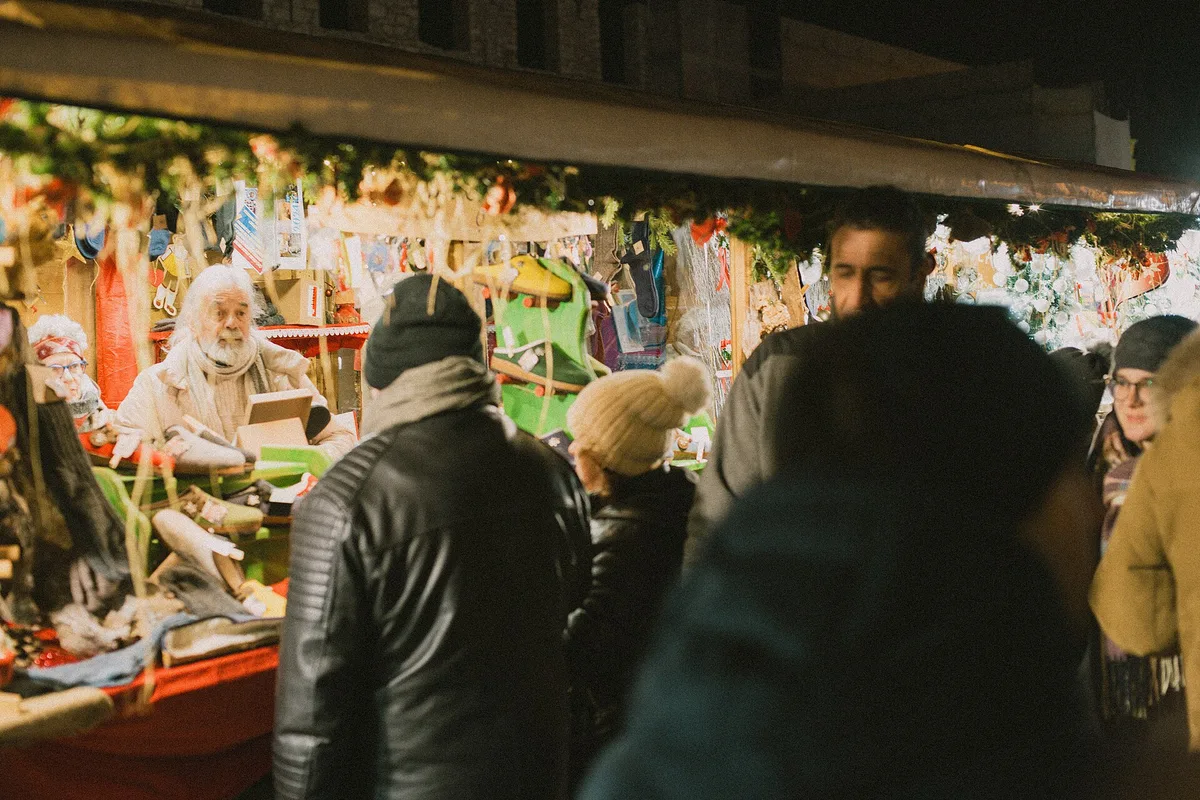
Italy's markets are not interchangeable. The Alto Adige ones are Alpine and Germanic in food, language and architecture; the central and southern ones are a different tradition entirely, closer to a street fair or, in Naples, a year-round craft district that simply peaks in December. Choosing badly is the most common December mistake.
| Market | Where | Published pattern | Suits |
|---|---|---|---|
| Bolzano | Piazza Walther, Alto Adige | Late November to 6 January | The full Alpine market; Italy's best known |
| Merano | Passirio promenade, Alto Adige | Late November to 6 January | Riverside setting, thermal baths nearby |
| Milan | Multiple sites, Lombardy | Advent to 6 January | Combining with the 7 December events |
| Verona | Piazza dei Signori, Veneto | Mid-November to 26 December | A compact market in a walkable centre |
| Florence | Piazza Santa Croce, Tuscany | Late November to late December | A German-style market inside a Renaissance city |
| Rome | Piazza Navona, Lazio | Advent to 6 January | Mild weather; the Befana tradition |
| Naples | Via San Gregorio Armeno, Campania | Workshops year-round, peaking Advent to 6 January | Nativity craft, not stalls and mulled wine |
Two of those entries carry a warning. Verona ends on 26 December and Florence in late December — neither runs to Epiphany, so a New Year trip built around either will find the stalls gone. Bolzano, Merano, Milan, Rome and Naples are the ones that genuinely continue into January. The country-wide comparison, including food and travel times between them, is in the guide to Italy's Christmas markets.
These are the organisers' recurring patterns, not confirmed dates for any single year. Each market publishes its exact opening and closing days a few months ahead, and the Alto Adige markets in particular shift their start by a week depending on where Advent falls.
What Closes in December, and When
Three December dates change how the country operates. They are not interchangeable — the closures escalate.
| Date | Holiday | What it means on the ground |
|---|---|---|
| 8 December | Immacolata (Immaculate Conception) | National holiday. Markets and attractions open and very busy; offices and many shops closed |
| 25 December | Natale | Near-total shutdown. Assume nothing is open unless booked |
| 26 December | Santo Stefano | National holiday; most shops closed, some museums on holiday hours |
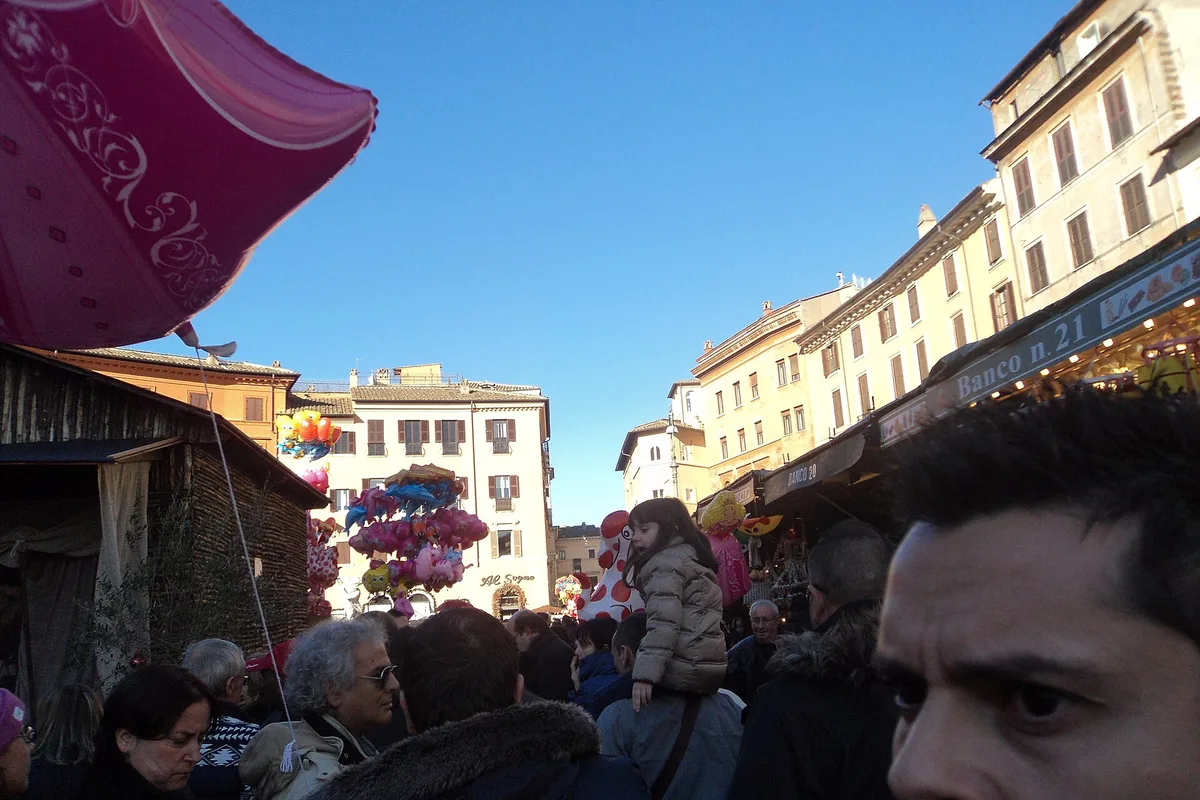
The 8 December holiday is the one worth planning around rather than avoiding. It traditionally marks the day Christmas trees and decorations go up, and it is when Italians themselves visit the markets — which makes it the single most crowded market day of the year. Going on 8 December means seeing the season at full strength alongside most of the country's domestic tourists.
The full national calendar, including how these dates combine into ponti — bridge weekends where a midweek holiday absorbs the working days beside it — is set out in the guide to Italy's public holidays.
7 December: Milan Has the Busiest Day in Italy
Milan compresses three separate events into 7 December, the feast of the city's patron saint. The Oh Bej! Oh Bej! street fair runs around the Castello Sforzesco for several days; the city observes Sant'Ambrogio as a local holiday; and La Scala opens its opera season that evening with the Prima, a live-broadcast national event that draws political and cultural figures and, reliably, demonstrations outside.
Because 7 December sits immediately before the national 8 December holiday, Milan gets one of the longest bridge weekends of the year — two consecutive holidays in the city, one of them nationwide. Hotel prices in Milan reflect this, and restaurant tables need booking well ahead. The detail on all three events is in the guide to Sant'Ambrogio in Milan.
What Else Runs Besides the Markets
The markets dominate December coverage, but they are not the only thing on.
Alba's truffle market in Piedmont runs on weekends from early October through early December, so the first weekend or two of the month still catch it. It is a working market rather than a festival, and it pairs naturally with Piedmont's wine country — see the Alba Truffle Festival guide for how the weekend sessions work.
Nativity scenes are the southern tradition that has no northern equivalent. Naples' Via San Gregorio Armeno is a street of workshops producing presepe figures year-round, and in December it becomes almost impassable. This is craft-buying, not stall-browsing, and anyone expecting mulled wine and wooden huts will be disappointed — the Naples guide explains the distinction.
Opera season opens across the country in the autumn and runs through winter, with La Scala's 7 December opening the most visible. This is the inverse of Italy's summer opera, which is outdoor and festival-shaped; December opera is indoor, formal and season-based. For contrast, the Arena di Verona runs in the open air from June to September.
Weather, Daylight and What That Means for Planning
Italy in December is not one climate. The Alto Adige markets sit in genuine Alpine winter, with snow likely and sub-zero evenings; Rome and Naples are mild enough that a heavy coat is often too much by midday. This spread is wider in December than in any other month, and it is why a single packing list for "Italy in winter" fails.
Daylight is the constraint people underestimate. Sunset falls in the mid-afternoon, which is short for sightseeing but works in the markets' favour — they are evening events, and the lights only read properly after dark. A workable December day front-loads museums and churches into the morning, then moves outdoors once it is dark.
The Two Weeks That Cost the Most
Two windows drive December pricing. The first is 5–9 December, around the Sant'Ambrogio and Immacolata pair, when domestic travel peaks and Milan in particular becomes expensive. The second is 24 December to 1 January, when families travel and the cities that stay open charge accordingly.
The cheapest, and in many ways the best, window for a markets-focused trip is the first ten days of December excluding that 5–9 December stretch — the markets are fully open, the crowds are manageable, and none of the holiday closures have started. Booking Christmas Day and New Year's Eve meals well ahead is not optional advice in Italy; restaurants that open on those dates fill on fixed menus weeks in advance.
For what follows December, the Italy festival calendar maps the year, and Epiphany on 6 January — with the Befana, the folkloric witch who brings gifts the night before — closes the season in early January.
Frequently Asked Questions
Is December a good time to visit Italy?
The first three weeks are excellent — Christmas markets are open nationwide, prices outside the 5–9 December window are lower than summer, and the major cities are far less crowded than in peak season. From 24 December the country largely closes for the family holiday, so that final stretch suits travellers who want quiet cities rather than open attractions.
When do Christmas markets in Italy open and close?
Most open with Advent in late November and run to 6 January, but the pattern varies by city. Bolzano, Merano, Milan, Rome and Naples typically continue into January, while Verona's ends on 26 December and Florence's in late December. Each organiser publishes exact dates a few months ahead, so confirm before booking a late-December trip around a specific market.
What is closed in Italy at Christmas?
25 December is a near-total national shutdown, with 26 December (Santo Stefano) also a national holiday and most shops closed. 8 December is a national holiday too, though markets and attractions stay open and are at their busiest. Museums often run holiday timetables rather than closing outright, but they should be checked individually.
Which Italian Christmas market is the best?
It depends on what is wanted. Bolzano is the largest and most traditional Alpine market and the usual first choice. Merano offers a similar Germanic character in a riverside setting. Naples is not a stall market at all but a street of nativity-craft workshops, and Rome's Piazza Navona trades Alpine atmosphere for mild weather and the Befana tradition.
Why is 7 December significant in Italy?
It is the feast of Sant'Ambrogio, Milan's patron saint. The city holds the Oh Bej! Oh Bej! street fair, observes a local holiday, and La Scala opens its opera season that evening. Because the national Immacolata holiday follows on 8 December, Milan gets a two-day bridge that makes it the busiest and most expensive city in Italy that week.

