
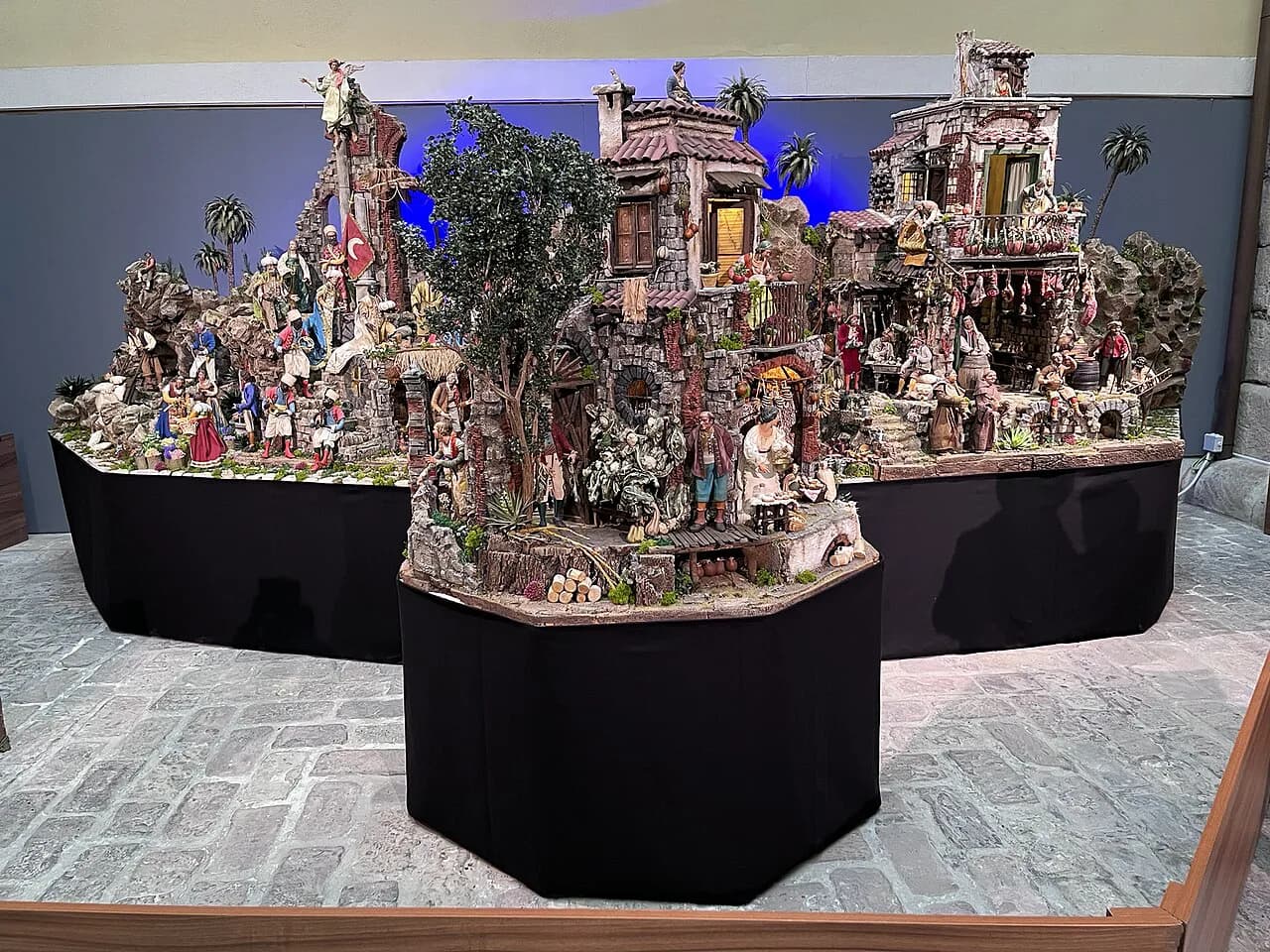
Last updated August 2026. Christmas in Italy runs as a five-week season, not a single day, opening on December 8 and closing on January 6. Traditions vary sharply by region, from Naples' nativity workshops to Alpine market towns, built around family meals more than a single national script.
At a Glance: The Christmas in Italy Season
Where you land changes what the season feels like more than the date on the calendar does. Natale is family-centric and food-heavy everywhere, but the specific rituals shift by region. For a broader view of Italian celebrations across the year, see the Festivals in Italy: The Month-by-Month Event Calendar. The quick list below covers the essentials before the regional detail that follows.
Gift-giving timing splits between December 25 with Babbo Natale and January 6 with La Befana, with the choice reflecting generational shifts and regional preferences rather than a unified national practice across households.
- Season dates: December 8 (Immaculate Conception) opens it; January 6 (Epiphany) closes it.
- Core tradition: the presepe, a nativity scene displayed in churches, homes, and town squares nationwide.
- Naples' nativity craftsmen work Via San Gregorio Armeno from early November through January 6.
- Milan's patron-saint feast, Sant'Ambrogio, falls December 7 and opens the city's main holiday window.
- Gift-giving: historically January 6 via La Befana; Babbo Natale on December 25 is now common alongside it.
- Standout regional events: Gubbio's lit mountainside tree, Matera's living nativity in the Sassi, and Salerno's Luci d'Artista lights.
How Christmas in Italy Divides by Region
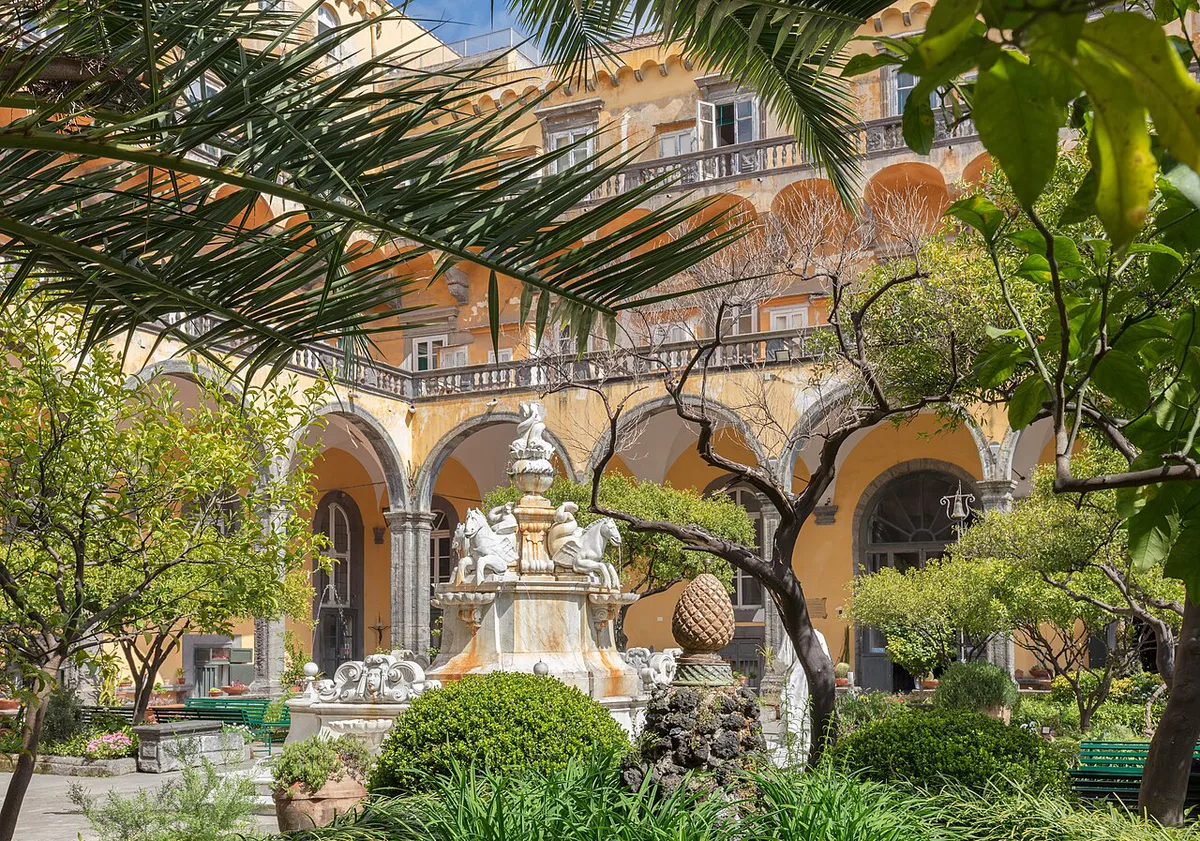
Rome leans religious, Naples leans artisan, Milan leans commercial, and the Alpine north leans toward market season proper. Weather shifts the experience too: the Alpine north often sees genuine snow, while central and southern cities usually stay mild and wet. For the market-specific rundown on hours, stalls, and ticket needs, the dedicated Italy Christmas markets guide covers that ground.
| Region | Best For | Weather Expectation | Signature Event |
|---|---|---|---|
| Rome & Vatican | Religious tradition | Mild, often rainy | Christmas Eve Mass at St. Peter's |
| Naples | Artisan nativity culture | Mild | Via San Gregorio Armeno nativity workshops |
| Milan | Sant'Ambrogio traditions & shopping | Cold, sometimes foggy | Oh Bej Oh Bej fair, opening December 7 |
| South Tyrol (Bolzano/Merano) | Alpine market atmosphere | Cold, often snowy | Traditional Christmas markets |
| Umbria (Gubbio) | Large-scale spectacle | Chilly | World's largest Christmas tree lighting, December 7 |
The Presepe: Italy's Nativity Scene Tradition
Naples treats the nativity scene, or presepe, as a living craft rather than a seasonal decoration. Workshops along Via San Gregorio Armeno stay open from early November through January 6. Figurines there are built the same way local artisans have worked since the late 1700s. Foot traffic gets heavy enough during the season that the street becomes a one-way pedestrian route. Francis of Assisi staged a Christmas Mass in front of a manger scene in 1223, and the presepe tradition traces back to that moment. From there, the custom spread into churches, homes, and town squares nationwide. Rome runs a parallel tradition of its own. A life-size nativity scene stands each year in St. Peter's Square, and a separate citywide exhibition displays roughly 200 nativity scenes made by different artists. Florence adds another version: a life-size presepe outside its Duomo, built from terracotta by artisans working in nearby Impruneta.
What to Eat During the Christmas in Italy Season
Natale food traditions mark the season as clearly as any decoration does, and they vary by region and by day. La Vigilia, Christmas Eve, is traditionally meat-free, so dinner centers on fish and seafood before midnight Mass. Christmas Day flips that pattern. A long family lunch follows, built around meat dishes, pasta in broth, and sweet bread. Milan's Christmas lunch leans toward butter-based sauces and stewed meats, a style closer to its Alpine neighbors than to Rome's tomato-and-olive-oil cooking.
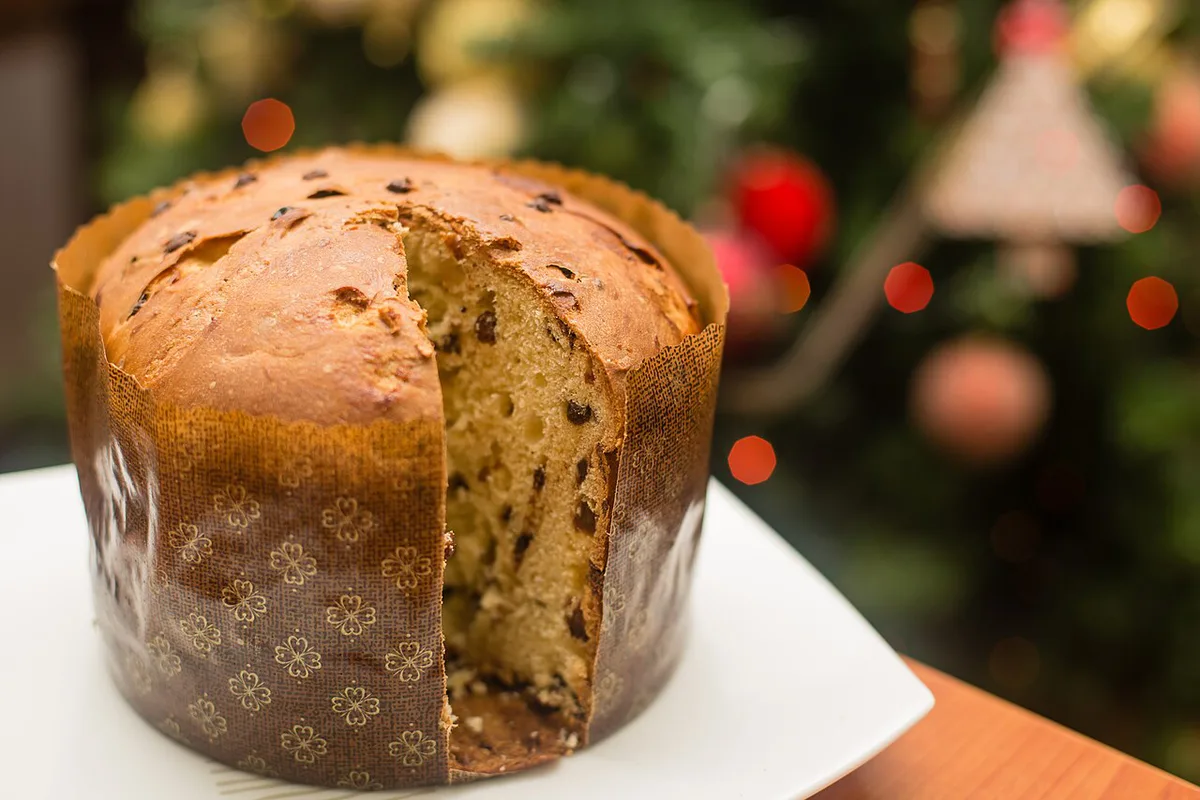
- Panettone (Milan) versus pandoro (Verona): the two rival Christmas sweet breads, one studded with candied fruit, the other plain and dusted with sugar.
- Panforte, a dense spiced fruitcake from Siena.
- Struffoli, fried dough balls coated in honey, a Naples specialty.
- Cotechino or zampone served with lentils on New Year's Eve, eaten for luck as much as flavor.
- Ossocollo and other cured meats for a Venetian-style antipasto spread on Christmas Day.
Regional Events Worth Building a Trip Around
Beyond the five major cities, a handful of smaller events pull dedicated visitors on their own merits. Gubbio lights what organizers call the world's largest Christmas tree on Mount Ingino, above the city walls. That display uses more than 700 lights across a shape stretching roughly 750 meters down the hillside, covering about 130,000 square meters. Lighting happens on the night of December 7 each year, a fixed date rather than one that shifts with the calendar.
- Matera: a living nativity scene runs through the Sassi most weekends in December and the first weekend of January, along a route of roughly 1.5 kilometers.
- Salerno: the Luci d'Artista light installations run from November 30 into January, covering the historic center's streets.
- Bologna: the Bonfire of the Old Man burns a giant illuminated figure, the Vecchione, in Piazza Maggiore at midnight on December 31.
- Ferrara: the Burning of the Este Castle lights up the walled town at midnight on December 31 with fireworks and color.
- Tarvisio: skiers descend Monte Lussari by torchlight on the evening of January 1, dressed in traditional costume.
- Orvieto: Umbria Jazz Winter runs into the New Year for travelers who want music over markets.
La Befana vs. Babbo Natale: Who Brings the Presents
Babbo Natale, the Italian Father Christmas, now brings gifts on December 25 in many households. This is a newer, more international custom. An older tradition puts the exchange on January 6, Epiphany, instead, when La Befana visits. She's an old woman who arrives on a broomstick, not a witch. Older lore has her leaving an orange for good behavior and a lump of coal for bad, though modern versions mostly stick to candy and small toys. Florence marks the same date with the Cavalcade of the Magi, a costumed procession through the historic center reenacting the journey to Bethlehem. Which figure a family follows, or both, depends more on region and generation than on any single household's rule.
New Year's Eve: Il Cenone and Capodanno Customs
New Year's Eve in Italy centers on a big family dinner called il Cenone, eaten before midnight. Lentils are served right after the countdown; their coin-like shape is meant to bring good luck and money in the year ahead. Red underwear is a lasting superstition, worn on December 31 for luck, and it's common enough that stores sell it specifically for the occasion. Fireworks, prosecco, and outdoor parties follow in main squares nationwide, alongside the Bologna and Ferrara events covered above. One older custom, tossing unwanted furniture and appliances out windows at midnight, has mostly died out for safety reasons and is rarely seen today.
Practical Notes: Weather, Timing, and Booking Ahead
December 24 through 26 form the tightest closure window of the season. Many museums, the Vatican's afternoon hours, and smaller restaurants shut or run reduced schedules across those three days. Italy in December: Christmas Markets, Closures and What's On covers those closures and holiday train schedules in full detail. Arriving right after the November shoulder season means thinner crowds before the December 8 rush begins. A trip that runs past Epiphany can lean on Italy in January: Weather, Best Places to Visit, and Winter Travel Guide, which picks up once decorations come down and the season resets. Italy's national tourism agency tracks regional event calendars each year, though published dates shift, so confirm specifics close to travel. Restaurants and hotels in smaller towns fill early for the week around Christmas itself, so lock in reservations well before December. For weather and trip planning across the full cold season, see the Italy winter guide.
Mistakes to Avoid When Planning Christmas in Italy
A few assumptions trip up first-time visitors more than anything else.
- Expecting snow everywhere: the south usually sees rain rather than snow. Naples runs mild through the season, with daytime highs often near 50°F, while the Alps and higher inland towns are the reliable snowy exception.
- Booking Christmas Day dinner late: restaurants open on December 25 fill their limited seatings months ahead.
- Assuming every market runs to January 6: some close as early as December 24, so check individual market dates before building a day around one.
- Skipping the early weeks: the run-up between December 8 and 20 is quieter and less expensive than the final stretch before Christmas.
Holiday Transport and Vatican Mass Planning
Italy’s rail network still runs over Christmas, but December 24, 25, and 26 use reduced holiday timetables. Check the final schedule after booking, especially for regional trains linking smaller towns to major stations. High-speed Frecciarossa, Italo, and Intercity services can sell out on the busiest travel days.
Build extra time into connections through Rome Termini, Milan Centrale, and Florence Santa Maria Novella. On Christmas Day, avoid depending on a late regional train for a restaurant reservation or airport transfer. Taxis and local transit may also operate less often.
Visitors hoping to attend a papal liturgy should request admission through the Prefecture of the Papal Household well ahead of travel. Tickets, when required, are allocated rather than sold. A request does not guarantee entry. Arrive early at St. Peter’s Square and expect airport-style security.
- Reserve long-distance trains before the Christmas week.
- Confirm restaurant opening hours directly for December 24–26.
- Keep a backup route if staying outside a major city.
Frequently Asked Questions
When does the Christmas season start and end in Italy?
It runs from December 8, the feast of the Immaculate Conception, through January 6, Epiphany. Decorations typically go up right at the start of that window, and most events wind down by the first week of January.
What is a presepe?
A presepe is a nativity scene, displayed in churches, homes, and town squares across Italy. Naples treats it as a craft tradition in its own right, with artisan workshops along Via San Gregorio Armeno building figurines much as earlier generations did.
What do Italians eat on Christmas Eve?
La Vigilia, Christmas Eve, is traditionally meat-free, so dinner centers on fish and seafood before midnight Mass. Christmas Day reverses that pattern, with a long family lunch built around meat, pasta in broth, and sweet bread like panettone or pandoro.
Does La Befana or Babbo Natale bring the presents?
Both can, depending on the household. Babbo Natale, the more internationally familiar figure, now brings gifts on December 25 in many families, while an older tradition saves the exchange for January 6, when La Befana visits.
Will it snow in Italy at Christmas?
Not reliably outside the Alps and higher inland towns. Naples and most of the south typically see mild, rainy weather instead, with daytime highs sometimes near 50°F, so pack for rain more than a white Christmas.
Do Christmas markets in Italy stay open until Epiphany?
Not all of them. Some wind down as early as December 24, while others run into January, so check dates for the specific market on the itinerary rather than assuming one schedule applies everywhere.
What happens on New Year's Eve in Italy?
Families gather for a big dinner, il Cenone, and eat lentils right after midnight for luck. Fireworks and outdoor parties follow in main squares, alongside standout events like Bologna's Bonfire of the Old Man and Ferrara's Burning of the Este Castle.
What's the difference between panettone and pandoro?
Panettone comes from Milan and is studded with candied fruit and raisins. Pandoro comes from Verona, is plain and star-shaped, and gets dusted with vanilla sugar just before serving.