

Last updated August 2026. Verona is the setting of a play about two teenagers from feuding families, written by an Englishman who never went there, and the city has spent four centuries turning that into an industry. Verona in Love is the annual peak of it — a Valentine's programme of concerts, street performance, guided tours and markets across the historic centre, anchored on Piazza dei Signori. It is also the only thing that happens in Verona in February, which makes it more useful than it might sound.
Dates and What Happens
The 2026 edition ran 14 to 16 February, built around Valentine's Day itself. Future editions are expected to hold a similar few days around 14 February, computed from the recurrence pattern rather than confirmed — the city publishes each year's programme in advance on Visit Verona, with the Comune di Verona as the institutional source.
The programme spans concerts, street performance, guided tours, markets and museum initiatives, spread across the centre. Recent editions have also stretched related exhibitions and activities from early February into March, which is a deliberate attempt to spread visitors beyond the Valentine's weekend itself.
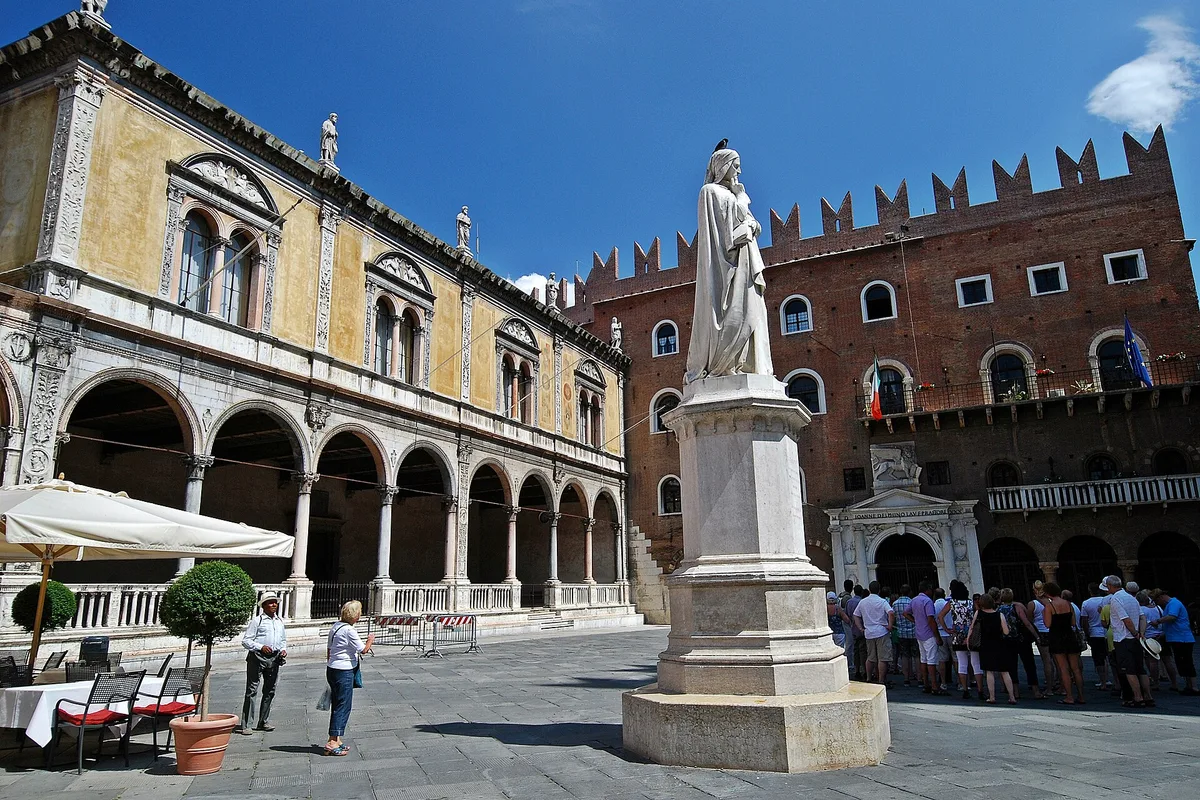
The Heart in Piazza dei Signori
The signature image is Piazza dei Signori laid out with wooden market stalls arranged to form a giant red heart, selling Veronese craft goods and local food. It is unashamedly a set piece for photographs, and it works — the square is one of the most handsome in the Veneto, enclosed by Scaliger and Renaissance architecture, and the arrangement reads properly from the upper floors and from the Torre dei Lamberti above it.
Around it, the Loggia di Fra' Giocondo hosts shows and talks, the Loggia Antica and the surrounding streets carry themed installations, and the pedestrian routes between the Arena, Juliet's House and the centre are decorated for the weekend.
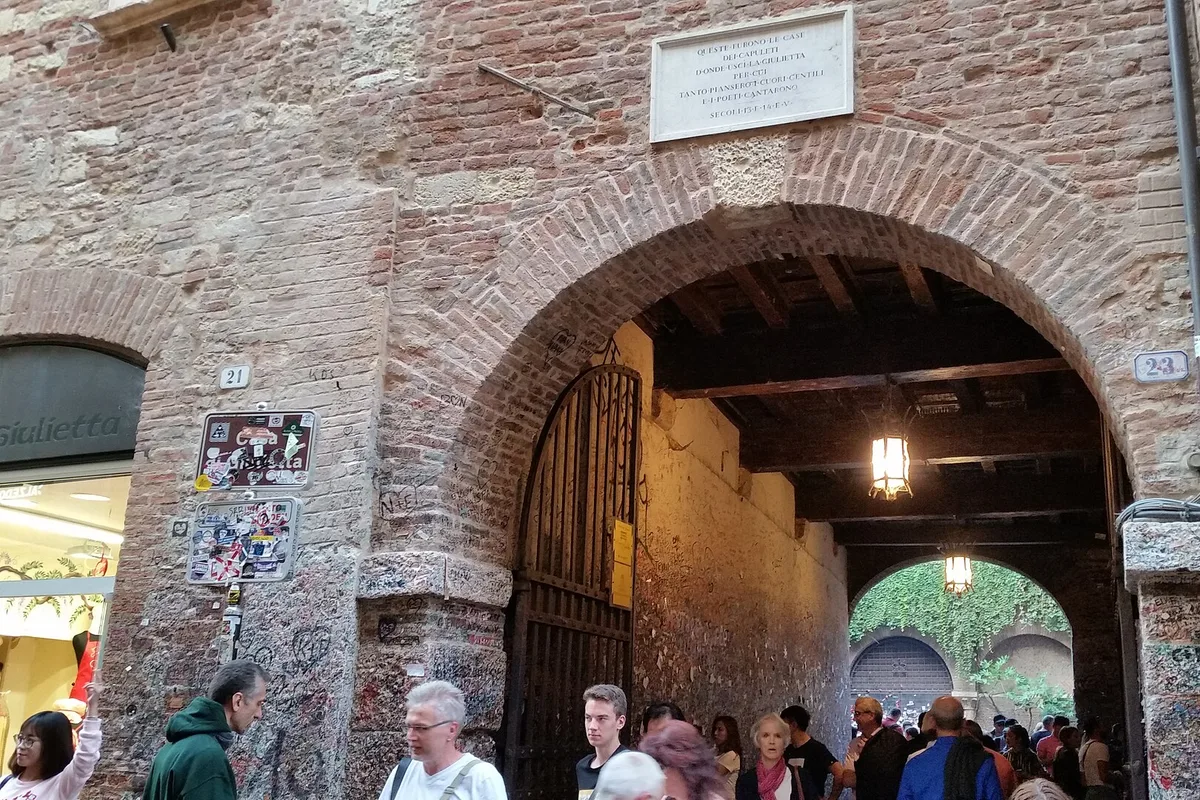
Verona has been actively managing pressure on Juliet's House, including limits on access to the balcony courtyard. If that specific stop matters to you, check the current arrangements before arriving rather than assuming you can walk in — the Valentine's weekend is precisely when it is most constrained.
Is It Worth Going?
Be clear about what this is. Verona in Love is a well-run municipal programme built on a literary association, not a historic civic tradition like Tocatì or a world-class festival like the Arena opera season. Nobody in Verona has been doing this for four hundred years.
What makes it worth knowing is the calendar position. February is otherwise completely empty in Verona — no opera, no Vinitaly, no Christmas market — and it is the cheapest month of the year to visit a city that is expensive in April and from June to September. A February trip gets you the Arena as a Roman monument without the festival rigging inside it, the Castelvecchio and the Scaliger tombs without queues, and a programmed weekend on top.
The Valentine's weekend itself is the exception to the cheapness — couples travel for it and central hotels price accordingly. If the festival is incidental and the empty city is the appeal, the weeks either side of it are better value than the weekend.
What Else Is On in February
Not much in Verona, but a great deal nearby. February is carnival month across northern Italy: Venice Carnival is about ninety minutes east by train and runs for two and a half weeks, Viareggio parades its floats on the Tuscan coast, and Milan's Ambrosian carnival runs four days past everyone else's, an hour and a half west.
| From Verona | Event | Journey |
|---|---|---|
| East | Venice Carnival | ~1h30 by rail |
| West | Milan's Ambrosian carnival | ~1h30 by rail |
| Southwest | Viareggio | ~3h by rail |
That makes Verona a workable base for a carnival trip rather than a destination in itself in February — cheaper than Venice, on the Milan–Venice rail corridor, with its own programmed weekend in the middle. The Easter-relative date rules explain how carnival dates move each year, and the Verona festival calendar covers the rest of the city's year.
Frequently Asked Questions
When is Verona in Love?
Several days around 14 February. The 2026 edition ran 14 to 16 February. Future editions are expected in the same window, computed from the recurrence pattern — the city publishes each year's programme in advance on Visit Verona.
What happens at Verona in Love?
Concerts, street performance, guided tours, markets and museum initiatives across the historic centre. The centrepiece is Piazza dei Signori, filled with wooden stalls arranged to form a giant heart selling Veronese crafts and food, with shows and talks at the Loggia di Fra' Giocondo.
Can you visit Juliet's House during the festival?
Verona has been managing visitor pressure on Juliet's House, including limits on balcony courtyard access. The Valentine's weekend is when it is most constrained, so check current arrangements before arriving rather than assuming walk-in access.
Is February a good time to visit Verona?
It is the cheapest month, and the only one with no major event competing for accommodation — no opera season, no Vinitaly, no Christmas market. You get the Arena as a Roman monument without festival staging inside it and the museums without queues. The Valentine's weekend itself prices higher than the weeks either side.
Is Verona in Love a historic tradition?
No — it is a modern municipal programme built on Verona's literary association with Romeo and Juliet, not a centuries-old civic festival like Tocatì. Its value is calendar position: it fills an otherwise empty month in a city that is expensive the rest of the year.