
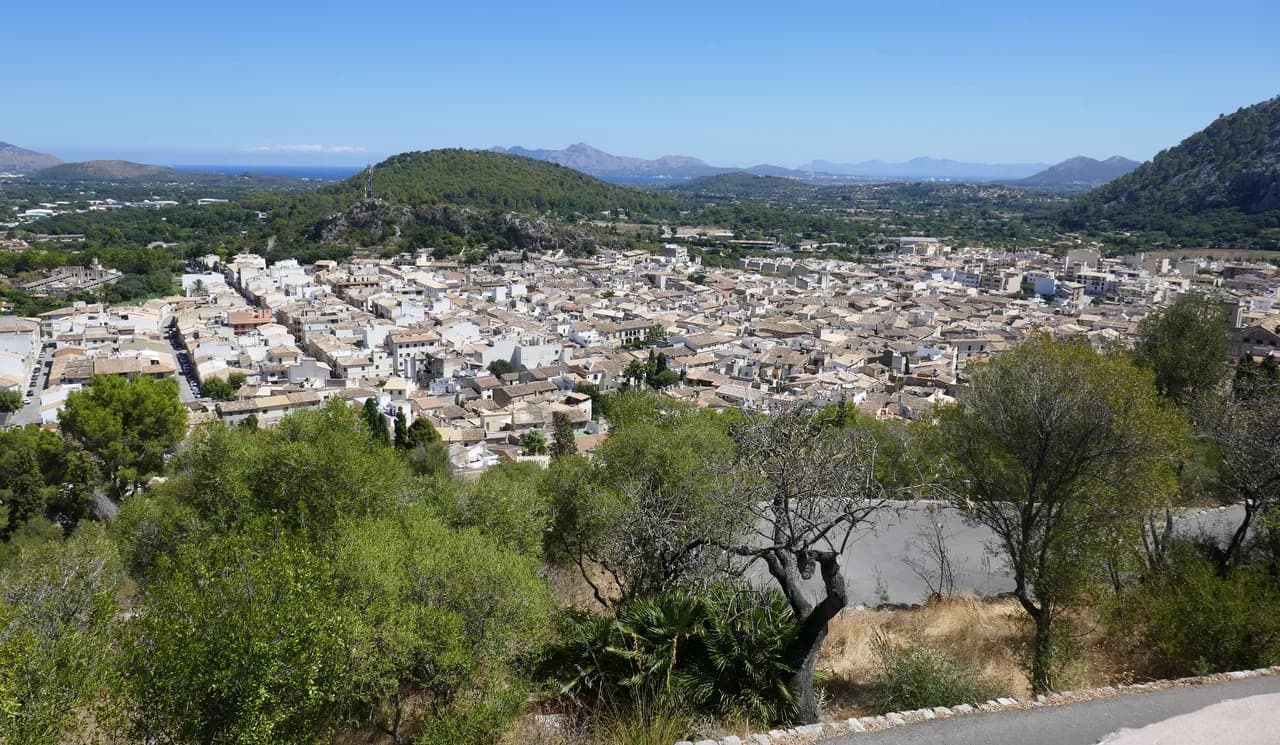
Semana Santa in Pollença is among Mallorca's most distinctive Easter observances. Unlike celebrations held in cathedral squares, Pollença's key moments unfold on and around the 365-step Calvari hill, making the setting itself part of the drama.
The municipality's official tourist portal highlights the Good Friday Davallament, considered of tourist interest since 1968, as the event that symbolizes Easter week in Pollença. Alongside it, the Holy Thursday procession with Passion tableaux and the Easter Monday pilgrimage to Puig de Maria round out a week of living tradition.
Overview of Semana Santa in Pollença
Holy Week in Pollença spans from Palm Sunday to Easter Monday, with the most significant processions occurring on Holy Thursday and Good Friday. The town's processions are organized by parish brotherhoods, or cofradías, whose members wear traditional penitential robes and conical hoods, a practice dating back to medieval times.
While the coastal settlement of Port de Pollença holds church services during Holy Week, the processions themselves take place in Pollença's old town. If you are staying by the harbor, plan to travel the short distance inland to see the main events.
Holy Thursday: The Evening Procession of Passion Tableaux
On Holy Thursday evening, a procession known as the Procession of the Blood winds through the streets of Pollença, starting near the Plaça Major and moving past several churches. Its most striking feature is a series of tableaux representing scenes from the Passion, a tradition that has been part of the town's observance since the mid-twentieth century.
Re-enactments may include the Last Supper and even live crucifixion scenes, as participants carry the figures through the old town. The atmosphere is somber and contemplative, with spectators lining the narrow streets despite the late hour.
Good Friday: The Davallament (Descent from the Cross)
The centerpiece of Pollença's Easter is the Good Friday Davallament. This re-enactment begins at the top of the Calvari hill, where an articulated figure of Christ is unnailed from the cross, then carried down the 365 steps that lead to the town streets.
Once at the bottom, the procession heads to the Mare de Déu dels Àngels Parish Church. Because the steps are narrow, spectators who want a close view should arrive well ahead of the start time and be prepared for a long wait in a crowded space.
Other Holy Week Observances in Pollença
Palm Sunday opens Holy Week with a blessing of palms and a procession from the Monti-sion church to the parish church, often followed by a Way of the Cross on the Calvari steps in the evening. In Port de Pollença, Palm Sunday includes a separate morning procession and mass.
On Easter Sunday, a smaller but still moving procession takes place in the lower market square, and on Easter Monday the town makes a pilgrimage to the sanctuary on Puig de Maria, the hilltop that overlooks Pollença. This day features mass, music, and a traditional communal lunch.
Planning Your Visit: What to Expect
Processions in Pollença do not run to a precise minute. Times published ahead of Easter are approximations, so treat them as a guide and confirm with local sources closer to the date. The town's official tourism pages and the Ajuntament de Pollença publish the full program in Catalan and Spanish each year.
You do not need a ticket to watch the street processions, but you will need patience. The Good Friday descent draws large crowds, making the Calvari steps a competitive spot. Dress for cool spring nights and bring comfortable shoes for the cobbled streets.
How the Traditions Differ in Pollença
What sets Pollença apart from other Mallorcan towns is the topography: the Calvari steps become a natural stage for the Descent, rather than a flat square. The intimate scale of the old town also brings spectators close to the hooded penitents and the heavy platforms bearing the statues.
This is a living act of faith, not a tourist performance. Participants take their roles seriously, and onlookers are expected to maintain a respectful silence during the most solemn moments, even as photographers jostle for position.
How to Confirm Dates and Schedule
Holy Week falls on different dates each year following the lunar calendar. To confirm the exact program, consult the Ajuntament de Pollença's official website in the weeks leading up to Easter, as it publishes the most reliable schedule of processions and masses.
Third-party blogs and forums can offer useful descriptions, but they should not be taken as the final word on times. Cross-check any details you read with official or local sources before making firm plans.
Plan Your Visit
Experiencing Semana Santa in Pollença is an opportunity to witness one of Mallorca's most atmospheric Easter traditions, set against the dramatic backdrop of the Calvari steps. Whether you arrive on Palm Sunday or stay through Easter Monday, the town's processions offer a window into its religious heritage.
Before your trip, check the official schedule and be flexible with your plans. If you miss the main events, the sanctuary on Puig de Maria and the quiet beauty of Pollença's old town still make the visit worthwhile.
Frequently Asked Questions
When is Holy Week in Pollença?
Holy Week takes place each year in the week leading up to Easter Sunday, which falls on different dates according to the lunar calendar. In 2026 it runs from Palm Sunday (March 29) to Easter Monday (April 6). Check the official Ajuntament de Pollença schedule for exact dates each year.
What happens at the Good Friday procession in Pollença?
On Good Friday evening, the Davallament re-enactment takes place: a figure of Christ is carried down the 365 steps of the Calvari hill to the town streets, then proceeds to the parish church. It is a solemn and much-photographed event.
What is the Davallament?
The Davallament, meaning 'Descent', is the Good Friday ceremony in which an articulated Christ figure is unnailed from the cross at the top of the Calvari and carried down the steps. Considered of tourist interest since 1968, it is Pollença's most iconic Easter event.
Where do the processions take place?
The main processions take place in Pollença's old town, centered on the Calvari hill and the streets around the Plaça Major and parish church. Port de Pollença holds church services but not the major street processions.
Are there processions in Port de Pollença?
Most processions are held in Pollença town itself. Port de Pollença typically has church services, including Palm Sunday mass and Easter services, but the larger street processions are centered in Pollença old town.


