Holy Week in Zaragoza may not have the global fame of Seville’s, but it has a character all its own. Declared a Festival of International Tourist Interest, the celebration fills the city with processions from Palm Sunday to Easter Sunday, and the sound of thousands of drums and bass drums beating in unison gives it a distinctive, almost roaring energy. For first-time visitors, the sheer number of events can be overwhelming, so this guide highlights the processions that stand out for their imagery, drama, and local tradition.
The dates of Holy Week change every year because they follow the lunar calendar, so before you plan your trip, check the official calendar published by Zaragoza Tourism or the Spanish tourism board. The celebration typically runs from Palm Sunday through Easter Sunday, but exact dates for each edition are confirmed only months in advance. For a broader look at the country’s best celebrations, see our guide to festivals in Spain.
Zaragoza's Holy Week at a Glance
The processions in Zaragoza involve roughly 25 brotherhoods and more than 15,000 participants, with up to 4,000 drums and bass drums accompanying the floats. Over the week, about 50 processions wind through the city, making it a packed calendar. The official tourism site notes that the celebration attracts over 100,000 visitors each year, so expect crowds, especially for the marquee events.
The drum tradition is the hallmark of Zaragoza’s Holy Week. While drums have been played in the Bajo Aragón region for centuries, they were only introduced to the city’s processions in 1940, with the bass drum following in 1969. These instruments are not just background noise; they create intense moments of silence and thunder that you’ll feel in your chest.
Procession of the Holy Burial: Good Friday's Crown Jewel
The Holy Burial (Santo Entierro) on Good Friday is the most famous and crowded procession in Zaragoza. It brings together members of all the brotherhoods, who walk through the city centre in a solemn parade that dates back centuries. The procession ends with the Cristo de la Cama, one of the oldest images processed in the city, making it a deeply moving spectacle. Some sources call it the longest and oldest procession in Spain, but this claim is not corroborated by the official tourism office, so treat it as a local legend rather than verified fact.
The Encuentro (Meeting) Procession: A Day to Verify
The Encuentro Glorioso recreates the meeting between the Risen Christ and the Virgin Mary, and it is one of the most emotionally charged events. The scene unfolds in Plaza del Pilar to the sound of bells, traditional jotas, and drums. However, sources disagree on the day: the Sercotel blog places it on Easter Sunday, while a Hotel Sauce interview mentions an Encuentro on Holy Wednesday. Before you commit, check the official schedule for the year you plan to visit, as the day may vary.
Procession of the Seven Words: The Power of Drums
Also on Good Friday, just before the Holy Burial, the Procession of the Seven Words (Procesión de las Siete Palabras) takes place. This procession represents the seven last words of Christ on the Cross and features an explosion of drums and bass drums, a tradition inherited from the Bajo Aragón. The brotherhood behind it, founded in 1940, is the largest in Zaragoza, with more than 1,400 members, and its white habits and green hoods are a recognizable sight.
Penitential Way of the Cross: Night on the Stone Bridge
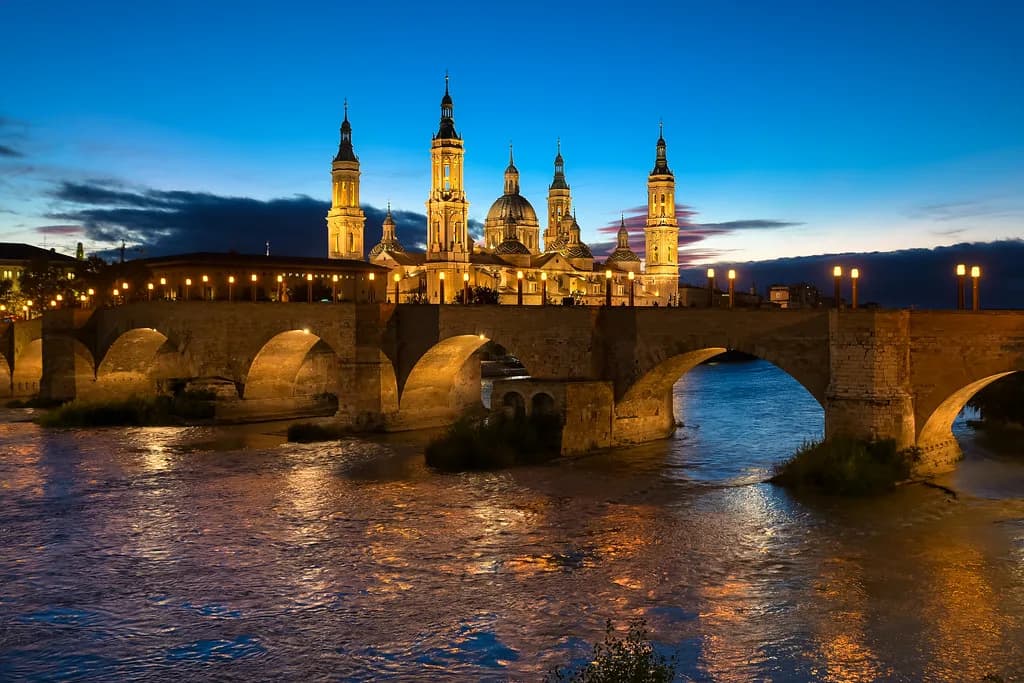
On the night of Holy Wednesday, the Via Crucis of the Ecce Homo brotherhood crosses the Stone Bridge around midnight, with the Basilica of Our Lady of the Pillar lit in the background. The procession uses carraclas, a distinctive rattle-like instrument, instead of drums, creating an eerie, haunting sound. It's a shorter but atmospheric procession, ideal if you prefer a quieter, more solemn experience.
Other Processions Worth Watching
Palm Sunday kicks off Holy Week with the Procession of Palms, which leaves from the Church of Santa Isabel de Portugal and re-enacts Jesus’ entry into Jerusalem. The same day, the Station of Penance features the Brotherhood of Nazarenes of Jesús de la Humildad, known for a shower of petals on Palomar Street. On Holy Tuesday, the Procession of Tears accompanies the Virgin of Tears from El Salvador School to San Cayetano Church, remembering the five sorrows of Mary.
Where to Watch: Plaza del Pilar and the Stone Bridge
Plaza del Pilar is the historic and emotional heart of Holy Week. Many processions either start, pause, or end here, and the wide square offers space for large crowds. The official tourism site highlights the departure of the brotherhoods and the final acts (recogidas) as highly emotive moments, and these often happen near the plaza or at the basilica. Arrive at least an hour early for major events like the Holy Burial, as barriers fill quickly.
The Stone Bridge over the Ebro River provides a different perspective, especially for the Penitential Way of the Cross, which crosses it at midnight. From the bridge, you also get one of the best views of the basilica, and you can see processions approaching from both sides. For a less crowded viewpoint, try the riverbanks, where you can catch processions as they pass along the water.
Practical Tips for First-Timers
Plan for varying weather: March and April in Zaragoza can be cool and rainy, so bring a waterproof jacket and comfortable shoes. Dress modestly if you plan to enter churches during processions, as a sign of respect. Arrive early to secure a good spot, especially at Plaza del Pilar, and listen for the drums to gauge when a procession is approaching.
If you want to trace the route of a specific brotherhood, look for the official program published by Zaragoza Tourism, which includes times and start locations. Keep in mind that exact schedules are subject to change, so check on the day itself. While hotel recommendations are plentiful, the processions are the main event, so focus your energy on the street experience.
Plan Your Visit
Zaragoza’s Holy Week is a powerful display of faith and tradition, with a soundtrack of drums that you won’t forget. Whether you catch the massed brotherhoods of the Holy Burial, the night-time Via Crucis on the bridge, or the petal showers on Palm Sunday, the city offers a unique take on the Spanish Easter. Just verify the dates and times for your travel year, and arrive early to secure a good spot.
If you’re also planning a trip around the city’s other big celebrations, you might find our guides to the Fiestas del Pilar and the Three Kings Parade useful. For now, focus on the processions, and you’ll be rewarded with one of Spain’s most authentic Holy Week experiences.
Frequently Asked Questions
What is the most important procession in Zaragoza during Holy Week?
The Holy Burial (Santo Entierro) on Good Friday is the most important and crowded procession, as it brings together members of all brotherhoods in a solemn parade through the city center.
When are the processions of Holy Week in Zaragoza?
The processions take place from Palm Sunday to Easter Sunday, but the exact dates vary each year because they follow the lunar calendar. Check the official Zaragoza tourism website for the confirmed calendar.
Why are drums played during Holy Week in Zaragoza?
Drums were introduced to Zaragoza's processions in 1940, influenced by the Bajo Aragón tradition. They create a powerful, thunderous sound that evokes the emotion and passion of Holy Week.
How many processions are there in Zaragoza during Holy Week?
Around 50 processions take place throughout the city, involving approximately 25 brotherhoods and thousands of participants.
What is the Encuentro procession?
It is a procession that recreates the meeting between the Risen Christ and the Virgin Mary in Plaza del Pilar. The exact day varies by source, so verify with official programs.