
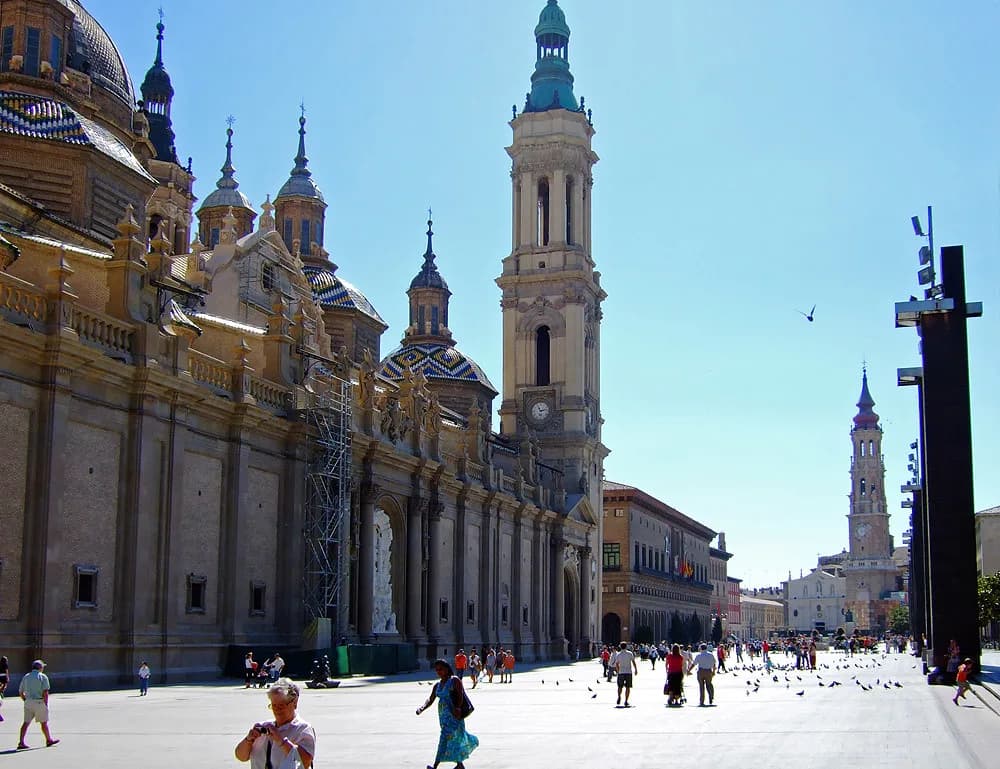
Every October, Zaragoza celebrates its patron saint, the Virgen del Pilar, with a festival that culminates in the Ofrenda de Flores on 12 October. Participants in traditional regional costumes carry flowers to the Plaza del Pilar, where volunteers build a vast flower mantle around the statue of the Virgin. Watching this slow, colorful transformation is a moving spectacle, whether you join the procession or observe from the square.
What Is the Ofrenda de Flores?
The flower offering is a central act of devotion during the Fiestas del Pilar. Hundreds of thousands of people, dressed in traditional Aragonese costumes or outfits from other Spanish regions, parade through the streets to the Plaza del Pilar, carrying bouquets to lay at the feet of the Virgen del Pilar. Volunteers arrange these flowers into a giant pyramidal mantle that surrounds the statue, which remains on display for the rest of the festival.
The event's roots lie in religious tradition, but it has become as much a celebration of Spanish regional culture as a religious tribute. Seeing the streets filled with people in period dress, walking together toward the square, is a unique experience. As one observer described, it feels like stepping back in time or being in a film set, with heavy silk dresses, embroidered cloaks, and floral headdresses everywhere you look.
When and Where Does It Take Place?
The Ofrenda de Flores is held on 12 October, the feast day of the Virgen del Pilar, in the Plaza del Pilar in Zaragoza. The event runs for most of the day, with participants arriving continuously from early morning onward. The official schedule can change from year to year, so check the Zaragoza city council's Fiestas del Pilar pages for the exact start and end times for the edition you plan to attend.
The procession follows main avenues leading to the square, and barriers line the route so that both participants and spectators can move safely. Because the event is enormous, closing streets to traffic and creating a festival atmosphere across the city centre. You can expect to walk a fair distance from the outer streets to the square, so factor that into your plans.
How to Participate in the Ofrenda de Flores
If you want to join the offering, the first step is to decide on your costume. The tradition is to wear the traditional dress of Aragon or any other Spanish region, which you can often rent in Zaragoza in the weeks leading up to the event. Since dress requirements can vary, check with the organizers or the tourism office for specific rules about clothing and whether anything else is required.
You also need to bring flowers to offer, often carnations or other blooms, which you can buy near the procession route or bring from home. Some participants carry a single stem, others a full bouquet. The act of handing your flowers to a volunteer who places them on the mantle is the core of the experience, making it meaningful beyond just watching.
What to Wear to the Ofrenda de Flores
Dressing traditionally is more than a costume; it's a point of pride and a way to honor the cultural heritage of Spain. For women, this often includes a floral headdress, and for men, a regional hat. Comfortable shoes are also essential because you'll be on your feet for hours, both while waiting in line and while walking the route.
If you're not comfortable renting a full costume, some spectators wear regional accessories like a scarf or a flower in their hair. But be aware that the event is deeply traditional, and dressing appropriately can make you feel more part of the celebration. In any case, layer your clothing, as October mornings can be cool and afternoons warm.
How to Watch the Ofrenda de Flores
If you prefer to observe rather than parade, you can watch from the edges of the Plaza del Pilar or along the route. The square becomes crowded, so arriving early is key to securing a good spot. There's no official viewing area, so find a spot with a clear view of the square and the flower mantle as it grows.
Even if you're not participating, you can stand near the route and see the costumes up close, and you'll have a good view of the flower mantle's progress. As one visitor noted, watching the mantle fill up flower by flower is a fascinating sight. The atmosphere is festive, with music and dance performances along the way.
Practical Tips on Timing and Crowds
Crowds are massive. To beat the worst congestion, start your journey to the square early in the morning, ideally before many participants begin arriving. But if you're participating with a pet, the organizers recommend attending during specific time slots to avoid the busiest periods. For the 2026 edition, these were from 6:45 to 9:00 h or after 19:00 h, though exact times may change.
Whatever you do, expect slow movement and long waits. The procession moves at a gentle pace, and you'll stand still for long stretches. If you're watching, you'll want to arrive even earlier to claim your spot. Just remember that the event is a marathon, not a sprint, so pace yourself.
What the Flower Offering Looks Like
Seeing the flower mantle grow is a highlight. The mantle is built around the statue of the Virgin, set on a high platform. Initially, the structure looks bare, but as the day goes on, volunteers slot each flower into place, and slowly, the pyramid transforms into a colorful tapestry of petals, leaves, and ribbons.
The result is stunning, with flowers covering almost the entire surface, creating a vibrant cloak that remains on display for the rest of the festival. The visual impact is heightened by the sheer number of flowers—thousands upon thousands—and the rhythmic movement of the crowd. It's a beautiful, moving tribute.
Combining the Ofrenda with Other Fiestas del Pilar Events
The Ofrenda de Flores is the heart of the Fiestas del Pilar, but the festival stretches over several days in early October, with concerts, parades, and cultural events. The pillar guide can help you plan which events to prioritize if you have limited time. For instance, the opening parade and the Rosario de Cristal are equally iconic.
If you have a special interest in religious processions, you might also appreciate the Semana Santa Zaragoza processions guide, which covers the city's famous Holy Week events, though they take place in spring, far from the Pilar festival. These events share a ceremonial spirit and offer another chance to see traditional costumes and floats.
Final Planning Checklist
Decide early whether you want to participate or watch—this shapes your planning. If you're participating, book your costume rental and set a clear meeting time with your group. If you're watching, identify your preferred viewing spot and plan to arrive several hours early to claim it.
Regardless of your role, bring sunscreen, water, and comfortable shoes, and remember that portable toilets are available but lines can be long. Keep an eye on the official Zaragoza Fiestas del Pilar website for any last-minute changes to the schedule or participation rules.
Plan Your Visit
The Ofrenda de Flores on 12 October is a once-in-a-lifetime experience, whether you join the sea of colorful costumes or stand and watch the floral mantle rise. With careful planning and a flexible attitude, you'll be ready to embrace the crowds and enjoy this extraordinary display of devotion and culture.
Frequently Asked Questions
What is the Ofrenda de Flores?
The Ofrenda de Flores is a traditional offering of flowers to the Virgen del Pilar in Zaragoza, held on 12 October during the Fiestas del Pilar. Participants dressed in regional costumes carry flowers to the Plaza del Pilar, where volunteers build a large flower mantle around the statue of the Virgin.
When is the Ofrenda de Flores?
It takes place every year on 12 October, the feast day of the Virgen del Pilar, as part of the Fiestas del Pilar in Zaragoza. The event typically runs for most of the day, but exact times can vary, so check the official program from the Zaragoza council for the current year.
How can I participate in the Ofrenda de Flores?
To participate, you can join the procession in traditional Spanish regional costume and carry a bouquet of flowers to the offering. You can either join one of the organized groups or take part individually. No prior registration is typically needed, but it's wise to follow the event's official guidelines.
What should I wear to the Ofrenda de Flores?
Traditional dress is expected for participants, but you can choose the costume of any Spanish region. If you don't have one, you can rent in Zaragoza. Comfortable shoes are essential, as you'll be on your feet for hours.
How can I watch the Ofrenda de Flores?
You can watch from the Plaza del Pilar or along the procession route. Arriving early is recommended to get a good viewing spot. The atmosphere is festive, and you can see the costumes and the flower mantle grow throughout the day.


