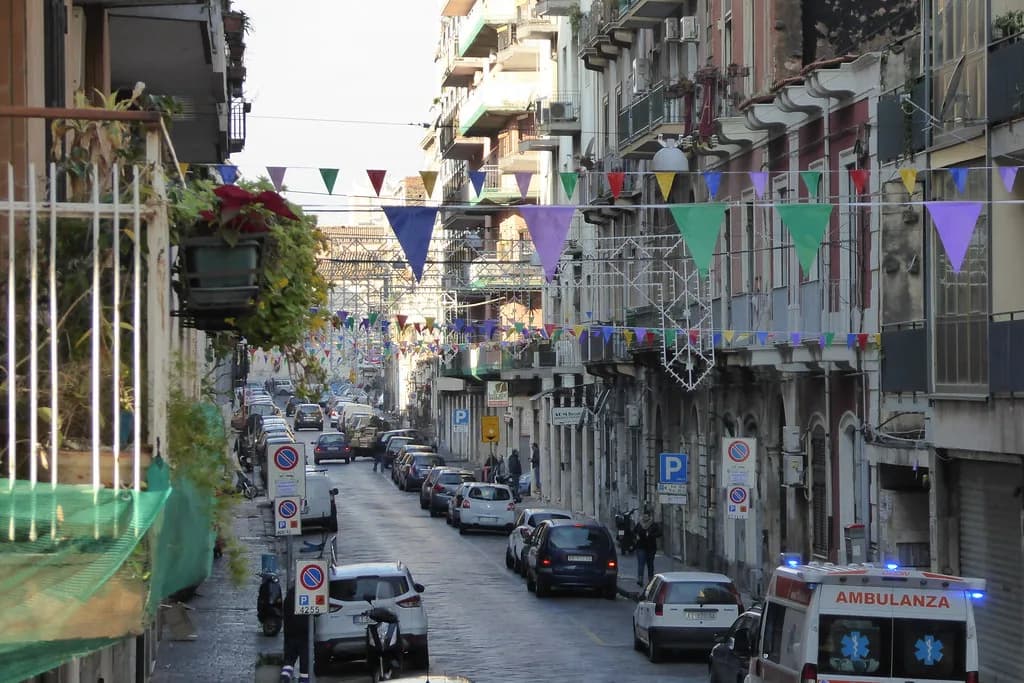
For three days each February, the Sicilian city of Catania fills with up to a million people as it honors its patron saint, Agatha. The Festa di Sant'Agata, held from February 3 to 5, is one of Europe's largest religious gatherings, combining deep faith with fireworks, processions, and centuries-old rituals.
Visitors who come to observe will see a different side of Sicily: not a spectacle staged for tourism but a living tradition in which the city's identity is on display. To help you navigate the festival, this guide covers its origins, the day-by-day highlights, and the practical details that make a visit smooth and memorable.
The Legend of Saint Agatha and the Festival's Religious Significance
Sant'Agata was a young Christian woman from a noble Catania family who lived in the first half of the 3rd century. According to tradition, she rejected the courtship of the Roman governor Quinziano and was tortured, having her breasts torn off before being killed.
After her death, Mount Etna threatened the city with a violent eruption. Believing that Agatha's veil, which had been placed over her tomb, could stop the lava, the inhabitants carried it in procession, and the miracle occurred: the lava halted on February 5, the anniversary of her martyrdom. Since then, the city has celebrated this act of protection.
The festival's religious roots are inseparable from its civic pride. The visit to the official tourism site of Sicily explains the story in detail, including the key moments of the three-day celebration, and is a reliable starting point before you travel.
When and Where: Dates and Key Locations in Catania
The festival takes place annually from February 3 to 5 in the heart of Catania. The focal point is Piazza Duomo, where the cathedral houses the relics of Sant'Agata and where the main processions begin and end. Nearby, Via Etnea, the city's grand boulevard, becomes the stage for the procession.
Other key sites include Piazza San Domenico, Piazza Università, Piazza Stesicoro, Villa Bellini, and Piazza Cavour, each marking a significant stage in the route. Because the exact path and timings can change from year to year based on crowd and tradition, always check the current year's schedule on the official tourism website of Sicily before making plans.
Day-by-Day Highlights (Feb 3-5): Processions, Candelore, and the Ferculum
On February 3, the civil authorities parade on an 18th-century Senate carriage, accompanied by religious and military dignitaries. They follow the eleven 'candelore', heavy carved and gilded wooden constructions carried by the city's ancient trade corporations. In the evening, a magnificent fireworks show lights up Piazza Duomo.
February 4 begins with the Aurora Mass, followed by the procession of the silver ferculum, known as 'a vara. The most eagerly awaited moment is the 'cchianata de' Cappuccini, when devotees pull the statue at a run to Piazza San Domenico. The tour continues through the night, with the ferculum returning to the Cathedral at first daylight.
On February 5, the procession moves along Via Etnea to Piazza Università, then Piazza Stesicoro, and Villa Bellini, finally arriving late at night in Piazza Cavour. The climactic 'cchianata 'i Sangiulianu sees the heavy statue run once more before the Saint returns to the Cathedral in the early hours, greeted by fireworks and emotional crowds. For a closer look at the best places to stand along the route, consult our guide to the best spots to watch the Sant'Agata procession in Catania.
The White Robes (u saccu) and Devotee Traditions
Perhaps the most striking image of the festival is the sea of white robes worn by devotees. This traditional votive costume, called ‘u saccu, consists of a white cotton habit and a black headdress, often worn with white gloves and a handkerchief.
Devotees dress this way as an act of faith, often in fulfillment of a vow. During the processions, they wave handkerchiefs and cry out in unison: “All devout, all citizens, long live Sant’Agata!” Many also carry large votive candles as offerings, a practice known as the 'rito della cera'. Observers should remember that this is a deeply religious act, and respect the devotion of those around you.
If you are considering joining as a devotee, it is a commitment that locals take seriously. See our guide on dressing as a devotee for Sant'Agata to understand the customs and responsibilities.
Traditional Foods to Try: Olivette and Minne di Sant'Agata
No Sicilian festival is complete without its traditional foods, and Sant'Agata offers two iconic sweets. Olivette di Sant'Agata are small almond pastries colored green and covered in sugar, shaped like olives. Cassateddi di Sant'Aita, also known as minnuzzi, are breast-shaped cakes with white icing and a cherry on top, a direct reference to the saint's martyrdom.
These treats appear in pastry shops across Catania during the festival days, and locals often enjoy them alongside a strong espresso. For a deeper dive into the food traditions and where to find them, see our dedicated guide to Sant'Agata festival food and sweets in Catania.
Practical Tips for First-Time Visitors: Crowds, Weather, and What to Wear
The festival attracts enormous crowds, so book your accommodation months in advance. Catania's historic center becomes largely pedestrianized during the main processions, and streets can be packed shoulder-to-shoulder.
February weather is mild but unpredictable, with temperatures typically ranging from 8°C to 15°C, often cooler at night. Dress in layers, wear comfortable walking shoes for cobblestone streets, and bring a rain jacket just in case. The processions continue rain or shine.
Safety is generally not a concern, but as with any large gathering, remain aware of your belongings. Use a zippered bag, avoid pickpocketing hotspots, and follow any police instructions. The atmosphere is intense and emotional, but respectful; visitors who maintain a courteous distance will find the experience rewarding.
Photography and Etiquette: Capturing the Festival Respectfully
The festival offers endless photographic opportunities: candlelight against darkened streets, the white robes of devotees, the ornate candelore, and the emotional expressions of the crowd. However, always be mindful that this is a religious event. Ask permission before photographing individuals, especially during moments of prayer.
Avoid using flash during the processions, as it can be intrusive and distract the carriers. For the most impactful shots, look for elevated vantage points or positions along the route where you can capture the flow without obstructing the procession. A photography tour led by a local expert can help you navigate these challenges, as described in a detailed account of a night walk focused on the festival.
Frequently Asked Questions
The questions below address common concerns for first-time visitors.
Plan Your Visit
Attending the Festa di Sant'Agata is more than just watching a parade; it's an immersion into the soul of Catania. The devotion of the crowd, the thunder of the candelore, and the dusty taste of almond sweets create an experience you won't forget.
Begin planning early, pack for cool nights, and arrive with an open mind. Above all, respect the religious significance that gives the festival its power. If you do, you'll leave with memories of a living tradition that has endured for centuries.
Related festival guides
Frequently Asked Questions
How to celebrate St. Agatha?
The most direct way is to attend the festival in Catania from February 3 to 5. You can join the crowd along the procession route, watch the candelore and the ferculum go by, and even dress in the traditional white 'u saccu' if you wish to participate as a devotee. Many locals also attend Mass and enjoy the festival foods.
How many days in Catania is enough?
To fully experience the Festa di Sant'Agata, plan to stay at least three days, from February 3 to 5. If you also want to explore the rest of Catania and nearby attractions like Mount Etna or the Baroque towns of the Val di Noto, consider adding two or three more days.
Is it safe to go to Catania now?
Yes, Catania is generally safe for tourists, including during the festival. Like any large gathering, petty crime such as pickpocketing can occur in crowded areas, but with normal precautions—keeping valuables secure and staying aware of your surroundings—you can enjoy the festival safely.
Where not to go in Catania?
While the historic center is safe, visitors should exercise caution in certain peripheral neighborhoods, such as San Giovanni Galermo or Librino, especially after dark. During the festival, stick to the main procession areas and well-lit streets. For the latest advice, consult local authorities or your accommodation.
Do I need tickets to attend the Festa di Sant'Agata?
No, the street processions and most events are free and open to the public. No tickets are required to watch the processions. Some churches may hold special masses with limited capacity, but these are not ticketed events for the general public.
What should I wear to the festival?
Wear comfortable walking shoes and dress in layers, as February evenings can be cool. There is no formal dress code for spectators, but modest clothing is appropriate given the religious context. If you plan to join as a devotee, you will need the traditional white 'u saccu' and black headdress.
How crowded does the Festa di Sant'Agata get?
Very crowded. The festival can attract up to one million people over the three days. During the main processions, the historic center becomes densely packed. If you prefer more space, position yourself on the periphery or choose an elevated viewpoint.
Is the festival suitable for children?
Yes, families attend with children, and the festival offers a vivid cultural experience. However, be prepared for large crowds and late hours, which may be challenging for very young children. The daytime events are generally more manageable.