
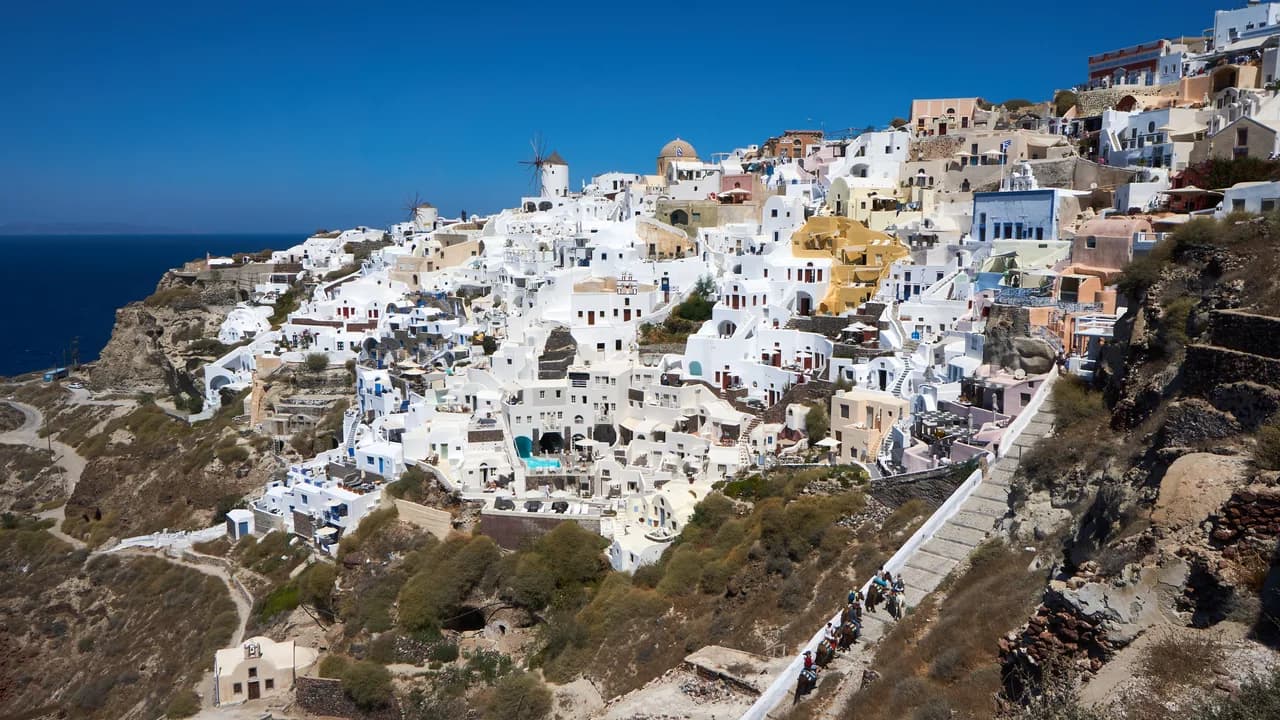
Easter is the most significant celebration in the Greek Orthodox calendar, and Oia offers a unique setting to experience it. The village’s cliff-top position and famous caldera views provide a dramatic backdrop for the week’s services and traditions.
Unlike the Western Easter, which usually falls earlier, Greek Orthodox Easter is determined by the Julian calendar, so it often occurs on a different date. Visitors should check the exact dates for the year they plan to travel, as this affects the entire Holy Week schedule.
Whether you are spiritually inclined or simply curious about local customs, attending Easter in Oia offers a rare glimpse into the island’s culture. The atmosphere during this week is markedly different from the summer crowds, providing a more intimate experience.
Understanding Greek Orthodox Easter
Greek Orthodox Easter follows the Julian calendar, which often shifts the date later than Western Easter. Because of this, spring travel to Greece can encompass two distinct Easter celebrations, adding to the appeal for cultural travelers.
The week before Easter, known as Holy Week, is filled with evening church services and fasting. The faithful abstain from meat and dairy, and the atmosphere is one of solemn anticipation leading to the Resurrection on Holy Saturday.
Holy Week in Oia
Holy Week begins on Palm Sunday and reaches its emotional peak on Holy Saturday. Each day has its own traditions and services, with churches across Oia opening their doors to locals and visitors alike.
During the week, you can attend services that include the reading of the Gospels, the anointing of the sick, and the Lamentation of the Virgin Mary. These services are often long and in Greek, but visitors are welcome to observe respectfully.
Knowing the general flow of the week helps you plan. For a detailed overview, a separate guide covers Holy Week processions in Oia, including the Epitaph service on Good Friday.
Holy Thursday: Red Eggs and Tsoureki
On Holy Thursday, families dye hard-boiled eggs red, symbolizing the blood of Christ and the empty tomb. These eggs will be used in the traditional egg-cracking game on Easter Sunday, where the last unbroken egg brings good luck.
The same day, households bake tsoureki, a sweet braided bread flavored with orange zest and mastic. Often a red egg is pressed into the center of the braid, creating a festive centerpiece for the Easter table.
Good Friday: The Epitaph Procession
Good Friday is the most solemn day of Holy Week. In the afternoon, the congregation decorates the Epitaphios, a symbolic bier representing Christ’s tomb, with flowers. In the evening, a candlelit procession carries the Epitaph through the streets.
While every village on Santorini holds its own procession, many say the most impressive one is in Pyrgos, a castle village on the island’s interior. There, the streets and buildings are illuminated by thousands of small flames from aluminum cans, creating a magical scene.
In Oia, the procession is more intimate but equally moving, winding through the marble-paved streets and offering views over the caldera.
Holy Saturday: Midnight Resurrection at Panagia Platsani
The peak of Easter in Oia is the Midnight Resurrection service at Panagia Platsani, the village’s main church. As midnight approaches, the church and surrounding square fill with worshippers holding unlit candles.
At midnight, the priest emerges with the Holy Flame, and the light is passed from candle to candle through the congregation. The chant “Christos Anesti” (Christ is Risen) rings out, followed by embraces and fireworks over the caldera.
This moment is both deeply spiritual and visually spectacular, as the caldera provides a natural amphitheater for the celebratory fireworks.
Fireworks over the Caldera: Where to Watch
After the service, fireworks explode over the caldera, reflecting in the dark waters below. Many locals and visitors head to the castle ruins or any spot along the cliff path for an unobstructed view.
For the best experience, arrive early to secure a spot, as the village becomes crowded. The atmosphere is jubilant, with families greeting each other and the night lit by the glow of candles and fireworks.
Easter Sunday: Feast and Local Customs
On Easter Sunday, the fasting period ends, and families gather for a grand feast. The centerpiece is roasted lamb, traditionally cooked over a fire pit for hours, accompanied by local wine and festive music.
It is common for locals to invite friends, neighbors, and even strangers to join the celebration, reflecting the spirit of community. If you are in Oia, do not be surprised if you are welcomed to share in the meal.
Practical Tips for Visiting Oia During Easter
Spring brings milder weather and fewer crowds than summer, but evenings can still be cool. Pack layers, comfortable walking shoes for the steep streets, and a light jacket for the night services.
Check with your hotel or local tourism office for the exact schedule of services and events, as these may vary. Availability of accommodations is generally better than summer, but booking in advance is wise if you plan to stay over the holiday.
Etiquette for Attending Church Services
Visitors are welcome at Orthodox services, but modest dress is expected: cover shoulders and knees. Women may wish to bring a scarf to cover their heads, as is customary in some Orthodox churches.
During the service, it is respectful to remain quiet and follow the lead of congregants. When the Holy Flame is passed, you may light your own candle and hold it during the singing of “Christos Anesti.”
A detailed etiquette guide is available for those attending Easter church services in Oia, offering further advice on participating respectfully.
Where to Stay and How to Get Around
Oia is a pedestrian-friendly village, but its many steps can be challenging. Staying in a hotel with a caldera view allows you to enjoy the fireworks from your balcony, though such rooms are often in high demand.
To reach Oia, most visitors fly to Santorini (Thira) and take a bus, taxi, or rental car. Public buses connect Oia with Fira, the island’s capital, but service can be limited during the Easter weekend.
What to Pack for Easter in Oia
Spring in Oia can be unpredictable: sunny days quickly turn cool, and rain is possible. A waterproof jacket and sturdy, non-slip shoes are essential, especially if you plan to watch the processions or climb to the castle.
Don’t forget a small candle to take part in the Midnight Resurrection, as local shops may be closed on the holiday.
Other Easter Events on Santorini
While Oia is a highlight, the island of Santorini celebrates Easter in many villages. Fira, the capital, hosts services and a large community celebration. At the same time, Pyrgos is renowned for its spectacular Good Friday procession, which is a major draw for visitors.
Exploring other villages during Easter week offers a broader view of the island’s traditions. If your travels take you to the Greek mainland, consider comparing the festivities with those in Athens through a separate city guide.
Plan Your Visit
Easter in Oia is a serene yet profound experience, blending religious devotion with natural beauty. As the summer crowds have not yet arrived, you can enjoy a more authentic side of the village.
Confirm the dates for Orthodox Easter each year and check with local organizers for the schedule of events. With careful planning, you can witness the enchanting Midnight Resurrection and fireworks from the caldera’s edge.
Related festival guides
Frequently Asked Questions
What happens in Santorini during Easter?
Santorini celebrates Greek Orthodox Easter with solemn church services throughout Holy Week. Highlights include the Epitaph procession on Good Friday (especially in Pyrgos), the Midnight Resurrection service at Panagia Platsani in Oia on Holy Saturday, and a festive feast on Easter Sunday.
Is Easter a good time to visit Greece?
Yes, Easter is a special time to visit Greece as it is the most important religious holiday. You'll experience authentic traditions, spring weather, and fewer tourists compared to summer, offering a more intimate view of local culture.
Should you wear white in Santorini?
There is no rule requiring white clothing, but it complements the island's aesthetic. More importantly, for church services, dress modestly with shoulders and knees covered. Comfortable shoes are essential for the steep, uneven paths.
What date is Easter in Greece in 2026?
Greek Orthodox Easter in 2026 falls on April 12, according to the Julian calendar. Exact dates vary each year, so always verify with the local church or tourism office closer to your travel dates.
Where to watch the Resurrection service in Oia?
The Midnight Resurrection service in Oia takes place at Panagia Platsani, the main church in the village square. Arrive early to secure a spot inside or in the surrounding streets, where you can also see the fireworks over the caldera.


