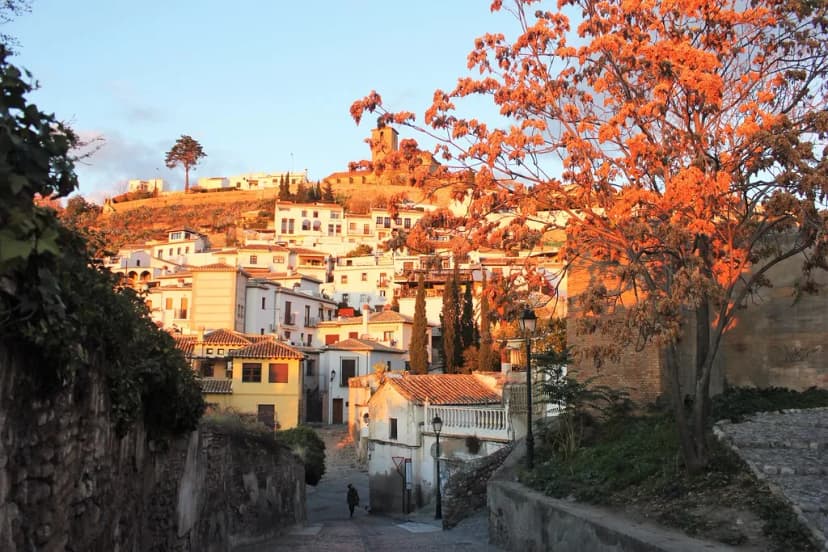
Every May 3rd, Granada turns into an open-air gallery of flower-decorated crosses. Neighbourhood associations, schools, and shopkeepers build elaborate altars in plazas, patios, and doorways, and the city fills with music, dancing, and the scent of carnations. This guide explains what Día de la Cruz is, where to find the most impressive crosses, and how to plan a day or weekend around the festival.
Día de la Cruz is one of the most popular festivals in Andalusia, and Granada has celebrated it since the 17th century. The tradition grew out of a neighbourhood celebration around a cross erected in 1625 in the San Lázaro district, and it spread to quarters like the Albaicín and Realejo. Children once built small flower-decorated altars and collected coins from passers-by, and although the fundraising has disappeared, the competitive, neighbourly spirit remains.
History and Traditions Behind the Day
The festival blends a Christian feast with older spring rites. Many sources trace Granada's celebration to the 17th century, when a white alabaster cross was erected in the San Lázaro district on May 3, 1625. Others point to 1754 as the beginning of the citywide tradition, so you will hear different origin stories. Either way, the core ritual is the same: neighbours decorate a cross with flowers and gather around it to sing and dance.
A distinctive local custom is the display of an apple with open scissors stuck in it among the decorations. In Spanish, the word for that type of apple is 'pero', which is also the word for 'but', so the apple and scissors say, 'We accept no buts' – a playful way to ward off criticism. You will spot these apples on many crosses, and locals enjoy explaining the meaning to visitors.
The festival has had its ups and downs. After the prohibition of soliciting money for crosses in 1883, the tradition nearly disappeared, kept alive privately until the first official altar competition in the early 19th century. In 1964, May 3rd was officially reinstated as a major city event. Bars and loud music around the crosses were later banned and then partially allowed again, so the rules have changed over the years; for the current setup, check with the local town hall.
Practical Planning: Date, Public Holiday, and Costs
Día de la Cruz is celebrated on May 3rd every year. Because that date often falls close to Labour Day on May 1st, the festival frequently stretches over a long weekend, with celebrations starting on Friday. In 2026, for example, the festival ran from Friday May 1st to Sunday May 3rd, as detailed in this Cruces de Mayo guide. May 1st is a national public holiday, and many villages in Granada province also declare May 3rd a local public holiday, so expect many shops to close and the city to be in full party mode.
Visiting the crosses is free; you only pay for food and drink at the temporary bars. The crosses go up on Friday afternoon and stay until Sunday night, with the best hours from late afternoon to midnight, when the crosses are illuminated. There is no need to book tickets, but accommodation fills up early, so reserve well in advance if you plan to stay overnight.
Where to See the Crosses: A Neighbourhood Guide
The crosses pop up all over the city, but the most spectacular ones cluster in a few neighbourhoods. In the city centre, Plaza de Bib-Rambla usually hosts the grandest cross, a strong contender for the top prize, while Plaza de la Trinidad offers a livelier, student-flavoured cross with a festive bar scene. For a quieter stroll, head to Paseo del Salón and Carrera del Genil, where smaller crosses line the riverside promenade.
In the Albaicín, Plaza de San Miguel Bajo offers a neighbourhood-first cross with a steep climb but great atmosphere. The route between the Albaicín and Sacromonte, Cuesta del Chapiz, features an intimate cross with views back over the city. Further into Sacromonte, you will find small community crosses set up outside cave-houses – none win city prizes, but they are among the most charming.
The Realejo is the festival's heartland. Campo del Príncipe, the main square, hosts one of the city's most beloved crosses, surrounded by outdoor seating, music, and a crowd that swings from local families in the afternoon to a younger drinking crowd after dark. Plaza de los Campos offers a quieter, more neighbourhood-driven cross just minutes away. Wander along Calle Molinos and Calle Horno de Oro to discover painted patios open to the public and small altars set into doorways.
To plan an efficient route, focus on the neighbourhoods most likely to reward your time. A detailed route that strings together the best city-centre, Albaicín, Sacromonte, and Realejo crosses is covered in our guide to the best neighborhoods to see Día de la Cruz crosses, so you can spend less time navigating and more time enjoying the flowers.
The Official Competition and Prizes
Every year, the city council organises an official May Crosses competition to promote the tradition. The categories typically include patios (courtyards), streets and squares, shop windows, schools, and religious brotherhoods. The number of participating crosses varies annually – 2018 saw 89 entries, while 2027 had 50 – so don't expect a fixed number each year; check the official list a few days before May 3rd.
Judging takes place over the festival days, with a panel touring the crosses. Prize-winning crosses often draw long queues of visitors, so if you want to see the best, time your visit accordingly. Winners are announced publicly – in 2027, the announcement followed the official proclamation on May 2nd at midday. For the exact schedule of future editions, consult the city council's official program.
Festive Atmosphere: Music, Dance, and Dress
The festival is known for its lively, inclusive atmosphere. Throughout the day, you'll find Andalusian folk performances on stages set up in plazas like Plaza del Carmen, and people of all ages dance sevillanas and the local 'La Reja' around the crosses. The most popular crosses attract big crowds, and the energy is contagious – don't be afraid to join in the dancing.
Women and children often wear the traje de flamenca, the ruffled, polka-dotted dress associated with Andalusian festivals, and men may don a Cordoban hat. Visitors are welcome to dress up too; several rental shops in the centre hire flamenca dresses, but prices vary and stock runs out by mid-April, so book ahead if you plan to participate. Otherwise, wear comfortable shoes – the cobbled streets of the Albaicín and Realejo demand them.
Food and Drink at the Cruces
Eating and drinking are central to the festival. Each cross is surrounded by a temporary bar run by the association that built the cross, and the money raised funds next year's flowers. The classic order is a small glass of cold draft beer (a caña) or a rebujito, a refreshing mix of manzanilla or fino sherry with lemonade or Sprite. Tinto de verano – red wine with lemon soda – is another popular choice.
In true Granada tradition, every drink comes with a free tapa, so you can graze from cross to cross. Expect simple plates like patatas bravas, jamón, or a slice of tortilla. For a full meal, step away from the crosses and find a proper restaurant – the areas around Campo del Príncipe, the Albaicín, Paseo de los Tristes, and Calle Navas offer plenty of options. Note that only crosses in private patios are permitted to serve food and drink to the public, so not every cross will have a bar.
Sample Routes: One-Day and Three-Day Plans
If you have only one day – ideally the opening Friday – start with a late lunch around 2 PM, then walk to Plaza de Bib-Rambla by 5 PM to see the headline cross before the crowds peak. Spend the late afternoon hopping between city-centre crosses, then head up to the Albaicín for sunset. End the evening in the Realejo, where the night-time illuminations are magical.
A three-day weekend allows a more relaxed pace. On the first day, focus on the centre and the opening-day buzz. On the second, climb to the Albaicín and Sacromonte, exploring the smaller community crosses and enjoying views back over the city. On the third day – May 3rd – make the Realejo your base, as the award celebrations tend to peak there on the day itself. You can then adapt this plan to the actual list of crosses released closer to the date.
Photography Tips: Best Times and Lighting
The crosses look entirely different in daylight and after dark, so plan to photograph them in both. Late afternoon light softens the colours of the flowers and shawls, while the evening illuminations bring a warm glow that makes the details pop. For the least crowded shots, visit early in the morning, especially around the Albaicín, before the day's visitors arrive.
Macro shots of the flower arrangements and the apple-and-scissors detail work well in daylight. At night, a tripod helps capture the illuminated crosses without blur. Finally, don't forget to photograph the people – locals in flamenca dress, children dancing, and musicians – as they are as much a part of the festival as the flowers.
Local Customs: The Apple with Scissors
The apple with scissors is one of the festival's most distinctive traditions. The Spanish word for that apple variety, 'pero', is also the word for 'but', so the display is a playful challenge to visitors: admire the cross without saying 'but'. If you do, you owe a drink – or so the saying goes.
Beyond the apple, crosses are typically decorated with Grenadian handicrafts such as inlaid wood and ceramics, traditional courtyard plants like geraniums and pilistras, embroidered Manila shawls, and copper utensils. Many crosses also feature quirky personal touches – an old sewing machine, mirrors, or silver objects – reflecting the creativity of the builders.
Rules and Etiquette
The festival is family-friendly, but it can get loud and crowded, especially after dark. Music plays at every cross from late afternoon onwards, and young crowds may party late into the night – reviews mention noise and drinking continuing until early morning in some areas. If you prefer a quieter experience, visit in the early afternoon or stick to smaller neighbourhood crosses.
Should you want to check the current rules about bars, music, and public drinking, the city council's official program is the best source – they have changed over the years. When you're on site, carry some cash for the drinks and consider learning a few Spanish phrases; most bar staff are volunteers, and English may be limited. Always respect the crosses and the decorated patios – they are the result of weeks of work.
Combining Día de la Cruz with Other Granada Attractions
Because Día de la Cruz falls on May 3rd, you can easily combine the festival with visits to Granada's other highlights. The Alhambra is a must-see, but it sells out weeks in advance, so book tickets early – perhaps for the morning of May 4th, after the festival, to avoid the crowds. The Albaicín and Sacromonte are natural extensions of your cross route, offering historic viewpoints over the Alhambra.
If you are planning a longer stay, consider timing your visit to catch another local celebration. Granada's spring calendar also includes the Corpus Christi festival in early June, which fills the streets with processions and temporary altars, offering a different but equally vibrant atmosphere. Check our Corpus Christi Granada festival guide for details.
May is also a great month for hiking in the Sierra Nevada or exploring the white villages of the Alpujarras, just a short drive from the city. For a broader view of Spanish festivals throughout the year, our festivals in Spain guide can help you plan future trips.
Plan Your Visit
Día de la Cruz is Granada at its most welcoming: a free, open-air festival where neighbours show off their creativity and visitors are invited to share in the fun. The best way to experience it is simply to wander – from the grand crosses of the centre to the hidden corners of the Albaicín and Realejo – letting the music and the scent of flowers guide you.
To make the most of your time, check the official program for the exact list of crosses and any events, as these change every year and are only published a few days before the festival. With a little planning, you can join the locals in dancing around the flower crosses, raising a glass of rebujito, and soaking up one of Andalusia's most charming traditions.
Related festival guides
Frequently Asked Questions
What is Día de la Cruz in Granada?
Día de la Cruz, also called Cruces de Mayo, is a festival on May 3rd when Granada fills with flower-decorated crosses in plazas, patios, streets, and shop windows. It combines a Christian feast with spring celebrations, and locals gather around the crosses to dance, eat, and enjoy music.
When is Día de la Cruz celebrated?
Día de la Cruz is always celebrated on May 3rd. In many years, the festival is extended over the weekend that includes May 1st (Labour Day), with events starting on Friday. Check the official program for exact dates of the current year.
Where are the crosses located?
Crosses appear throughout Granada, but the main concentrations are in the city centre (Plaza de Bib-Rambla, Plaza de la Trinidad), the Albaicín and Sacromonte, and the Realejo (especially Campo del Príncipe). The exact locations change each year, and the official list is published a few days before the festival.
Is Día de la Cruz a public holiday?
May 3rd is a public holiday in many villages in Granada province, but not always in the city itself. May 1st (Labour Day) is a national public holiday, so if the festival falls around that date, you'll have a long weekend. Many shops close, and the city is in full festival mode.
How much does it cost to visit the crosses?
Visiting the crosses is completely free; there is no ticket or entrance fee. You only pay for food and drink if you choose to buy them at the temporary bars set up around the crosses, following the Granada tradition of a free tapa with each drink.
What should I wear to Día de la Cruz?
There is no strict dress code. Many locals, especially women, wear traditional flamenco dresses (traje de flamenca), and visitors are welcome to join in by renting a dress from city-centre shops. Comfortable walking shoes are strongly recommended because the streets are cobbled and you'll walk a lot.
What do you eat and drink at the cruces?
The typical drinks are small glasses of beer (cañas), rebujito (sherry with lemonade), and tinto de verano (red wine with soda). In true Granada style, every drink comes with a free tapa, ranging from patatas bravas to jamón. You can also find temporary bars selling food, but for a full meal, it's better to eat at a nearby restaurant.
How can I plan my visit to the Día de la Cruz?
Start by checking the official program for the list of crosses and events, which is released a few days before the festival. Book your accommodation early, as hotels fill up. Then choose which neighbourhoods to explore – the centre, Albaicín, and Realejo are the most rewarding – and allow plenty of time to stroll between crosses.