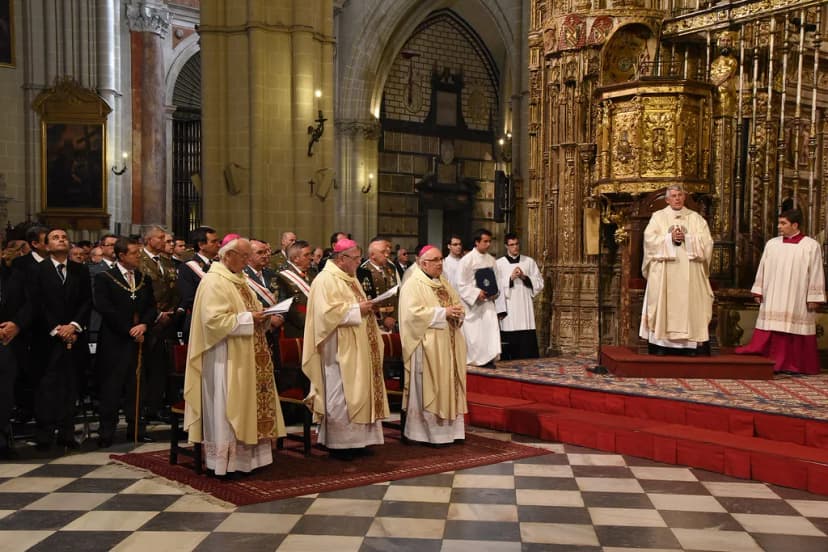
On December 6, the southern Italian city of Bari honors its patron saint, St. Nicholas, with a day of worship and community that draws pilgrims and visitors alike. Unlike the May feast, which commemorates the arrival of the relics in 1087, this December observance marks the liturgical feast of the saint's death and rebirth in heaven. The day blends deep religious devotion with local customs that have been passed down for centuries.
The heart of the celebration is the Pontifical Basilica of St. Nicholas in Bari's old town, where the relics have rested since the 11th century. Here, the faithful gather from early morning until late evening, and the narrow streets around the basilica fill with light, music, and the aroma of hot chocolate. This guide explains the December 6 traditions, from the first Mass at dawn to the evening fireworks over the sea, and helps you plan your own visit.
Why December 6? The Liturgical Feast
St. Nicholas, born in Patara (modern-day Turkey) around 270 A.D., served as Bishop of Myra and became known for his charity and defense of the faithful. He died on December 6, and that day became his primary liturgical memorial, celebrated by Catholics, Orthodox, and many Protestant communities. The Vatican's saint-of-the-day note for December 6 confirms that he is venerated in both East and West, a rare figure of unity among Christian traditions.
For Bari, December 6 is not just a calendar reminder; it is a profound expression of a relationship that began in 1087 when sailors brought the relics here. The rector of the basilica, Father Giovanni Distante, has described this bond as one of love, rooted in the saint's protection and miracles. The city's devotion is visible in the crowds that pack the basilica and the streets throughout the day.
Inside the Pontifical Basilica: Masses from Dawn
The basilica opens early on December 6, with doors opening at 4 a.m. and the first Mass celebrated at 5 a.m., presided over by the rector. Five additional Masses follow through the morning, giving the faithful multiple opportunities to participate before the day's other events. These early hours are quiet and contemplative, a chance to venerate the relics before the crowds swell. For a deep dive into the basilica's role and history, see Festa di San Nicola Bari for a broader picture of the feast.
Attending the 5 a.m. Mass is a singular experience, but you do not have to be an early riser to join the worship; the continuous schedule through the morning accommodates both pilgrims and curious visitors. Note that the basilica is an active place of worship, so it is wise to dress modestly and arrive early to find a seat. As with many religious events, it is best to confirm the current year's schedule on the official parish or archdiocese website, as times can be adjusted.
Reveille and the Torchlight Procession
At 4:30 a.m., a distinct sound interrupts the pre-dawn stillness: the reveille, a military-style bugle call that signals the start of festivities. Soon after, a torchlight procession makes its way to the basilica, its flames flickering in the dark as the faithful accompany the symbolic light of the saint. This moment, captured in reporting from EWTN News, sets the tone for a day that mixes solemnity with communal joy.
The torchlight procession is a visual highlight, especially for photographers who brave the early hour. Participants carry torches through the narrow streets, converging on the basilica square. If you plan to witness it, dress warmly and consider staying near the old town to catch the route; the exact path may vary, so ask locally or check the town's event notices in advance.
Bagpipers in the Old Town Alleys
In the early hours, the alleys of Bari's old town come alive with the sound of bagpipers, who wander through the neighborhood to herald the feast. These musicians, often dressed in traditional shepherd attire, play Christmas and pastoral melodies that echo off the ancient stone buildings. It is a custom that links the December feast to the coming Christmas season, as the bagpipers typically appear during Advent in southern Italy.
For visitors, following the bagpipers is a delightful way to explore the old town's labyrinthine streets beyond the basilica. The music may be spontaneous, so don't rely on a set performance schedule; instead, wander and listen. Locals are generally welcoming and may share stories about the tradition, but remember to be respectful of residential areas.
Evening Solemn Mass and the Statue Procession
As afternoon turns to evening, the focus returns to the basilica for a solemn Mass celebrated at 6 p.m., often by the Archbishop of Bari-Bitonto along with other prelates. This service is the liturgical peak of the day, drawing a packed congregation that includes civic leaders and ecumenical guests. The music and incense heighten the sense of occasion, and the sermon frequently reflects on the saint's enduring message of charity and unity.
At the end of Mass, a procession carries a statue of St. Nicholas through the streets of the old town, allowing the faithful to accompany their patron. This moment is emotional for many, recalling the annual May procession by sea, but it has its own distinct character. As with the morning events, the procession route and timing could change from year to year; check local listings for the most current information.
Fireworks Over the Sea
At 8:30 p.m., fireworks light up the sky over the Sant'Antonio pier, a spectacular finale to the day's celebrations. Crowds gather along the waterfront to watch the colorful explosions reflected on the water, a scene that has become a beloved tradition. The pier, located to the east of the old town, provides a clear view, though you can also see the display from various points along the seafront.
If you attend the fireworks, arrive early to secure a good spot, especially near the pier where the crowd is thickest. Bring a coat, as December evenings in Bari can be cool and damp. The display typically lasts about 20 minutes, and afterward, the streets fill with people heading home or to cafés for a late-night snack. Always check the local event calendar for the exact timing, as it may vary.
Hot Chocolate: The Essential Local Custom
No St. Nicholas Day in Bari is complete without a cup of hot chocolate, enjoyed in the alleys near the basilica. This custom, deeply ingrained in local life, warms the faithful after the early Mass and provides a moment of conviviality. The EWTN News article notes that it is a favorite ritual after leaving the church, and locals take it seriously: it must be thick, creamy, and sipped slowly while chatting with friends.
To join in, head to any café or kiosk in the old town, where you'll often see residents standing at the bar with their small cups. It's customary to drink it immediately, feeling the warmth spread as you watch the crowds pass. The cost is modest and varies by venue; there's no set price, so just check the menu or ask the barista.
December 6 vs. May 9: Two Distinct Feasts
Bari celebrates its patron saint twice a year, but December 6 and May 9 honor very different moments. December 6 is the liturgical feast, commemorating St. Nicholas's death and his entry into heavenly glory. In contrast, May 9 marks the translation of the relics from Myra to Bari in 1087, a maritime event celebrated with a large sea procession and a citywide festival. The two observances are easily confused, so it's helpful to know which one you're planning for.
The December feast focuses on religious services in the basilica, while the May feast is a grander popular festival with historic parades, boat processions, and the famous 'manna' ritual. Both are important, but if your interest lies in the December 6 worship traditions, you'll find a more intimate and reverent atmosphere. The St. Nicholas Center's description of the May festival provides a useful contrast to the December events.
Planning Your Visit: What to Expect
If you're planning to be in Bari on December 6, expect a day filled with devotion, community, and cold weather. The city's old town becomes pedestrian-friendly, with locals and tourists moving between the basilica, the alleys, and the seafront. Overnight crowds are sparse before dawn, but swell as the day progresses, especially for the evening Mass and fireworks. Arrive early for services if you want a seat, and be prepared for large crowds during the statue procession.
Accommodation in Bari fills quickly for this feast, so book months in advance if you plan to stay overnight. Public transport, including trains and buses, runs on a limited holiday schedule, so verify times ahead. For a complete overview of the city's San Nicola celebrations, including practical visitor details, consult the Festa di San Nicola Bari guide, which covers both the December and May observances.
Plan Your Visit
St. Nicholas Day in Bari on December 6 is a unique blend of ancient liturgy and local warmth, capped by a moment of shared sweetness over hot chocolate. The traditions described here offer a window into the city's soul, where the bond with the saint remains as strong as it was in 1087.
Whether you come for the 5 a.m. Mass, the bagpipers, or the fireworks, you'll witness a celebration that is both deeply spiritual and unmistakably Barese. Before your trip, always check the official basilica or archdiocese website for the current year's schedule, as times and events can be adjusted.
Embrace the cold, join the crowds, and let the warmth of the feast carry you through the day. For further details on the various celebrations and how to participate, look to trusted tourism and religious sources. Buon San Nicola!
Frequently Asked Questions
Why is St. Nicholas important in Bari?
St. Nicholas is the patron saint of Bari because his relics were brought there in 1087 from Myra. The people of Bari have a deep devotion to him, considering him their protector and an intercessor. His tomb in the Basilica of St. Nicholas is a major pilgrimage site, and his importance is reflected in two annual feasts.
Is Saint Nicholas Day celebrated on December 6th?
Yes, December 6 is the liturgical feast of St. Nicholas, commemorating the day of his death. In Bari, this is marked with special Masses, a torchlight procession, and various traditions. A separate feast on May 9 celebrates the arrival of his relics in the city.
Does St. Nick come on the night of the 5th or 6th?
In many countries, St. Nicholas brings gifts on the night of December 5th, leading to the morning of the 6th. However, in Bari, the focus is on religious observances on the 6th itself, not on gift-giving. The local tradition emphasizes participation in Mass and sharing hot chocolate in the old town.
Why is Saint Nicholas buried in Bari?
Saint Nicholas is buried in Bari because in 1087, sailors from the city transported his relics from Myra to Bari to protect them from Turkish invaders. The relics were placed in a newly built church, which later became the Basilica of St. Nicholas, where they remain today.