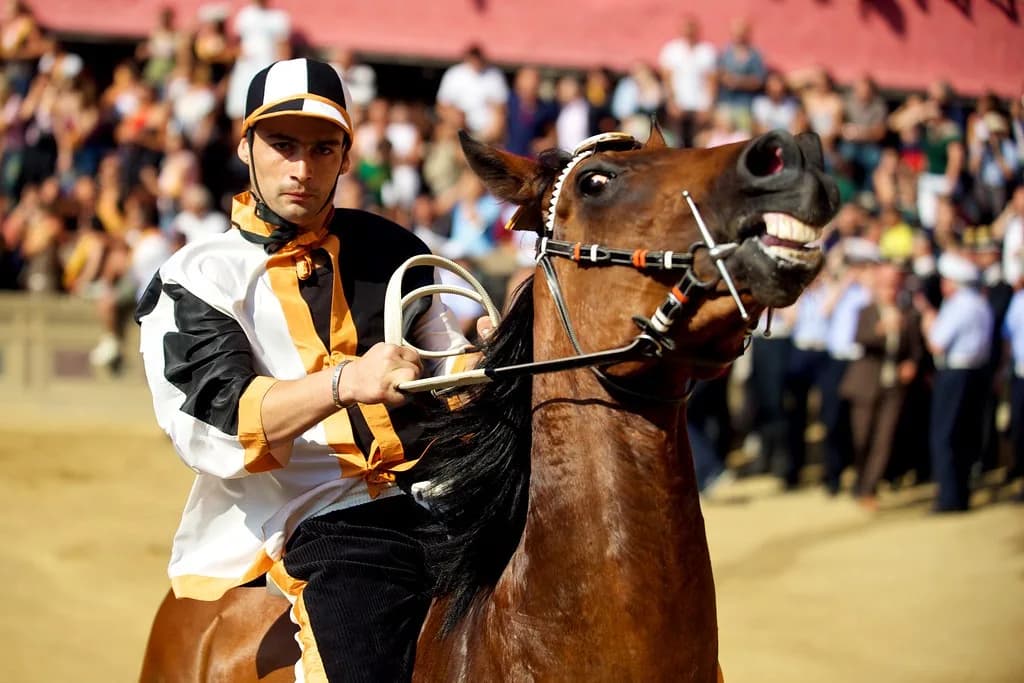
The Palio di Siena is a thrilling bareback horse race that has taken place in Siena's Piazza del Campo twice a year for centuries, on July 2 and August 16. While the main event draws tens of thousands of spectators into the square and onto packed balconies, the days leading up to each Palio offer a series of practice races known as the prove, culminating in a final morning trial called the provaccia. For many visitors, these preliminary events provide a memorable way to experience the Palio's unique atmosphere without the intense crowds.
The traditional dates of July 2 and August 16 are confirmed by the Comune di Siena, which also notes that the race is held in the Campo. The Palio is much more than a competition; it is a deeply rooted expression of civic pride, with each of Siena's seventeen contrade (neighborhoods) vying for the coveted banner, or palio. To understand how the practice races fit into the broader spectacle, travelers can consult the official Comune di Siena resources, which outline the main traditions and provide up-to-date announcements.
Understanding the Palio: Dates and Structure
The Palio di Siena is not a single race but a tradition bound to specific dates: July 2 honors the Madonna of Provenzano and August 16 commemorates the Assumption. The Comune di Siena states that the traditional races take place on these days each year. Each race involves ten of the seventeen contrade, selected by lottery and through exemptions based on recent participation.
This page is part of a comprehensive guide to the Palio, which explains the festival's history and key details. The Palio's structure is unique: jockeys ride bareback on horses that are assigned to each contrada by lottery, and the race itself lasts only about ninety seconds, circling the square three times. The outcome can hinge on a moment's mistake or a perfectly timed move, which is why the trials matter so much.
The Days Before: Practice Races (The Prove)
In the days before each Palio, the contrade and their jockeys gather in the Piazza del Campo for practice races known as the prove. The Italian word for trial is prova, and these sessions are essential for horses to become accustomed to the tight turns and the unique surface of the shell-shaped square. The official Palio rules and schedules are published by the Comune di Siena, which is the authoritative source for the exact calendar of these practices.
Given the frequency of searches for 'palio di siena practice naps', it is worth noting that the correct term is 'prove', not 'naps'. The number of practice races varies by year, so visitors should look for the official program rather than relying on fixed expectations. Each prova takes place in the late afternoon or evening, often beginning around 7:00 PM, and lasts about an hour and a half, but these times must be verified for the specific year.
The practice races are a more intimate experience than the Palio itself, as crowds are thinner and you can get remarkably close to the action along the railings of the Piazza. However, the claim that the practices are free to enter must be checked with the Comune di Siena, as access policies could change. The safest approach is to plan to stand in the centre or along the outer edges, where you can see the horses charge past on the packed dirt.
On the evening of the last practice before the race, known as the prova generale, the atmosphere becomes especially charged. The jockeys and horses perform a full rehearsal, and the contrade's supporters fill the stands. This final trial often draws a larger crowd than the earlier sessions, but it still feels a world away from the crush of the main event. Keep an eye on the official announcements for the exact date and time.
The Provaccia: The Morning of the Palio
On the morning of the Palio itself, a final trial takes place, known by the curious name provaccia, which translates roughly to 'bad trial'. This name reflects the purpose: the race is run with minimal effort, serving to test the horses' readiness once more without risking injury or exhaustion before the real competition in the afternoon. The etymology and character of the provaccia are described by several sources covering the Palio.
Because the jockeys hold back and focus on safety, the provaccia tends to be lower-key than the prove. Yet it still offers the unique sight of the horses and riders in the empty Campo, and because it happens in the morning, it is an accessible event for visitors who cannot secure a spot for the afternoon race. The exact start time of the provaccia is not fixed in the sources; it is scheduled by the Comune di Siena in conjunction with the Palio's traditional timetable.
One of the most memorable aspects of the provaccia is watching the jockeys canter around the curve of the Piazza, often waving to the crowd or exchanging jokes, knowing that the result carries no weight. This relaxed vibe is part of its charm, but the event is not an official race with a winner; it is a rehearsal. For a detailed explanation of the race's significance, the official Comune di Siena page on the Palio remains the best source.
What Makes a Horse Race: Contrade and Candidates
The Palio is contested by ten of the seventeen contrade, each with its own identity, colors, and historical rivalries. During the days of the prove, locals follow the form of each horse and rider with the intensity of sports fans, discussing which contrada has the best chance. The jockeys are professionals, but they are often hired just for the race, while the horses are the true stars, selected by lottery from a pool of eligible animals.
Each contrada fields a horse and a jockey, and the combination is assigned through a complex draw that adds another layer of suspense. Riders must be skilled enough to handle the treacherous angles of the Campo, but they also engage in strategic alliances and betrayals that are as much a part of the Palio as the speed of the horses. For a deeper look at these traditions, the guide to the Palio's key figures offers context.
An optional link to the Corteo Storico, a grand procession that precedes the main race, could be added here if useful. The parade features historical costumes and flag throwers, providing a visual feast that complements the racing heritage. To learn about the procession's route and schedule, see the dedicated guide.
Watching the Prove and Provaccia: Practical Tips
To make the most of the practice races, arrive early to secure a spot at the railings that encircle the race track. The center of the Piazza is usually open to pedestrians, but barriers are set up along the inner edge of the track, so you can stand right up against them for a close view. The cobblestones of the square reflect the heat, so bring water and comfortable shoes.
The provaccia and the prove are not ticketed events in the same way as the main Palio, but access can still be controlled. The official page of the Comune di Siena provides the most reliable information on any changes to public access. If you are determined to watch the Palio itself, note that standing spaces in the center are free on a first-come basis, but balconies and stands are paid; for advice on vantage points, read our guide.
In the days before the event, the city itself is full of processions and pageantry. The interminable drum beats and the smell of roasting chestnuts create a festive atmosphere in the narrow streets. For a broader view of Siena's festival calendar, including other events throughout the year, you can consult the annual guide to Siena, which highlights celebrations beyond the Palio.
Beyond the Palio: Other Italian Festivals
If you are drawn to Italy's historic reenactments and competitive traditions, the Palio is not alone. The Calcio Storico in Florence is a brutal mix of soccer, rugby, and wrestling staged in period costume, while the Carnival of Ivrea features a spectacular orange battle. These events, like the Palio, are deeply rooted in local identity and draw visitors from around the world.
For those planning a broader trip to Tuscany, understanding the rhythm of these festivals can help you time your visit to avoid the biggest crowds or to embrace them. Each has its own schedule and logistics, so research carefully. The Palio, however, remains the most iconic, and the practice races offer an accessible entry point.
Plan Your Visit
The Palio di Siena's practice races, the prove, and the morning provaccia provide a window into the heart of this centuries-old tradition. They allow you to see the horses and contrade up close, feel the mounting excitement, and do so with less pressure than the main event. While the term 'naps' is not the official one, the concept of watching a trial is as old as the race itself.
Because exact schedules and access rules can vary, always check the official Comune di Siena website and the city's tourism pages for the most current details. The official Palio page is your reference for the established dates of July 2 and August 16 and the traditional ceremonies.
Whether you catch a late-evening practice or the quiet morning provaccia, you will leave with a deeper appreciation for the skill and passion that make the Palio unforgettable. See the race that defines Siena, and let the trials be your introduction.
Frequently Asked Questions
What are the Palio di Siena practice races called?
The practice races are officially called prove (singular: prova), which means trials. The term 'naps' is not an official term; it may be a colloquial or misremembered name. The provaccia is the final trial held on the morning of the Palio. For official terms and schedules, refer to the Comune di Siena.
Can tourists participate in the Palio?
Participation in the Palio is reserved for the seventeen contrade of Siena and their appointed jockeys, who must be professional riders. Tourists cannot directly participate, but they can watch the practice races and the main event. The contrade are neighborhood associations, and joining one requires residing in Siena.
Can a riderless horse win the Palio?
Yes, a riderless horse can win the Palio if it completes the required three laps and crosses the finish line first, provided it still wears its contrada's colors and headgear. This has occurred in the past, adding to the unpredictability. The horse must be declared the winner by the judges.
Is Palio di Siena worth it?
The Palio di Siena is an extraordinary spectacle of history and emotion, but it can be crowded and overwhelming. If you want the full experience, attending is worth it for the unique atmosphere. Alternatively, the practice races and the provaccia offer a less intense view of the same tradition. Plan ahead for accommodation and viewing spots.