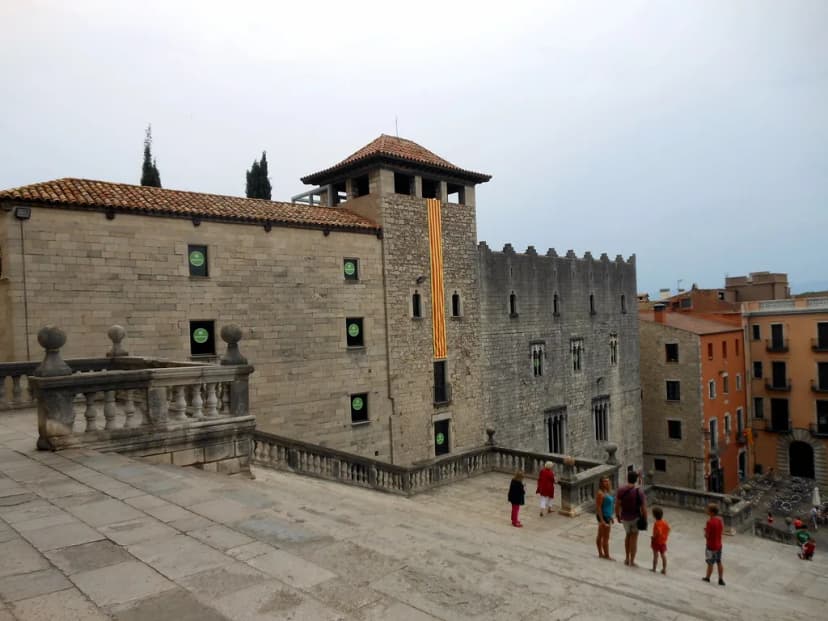
Temps de Flors is Girona's annual spring festival of flowers, filling the old town with installations in courtyards, churches, and private patios that are usually closed to the public. The festival encourages movement through the streets rather than a single exhibition space, with a route map that helps you discover installations woven into architecture across the historic centre. The official route changes each edition, so the map provided by the organizers is essential for planning your day. The best way to approach Temps de Flors is to let the route guide you without feeling you must follow it precisely; with crowds and one-way flows, allowing for spontaneity is part of the experience.
How the Festival Works
During Temps de Flors, Girona's Barri Vell opens up normally hidden spaces: private courtyards, monastic cloisters, and historic interiors that are closed to the public for the rest of the year. Installations are spread throughout the old town, and visitors follow suggested routes that connect the major display areas. The festival typically operates daily during its spring run, but exact dates and hours change from year to year, so check the official organizer or tourism office announcement before planning your visit. Access to the installations is generally free, but this is subject to confirmation by the municipality for each edition; the official festival website or the Girona tourism board will state whether tickets are needed.
The festival is best known for its site-specific installations, such as floral cascades on the Girona Cathedral staircase or floating displays in the Arab Baths. These are temporary works that respond to the architecture they inhabit, and the selection often changes each year. To find out which spaces are open and what the route looks like for the upcoming edition, download the official map or app when it is published. Many visitors also rely on the printed map distributed at tourist information points during the festival.
Start Your Walk: From the Onyar River to the Old Town
The Onyar River divides Girona into the modern city and the historic Barri Vell. Many visitors start their flower route by crossing one of the river's bridges, such as the Pont de Pedra or the red iron Pont de les Peixateries Velles. From the train station, it is a short walk to the river, and the colored houses lining the Onyar form the backdrop to some of the festival's first installations.
Working from the riverbank toward the cathedral means moving from the commercial edge into the older, more intimate streets. The route will take you along the eastern bank, where the Jewish Quarter climbs the hill, and then across to the cathedral square. Another option is to start at Plaça de Catalunya, near the modern center, and follow the main shopping artery until it meets the river. Both approaches work; the idea is to give yourself a few hours and be ready to double back when you notice a courtyard you want to explore.
Stop 1: Onyar River & Bridges – Floral Reflections
The Onyar riverbank is an ideal first stop because it gives you an overview of the city before you enter the narrow lanes. The painted facades on the eastern bank are a Girona icon, and during Temps de Flors, installations often extend onto the bridges and riverside balconies. You can take in the floral reflections in the water from any of the bridges; the Pont de Pedra offers a wide view, while the Pont de les Peixateries Velles, designed by Gustave Eiffel's firm, brings you right into the heart of the old town.
After crossing the river, you'll find yourself near Plaça del Vi, which often features a large installation. Following the map's suggested route from here will lead you to the cathedral area, passing through narrow streets that may be decorated with hanging flowers or small exhibits in shop windows.
Stop 2: Cathedral & Plaça dels Apòstols – Iconic Floral Staircase
The Cathedral of Girona is the festival's monumental centerpiece. The wide Baroque staircase is often covered with thousands of flowers or other materials arranged in cascading patterns, a dramatic transformation that the festival team designs specifically for the space. The cathedral's interior may also host installations, particularly in the cloister and nave.
Because this is one of the busiest spots, visit early in the morning or later in the afternoon to avoid the worst crowds. The cathedral steps also serve as a natural gathering point; from here, the route typically continues along the Pujada de la Catedral, where additional installations might be found on street level.
Stop 3: Jewish Quarter & Arab Baths – Medieval Lanes in Bloom
The Call Jueu, or Jewish Quarter, is a maze of narrow, cobbled streets that lead uphill from the cathedral. During the festival, many of these lanes are decorated with suspended flowers, creating tunnels of color overhead. The intimate scale means you need to look both up and down – installations can appear above doorways, in tiny patios, or around the next corner.
One of the quarter's most distinctive venues is the Banys Àrabs, a 12th-century Romanesque bathhouse that opens its central pool and changing rooms to floral displays. The combination of stone arches and fresh arrangements makes for atmospheric photography. The baths are a small, enclosed space, so expect queues at peak times; the middle of the afternoon is often quieter here. Check the official route map to see which other buildings in the quarter are open that year.
Stop 4: Convents and Cloisters – Sant Pere de Galligants & Sant Domènec
The old town contains several former convents whose cloisters are among the most evocative festival venues. The Monestir de Sant Pere de Galligants, which houses an archaeology museum, has a Romanesque cloister where installations often play against carved capitals and green plants. Sant Domènec, a former Dominican convent, offers a larger space with multiple courtyards and a church that might host an exhibit.
These sites are less crowded than the cathedral, making them enjoyable places to slow down and admire the details. The festival's route may lead you past the Església dels Dolors and its staircase, a spot that has hosted poetic installations in past editions. Keep an eye on the map for these hidden courtyards; they are often highlights precisely because they are not the obvious landmarks.
Stop 5: Gardens & City Walls – Jardins dels Alemanys, Francesa, and Passeig Arqueològic
As the route climbs away from the river, it reaches the city's medieval walls and gardens. The Jardins dels Alemanys, built on old barracks foundations, offer panoramic views and more space to relax between the crowded installations below. Nearby, the Jardins de la Francesa, a tranquil garden near the Torre Gironella, often contains thoughtful, art-oriented displays. The Passeig Arqueològic, a walkway along the medieval ramparts, connects these areas and provides a welcome breeze on warm days.
These upper reaches are less congested, and the changing perspective over the rooftops adds a different dimension to the floral displays. As you amble along the walls, you'll see installations set within the garden plantings, often integrating with the existing greenery. Allow yourself extra time here to simply sit and admire the view – the flowers are spectacular from above.
Practical Tips for Following the Route
Download the official Temps de Flors map or app once it is released, as it will show the current installations, suggested routes, and useful information like accessibility and restrooms. While the map is an essential tool, remember that it is a guide, not a strict itinerary; you may double back or wander off it when something catches your eye. Wear comfortable shoes because Girona's streets are steep and cobbled, and plan to walk several kilometers if you aim to cover the whole route.
To avoid the heaviest crowds, schedule your walk on a weekday morning or late afternoon; weekends attract day-trippers from Barcelona. The cathedral and Arab Baths tend to prompt the longest queues, so aim to visit them during off-peak hours. Carrying water and a snack is wise, as you may have limited access to restaurants in the old town during the busiest times. For more on getting there and where to stay, see the Girona Tourism Office or the official festival page – details are often confirmed only a few months ahead.
Final Thoughts: Wandering vs. Strict Routing
Many visitors who have followed the official route report that the best moments came from accidental discoveries – a courtyard they stumbled upon, an installation they saw from a side street. While a mapped walk helps you cover the highlights, the festival’s real charm lies in the element of surprise. Allow yourself to deviate: if you see a crowd gathered around a doorway, go look; if a narrow stairway tempts you, take it.
Girona’s old town is compact enough that you can’t get too lost, and the festival transforms even the most unassuming street into a floral experience. At the end of your route, you may find you have seen more than the official stops – and that is perfectly fine. Let the flowers guide you, but don’t be afraid to wander.
Plan Your Visit
The most important preparation for Temps de Flors is to stay flexible. Confirm the dates, opening hours, and any entry requirements from the official municipal announcement nearer the time, and download the route map once it is published. If you are traveling from Barcelona, Girona is a straightforward train ride, and the old town is compact enough to explore on foot.
There are many other festivals in Spain worth planning around, from the signature events listed in a comprehensive guide to festivals in Spain. In Girona itself, you might also discover the Fires de Sant Narcís in October or the Sant Jordi book-and-rose celebration in spring. But for a few days each year, the flowers take over entirely – and a well-planned walk will let you enjoy them at their best.
For the latest on dates, tickets, and official installations, consult the Girona Temps de Flors flower festival page or the city’s tourism office. With a little preparation and a willingness to follow the petals, you’ll find that Temps de Flors offers one of Europe’s most beautiful urban flower displays – and a memorable way to see Girona.
Frequently Asked Questions
When does the Temps de Flors flower festival take place in Girona?
Temps de Flors is an annual spring festival, typically held during the month of May. The exact dates for each edition are announced by the Girona City Council or the tourist office, usually a few months in advance. Check the official channels for confirmed dates.
Where can I find flowers in Girona during the festival?
Flower installations are spread throughout the city's historic quarter, including the Cathedral, the Onyar riverbanks, the Jewish Quarter, the Arab Baths, and various cloisters and hillside gardens. The official route map will show you all the current locations.
Is admission to Temps de Flors Girona free?
In past editions, the festival has been free to access, but you should confirm for the upcoming edition via official sources, as policies may change. No advance ticket booking is typically required, but verify the current situation before your visit.
How long does it take to walk the Temps de Flors route?
You should allow at least four to five hours to visit the main displays and wander the old town. A full day will give you time for meals and leisurely exploration. If you want to see everything, plan for a weekend with overnight accommodation.
What is the best time of day to see the flower installations?
Weekday mornings are generally less crowded, while late afternoons and Friday evenings offer a pleasant balance of light and fewer visitors. The Cathedral and Arab Baths are busiest between mid-morning and mid-afternoon on weekends.