
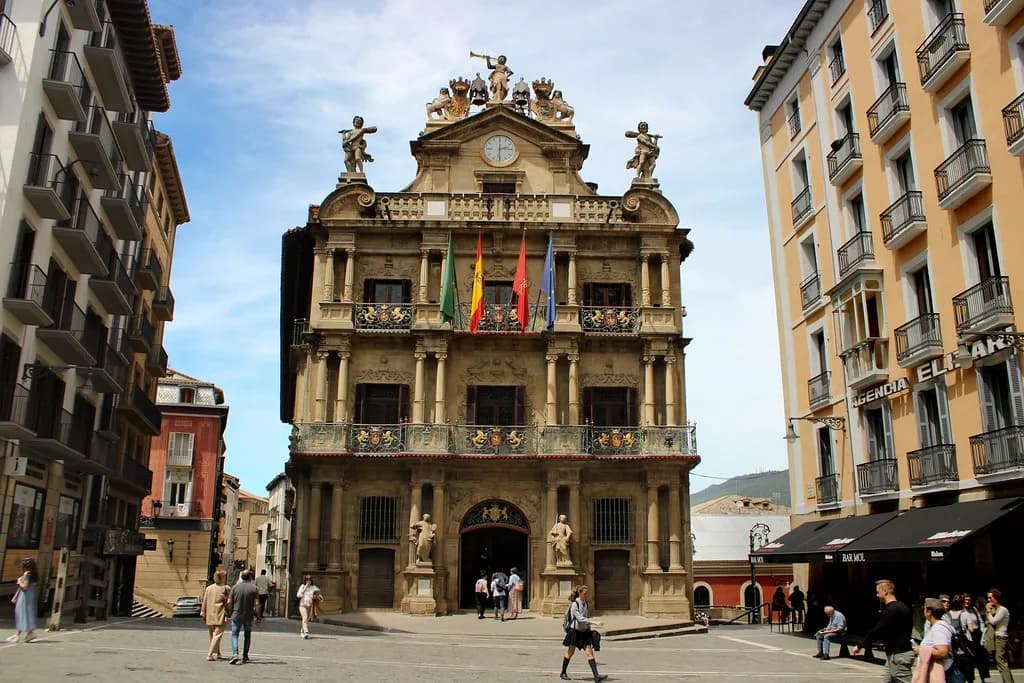
Every July, the Spanish city of Pamplona turns white and red as it hosts San Fermín, an intense nine-day celebration honoring its patron saint. The festival is known worldwide for the daily running of the bulls, but the full program includes hundreds of events—parades, concerts, fireworks, and family activities—spread across the city. Knowing the basic structure of the festival, its key events, and practical details of visiting Pamplona will help you make the most of your trip.
San Fermín Dates and Structure
San Fermín is held every year from July 6 through July 14, in Pamplona, Spain. The festival begins at noon on July 6 with the Chupinazo, a rocket fired from the balcony of the City Hall, and ends at midnight on July 14 with the Pobre de Mí, a mournful song that closes the festivities. That means the celebration lasts exactly 204 hours, or nine full days of nearly nonstop activity.
The official program is packed with more than 400 events, spread throughout the city to ease crowding and offer a different atmosphere in each neighborhood. While the bull run happens every morning at 8:00, the rest of the schedule varies by day: there are fireworks each night, parades of Giants and Bigheads in the morning, concerts in the plazas, and countless street performances. The City Hall and the Navarre tourist board publish detailed programs and services guides, and you can also pick up a pocket-sized schedule at the tourist office in Plaza Consistorial.
Origins and History
San Fermín honors Saint Fermín, the first bishop of Pamplona, who is said to have been martyred in the third century. The festival has deep religious roots: the procession on July 7, when the city's authorities walk from the cathedral to the Chapel of San Fermín in the Church of San Lorenzo, is one of the most emotionally charged events of the week. The bull run itself is part of a tradition of moving the bulls from the corrals to the bullring, a practice that dates back centuries.
Historians trace the festival's origins to medieval fairs and religious celebrations, but the modern San Fermín as we know it gained its shape in the mid-20th century. More than 800 years of history and tradition are often cited, and the festival continues to evolve while holding on to its core rituals. Understanding that religious devotion sits alongside the wild street parties gives you a fuller perspective on the event's cultural importance.
The Encierro: Running of the Bulls
The encierro, or running of the bulls, takes place every morning at 8:00 from July 7 to 14. The bulls are released from the corrals on Calle de Santo Domingo and run a winding course through the old town—up Santo Domingo, through the Plaza Consistorial, along Mercaderes and Estafeta streets—until they reach the bullring. The run typically lasts only a few minutes, but it is the festival's most famous and perilous event. You can see the route map and watch from behind the fences, from balconies, or on big screens set up around the city.
If you want to watch from the front row of the double fence, you need to arrive by 6:00 to 6:30 a.m., as the streets close to pedestrians 90 minutes before the run. Runners must be at least 18 years old and must not participate under the influence of alcohol or drugs; official rules are strictly enforced and aim to keep everyone as safe as possible. The most dangerous spots are the uphill stretch on Santo Domingo and the sharp corner on Estafeta, while the stretch from Plaza Consistorial to the end of Mercaderes is considered less risky. Many spectators choose to watch from the bullring itself, where you can see the final moments and enter with the crowds.
For those who prefer not to run, the festival offers plenty of alternatives. Balcony rentals provide a safe vantage point above the packed streets, but they sell out well in advance. You can also watch from the plaza de toros, where thousands gather to sing and cheer as the bulls enter the ring. Whatever you choose, heed the instructions of police and the experienced 'pastores' who guide the runners, and always prioritize your safety.
Key Events Beyond the Bull Run
While the encierro is the headline, San Fermín is packed with dozens of other events that give the festival its identity. The Chupinazo, on July 6 at noon in Plaza Consistorial, is the explosive opening; thousands crowd the square, and after the rocket is fired, the party begins in earnest. If you cannot get into the square, you can watch the broadcast on giant screens in Antoniutti Park, Paseo de Sarasate, and other spots.
The Procession of San Fermín takes place on July 7, when the city's authorities walk from the cathedral to the Chapel of San Fermín, accompanied by music and the faithful. The parade of Giants and Bigheads, known as the Comparsa, winds through the old town every morning starting around 9:30, delighting children with its colorful figures. In addition, the festival features nightly fireworks at 11 p.m. at the Citadel Park, which are ranked among the best in the world, and a whole range of concerts and folk performances that fill the plazas until the early hours.
The closing ceremony, Pobre de Mí, takes place on July 14 at midnight in Plaza Consistorial, where thousands gather to sing the traditional song that marks the end of the fiesta. It is a bittersweet moment that brings the city together one last time before the daily routines of July 15 return. In between, you will find open-air dances, concerts at the Plaza de los Fueros, and special events like the Alarde de Gaiteros, a parade of pipers that kicks off the first day.
Dress Code: White and Red
Dressing in white with a red scarf and sash is not just a fashion choice—it is the official dress code and a way to blend in with the crowd and embrace the festival spirit. You can wear a white t-shirt and white trousers or a skirt, topped with a red necktie or pañuelico and a red faja, or sash. You do not need to spend a fortune: bring white clothes from home and buy the red accessories at street stalls throughout the city.
Comfortable, closed-toe shoes are a must. The streets get crowded, broken glass and spilled drinks are common, and you will be on your feet for hours. Avoid sandals and flip-flops at all costs. Because white gets stained quickly with wine, sangria, and dust, it is smart to wear clothes you don't mind ruining. Practicality trumps style in the chaos of the fiesta.
Getting to Pamplona and Getting Around
Pamplona is a mid-sized city in northern Spain, and the festival draws huge numbers of visitors. The most common way to arrive is by train or bus from major Spanish cities like Madrid, Barcelona, or Bilbao; there are direct road and rail connections, but you must book tickets well in advance as they sell out quickly. Once in the city, the old town—where most of the action takes place—is compact and best explored on foot. Bike rentals and taxis are also available, but expect heavy pedestrian traffic in the festival core.
For those driving, the city provides special parking arrangements during the festival, and there are park-and-ride options on the outskirts. However, driving into the center is not advisable because street closures and crowds make it nearly impossible. For up-to-date transportation information and any service changes during the festival, consult the Pamplona City Hall website or the Navarre tourism portal.
Where to Stay
Accommodation in Pamplona during San Fermín is scarce and pricey, but there are options if you plan early. Hotels, hostels, apartments, and campsites fill up months in advance, especially for the first weekend. The Navarre tourist board emphasizes that booking well in advance is essential—yet it also notes that some vacancies always appear in the second half of the festival, and you can often find a place in the surrounding area if the city itself is full. Consider staying in a nearby town in Navarre and commuting in for the day.
When choosing lodging, decide whether you want to be in the middle of the action in the old town or somewhere quieter to escape the noise. Many visitors rent apartments or rooms from locals, which can be a good option if hotels are sold out. For regulated accommodation, check the official tourism listings; for private rentals, use reputable platforms. Bear in mind that some hosts rent out rooms or even entire apartments only during the festival, so you might find options that are not listed year-round.
Eating and Drinking
The festival is a marathon, not a sprint, and proper meals are essential to keep your energy up. Pamplona is in one of Spain's great gastronomic regions: you can enjoy pintxos—small bar snacks that range from simple to elaborate—in the old town's many bars. Local specialties include chistorra (a spicy sausage), lamb stew, and piquillo peppers. Do not skip breakfast, and consider the traditional almuercico, a mid-morning snack often enjoyed with groups of friends in the street.
Staying hydrated is key, especially since alcohol is everywhere. Alternate alcoholic drinks with water, and drink plenty of fluids throughout the day. Pamplona in July is hot, so it is easy to become dehydrated. Be aware that during the festival, bars and restaurants may charge more than they do the rest of the year; as a general rule, it is wise to ask for prices before you order. For a quick bite, there are street food stalls and food stands around the city.
Budget and Practicalities
Budgeting for San Fermín requires planning, as prices for accommodation, food, and drinks can spike during the festival. You can keep costs down by buying food from supermarkets (note that some close on Sundays and July 7) and sticking to your own white outfit from home. For left luggage, there are public lockers at the coach station and a officially-run left luggage office at the San Francisco public school, which is open from July 4 to 16; fees are around 4.5 euros per item per day, and you can also change clothes there. For lost items, the municipal Lost Property Office is the place to go.
Pickpocketing is a real problem at any large festival, and San Fermín is no exception. Keep valuables in a front pocket, ideally in a zipped bag, and avoid carrying your passport unless needed—a photocopy or downloaded copy on your phone is often enough. If you have a backpack, be mindful of it in crowds; many travelers wear it on their chest for safety. There are public showers available at the Casa de Baños y lavandería, near the left luggage office, where you can rent a towel and soap.
Families at San Fermín
Contrary to what you might think, San Fermín is surprisingly family-friendly. In the mornings, there are organized activity spaces for children, such as 'Menudas Fiestas' in Plaza de la Libertad, which features inflatable castles and games, as well as 'Birjolastu' in Taconera Park and 'Kirol Ari' on the city walls, which offer sports and creative activities. The parade of Giants and Bigheads is a must-see for kids, and there is also a children's bull run with safe cardboard bulls.
Families also enjoy the fireworks at night, which are a visual spectacle that captivates children and adults alike. The fairground at Runa Park, with its rides and food stalls, is another popular draw. If you are traveling with kids, pace yourselves: the festival is loud and crowded, and it is wise to find quiet times to rest. Check the official program for events specifically designed for children, which are clearly marked.
Tips for First-Timers
First-timers often underestimate the size of the crowds and the intensity of the experience. Arrive early for any major event, especially the Chupinazo and the bull run—you typically need to be in place at least an hour ahead. Follow the advice of the Navarre tourist board and 'take it easy': do not attempt to attend every event at full volume; instead, choose your priorities and give yourself time to rest. Plan breaks during the hottest part of the day to recharge at your accommodation.
Respect is a word you will hear often at San Fermín. Respect the city, the local residents, the police, and the animals. Do not argue with the police, follow the rules of the bull run if you participate, and be mindful of quiet hours in residential areas. Use the public toilets provided to help keep the city clean. Above all, remember that San Fermín is a celebration rooted in tradition, and behaving responsibly ensures that everyone can enjoy it.
Beyond the Bull Run: Other Cultural Experiences
Pamplona offers more than just the bull run. The city has a rich history, and the festival is a good excuse to explore its cultural sites. You can take a guided tour of the bull run route during the day, visit the Cathedral of Pamplona, or enjoy the green spaces of Taconera Park and the Citadel. If you are interested in the festival's religious side, attend the Vespers sung in honor of San Fermín at San Lorenzo Church, or witness the Jota sung in his honor during the procession.
For those who love the arts, San Fermín includes a diverse program of music, theater, and dance: jazz concerts, folk performances, and open-air shows take place in various plazas throughout the festival. You might also consider extending your trip to explore the wider region of Navarre, which offers beautiful countryside and historic towns. However, given the festival's intensity, many visitors plan a few quieter days after July 14 to fully appreciate what the area has to offer.
Plan Your Visit
San Fermín is a once-in-a-lifetime experience for many travelers, but it requires careful planning and a flexible attitude. Make your accommodation and travel reservations as early as possible, study the official program to decide which events you cannot miss, and pack for comfort and utility. The official tourism websites—such as Pamplona's City Hall and Visit Navarra—are your best sources for the latest schedules, services, and any last-minute changes.
Most importantly, pace yourself: San Fermín is a marathon, and those who try to do everything usually burn out by day three. Sleep when you can, drink water, and eat properly. While the bull run is the headline, the festival's true magic lies in the spontaneous moments—the music, the dancing, the conversations with strangers from every corner of the world. Respect the city, the locals, and the traditions, and you will leave with memories that last a lifetime.
Frequently Asked Questions
What dates is the San Fermín festival?
The San Fermín festival runs from July 6 to July 14 every year in Pamplona, Spain. The festival begins at noon on July 6 with the Chupinazo and ends at midnight on July 14 with the Pobre de Mí ceremony. For the exact schedule of events, check the official program published by the Pamplona City Hall or the Navarre tourist board.
What is the origin of San Fermín?
San Fermín honors Saint Fermín, the patron saint of Pamplona and Navarre, who is believed to have been the first bishop of the city. The festival has religious roots that go back centuries, and the July 7 procession is a central tradition. The modern celebration has evolved to include the running of the bulls and many secular events, but it still retains a strong religious character.
What should I wear to San Fermín?
The traditional dress code is white clothes with a red scarf and red sash. You can buy the red accessories at street stalls during the festival. Wear comfortable, closed-toe shoes because the streets are crowded and you will be walking a lot. It is a good idea to wear clothes that you do not mind getting stained, as spills and dust are inevitable.
How long is the San Fermín festival?
San Fermín lasts for nine days, from July 6 to July 14. That is 204 hours of festivities, with events scheduled at all hours of the day and night. The festival officially opens at noon on July 6 with the Chupinazo rocket and closes at midnight on July 14 with the Pobre de Mí song.
Where can I watch the running of the bulls?
You can watch the encierro from the double wooden fences along the route, from balconies overlooking the streets, from the bullring itself, or on large screens placed in various plazas. If you want to be behind the fence, you need to arrive very early; balconies can be rented in advance. The streets close to pedestrians 90 minutes before the run, so plan accordingly.


