
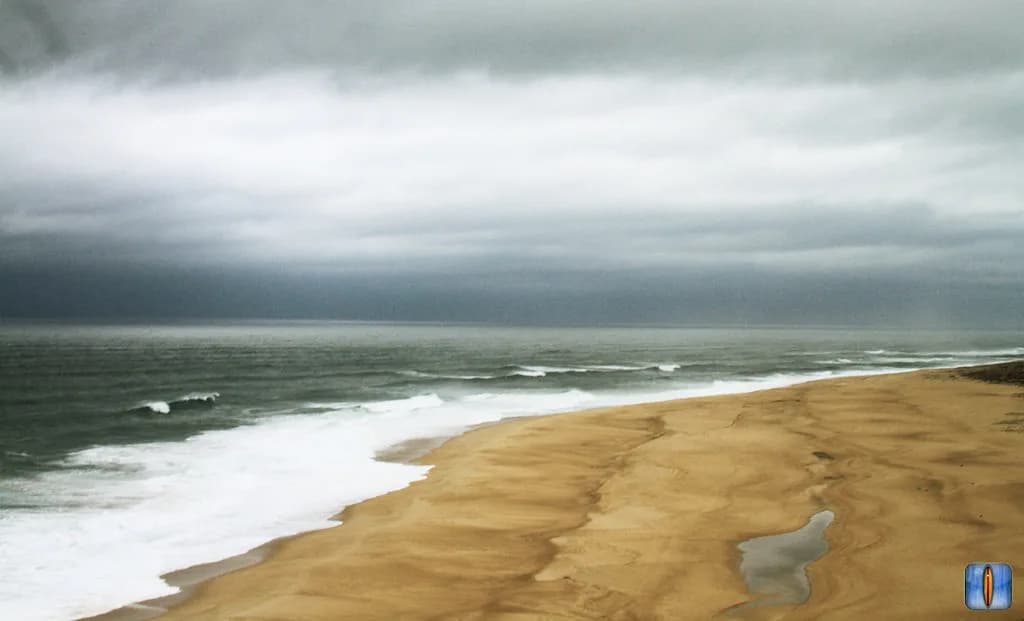
Nazaré, a fishing town on Portugal's Atlantic coast, has become the world's most famous big-wave viewing destination. Each winter, swells generated by North Atlantic storms march toward Praia do Norte, where the underwater Nazaré Canyon amplifies them into waves that can top 30 meters. Spectators pack the clifftops to watch surfers tow into these giants, making the town a hub for professional surfing during the season.
The spectacle is unique and uncertain: big waves depend on storms, so there is no fixed schedule. For travelers, this means understanding the forecasting system, monitoring alerts, and being ready to move at short notice. The local tourism site nazarewaves.com explains that the season typically runs from October to March, and recommends a stay of at least two weeks to maximize your chances of catching a big day.
Professional Surfing at Nazaré: The WSL Big Wave Challenge
The main competitive event is the WSL Nazaré Big Wave Challenge, a specialty event organized by the World Surf League. It gathers elite big-wave surfers who are invited to compete when conditions are ideal. The most recent edition, the Tudor Nazaré Big Wave Challenge 2025/26, was held on 13 December 2025, as reported by nazarewaves.com.
The next edition is expected to occur during the 2026/2027 winter season, between November 2026 and March 2027, but this is not yet confirmed. The World Surf League has not published an official schedule, and the event may happen more than once in a season, as it has in the past. Check the WSL website and local Nazaré surf news for the latest announcements.
Beyond the official WSL event, professional surfers often gather in Nazaré for what are often called 'pro sessions'—spontaneous big-wave riding outside of competition. These sessions are not formal contests with schedules, but they are frequently captured on webcams and by photographers. The distinction matters: while the WSL Challenge is a confirmed competition format, the daily presence of surfers on the waves is more informal and not governed by an official body.
Why There's No Fixed Event Date
Big-wave contests in Nazaré do not have a predetermined date because they depend on the arrival of large swells. The World Surf League prioritizes waves of at least 8 meters, also considering wind, tide, and fog. Forecasts are reliable only up to about a week in advance, and conditions can change hour by hour, making an exact schedule impossible.
The WSL issues a 'Big Wave Yellow Alert' up to 72 hours before a potential event when a favorable swell is approaching. If conditions remain good, a 'Big Wave Green Alert' is issued, indicating the competition will occur within the next 24 hours. This short notice is the best that current forecasting technology allows, ensuring the biggest and safest waves for competitors.
Using Alerts and Forecasts to Plan Ahead
To follow the action, subscribe to email alerts from nazarewaves.com, which notifies you when a good swell is forecast. The site also publishes alerts on its Facebook page and provides a big-wave forecast. For surf-specific forecasts, look for wave height above 3 meters, a wave period greater than 13 seconds, and offshore or north winds, as these conditions typically generate the largest waves at Nazaré's canyon.
The WSL app and website also provide official event alerts and updates on the yellow/green alert status. While the WSL watch page is a general surfing portal, it lists Big Wave specialty events and will show live streams when they are running. For real-time sea conditions, check local webcams, which can confirm whether the ocean is actually delivering the forecasted swell.
Watching from the Cliffs: Best Viewpoints at Praia do Norte
The best vantage points are on the cliffs above Praia do Norte, especially near the Fort of São Miguel Arcanjo and the Nazaré lighthouse. The hillside offers ample space, so you can move around and alternate between viewpoints. For a prime spot in the front row, arrive very early on days with good forecasts.
The fort is open to visitors year-round from 10:00 to 18:00, with a small entrance fee, and provides an excellent close-up perspective. However, it may be closed on big-wave competition days for operational reasons. Even then, you can still watch from the surrounding areas, including the descent to the beach, as local guidance notes. For a detailed guide to the best times and vantage points, see our article on How to Watch Nazaré's Giant Waves.
Lighthouse Access and Closures on Competition Days
The Fort of São Miguel Arcanjo, often called the Nazaré lighthouse, is a popular viewing spot, but it may close its interior on big-wave competition days. This closure is due to safety and event logistics. Check the official tourism website or local news for the day's access status, and be prepared to watch from the adjacent cliffs if the fort is inaccessible.
The fort is open to visitors year-round from 10:00 to 18:00, with a small entrance fee (per the tourism site). It provides an excellent close-up perspective. However, it may be closed on big-wave competition days for operational reasons. Even then, you can still watch from the surrounding areas, including the descent to the beach, as local guidance notes. For a detailed guide to the best times and vantage points, see our article on How to Watch Nazaré's Giant Waves, which covers the cliff viewpoints in depth. To compare this spectacle with other Portuguese events, our festivals in Portugal guide can help you plan a broader trip.
Planning a Flexible Trip to Nazaré
Because events are called on short notice, the best strategy is to plan a flexible stay. For those booking in advance, a stay of at least two weeks in the region is recommended to increase the chance of catching at least one big-wave day. Longer stays of three weeks improve the odds, as there are typically between one and six large swells each season.
Alternatively, you can travel at short notice when a good forecast appears, but you must be ready to move quickly. The local tourism site advises that the peak of the season is around December, though big waves can also occur in September and April in some years. To understand the seasonal patterns better, read our guide on the Best time and conditions for seeing giant waves in Nazaré.
Getting to Nazaré from Lisbon and Porto
The nearest airport is Lisbon, about 120 kilometers away. By car, the drive takes around 1.5 hours. Take the A8 highway towards Leiria, then exit at Nazaré and follow the IC9 road, and note that parking near the lighthouse is very limited on big-wave days. For current costs and exact directions, refer to the information on nazarewaves.com. To understand the seasonal patterns better, read our guide on the Best time and conditions for seeing giant waves in Nazaré, which explains how the canyon amplifies swells and when to plan your visit.
Alternatively, you can travel at short notice when a good forecast appears, but you must be ready to move quickly. The local tourism site advises that the peak of the season is around December, though big waves can also occur in September and April in some years.
Within Nazaré, the funicular lift connects the beach to the cliff-top district of Sítio, but it can be crowded on event days. Walking from the beach to the lighthouse takes about 20 minutes, or you can take a tuk-tuk for a small fee. Plan extra time for transport on big-wave days.
Practical Tips for Watching in Comfort and Safety
The viewing area is a rugged hillside, so wear comfortable, non-slip shoes and dress in layers to handle the changeable winter weather. Rain protection and a waterproof ground cover are useful, as you may be sitting on damp soil for hours. Bring water, snacks, and fruit, as food outlets are over 500 meters away and often crowded on big days.
Portable toilets are limited, and the area is pristine, so take a bag for your trash and leave no trace. Parking is scarce, so consider using public transport or parking at a distance. Above all, respect local residents and other spectators, and keep a safe distance from the cliff edge and the ocean, which can be extremely dangerous.
The beach itself is hazardous: several tourists have drowned after being carried away by waves. Do not go too close to the water's edge, even when surfers are present, as the waves are powerful and unpredictable. The local tourism site emphasizes that the descent to the beach is for perspective only, and you must stay well back.
Common Mistakes to Avoid
A common mistake is assuming that a competition or 'pro session' will happen on a specific date. Since events depend on swells, you must be flexible and monitor alerts. Another error is arriving unprepared for the terrain and weather, which can turn a thrilling day into an uncomfortable one.
Many visitors also underestimate the distance from parking to the viewpoint. Be prepared to walk more than a kilometer, and avoid leaving valuables in your car. Finally, never attempt to get a closer look by going onto the beach; the risk of being swept away is real. Always follow the advice of local authorities and event marshals.
If You Miss a Big Day: Surf Films and Replays
Missed the swell? You can still watch the action through highlight videos and replays. Red Bull's video series 'Sessions: Nazaré day of the season' recaps the best moments from the biggest days, including the 13 December 2025 Big Wave Challenge final. Search for these videos on streaming platforms or the WSL's official channel.
The WSL website offers a library of past event replays and highlights, which can give you a sense of the scale and drama of the competition. While these are not a substitute for being there, they are a good way to understand the sport and spot surfers you might follow in future events.
Plan Your Visit
Watching professional surfing at Nazaré is a unique experience that requires flexibility and planning. Because the schedule is tied to the ocean, you need to monitor alerts and be ready to travel at short notice. The rewards are unforgettable views of some of the biggest waves on Earth, ridden by the world's best surfers.
Start by bookmarking the WSL watch page and nazarewaves.com for alerts and forecasts. Familiarize yourself with the best viewpoints, and pack appropriately for the conditions. With a bit of luck and preparation, you will be in the right place when the ocean delivers its next spectacle.
Frequently Asked Questions
What channel is the surf competition on?
The WSL Nazaré Big Wave Challenge is broadcast on the World Surf League's official platforms, including worldsurfleague.com and the WSL YouTube channel, as well as some sports networks. Exact channel availability may vary by country, so check the WSL schedule for the event to see where it will be streamed.
What is the schedule for the Nazaré surfing competition in 2026?
There is no fixed schedule for the Nazaré surfing competition. The event depends on ocean conditions and is called on short notice when a suitable swell arrives. The next WSL event is expected between November 2026 and March 2027, but no official dates have been announced. Follow WSL alerts for real-time updates.
How can I get alerts for big wave events in Nazaré?
You can sign up for email alerts on nazarewaves.com, which notifies subscribers when a good swell is forecast. The WSL also issues Big Wave Yellow and Green Alerts through its official app and website. Additionally, following nazarewaves.com on Facebook and checking the local webcams can help you stay informed.
Where is the best place to watch the big waves in Nazaré?
The best viewing spot is on the cliffs near the Fort of São Miguel Arcanjo and the Nazaré lighthouse, overlooking Praia do Norte. The hillside offers ample space to move around, but on competition days the fort's interior may be closed. Arrive early to secure a good spot, and always stay well back from the edge.
