
Ivrea's Carnival, one of Italy's oldest, is more than a colorful festival: it is a living reenactment of a historic revolt. Every figure, from the aranceri to the General, carries the memory of a popular uprising that freed the city from tyranny. To understand the parade, you need to trace each role back to that epic event.
The Historic Carnival of Ivrea has deep roots in the city's identity, with traditions that have evolved over centuries. The event is famous worldwide for its Battle of the Oranges, where teams of foot throwers face horse-drawn carts. This guide explains the history and symbolism of each participant type, helping first-time visitors appreciate the spectacle.
The Historical Revolt of 1194: How a Miller's Daughter Sparked a Carnival
The carnival's origin story begins in 1194 when a popular uprising freed Ivrea from a tyrant. According to legend, Violetta, the miller's daughter, refused the lord's "right of the first night," got him drunk, and beheaded him. This act sparked a rebellion that led to the destruction of the noble's estate, and the city has remained free since.
The Carnival of Ivrea evolved from these events, with the first neighborhood carnivals celebrated from the fourteenth century onward. Over the centuries, the rituals came to symbolize the people's fight for freedom against feudal authority. Today, the Historic Carnival of Ivrea is considered a civic celebration of liberty, acting out the legend of Violetta and the revolt.
The source of the legend is well documented on the official tourism site of Ivrea, which explains that the carnival began in 1194 with the popular uprising. Historians note that this is the epic event that inspired the carnival, making the historical connection plausible. To learn more about the carnival's origins, check the official website of the Historic Carnival of Ivrea.
The Mugnaia (Vezzosa Mugnaia): Symbol of Freedom and the People's Revolt
The Vezzosa Mugnaia, or the fair miller's daughter, is the heroine of the carnival. She represents the people's revolt against tyranny and is celebrated during the parade with great admiration. During the carnival, a young woman from Ivrea is chosen to play this role, riding in a carriage and waving to the crowd.
Her story echoes the legend of Violetta, who defied the tyrant's unjust demands. As a symbol of freedom, she is central to the carnival's message. The official history of the carnival explains that she is the beloved heroine who embodies the values of freedom and resistance.
The General and the Podestà: Napoleonic Authority and Ceremonial Rule
The General is one of the most beloved figures of the carnival, serving as the authority in charge of the celebration. He wears a uniform inspired by the Napoleonic era, a nod to the historical period when the carnival took its current form. He is greeted with admiration and respect by the crowd.
On Epiphany, the General receives his office from his predecessor, and on Fat Thursday, he is symbolically invested with full authority by the Mayor of Ivrea. He leads the festivities, embodying the ceremonial rule that replaces the city's ordinary governance during the carnival period.
The Podestà is another historical figure, representing the city's medieval magistrate. While the General holds the symbolic power during the carnival, the Podestà is part of the parade's historical tableau. The official Ivrea tourism page lists the General and the Podestà among the main figures of the Carnival.
The Aranceri Teams: Nine Foot Teams Representing the Plebs
The aranceri are the foot throwers in the Battle of the Oranges. They represent the common people, or plebs, who revolted against the feudal lord. There are nine teams of aranceri on foot, each wearing tunics and trousers in their team colors, with no protective gear other than these clothes.
The aranceri challenge the carri da getto, the horse-drawn carts carrying the feudal army. This duel represents the symbolic struggle between the oppressed people and the aristocracy. The aranceri's lack of protection highlights their courage and the authenticity of their role as the rebellious plebs.
Each team has its own colors, name, and history, fostering a strong sense of identity and rivalry. The teams' historic uniforms and banners embody a deep attachment to tradition. The official Ivrea tourism site details the nine teams and their significance.
Costumes and Colors: The Visual Identity of Each Team
The aranceri teams are easily identifiable by their distinct colors and designs. For example, one team may wear white and blue, while another wears red and yellow, each with unique emblems on their backs. These visual elements make the parade a vibrant spectacle and help spectators follow the battle.
Beyond the aranceri, other participants have specific costumes: the Mugnaia wears a simple but elegant dress, often white or pale blue, while the General wears a black Napoleonic uniform with gold trims. The Podestà dresses in medieval robes, and the carri da getto riders are protected with leather gear.
The teams' colors and costumes are carefully chosen to reflect their historical identities. The official website of the Historic Carnival of Ivrea provides an interactive map and details on each team, including their colors and meeting points. Visitors can also purchase team merchandise.
The Carri da Getto: Horse-Drawn Carts as the Feudal Defense
The carri da getto are the horse-drawn carts that serve as the mobile defense of the feudal lord. They are the opposing force to the aranceri on foot. Each cart is a community project, with meticulous attention to masks, decorations, and horses' harnesses.
The throwers on the carts are protected by masks and leather gear, reminiscent of medieval armor, which contrasts with the aranceri's lack of protection. This distinction emphasizes the symbolic roles: the cart throwers represent the army, while the aranceri represent the common people.
The carri da getto are indispensable for the Battle of the Oranges to renew its historical significance each year. They are true communities in their own right, often with generations of family members working together on the cart's design and construction.
Other Parade Figures: The Abbà, Pifferi e Tamburi, and More
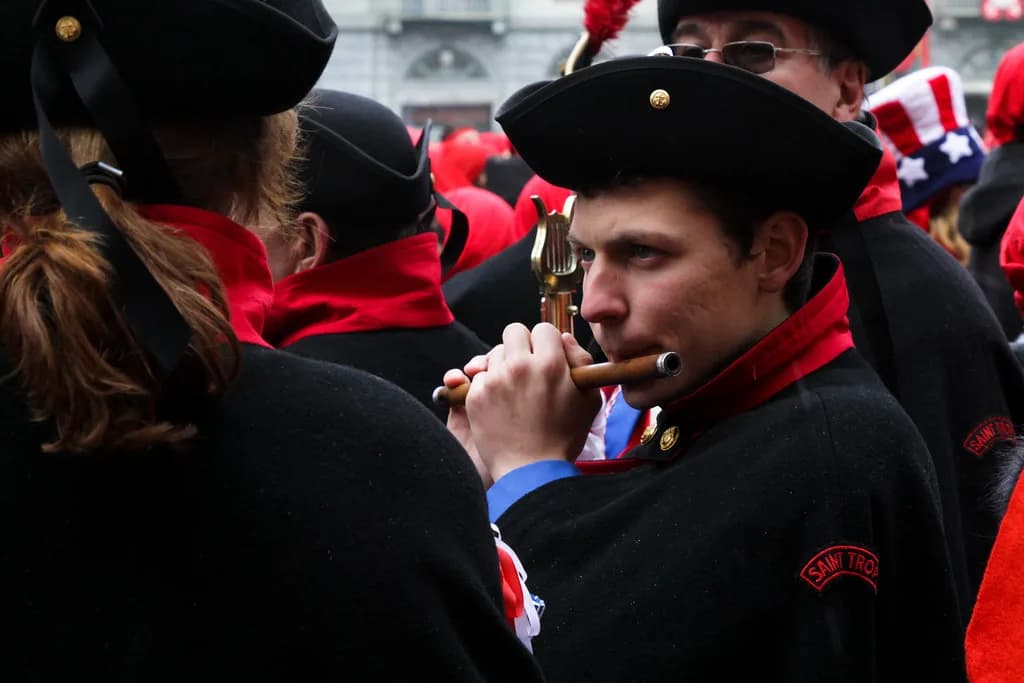
In addition to the main characters, the parade features the Abbà, a historical figure representing the abbot of the town, who is part of the ceremonial tradition. The Pifferi e Tamburi, or fifers and drummers, provide the musical accompaniment, setting the festive rhythm.
Other figures include the Vezzosa Mugnaia's court, the General's staff, and various historical reenactors. The official Ivrea tourism page describes "the sound of the Pifferi, the wearing of the Berretto Frigio, the historic bean feasts, the horses' ceremonial harnesses, the burning of the scarli" as part of the carnival's traditions.
The Berretto Frigio: Why Everyone Wears the Red Cap
The Berretto Frigio, or Phrygian cap, is a red cap that symbolizes freedom and revolt. It is worn by participants and spectators alike as a sign of support for the carnival's ideals. This headpiece is a direct reference to the bonnets worn during the French Revolution, which were themselves inspired by ancient symbols of liberty.
During the Battle of the Oranges, wearing the cap also serves a practical purpose: it helps cushion blows from stray oranges. However, it is primarily a symbol of active participation in the carnival, marking the wearer as one of the revolutionaries. Vendors sell caps throughout the city, and visitors are encouraged to wear them.
How to Watch the Parade: Tips for First-Time Visitors
First-time visitors should know that the Battle of the Oranges occurs only on the last three days of the carnival, typically Sunday through Tuesday. To secure a good vantage point, arrive early in the central squares, as crowds can be immense. Consider using the guide for viewing tips.
Since the exact dates and ticket arrangements change every year, check the official website for the most current information. The Historic Carnival of Ivrea's website provides the official calendar and details on parade routes. Do not rely on unofficial sources for scheduling.
Plan Your Visit
The Carnival of Ivrea is a unique blend of history and celebration, where every participant tells a story of freedom. From the nine aranceri teams to the General's uniform, each element is carefully crafted to reenact the town's legendary revolt. Understanding these roles enriches any visit, turning a spectacular orange battle into a meaningful historical experience.
Before you go, verify the dates and logistics on official channels, as these change yearly. The official costume and parade information is often published a year in advance. With proper preparation, you can join the crowds in red caps and cheer for the aranceri as they face the carri da getto, carrying forward a tradition that has endured for centuries.
Frequently Asked Questions
What do the aranceri represent in Ivrea Carnival?
The aranceri represent the common people who revolted against the feudal lord in 1194. They are the foot throwers who face the carri da getto, the horse-drawn carts carrying the feudal army, in a symbolic struggle for freedom.
How many aranceri teams are there?
There are nine teams of aranceri on foot. Each team wears distinctive colors and uniforms, representing different neighborhoods or groups, and they play a central role in the Battle of the Oranges.
Why does the General wear a Napoleonic uniform?
The General's uniform is inspired by the Napoleonic era, reflecting the historical period when the carnival took on many of its current traditions. The General is the ceremonial leader of the carnival, investing the festival with authority.
What is the role of the Mugnaia in the parade?
The Mugnaia, or Vezzosa Mugnaia, symbolizes the miller's daughter who sparked the revolt. She is a heroine figure representing freedom, and she is celebrated during the parade as a symbol of the people's uprising.
Are spectators allowed to throw oranges at Ivrea Carnival?
No, spectators are not allowed to throw oranges. Only the aranceri teams and the throwers on the carri da getto participate in the battle, while spectators watch from safe areas and wear red caps to show solidarity.