

Last updated August 2026. Once a year Venice sails out to the mouth of the lagoon and marries the Adriatic. The mayor drops a ring into the water off the church of San Nicolò, a formula is read aloud declaring the city's perpetual dominion over the sea, and a laurel wreath is laid for those lost to it. It is a thousand-year-old rite of the Republic, still performed, and almost no visitor knows it is on.
When the Sensa Falls
Sensa is Venetian for Ascensione — Ascension, the fortieth day after Easter. Ascension Day itself is a Thursday, Easter plus 39 days; the Festa della Sensa is held on the Sunday that follows, Easter plus 42. That makes it derivable years ahead without waiting on an announcement.
The rule checks out against real editions: Easter 2026 fell on 5 April, which puts the Sensa on Sunday 17 May 2026 — and that is the date Venice held it. Applying the same arithmetic forward gives the table below, computed from the recurrence rule rather than confirmed by the city, which publishes each year's programme closer to the day.
| Year | Easter Sunday | Ascension (Thursday) | Festa della Sensa |
|---|---|---|---|
| 2027 | 28 March | 6 May | Sunday 9 May |
| 2028 | 16 April | 25 May | Sunday 28 May |
| 2029 | 1 April | 10 May | Sunday 13 May |
| 2030 | 21 April | 30 May | Sunday 2 June |
| 2031 | 13 April | 22 May | Sunday 25 May |
Where the Ritual Comes From
The ceremony's roots sit in two moments the Republic wanted permanently remembered. Around the year 1000 (some accounts place it in 998), Doge Pietro II Orseolo sailed down the Dalmatian coast with Byzantine backing to put down the Narentani, a Slavic population whose raiding had been choking Venetian trade in the Adriatic. He returned in triumph and added Duke of Dalmatia to his title — the moment Venice's dominion over the sea became a claim worth marking every year.
The second anchor came in 1177, when Pope Alexander III and the Holy Roman Emperor Frederick Barbarossa settled their long dispute in Venice, with the city acting as neutral broker for the Peace of Venice. Tradition holds that the Pope granted the Doge a ring in gratitude, formalising the right to marry the sea that the city had already been claiming through its Ascension Day rite. From then on, the religious feast of the Ascension and the political ceremony of dominion over the Adriatic were fused into one event — more a statement of Venetian power than an act of worship, even though it happens on a holy day and closes with Mass.
What Happens on the Day
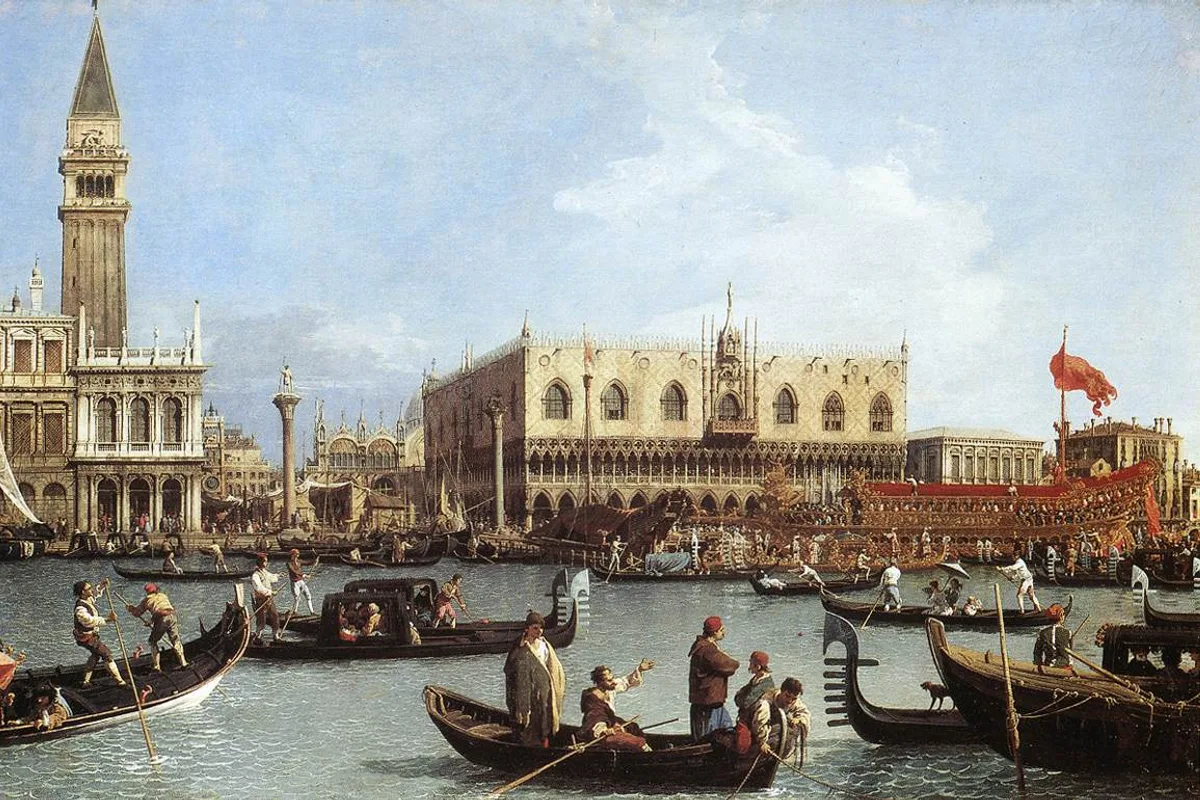
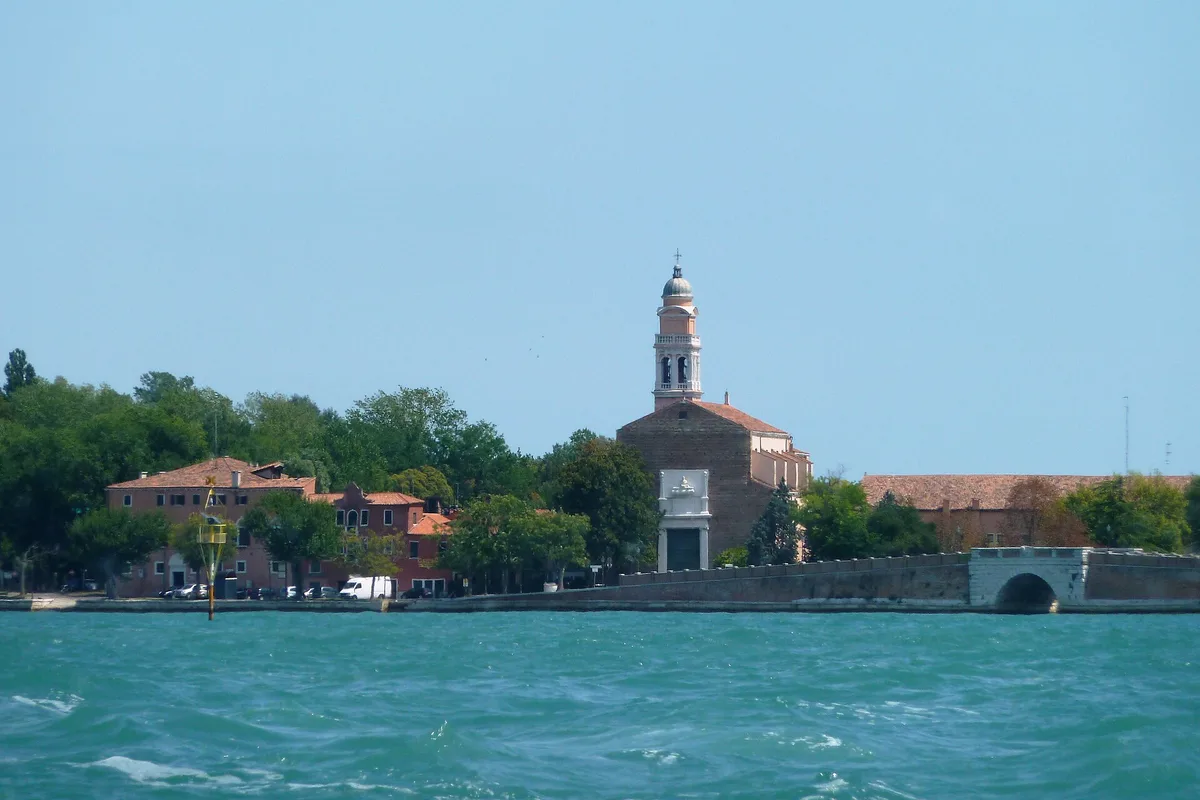
A procession of traditional rowing boats gathers in the Bacino di San Marco, in front of the Doge's Palace, then sets out for the church of San Nicolò at the northern tip of the Lido, near the lagoon mouth the Republic's galleys once used. The mayor now takes the Doge's place aboard a boat called the Serenissima, escorted across the lagoon by rowers from Venice's rowing associations; the ceremony proper takes place on the water once the procession reaches the Lido.
- The formula. The historic declaration is proclaimed — "Noi ti sposiamo, o mare, in segno di vero e perpetuo dominio", "we marry you, O sea, as a sign of true and perpetual dominion."
- The ring. A ring is cast into the lagoon, the gesture that gives the rite its name.
- The wreath. A laurel wreath is laid for those lost at sea, with oars raised and the anthem of St Mark played.
- The regattas. Traditional Venetian rowing races follow — categories for young rowers on two-oared boats, a women's race, and a men's race on four-oared gondolas.
In the Republic's time the Doge performed this from the Bucintoro, the gilded state barge that Canaletto and Guardi painted repeatedly. The last Bucintoro was broken up under Napoleonic occupation in 1798; the Serenissima has stood in for it ever since, and the paintings are now the best surviving picture of what the day once looked like.
Modern additions sit alongside the core rite. A market sets up at the Lido on the Saturday before, echoing the Sensa Fair that historically ran for around two weeks either side of Ascension and drew pilgrims bound for the Holy Land. The same weekend, Venice also holds an Adriatic Twinning with a sea-linked sister city or region, and awards the Osella d'Oro della Sensa to people or organisations who have brought credit to the city — smaller ceremonies most visitors never hear about because they happen away from the main procession.
How to See It
The ceremony happens on the water at the Lido end of the lagoon, which is the practical difficulty: the best view belongs to people in boats. From land, San Nicolò al Lido is the place to be — vaporetto to the Lido and then along to the northern tip. Get there before the procession arrives rather than trying to follow it across.
Before the boats cross the open lagoon, the early stretch of the procession passes close to the Riva degli Schiavoni and Riva dei Sette Martiri near San Marco, so it can be watched from the embankment there without needing a boat. It is an easier vantage point than the crossing itself, and clear of whatever crowd has gathered right at the Basilica — though it only shows the boats setting off, not the marriage ceremony itself, which stays at the Lido end.
The regattas afterwards are easier to watch from shore and are the more accessible half of the day. There is no ticket for any of it. The city publishes the year's programme and timings on the Comune di Venezia site, with Venezia Unica carrying visitor information in English — confirm both before travelling, since the running order shifts year to year.
This is the quietest of Venice's water festivals by a wide margin. The Redentore in July draws the whole city and the Regata Storica in September fills the Grand Canal; the Sensa happens at the far end of the Lido in front of a mostly local crowd.
Where It Sits in the Venetian Year
The Sensa lands in the best-value stretch of the Venetian calendar. May and early June are past the Carnival peak and before the summer crush, the weather is reliable, and the city has not yet reached the density of July and August.
It also sits close to the Vogalonga, the non-competitive mass row that is itself Ascension-adjacent — both belong to Venice's spring rowing season, and in some years they fall within a fortnight of each other. Together they make a strong late-May trip: two water events, neither ticketed, neither crowded with international visitors.
The full sequence across the year runs Carnival in winter, the Sensa and Vogalonga in spring, the Redentore in July, the film festival in late summer and the Regata Storica in September. The Venice festival calendar covers all of it, and the Easter-relative date rules explain why half of these move each year.
Frequently Asked Questions
When is the Festa della Sensa?
On the Sunday after Ascension Day, which is Easter plus 42 days. It fell on 17 May in 2026 and computes to 9 May 2027, 28 May 2028 and 13 May 2029. The date is derivable from the Easter rule, though the city publishes each year's programme and timings closer to the day.
What is the Marriage of the Sea?
A ceremony in which Venice symbolically weds the Adriatic. A ring is cast into the lagoon off the church of San Nicolò while the historic formula is proclaimed — "we marry you, O sea, as a sign of true and perpetual dominion" — followed by a laurel wreath laid for those lost at sea.
What was the Bucintoro?
The gilded state barge from which the Doge performed the ceremony in the Republic's time, painted repeatedly by Canaletto and Guardi. The last one was broken up under Napoleonic occupation in 1798, and the modern rite uses a traditional boat instead.
Where do you watch the Festa della Sensa?
The ceremony takes place on the water near San Nicolò at the northern tip of the Lido, so the best views belong to boats. From land, take the vaporetto to the Lido and walk to the northern end, arriving before the procession. The rowing regattas afterwards are easier to watch from shore.
Is the Festa della Sensa crowded?
No — it is the quietest of Venice's water festivals, held at the far end of the Lido in front of a largely local crowd. The Redentore in July and the Regata Storica in September both draw far bigger audiences. Nothing about the Sensa is ticketed.