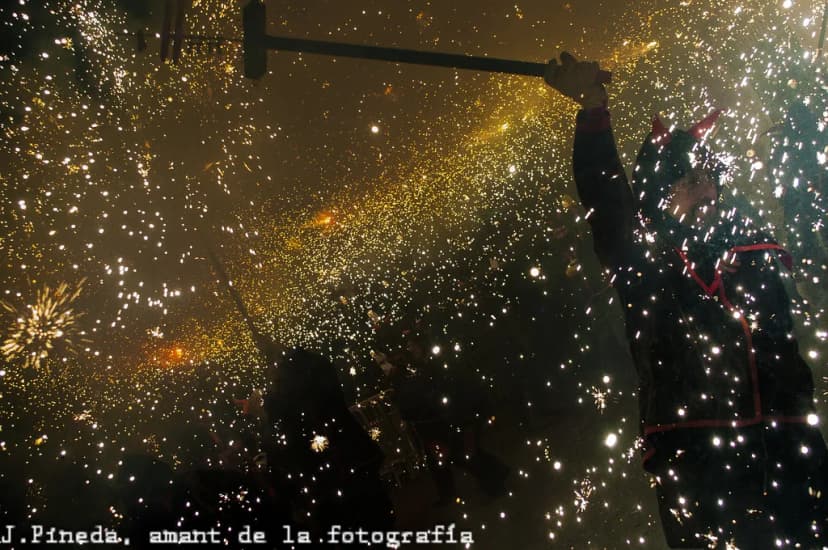
Every 23 June, Perpignan celebrates its patron saint with the Festa Major, a night of Catalan traditions that draws thousands to the city center. Locals call it the Feux de la Saint-Jean, but in Catalan it is the Festa Major de Sant Joan. The evening is built around the arrival of the Canigó Flame and the illumination of the Castillet—the city's iconic red-brick fortress and former prison.
This guide focuses on the logistics: where the action happens, how to get there by car or train, where to park, and how to plan your evening. The event is free and open to everyone, but official schedules and artist names are only confirmed close to the date. To avoid confusion, note that this is Perpignan's celebration, not the beach parties of Barcelona—the two share the Flame of Canigó tradition but are separate events.
The Epicenter: Castillet and Allées Maillol
The heart of the Festa Major is the Castillet, which sits at the edge of the Allées Maillol, a broad promenade in the historic center. The official location is listed as Place de la Victoire, 66000 Perpignan, covering the area around the Castillet and the Allées. A secondary square, Place Cayrol, often hosts concerts or family activities, creating a multi-site footprint rather than a single bonfire.
The name 'bonfire night' can be misleading: Perpignan's celebration is anchored by the Flame of Canigó and pyrotechnic displays over the Castillet, not a massive open fire. Small bonfires and braziers may appear, but the focal point is the Castillet tower itself, illuminated by fireworks late in the evening. For a broader overview of the festival's origins and cultural schedule, our Festa Major de Sant Joan in Perpignan guide covers traditions, highlights, and the historical background.
The Canigó Flame Ceremony
The symbolic centerpiece is the Flama del Canigó. The flame is kept alight year-round in a brazier at the Castillet, but each year on 23 June it is ritually renewed at the summit of Mount Canigó, the sacred Catalan peak. Runners and volunteers relay the flame across the region in a coordinated procession known as the Cercle de la Flamme, bringing it back to Perpignan for the evening's focal moment.
The entry of the flame into the city is a carefully orchestrated ceremony. The mayor of Perpignan lights braziers at the foot of the Castillet, and members of the Entente Spéléologique du Roussillon—a local caving club—ascend the tower carrying the flame. A separate tradition involves the 'sharing of bread' with the shepherds of Canigou, a ritual symbolizing unity across the Catalan lands, which occurs alongside the main proceedings.
The flame is not unique to Perpignan: it is also distributed throughout Catalonia, including Barcelona, where it arrives at Plaça Sant Jaume to be shared among neighborhood bonfires. Understanding this broader context is valuable if you are traveling across the region, as logistics and crowd sizes differ greatly between the two cities. To plan a wider French festival itinerary, you may also want to browse our guide to festivals in France, which covers events like Chartres en lumières.
Typical Schedule and What to Expect
The official schedule is published by Perpignan City Hall and the Tourist Office only near the event date, so any timings here are approximate based on recent editions. In past years, the evening followed a familiar rhythm: the festive village on the Allées Maillol opens around 6 p.m., with food stalls, Catalan snail tastings, and sardana dances; a classical concert by the Orchestre Perpignan-Catalogne typically begins around 8:45 p.m. at Place de la Victoire.
The flame's entrance at the Castillet usually happens after 10 p.m., followed by a pyrotechnic illumination of the tower and a fireworks display. Some years feature a concert at Place Cayrol rather than Place de la Victoire, with the flame arriving closer to 10:30 p.m. and fireworks at 11:30 p.m. To confirm the year's program, check the official channels: mairie-perpignan.fr and perpignantourisme.com in the weeks leading up to 23 June.
Given the free, open-air format, expect large crowds around the Castillet from late afternoon. Arriving by early evening lets you explore the festive village, secure a good viewing spot, and absorb the atmosphere before the main events. Note that timings can shift, so building flexibility into your plans is wise.
Getting There by Car and Parking
Perpignan is accessible by the A9 motorway, which runs from Spain north through the region, and the city center is well signposted from junctions 41 and 42. As with any major event, expect heavy traffic in the hours before the flame ceremony. Plan to arrive early, ideally before 5 p.m., to avoid the worst congestion and secure a parking spot.
Official guidance points to three central parking areas: Castillet, Wilson, and Clemenceau. These are close to the Allées Maillol and the Castillet, but they fill quickly on the night. Street parking in the historic center is limited and may be restricted during the event; check local signage. If central spots are unavailable, consider parking at the outskirts (e.g., near the station) and walking 15–20 minutes—the evening is a pleasant stroll through the old town.
Road closures and pedestrian zones are typically implemented around the Castillet and Allées Maillol from mid-afternoon. The city rarely publishes a detailed closure map in advance, so drivers should follow on-site diversions. If you are unfamiliar with the area, using satellite navigation with live traffic updates is the most reliable way to adapt to last-minute changes.
Taking the Train from Perpignan Station
Perpignan's TGV station connects directly to Paris (about 5 hours), Montpellier (under 2 hours), and Barcelona (around 1.5 hours on some services). From the station, it is roughly a 15-minute walk to the Castillet along the Allées Maillol—an easy flat route that is well lit and safe. If you prefer not to walk, local buses and taxis are available, though traffic will be heavy.
For a hassle-free evening, the train is a strong option because it avoids parking stress and allows you to leave relaxed after the fireworks. Note that the 'Festa Major' is a public holiday in Perpignan, so check the return train schedule in advance; some lines run reduced services on the morning of 24 June even though the night itself is busy.
If you are coming from further afield and plan to combine Perpignan with other Catalan cultural events, our guide to French festivals offers practical transport and timing advice for major celebrations; it also highlights that each region has its own customs and logistics.
Crowds, Safety, and Accessibility
The event is free and draws thousands, so expect dense crowds around the Castillet and at the fireworks. Attendees should keep personal belongings secure and supervise children closely. No major incidents have been reported in recent editions, but standard big-crowd precautions apply: stay hydrated in the summer heat and wear comfortable footwear.
The city does not typically publish specific safety or crowd-control measures in advance; instead, local authorities deploy police and medical teams discreetly. The historic center is mostly flat and wheelchair accessible, though cobblestones in some areas can be uneven. Temporary barriers are often installed near the Castillet; look for designated viewing areas if you have limited mobility.
Finally, remember that this is a family-friendly celebration rooted in Catalan tradition—no alcoholic street parties like in some cities. The festivities wind down around midnight, leaving time for a calm exit if you do not linger. For general safety, keep an eye on official announcements from the city, which occasionally make last-minute adjustments to the program.
Practical Tips for the Night
The event is open-air and free; there is no ticketing, so just show up. Do not expect seating—most people bring a picnic blanket or stand. The Allées Maillol is well served by food vendors, but lines can be long; consider eating beforehand or carrying snacks in a bag (glass bottles are often discouraged).
Phone batteries drain quickly with all the photos and video. Bring a power bank, and agree on a meeting point in case your group splits up in the crowd. For up-to-date information, call the Perpignan Tourist Office at 04 68 66 30 30 or visit their website, which also posts any announcements about delays or cancellations.
If you are also interested in the Catalan version of the night along the coast, a relevant article from Barcelona travel blogs describes the beach bonfires; however, note that Perpignan's event is distinct in scale and layout, so adapt your expectations accordingly.
Final Checklist
With these logistics in mind, you are ready to enjoy Perpignan's Sant Joan. Confirm the exact times and any last-minute changes on mairie-perpignan.fr or perpignantourisme.com a few days before your visit. Plan to arrive early to watch the flame procession, and consider taking the train if you want to avoid parking entirely.
The Festa Major de Sant Joan offers a genuine taste of Catalan culture north of the border—free, welcoming, and steeped in symbolism. If your itinerary permits, combine it with a trip to see the flame's source at Mount Canigó, or explore other French summer festivals to round out your journey through Occitanie.
Frequently Asked Questions
Where in Perpignan is the main Sant Joan bonfire?
In Perpignan, there isn't a single bonfire. The celebration centers on the Castillet and the Allées Maillol, where the Flame of Canigó is received and the fireworks take place. Smaller bonfires and braziers may be lit, but the focus is the pyrotechnic display over the Castillet.
What time does the Sant Joan bonfire start in Perpignan?
The festive village typically opens in the late afternoon, around 6 p.m. The flame's entrance is usually scheduled after 10 p.m. Check official channels for the specific year's program.
How do I get to the Sant Joan celebration in Perpignan?
By car, take the A9 motorway to Perpignan and park in central car parks (Castillet, Wilson, Clemenceau) or on the outskirts. By train, Perpignan station is about a 15-minute walk from the Castillet. The event is free and open to all.
Is Sant Joan in Perpignan free?
Yes, the entire event is free. There is no ticket or registration; you can simply join the festivities in the street and around the Castillet.
What is the Flama del Canigó and how does it get to Perpignan?
The Flama del Canigó is a flame lit at the summit of Mount Canigó every June 23rd, then relayed by runners throughout the Catalan territory to symbolize unity. In Perpignan, it is welcomed at the Castillet by the Cercle de la Flamme procession and used to light braziers.
What safety measures are in place at Perpignan's Sant Joan bonfire night?
The city typically deploys police and emergency services, and barriers may be set up around the Castillet. However, specific measures are rarely published in advance. Attendees should act responsibly and follow instructions from local authorities.
Where can I park for the Sant Joan festival in Perpignan?
Official parking options include the Castillet, Wilson, and Clemenceau car parks. These are central but fill up quickly; arriving early or using the train is recommended.