The Théâtre Antique d'Arles is not just a relic to admire from behind a rope; it is a working venue where concerts and performances still take place. Set in the heart of the city at 9 Boulevard des Lices, this Roman theatre offers a rare chance to hear live music surrounded by two-thousand-year-old stone. For any concertgoer, knowing a little about the space before you go can make the difference between a good evening and a memorable one.
This guide steers clear of listing specific dates or line-ups, which change from season to season. Rather, it focuses on what is constant: the venue's character, how to find it, how daytime visits work, and how to track down what is on when you plan to travel.
History and Significance of the Roman Theatre
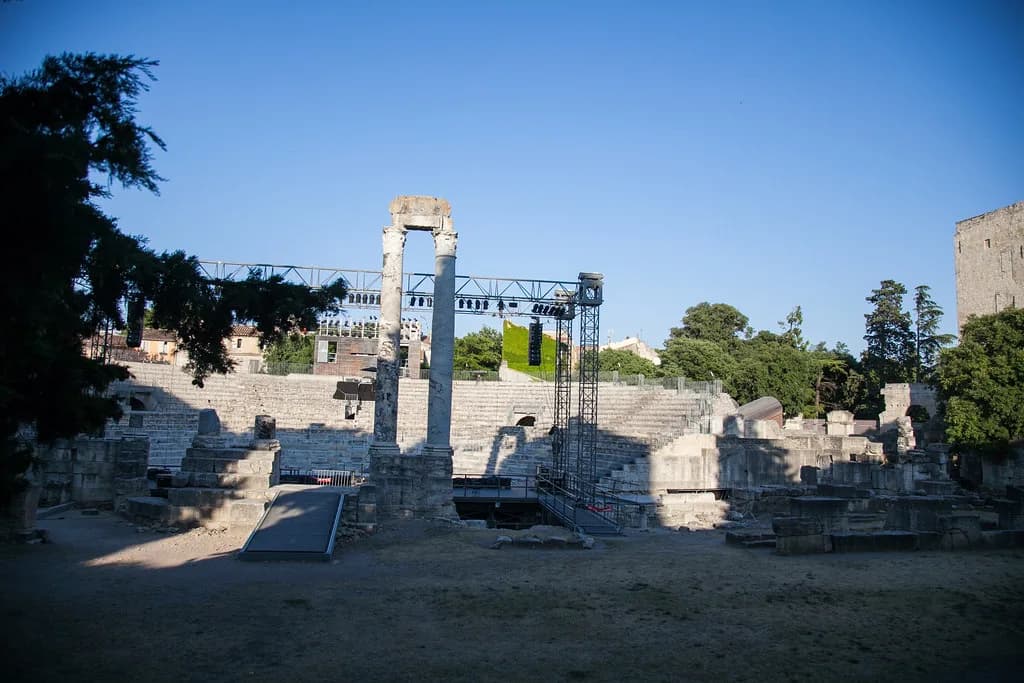
Dating from the late 1st century BC, the Théâtre Antique was one of the earliest Roman theatres built in Gaul. In its prime, it could seat thousands of spectators for plays and public events. Today, only part of the original structure survives: the two columns of the stage wall, some seating tiers, and the orchestra area remain, yet they still evoke the grandeur of the original.
The site is part of Arles's Roman and Romanesque monuments, a UNESCO World Heritage listing that also includes the nearby arena and other ancient structures. Its compact size makes it more intimate than the vast amphitheatre, and visitors often note that seeing a show here connects you directly to the ancient culture of the city.
Location and How to Get There
The theatre sits just steps from the larger Arles Amphitheatre, on the edge of the historic centre. Its address is 9 Boulevard des Lices, a broad avenue that marks the boundary between the old town and the newer quarters. From the central Place de la République, it is roughly a five-minute walk uphill towards the arena.
If you arrive by train at Arles station, the theatre is about a fifteen-minute walk or a short taxi ride. Drivers will find public parking lots near the Boulevards des Lices, though spaces fill quickly during summer events. The city is compact, so walking is often the most pleasant way to approach the venue, letting you soak up the atmosphere of the narrow streets and cozy neighbourhood around it.
What to Expect When Attending a Concert
Reviews of the Théâtre Antique consistently describe it as a 'still active' performance space. One recent visitor noted that preparations for a concert were underway during their daytime visit, while another praised the experience of 'watching a show' there as magical, especially with good light and sky. This is not a museum piece; it is a stage that regularly hosts everything from rock acts to classical evenings.
Because the structure is ancient, there is no fixed seating plan published for every event; arrangements vary depending on the production. Some shows use the orchestra area for seating, while others may place a stage against the surviving columns. This variability is part of the charm, but it also means you should check the specific event details for your show to know what kind of view to expect.
One trade-off to keep in mind is that the ancient ruins, while atmospheric, can also obstruct sightlines. Several reviewers mentioned that the 'performance structures' and remaining columns can block views from certain angles. If you have a choice of seat, aiming for a central position is usually a safe bet, though the intimate scale of the theatre means even side seats are relatively close to the stage.
Visiting for a Show vs. Daytime Visit
During the day, the Théâtre Antique is open to the public as a historic monument. Based on current listings, it is open daily from 10:00 AM to 5:00 PM, though these hours can change seasonally. A visit typically involves a short video introduction and then free time to wander among the ruins, which travellers often call an enlightening experience.
For evening events, the venue is cleared of daytime visitors and transformed into a concert hall. Do not expect to wander the ruins freely during a show; the focus is on the performance. If you want both experiences, consider visiting during the day and then returning in the evening, though you will need separate admission for each.
Practical Tips: Combining with Other Arles Sights
Because the theatre sits beside the Arles Amphitheatre and close to the thermal baths and the Musée Départemental Arles Antique, it is easy to build a full day around it. Reviewers often recommend combining a visit here with the arena and the Roman baths. The area right around the theatre is 'cozy,' with plenty of restaurants and café terraces on the Boulevard des Lices for a pre-show dinner.
If you are planning a longer festival trip to the region, you might also explore other music events. A broader look at [festivals in France] can help you sequence your travel. And if you are considering events beyond Arles, guides for the wider region can be useful for linking multiple stops.
Checking Current Event Listings and Tickets
To find out what is on during your visit, check dedicated concert databases like Bandsintown, which lists events at the Théâtre Antique and other Arles venues. Note that these listings are time-sensitive; verify closer to your travel dates. Official channels include the Arles tourism office, which publishes an agenda of events and links to its box office.
For tickets, your best bet is the venue's official box office or the event organiser's website. Concert prices vary widely depending on the artist and seat category, so it is best to check directly rather than rely on secondary sources. Be wary of resale sites and only buy from official sellers.
If you are planning around the broader Fêtes d'Arles season, the [Fêtes d'Arles tickets prices and booking] guide offers a rundown of how ticketing typically works for festival events. However, always confirm the latest information with the organiser before purchasing.
Plan Your Visit
Attending a concert at the Théâtre Antique d'Arles is an opportunity to experience live music in a truly historic setting. While the ruins can present some sightline challenges, the intimate scale and ancient atmosphere make it a memorable venue. Check current event listings closer to your trip, plan for daytime visits if you want to see the ruins up close, and give yourself time to enjoy the surrounding neighbourhood.
For more on making the most of a music-focused trip to the region, see our main [Fêtes d'Arles] guide. And for family-friendly options, the [Fêtes d'Arles family friendly activities] page has ideas for travelling with kids.
Frequently Asked Questions
What types of events happen at the Théâtre Antique d'Arles?
The Théâtre Antique hosts a variety of concerts and performances, from rock and pop to classical and theatrical shows. It is an active venue used regularly throughout the year. Specific events and dates vary each season, so check current listings from the venue or the Arles tourism office for what is scheduled during your visit.
Where is the Théâtre Antique d'Arles located?
The theatre is at 9 Boulevard des Lices, 13200 Arles, France. It is situated in the historic centre, just a short walk from the larger Arles Amphitheatre and the main pedestrian streets. The area is well served by public parking and is accessible on foot from most central hotels.
Is the Théâtre Antique d'Arles still used for performances?
Yes, the theatre is still an active performance venue. Reviews from recent visitors confirm that concerts and shows are regularly staged there, and preparations for events are often visible during daytime visits. It serves both as a historic monument for visits and a working stage for live events.
What are the daytime opening hours of the Théâtre Antique d'Arles?
Based on current visitor information, the theatre is open daily from 10:00 AM to 5:00 PM for daytime visits. These hours may change seasonally, especially during summer or winter. It is advisable to check the official Arles tourism website for the most up-to-date visiting hours before your trip.