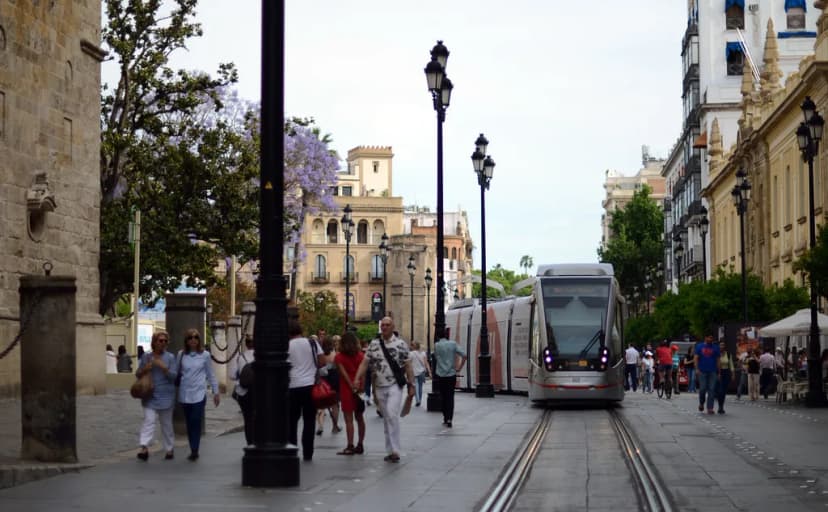
Few cities are as synonymous with flamenco as Seville. The Andalusian capital has been a crucible for the art form since the 19th century, when cafés cantantes (singing cafés) turned the city into a flamenco epicenter. The historic Triana district, across the river, was once a major Romani neighborhood and remains a pilgrimage site for aficionados.
Today, Seville offers multiple ways to experience flamenco every day of the week, from polished tablaos to impromptu street performances. This guide breaks down the different venue types, gives concrete examples, and offers practical tips on etiquette and booking so you can choose an experience that matches your preferences.
For travelers who want to align their trip with the city's most important flamenco festival, the Flamenco Bienal de Sevilla takes place every two years and transforms theaters and peñas across the city. For assistance securing seats to the event, see the dedicated page on how to buy Bienal de Flamenco tickets.
Understanding Flamenco Venues
Before booking a show, it helps to understand the landscape. The main venue types in Seville are tablaos, theaters, peñas, and bars. Tablaos are dedicated performance spaces with a wooden stage, designed to showcase footwork and singing to audiences that are largely visitors. They are the modern heirs of the singing cafés and offer multiple shows daily, making them a convenient choice for tourists.
Theaters elevate the experience to full-scale productions with dramatic lighting and larger stages. Peñas are private clubs for flamenco enthusiasts, where performances are authentic but not staged for tourists. Bars offer the most casual and spontaneous setting, with local performers often taking the stage late at night. Each venue type has its own atmosphere and audience, so think about what you want: close-up footwork, a polished show, or a slice of local life.
Tablaos: The Classic Flamenco Experience
Tablaos are the quintessential flamenco venue in Seville. They are typically small to medium-sized, holding between 20 and 70 guests, and feature a wooden stage that amplifies the percussive footwork. Performers wear traditional colorful costumes, sometimes changing between sets, and the shows are polished for an audience that may be experiencing flamenco for the first time.
The performances, however, are genuine and the skills are real. Many tablao artists are seasoned professionals who have dedicated their lives to the art, and landing a spot in a reputable tablao is a mark of achievement. So while the setting may be tourist-oriented, the artistry is authentic.
La Cantaora: An Intimate Table-Side Experience
La Cantaora is an intimate tablao where spectators sit close to the performers, often at tables right at the stage's edge. Arriving early to secure a front table lets you watch the dancers' footwork up close and feel the intensity of the performance. This proximity can be a thrilling way to experience the raw emotion of flamenco.
Tablao El Arenal: Over 50 Years of History
Tablao El Arenal has been operating since 1975 or 1976, according to its own website, making it one of Seville's most historic flamenco venues. Over the decades, it has hosted thousands of visitors, and it has been recognized by The New York Times as a top place to feel the emotion of flamenco. The venue offers a show that typically lasts about one hour, with optional dining packages that include a drink, tapas, or a full à la carte dinner.
Booking a show with dinner means you'll dine at your table before the performance begins, and the dining room doubles as the performance space. Many guests appreciate the seamless transition from meal to show without having to move. Reviews of El Arenal frequently praise the high-energy performances, and many point out that photography and video recording are not allowed during the show, a policy that helps everyone stay present.
Flamenco Theaters: Bigger Stages, Bigger Productions
If you prefer a more theatrical presentation, consider a flamenco theater. These venues have larger stages that allow multiple dancers to move freely, and they use sophisticated lighting and sound design to create a more dramatic atmosphere. They are a good choice for travelers who enjoy spectacle and production value.
Teatro Flamenco Sevilla: A Full Production Experience
One standout theater is Teatro Flamenco Sevilla, which presents a full-scale production with a larger cast and elaborate staging. Some visitors who have seen both tablao and theater shows report that the theater experience felt more polished and visually dynamic. If you have time, experiencing both a small tablao and a theater production can give you a broader appreciation of the art form.
Museo del Baile Flamenco: Courtyard Shows Under the Stars
The Museo del Baile Flamenco, housed in a historic building in the Santa Cruz neighborhood, presents its 'Puro Flamenco Show' in an intimate indoor courtyard open to the sky. The setting is atmospheric, with floating chairs and a Sevillian orange tree overhead. The museum hosts multiple shows nightly, and, notably, photography and filming are not allowed during the performance, which helps immerse the audience in the experience.
Because the museum is dedicated to flamenco art, the show is designed to complement its exhibits. Visitors interested in the history of flamenco might combine a visit to the museum's galleries with an evening performance. For details on courtyard shows, you can check the travel guide that first brought attention to this venue.
Peñas: The Most Authentic Flamenco Clubs
For those seeking authentic, non-touristy flamenco, a peña is the most rewarding option. A peña is essentially a club where local artists and aficionados gather to practice, perform, and celebrate flamenco. Membership fees fund workshops, lectures, and performances, and while visitors are welcome, the shows are not staged for them. This means there may or may not be an event on any given evening, and the gatherings are usually conducted in Spanish.
To learn more about the culture and find a flamenco peña in Seville, explore our detailed guide on the subject.
Peña Flamenca Torres Macarena: Public Weekly Gatherings
One of the most accessible peñas for visitors is Peña Flamenca Torres Macarena, which hosts a weekly public gathering every Thursday evening at 8 pm. These evenings are open to the public and rarely charge an entrance fee, though it's wise to arrive early to secure a seat. In addition to the weekly event, the peña occasionally offers ticketed shows that can be purchased at the door.
Keep in mind that schedules can change, so it's a good idea to check the peña's official website or social media or to ask at your accommodation for the latest information. While there, buy a drink and soak in the ambiance—this is as close to the grassroots of flamenco as visitors can get.
Flamenco Bars: Low-Key Late-Night Performances
For a more relaxed evening, head to a flamenco bar. These are small venues where local musicians and dancers gather informally, often starting after 10 or 11 pm. There is typically no set schedule and no entrance fee, but food and drink prices may be slightly higher than standard bars. Bars like Lo Nuestro or Taberna La Quad in Triana are known for hosting impromptu performances, especially on weekends when things can continue late into the night.
Locating these bars can be a bit of an adventure, since some of the best ones don't advertise heavily. Asking locals or your hotel staff for recommendations is often more productive than searching online. Just go with the flow, enjoy a drink, and let the evening unfold.
Flamenco Street Performers: Spontaneous Spots
A less predictable but often magical way to experience flamenco is to come across street performers. Buskers may set up in busy plazas or near famous landmarks, and you might find a guitarist or two playing for pleasure rather than money. One popular spot is Plaza de España, particularly around sunset. Their appearances are unpredictable, but you can stumble upon something special while exploring the city.
Flamenco Show Etiquette: What to Know
To ensure a respectful experience, be mindful of the performance and the artists. Flash photography is almost never allowed, as it can distract the performers. Some venues, such as the Museo del Baile Flamenco and El Arenal, prohibit all photography or filming during the show. This isn't meant to be restrictive but to help the audience stay engaged and to protect the artists' rights.
During the performance, avoid talking or moving around excessively. Applause is welcomed and is a traditional way to show appreciation. If you are dining, meals are typically served before the show, allowing you to focus on the performance without distractions.
How to Choose the Right Show for You
Choosing between a tablao, theater, peña, or bar depends on what you value most. If you want to be as close to the performers as possible and see intricate footwork, book a small tablao and request a front table. If you prefer a big production with lighting and choreography, a theater show may be a better fit. For a glimpse of local life and spontaneous artistry, seek out a peña or a bar.
The travel guide from Where and Wander recommends experiencing both a tablao and a theater show if you have the time, as each offers a different perspective. El Arenal's venue was praised for its elevated seating that provides clear views even when you're farther back, so if you're short on time, that's a safe bet.
Practical Tips for Booking and Timing
Book your show well in advance, especially for popular evening slots, as seats can sell out days ahead. Many venues offer online booking, and some allow you to choose your seating category. For weeknights, you may have more flexibility, but weekend shows fill up quickly.
Most tablao and theater shows run about one hour. If you book a dinner package, plan for an additional hour for the meal. For bars and peñas, there is no fixed schedule, so arrive early to settle in with a drink and wait for the music to begin. Keep in mind that some venues have specific photography policies, so review their website before you go.
Frequently Asked Questions
This section answers common questions about flamenco shows in Seville, drawing on general knowledge and the guidance in this article.
Plan Your Visit
Flamenco is more than a show in Seville; it is a living tradition that pulses through the city's veins. Whether you choose an intimate tablao, a grand theater, a local peña, or a spontaneous street performance, you are participating in a cultural experience that has been evolving for centuries.
To make the most of your visit, decide what kind of experience you want, book in advance, and arrive ready to be moved. For more ideas on Spanish festivals, explore our guide to festivals in Spain, and if your trip coincides with Easter or the spring fair, you can combine flamenco with other Seville celebrations like Corpus Christi Seville or the Feria de Abril Seville.
Frequently Asked Questions
What is the best flamenco show to see in Seville?
There is no single best show; the ideal choice depends on your preferences. For an intimate experience with close-up footwork, try a small tablao like La Cantaora. For a full-scale production, consider Teatro Flamenco Sevilla. For a local experience, visit a peña such as Peña Flamenca Torres Macarena.
Is it better to see a flamenco show in Seville or Granada?
Both cities have deep flamenco roots. Seville offers a wider variety of venues and more frequent performances, making it easier to find a show on any night. Granada's intimate caves in the Albaicín provide a unique setting. It's a matter of preference.
Where can I find authentic, non-touristy flamenco shows in Seville?
Peñas, such as Peña Flamenca Torres Macarena, offer some of the most authentic experiences. These are local clubs where performances are not staged for tourists. Flamenco bars like Lo Nuestro also host spontaneous performances, but you'll need to ask around for current schedules.
What is the difference between a tablao and a flamenco theater?
A tablao is a dedicated performance space, usually small to medium-sized, with a wooden stage that enhances footwork sounds. A flamenco theater is larger, often featuring elaborate lighting and set design, allowing for more dramatic productions with larger casts.
Are flamenco shows in Seville suitable for kids?
Yes, many venues welcome children. For example, Tablao El Arenal offers a special kid's menu, and the show itself is visual and rhythmic, appealing to all ages. However, evening shows may be late for young children, so check the timing.
Do flamenco shows in Seville allow photography?
Most venues prohibit flash photography. Some, like Museo del Baile Flamenco and Tablao El Arenal, ban all photography and video during the show. Always check the venue's policy before you attend.
Do flamenco bars in Seville have an entrance fee?
No, most flamenco bars do not charge an entrance fee. They are informal venues where you pay for food and drinks. However, peñas may charge a nominal fee for certain events, and you may need to become a member for regular visits.