
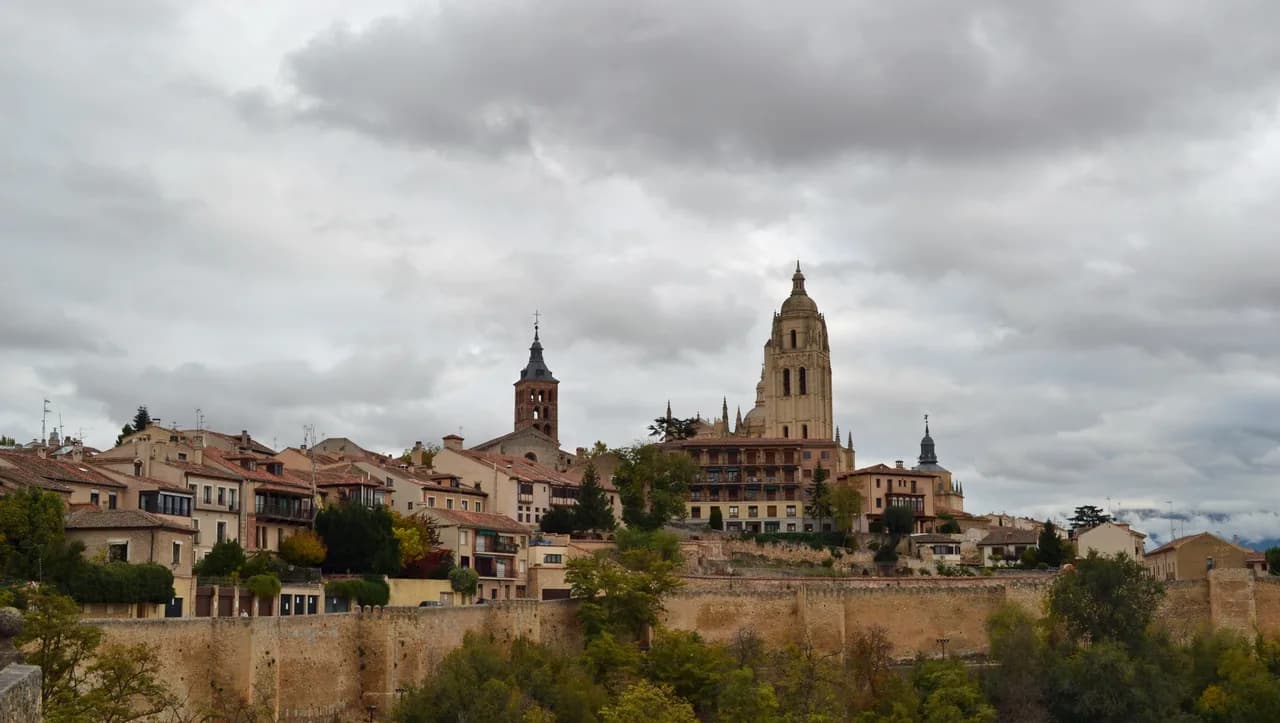
Hay Festival Segovia is a prestigious literary festival that takes place each September in the historic Spanish city of Segovia. The 2026 edition runs from 10 to 13 September, with a programme that the organisers describe as championing 'beauty versus the immediate' — an invitation to slow down and engage with ideas, art, and storytelling. The festival is part of a global network of Hay events, and Segovia's version has grown from its literary roots to embrace visual arts, film, and music.
Expect a packed four days of author talks, panel discussions, exhibitions, and workshops in venues across the city. The festival often combines international names with Spanish voices, offering sessions in both English and Spanish. As well as literature, the programme frequently includes journalism debates, art installations, and film screenings — so there is something for a broader cultural audience.
This guide covers the key practicalities: dates and location, how to book tickets, what the programme might include, which venues to look out for, and how to get to Segovia. Whether you are a book lover or simply curious about the city's cultural scene, the festival is a highlight of the autumn calendar.
Hay Festival Segovia 2026 dates and location
The 2026 edition of Hay Festival Segovia runs from Thursday 10 to Sunday 13 September 2026. The main hub is the city of Segovia, located about 90 kilometres northwest of Madrid. The festival makes use of multiple venues — from historic buildings to university spaces — rather than a single site.
According to Spain's official tourism website, the festival brings together authors and artists from many countries over its four days, with readings, talks, and debates held across the city. It is a good idea to check the official Hay Festival Segovia page for the most up-to-date schedule, as venues and times can occasionally change.
How to buy tickets and pricing
Tickets for Hay Festival Segovia 2026 are now on sale, according to the festival's official homepage. The best place to book is the Hay Festival website, where you can browse the programme and select individual events. Some sessions are free, while others require a ticket — the cost varies by event.
Other events, particularly author talks, may have charges. Since prices are set per event, it is best to check the individual listing for each session you plan to attend. Check the organizer's current ticket information for admission costs, booking fees and eligibility for reduced tickets.
What to expect: talks, exhibitions, and events
The programme for 2026 spans a wide range of topics. One highlight is the 'Europa Tribune' session on 9 September, where journalists from major European outlets gather to debate the future of journalism and the stories shaping the continent. The session takes place at the Espacio Fundación Telefónica in Madrid rather than in Segovia itself, but is listed as part of the festival's activities.
There are also several visual arts exhibitions. On 8 September, Hubertus von Hohenlohe opens 'Fama everybody', an exhibition of his photography, at La Alhóndiga. The show runs until 25 October. Another opening at the Torreón de Lozoya focuses on 'El mantón de Manila', a collection of traditional shawls with Asian and Spanish roots, on display until 10 November.
Segovia is also known for its enthusiasm for puppetry, and the international Titirimundi Puppet Festival in May is another highlight on its cultural calendar. If you visit in spring, you can catch Spain's Holy Week processions in Segovia, which are among the country's most traditional.
Key venues in Segovia
The festival uses different venues around Segovia, each with its own character. The Museo Esteban Vicente, an art museum dedicated to the Spanish painter, is a focal point. In 2026, the museum's Capilla (chapel) space hosts the exhibition 'Intruso', which combines paintings, sculptures, and music to explore migration and identity.
The Torreón de Lozoya, a medieval tower house on Plaza San Martín, has hosted numerous festival events and is the location for the 'El mantón de Manila' exhibition. Other regular venues include La Alhóndiga, a cultural centre, and IE University's campus, where the Refectorio hosts film screenings.
How to get to Segovia
Segovia is easily reached from Madrid. The high-speed AVE train from Madrid Chamartín station takes about 30 minutes to reach Segovia-Guiomar, which is a short taxi or bus ride from the old town. Alternatively, conventional trains and buses make the journey in around 90 minutes.
If you are driving, the A-6 motorway connects Madrid and Segovia in about an hour. Once in the city, the old town is pedestrian-friendly, but be prepared for steep streets and uneven pavements. The Roman aqueduct is a short walk from the train station, and many festival venues are in the city centre.
Where to stay and practical tips
Because the festival takes place over four days, plan to stay overnight in Segovia. Options range from historic hotels near the aqueduct to budget hostels and guesthouses in the old town. Book well in advance — festival weekends are popular for both travellers and attendees.
Remember that Segovia is a hilltop city, so comfortable walking shoes are essential. English is widely spoken in festival venues, but learning a few Spanish phrases will enrich your interactions. For information in English, check the official website and consult other festival travel guides in the festroam collection on festivals in Spain.
Other festivals and events in Segovia
Segovia hosts several other events throughout the year. In late March, the city celebrates Holy Week with traditional processions. In May, the Titirimundi Puppet Festival brings international puppeteers to the streets, and in autumn, the Hay Festival marks the start of the cultural season.
Segovia is also a fantastic destination for its cuisine and culture. Don't miss the cochinillo asado (roast suckling pig), a local speciality. The city's cathedral and the Alcázar castle are worth exploring when the festival programme is not keeping you busy.
Plan your visit: sample itinerary
Day 1 (Friday, 11 September): Arrive in Segovia and check in to your hotel. Start with a stroll past the Roman aqueduct to acclimatise. In the afternoon, catch an early festival talk, then explore the old town and enjoy dinner at a local restaurant.
Day 2 (Saturday, 12 September): Spend the day at festival events — perhaps a panel discussion in the morning and a film screening in the afternoon. Make time for the exhibitions at the Museo Esteban Vicente or the Torreón de Lozoya.
Day 3 (Sunday, 13 September): Take in a final talk and visit the Alcázar before heading back to Madrid. If if you are driving, stop at the viewpoints along the way for a last look at the Castilian landscape.
Plan Your Visit
Hay Festival Segovia is a wonderful opportunity to experience world-class literature and culture in one of Spain's most beautiful cities. With dates confirmed for 10 to 13 September 2026 and tickets already on sale, now is the time to start planning your trip.
Check the official Hay Festival Segovia page for the full programme and to book tickets, and use the Spanish tourism office's page for general visitor information. Whether you are a devoted reader or a cultural explorer, you'll find plenty to inspire you.
Frequently Asked Questions
What are the dates for Hay Festival Segovia 2026?
The 2026 edition takes place from Thursday 10 to Sunday 13 September 2026. The festival usually runs for four days in early September.
Where does the Hay Festival take place?
The festival takes place in Segovia, Spain, across multiple venues in the city. Some satellite events, such as the Europa Tribune session in 2026, may be held in Madrid.
How do I get tickets for Hay Festival Segovia?
Tickets are available on the official Hay Festival website. You can browse the programme and book individual events. Some events are free, but they may still require booking.
Are there events for non-Spanish speakers?
Yes, some events are held in English, while others are in Spanish. Check each event's description for language information. The 2026 programme includes sessions in both languages.
How do I get to Segovia?
The fastest way is by high-speed AVE train from Madrid Chamartín, taking about 30 minutes. Buses take around 90 minutes. Driving on the A-6 motorway takes about an hour.
What is the dress code or recommended attire?
There is no formal dress code. Comfortable shoes are essential as Segovia is a hilltop city with many cobblestone streets. Dress in layers, as evenings can be cool even in September.


