Every summer, the Granada International Festival of Music and Dance fills the city's most storied spaces with orchestral concerts, ballet, flamenco, and recitals. Rather than a single hall, the program unfolds across the Alhambra complex and the historic quarters of Granada, so your choice of venue shapes both the music and the experience. For a full overview, start with our Granada International Festival of Music and Dance guide.
From the Renaissance palace of Charles V to the open-air theatre in the Generalife gardens, each stage offers distinct sightlines, intimacy, and exposure to the elements. This guide describes the documented venues and offers practical advice for matching your ticket to the concert experience you want. If you're traveling around the country to catch more events, explore our comprehensive Festivals in Spain overview.
The Palace of Charles V: A Renaissance Stage for Symphony
The Palace of Charles V, a circular Renaissance building inside the Alhambra, is the festival's historic home. The official festival history notes that symphony concerts have been staged here since 1883, making it one of Spain's oldest summer music traditions.
Large symphony orchestras perform in the palace's columned inner courtyard, where the architecture creates a distinctive acoustic. Although it is an open-air space, the surrounding walls and arcade give the audience a sense of enclosure, and the stone surfaces add a resonant, sometimes boisterous, quality to the sound.
For seat selection, remember that this is a courtyard: you are exposed to the sky, though the palace walls provide shelter from wind. Choose a seat in the covered arcade if you prefer protection from the occasional drizzle, but be prepared for views of the stage that are partially framed by pillars. For a complete breakdown of ticketing, see our Granada International Festival tickets prices page.
Generalife Gardens Outdoor Theatre: Dance Under the Stars
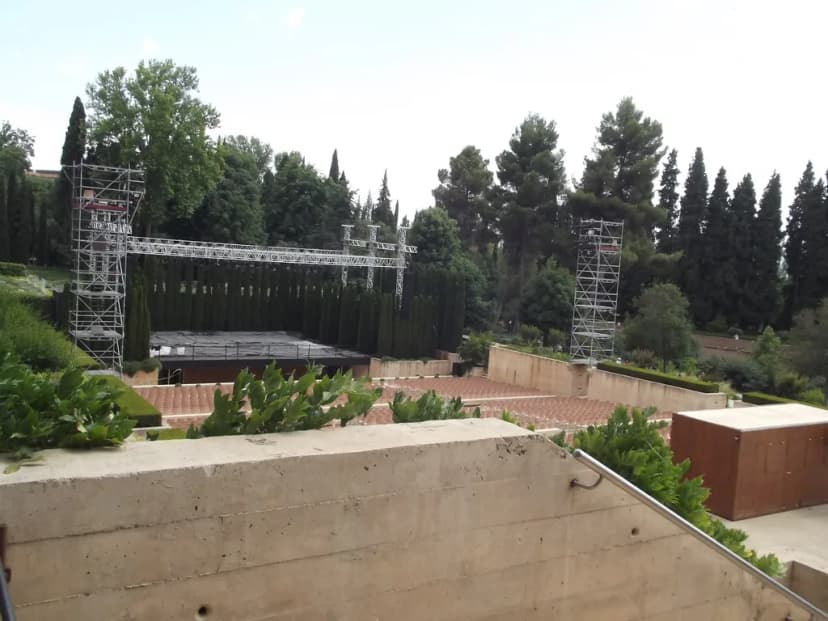
The outdoor theatre in the Generalife gardens, the summer residence of the Nasrid rulers, is the festival's most romantic venue. The stage sits among cypress trees and water features, and the garden's elevated position offers views over the Albaicín and the Sierra Nevada. The main performances here are part of the Granada International Festival of Music and Dance.
This is where dance and ballet productions are staged, and the productions are designed to use the natural scenery as a backdrop. The seating is an open-air amphitheatre, so sightlines depend on the tier and the position of the stage relative to the audience. For more on the dance line-up, visit our Granada International Festival Dance Program.
Bring a cushion or a jacket, as evening performances can get cool. The garden paths require some walking from the main Alhambra entrance, so comfortable shoes are essential, especially for the climb back after the show.
Patio de los Arrayanes: Intimate Recitals in the Alhambra
The Patio de los Arrayanes, with its long reflecting pool and myrtle hedges, is one of the most photographed spots in the Alhambra. During the festival, it hosts recitals—solo piano, chamber ensembles, and intimate vocal performances—that capitalise on the courtyard's serene atmosphere.
Seating is typically arranged on the portico that surrounds the patio, offering shelter from the elements and relatively consistent acoustics. Because the space is intimate, even the back rows are close to the performers, making it an excellent choice for those who value visual connection over sheer volume.
The patio's reflective surfaces can amplify sound, so the experience may vary depending on the instrumentation. For an evening recital, the play of light on the water adds a magical element, but it is wise to confirm the exact position of the stage when booking your ticket.
Churches and Historic Buildings: Morning Concerts in the Old Town
The festival uses Granada's churches and historic buildings for morning concerts, offering a quieter start to the day. These venues are chosen for their acoustics; stone walls and vaulted ceilings can make even a single instrument sound rich and enveloping. Many programs are announced each summer, so check the official calendar for the season.
You will find these concerts across the old town, from the cathedral area to the former monasteries. Because these are active places of worship, expect a respectful atmosphere—applause is often muted, and audiences are typically more subdued than at festival gala evenings.
Seating in churches usually means wooden pews or folding chairs, so comfort is secondary to the acoustic experience. Arrive early to secure a centre aisle seat, which offers the most balanced sound, and note that interior lighting can be dim, so programme reading may be a challenge.
Albaicín and Sacromonte: Flamenco and World Music in the Old Quarters
The traditional neighborhoods of Albaicín and Sacromonte, climbing the hills opposite the Alhambra, are the festival's home for flamenco and world music. Here, performances occur in humble venues, sometimes in caves or small plazas, reflecting the raw, improvisational roots of the art forms.
These events are often unticketed or free, part of the FEX extension that spills out of the official venues. They offer a less formal experience: expect standing room, tightly packed crowds, and a more participatory atmosphere. This is where you might catch local artists and impromptu jam sessions.
The Albaicín is a labyrinth of narrow, steep streets, so allow extra time to find the venue. Sacromonte is known for its cave dwellings, some of which have been converted into performance spaces—a unique concert setting with excellent acoustics and a cosy, candlelit atmosphere.
The FEX Extension: City-Wide After-Hours Performances
The FEX (Extensión del Festival) is a series of informal concerts and performances that pop up across the city after the official program ends. According to the local tour operator Cicerone Granada, this extension has been a tradition for decades, with events in plazas, museums, and even private homes.
FEX events are typically unticketed and free, making them an accessible way to experience the festival’s more experimental side. You might encounter jazz combos in a hidden courtyard, electronic music in a former convent, or traditional zarzuela staged by university students.
Because FEX locations change nightly and are not always published in the main festival brochure, check the official festival website or local listings on the day to see what’s on. Exploring these events is a great way to immerse yourself in Granada’s contemporary music scene, often in intimate and unconventional settings.
Practical Tips for Choosing Your Venue: Sightlines, Climate, and Atmosphere
Granada's summer evenings can be hot, with temperatures often above 30°C during the day but dropping sharply after sunset. For outdoor venues like the Generalife theatre, bring a sweater or light jacket, as the open-air stage can feel cool despite the daytime heat.
Indoor venues such as churches and the Palace of Charles V offer more stable temperatures but may lack climate control. The palace courtyard is partially shaded, but during daytime concerts, it can be warm; the arcades provide relief, so consider a seat in the covered colonnade. For insights into other cultural celebrations in the city, our festival guide may come in handy.
Sightlines vary: in the palace, the stage is usually set along the main axis, so central seats give the best view; in churches, pillars can obstruct angled views, so opt for the centre aisle. For dance performances in the Generalife, elevated tiers provide a fuller view of the choreography, while ground-level seats offer proximity but may miss overhead formations.
Atmosphere differs significantly between formal and informal venues. The Palace of Charles V and the Generalife have a gala feel, with audiences in evening wear, while Albaicín and Sacromonte venues are more bohemian, encouraging audience participation. Choose accordingly to align with your preferred concertgoing style.
Accessibility and Seating Considerations for Festival Goers
Accessibility varies markedly across the festival venues. The Palace of Charles V is accessible from the main Alhambra entrance, but cobblestone paths and steps may present challenges. The Generalife gardens involve a climb and uneven paths, so if you have mobility concerns, plan extra time and consider alternative routes. Most official pages do not publish detailed seating charts, so verify directly with the organizer.
Historic churches and Albaicín venues often lack ramps or lifts, and seating is typically on fixed pews or folding chairs. Contact the festival's accessibility email or phone line well in advance to discuss your needs; they can advise on the most suitable venues and whether accessible seating is available for each performance.
For specific seating categories and current layout information, consult the festival's ticketing partner. While the festival does not publish detailed sightline maps, you can request assistance from the customer service team at the time of booking. Always confirm the actual seating arrangement when you arrive, as stages are set up differently for each concert.
Plan Your Visit
The Granada International Festival of Music and Dance offers a unique chance to hear world-class music in settings that have inspired artists for over a century. By matching your concert choice to the venue—intimate recitals in the Patio de los Arrayanes, grand symphonies in the Palace of Charles V, or free-spirited FEX events in the old quarters—you can tailor an unforgettable experience.
Before booking, check the official festival website for the latest program, dates, and accessibility information. For up-to-date ticket details and venue arrangements, consult official sources rather than relying on third-party descriptions.
Frequently Asked Questions
What venues are used during the Granada International Music and Dance Festival?
The main venues are the Palace of Charles V for symphony concerts, the outdoor theatre in the Generalife gardens for dance and ballet, the Patio de los Arrayanes for recitals, churches and historic buildings for morning concerts, and the Albaicín and Sacromonte neighborhoods for flamenco and world music. The FEX extension also uses various locations across the city.
What is the seating like at the Palace of Charles V concerts?
The Palace of Charles V is a circular open-air courtyard with seating arranged around a central stage. The surrounding arcade provides some seating with cover, but many seats are exposed to the sky. Because it is an open space, sightlines are generally good, but pillars may obstruct views from some angles.
Are there outdoor performances at the Generalife gardens?
Yes, the outdoor theatre in the Generalife gardens is a primary venue for dance and ballet performances. It is an open-air amphitheatre set among the gardens, offering a magical setting with views over the Albaicín and the Sierra Nevada. Performances usually take place in the evening, so dress appropriately.
What type of music is performed at the Patio de los Arrayanes?
The Patio de los Arrayanes hosts recitals, including piano, chamber music, and intimate vocal performances. The serene courtyard with its reflecting pool provides a perfect backdrop for these smaller-scale classical concerts.
Are there concerts in churches or historic buildings?
Yes, the festival schedules morning concerts in Granada's churches and historic buildings. These venues are chosen for their acoustics and offer a serene way to experience classical music in a spiritual setting. The program includes organ recitals and chamber ensembles.
Where do flamenco and world music performances take place?
Flamenco and world music performances take place in the traditional neighborhoods of Albaicín and Sacromonte, which offer an intimate, authentic setting. These performances often occur in small venues or caves, and many are part of the FEX extension, with some being free or unticketed.
What is the FEX extension of the festival?
The FEX is the festival's extension, a program of informal concerts and performances that take place beyond the official venues across the city. It includes jazz, experimental music, and traditional Spanish forms, often in non-traditional spaces like plazas or private homes. Many FEX events are free and unticketed.
Where can I find the official program and ticket details?
The official program and ticket details are published on the festival's official website, granadafestival.org. Ticket information may also appear on authorized ticketing partners. Always check the official sources for the most current information, as dates and programs change annually.