
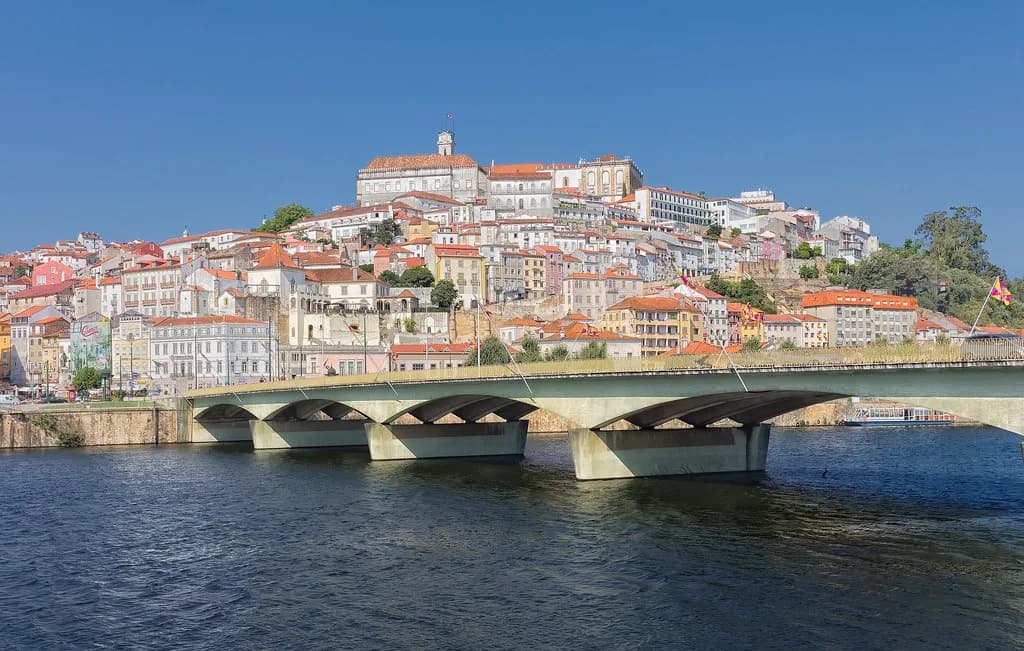
Every early July, Coimbra honors its patron saint, Queen Saint Isabel, with the Festa da Rainha Santa. The celebration combines a municipal holiday, religious processions, and deep-rooted devotion, drawing pilgrims and visitors to the city's historic streets. For travelers, it's a chance to witness a living tradition, but planning around the religious events and road closures makes the experience smoother.
This guide offers practical advice for attending the festivities, focusing on what you need to know about the city holiday, the key processions, and how to navigate the traffic restrictions that accompany them. You'll also find background on the saint's connection to Coimbra and the remarkable relic displayed on a rare cycle.
Who Was Queen Saint Isabel?
Born in 1271 as an Infanta of Aragon, Isabel became Queen of Portugal through her marriage to King Dinis. She was known for her charity and piety, and the famous Miracle of the Roses legend holds that bread she hid to give to the poor was transformed into roses when questioned by the king. After her death in 1336, she was buried in Coimbra as she had requested, in the Monastery of Santa Clara-a-Velha, which later fell into ruin.
The devotion to Queen Saint Isabel grew quickly, leading to her beatification in 1516 and canonization in 1625. In 1677, her body was transferred to the new Monastery of Santa Clara-a-Nova, where it remains today. The city of Coimbra holds her as its patron saint, and the municipal holiday on July 4th coincides with her liturgical feast day, reinforcing the bond between the queen and the city.
Understanding the Festival: Dates and Events
The Festa da Rainha Santa takes place each year in early July, anchored by the Dia do Feriado Municipal on July 4th. This city holiday honors Queen Saint Isabel, and in recent years it has featured a solemn mass at the Church of Santa Isabel. For the 2026 edition, the celebrations included the Penitência procession on July 9th and the Solene procession on July 12th, each following a route between the Monastery of Santa Clara-a-Nova and the Church of Santa Cruz.
The Confraria da Rainha Santa Isabel, the brotherhood dedicated to the saint, organizes the religious festivities each year. For current dates and ceremony details, visitors should check the Confraria's official site or the local tourism office, as programs evolve. While the festival typically follows this pattern, you should verify the schedule for your travel year.
The Processions: What to Expect
The main events are two processions that parade through the historic center. The Procissão da Penitência, held on the evening of July 9th, is a more solemn affair, while the Procissão Solene on July 12th is the grander celebration. Both wind from the Monastery of Santa Clara-a-Nova, across the river, and up to the Church of Santa Cruz, passing landmarks like the Portagem and the Praça 8 de Maio.
Participants carry religious banners and statues, and the faithful line the streets in a display of devotion. The processions can draw thousands, so expect crowds and limited views along the narrow streets. For a good vantage point, arrive well before the start time and be prepared to stand for the duration, which can last several hours as the procession moves at a solemn pace.
The Relic of the Incorrupt Hand
One of the most extraordinary aspects of the devotion to Queen Saint Isabel is the incorrupt hand relic, kept in the Monastery of Santa Clara-a-Nova. According to tradition, the hand has remained uncorrupted over the centuries, symbolizing her sanctity. Perhaps because of its fragility, the relic is only shown to the faithful every four years, making the display a rare and intensely moving occasion for pilgrims.
The relic was displayed in 2024, and past displays have occurred every four years. For the next exhibition date, consult the Confraria's announcements, as the schedule is not publicly fixed far in advance. If you are planning to visit Coimbra specifically to see the relic, align your trip with one of these rare years and check the Confraria's official communications for the precise date.
Traffic and Street Restrictions
The processions bring significant traffic and parking restrictions to central Coimbra, so plan your movements accordingly. In 2026, road closures were implemented on July 4th, 9th, and 12th, affecting numerous streets along the procession route, including Calçada de Santa Isabel, Rua Mendes dos Remédios, Avenida da Guarda Inglesa, and the Ponte de Santa Clara. The police enforced closure times varied: on July 9th from 16:00 to 1:00 the next morning, and on July 12th from 15:00 to 21:00.
In addition to traffic restrictions, the city also prohibited the placement of outdoor terraces and mobile vending along the procession routes and in certain squares on specific days in early July. This affects street vendors selling balloons, snacks, and other items. If you plan to drive, use the city's peripheral parking and walk into the center, or rely on public transport, which may also have service adjustments.
Tips for Attending
The processions are religious events, so respectful attire and behavior are expected. Dressing conservatively, covering shoulders and knees, is advisable, and you should avoid speaking loudly or obstructing the procession. Photography is usually permitted, but be mindful of participants and maintain a respectful distance.
Given the crowds and potential for warm July weather, bring water, sunscreen, and comfortable shoes for walking. Check the latest local traffic announcements before heading out, and allow extra time to reach your vantage point. If you are driving, be aware of the street closures well in advance, and consider parking outside the restricted zone.
The festival is a poignant expression of Coimbra's identity, linking the city's medieval past with its vibrant present. Exploring the religious festivals and traditions of Coimbra alongside the festival gives a fuller picture of the region's cultural depth, and you can find other festivals in Portugal throughout the year that complement your visit.
Plan Your Visit
The Festa da Rainha Santa offers a unique window into Coimbra's spiritual and cultural life. By understanding the holiday, the processions, and the practical restrictions, you can make the most of your visit. Remember to verify the exact dates and schedule from official sources before you travel, as the program may vary from year to year.
Frequently Asked Questions
What is the Festa da Rainha Santa?
The Festa da Rainha Santa is an annual celebration in Coimbra, Portugal, held in early July to honor Queen Saint Isabel, the city's patron saint. It features a municipal holiday on July 4th and religious processions, including the Penitência and Solene processions, which parade through the historic center.
When is the municipal holiday in Coimbra?
The municipal holiday, known as Dia do Feriado Municipal, is celebrated on July 4th each year. This date coincides with the liturgical feast day of Queen Saint Isabel, highlighting the deep connection between the saint and the city.
What is the route of the processions?
The two main processions, the Procissão da Penitência and the Procissão Solene, both travel between the Monastery of Santa Clara-a-Nova and the Church of Santa Cruz in Coimbra. The route passes through several historic streets and landmarks, including the Calçada de Santa Isabel, Avenida da Guarda Inglesa, and the Ponte de Santa Clara.
How often is the relic displayed?
The incorrupt hand relic of Queen Saint Isabel is displayed to the faithful only every four years. The relic is kept in the Monastery of Santa Clara-a-Nova. Due to its rarity, pilgrims and visitors should check with the Confraria da Rainha Santa Isabel for the exact display schedule.
Are there traffic disruptions?
Yes, the processions cause significant traffic and parking restrictions in central Coimbra on the days of the events. Road closures affect numerous streets along the procession routes, and the city also prohibits outdoor terraces and mobile vending in certain areas. Visitors should plan to park outside the restricted zones and use public transport or walk.