
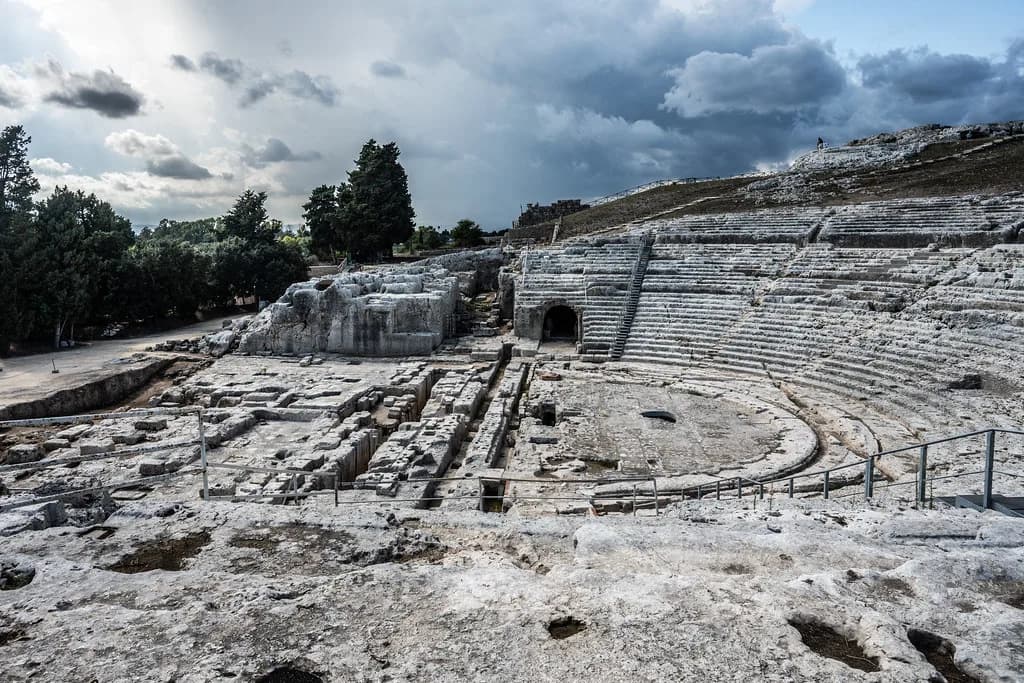
The Greek Theatre of Syracuse is one of the most important ancient theaters in the world, carved into the rock of Temenite Hill within the Neapolis Archaeological Park. Dating from the 5th century BCE and renovated in the 3rd century BCE, it once rivaled the great theaters of Athens and still hosts classical performances today. Whether you are a history enthusiast or a casual traveler, a visit here offers a rare chance to stand in a venue that has echoed with drama for over two millennia.
The Greek Theatre at a Glance: History, Architecture, and Significance
The theater's semi-circular auditorium, orchestra, and stage are its defining features, with the stage showing grooves and trenches likely used for Roman-era spectacles. Its design took full advantage of the natural slope of Temenite Hill, offering superb acoustics and views toward the harbor and Ortygia. Travelers consistently rank it among the top attractions in Syracuse, noting its remarkable preservation and the unique atmosphere of sitting in a monument that has been entertaining audiences for centuries.
Location and Setting: Inside the Neapolis Archaeological Park
The Greek Theatre sits within the Neapolis Archaeological Park, a sprawling green area that also contains the Roman Amphitheatre, the Altar of Hieron, and the Ear of Dionysius. This park is a show in itself, rich in archaeological treasures and surrounded by greenery. Most visitors combine a trip to the theater with explorations of these other ancient wonders, making the park a half-day destination in its own right.
A helpful distinction: the theater is not in Ortigia, the historic island center of Syracuse, but on the mainland within the park. When planning your route, factor in the distance between Ortigia and the park; many travelers find it convenient to base themselves in Ortigia and take a short taxi ride or walk to the park's entrance.
Guided Tours vs. Self-Guided Visits: Options and Trade-offs
Guided tours are widely recommended for bringing the site to life. One recent visitor emphasized, "It is absolutely recommended to take the guided tour," praising the insights provided by their guide. While you can certainly explore on your own, the lack of on-site audio guides and minimal informational signage has been a common complaint among travelers. A tour fills those gaps with historical context and stories you might otherwise miss.
Consider booking a tour that covers the entire Neapolis Archaeological Park, since the theater is just one part of the experience. Alternatively, you can join a guided walk that focuses mainly on the theater and its history. For those who prefer independence, a self-guided visit allows you to move at your own pace, but be prepared to supplement your knowledge with a guidebook or mobile research.
What to Expect on a Visit: The Theatre and Surrounding Park
When you visit outside of performance seasons, you can see the ancient rock-cut seating in its original state, free from the temporary wooden structures that are added for summer shows. Several reviewers have noted that during performances, protective wooden seating covers the ancient stone, significantly altering the appearance. So if you want to photograph the theater as it has stood for centuries, plan your visit for a time when no performances are scheduled.
Within the park, expect uneven terrain and some walking. The theater itself is only part of the story; the nearby Latomia del Paradiso, a lush quarry garden, is a cool and evocative spot to explore. Allow at least two to three hours to cover the park comfortably, not including any guided tour time.
Best Times to Visit and Crowd Considerations
To avoid crowds and midday heat, plan your visit for early morning or late afternoon. The park can get busy, especially when tour groups arrive, so arriving right at opening time gives you a quieter experience. Weekdays tend to be less crowded than weekends, and the cooler months from October to April are more pleasant for walking the extensive grounds.
Combining Your Visit with Other Syracuse Sights
After touring the Neapolis park, many visitors head to Ortigia to wander the narrow streets, see the Cathedral, and enjoy seaside dining. If you are interested in religious festivals, you can also check the dates for the Madonna delle Lacrime Syracuse festival or the Syracuse Santa Lucia festival, which are celebrated in the city and may enrich your trip.
Practical Tips for Visitors: Walking, Parking, and Comfort
Parking near the Neapolis Archaeological Park can be difficult, and many travelers recommend walking or taking a taxi instead of driving. One recent visitor shared that their host strongly advised against driving due to the parking challenge. If you do drive, be prepared to park some distance away and walk.
Wear comfortable walking shoes, as the terrain is uneven and you will cover a lot of ground. Bring water, a hat, and sunscreen, especially in warmer months. There are limited refreshment facilities inside the park, so consider packing snacks. Also, remember to check the official park website or local tourist information for current opening times, as these can vary by season.
Plan Your Visit
A visit to the Greek Theatre of Syracuse offers a profound connection to ancient history, and with a little planning, it can be a highlight of your trip to Sicily. Whether you choose a guided tour to enrich your understanding or prefer to explore at your own pace, the theater's grandeur will leave a lasting impression. Check the official sources for current visiting hours and any seasonal closures, and be sure to set aside enough time to explore the entire Neapolis park.
Frequently Asked Questions
Can you visit the Greek Theatre of Syracuse without a tour?
Yes, you can visit the Greek Theatre without a guided tour. The theater is part of the Neapolis Archaeological Park, and visitors can explore the park independently with a general admission ticket. However, guided tours are recommended for a deeper understanding, as travelers report that on-site information is limited and there are no audio guides available.
What is the Greek Theatre of Syracuse used for today?
Today, the Greek Theatre continues to host classical performances during the summer months, organized by the INDA Foundation. These performances feature ancient Greek tragedies and comedies, attracting audiences from around the world. During the rest of the year, the theater is open for tourists to explore its ancient structure.
Is the Greek Theatre of Syracuse the same as the Neapolis Archaeological Park?
The Greek Theatre is located within the Neapolis Archaeological Park, which also includes the Roman Amphitheatre, the Altar of Hieron, and the Ear of Dionysius. You cannot visit the theater without entering the park, but the theater is only one of several ancient attractions within the park.
How do you get to the Greek Theatre of Syracuse?
The Greek Theatre is situated in the Neapolis Archaeological Park, about 1.5 kilometers from Ortigia. Many visitors walk or take a taxi from Ortigia, as parking near the site can be difficult. Public buses also stop near the park; you can check local transit schedules for the most convenient route.