
The lowlands around Parma are inseparable from the life and music of Giuseppe Verdi, who was born in 1813 in Roncole, studied in Busseto, and spent his final decades at his private estate in Sant'Agata. For travelers arriving for an opera season, a day trip into this quiet countryside offers a tangible connection to the composer's world, from the rooms where he learned music to the villa where he composed some of his greatest works. These sites are best explored as a circuit, with each stop revealing a different stage of Verdi's long life.
The essential itinerary links three places: the birthplace in Roncole Verdi, the Casa Barezzi museum and Teatro Verdi in Busseto, and Villa Verdi just across the Ongina river. Although Villa Verdi sits technically outside Parma's province, it remains historically tied to the area, and its proximity to Busseto makes it a natural part of any pilgrimage. Whether you have a full day or a longer stay, planning your route around these highlights ensures you see the most meaningful sites without rushing.
Why Start in Parma: Festival Connection and Orientation
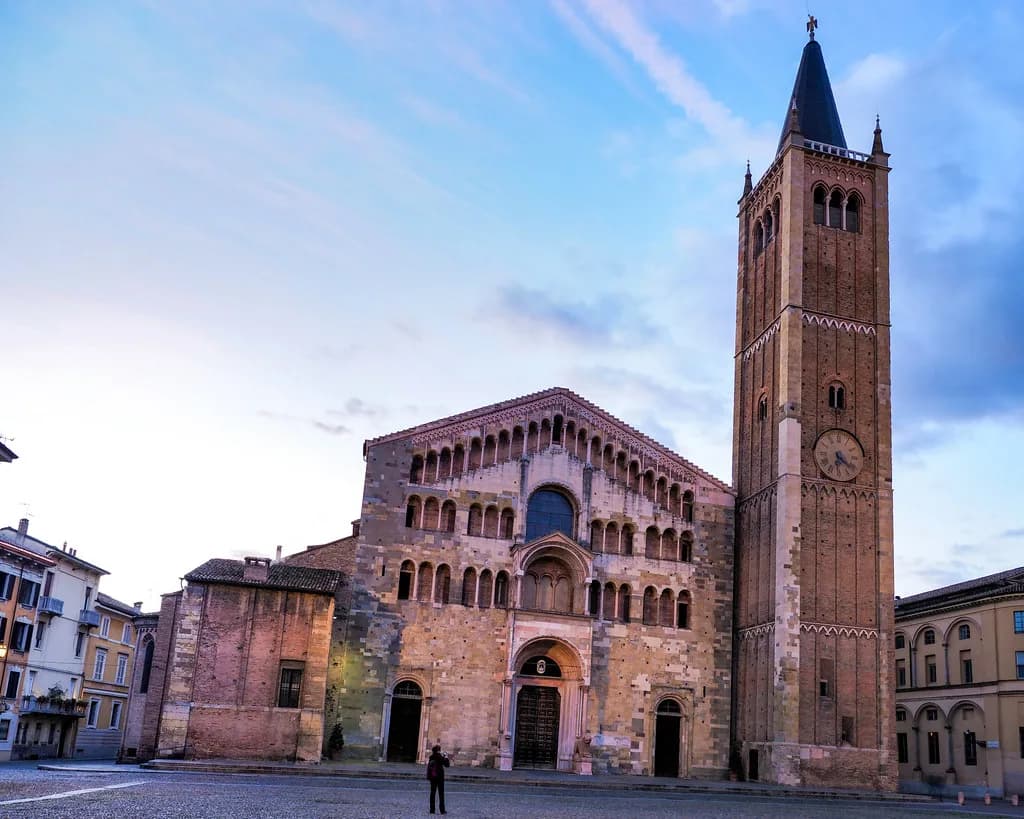
Parma acts as the natural gateway to Verdi's land, with the Teatro Regio in Parma and the Teatro Verdi in Busseto both serving as seats of the famous Verdi Festival. A visit to the city also sets the scene: the composer belongs to the province of Parma even though he was born closer to Piacenza, and the monumental Ara dedicated to him stands near the Pilotta complex. Before heading out to the rural sites, travelers can orient themselves in Parma and then follow the well-marked route into the countryside.
The Verdi Festival, which typically runs in autumn, is a major draw for opera lovers, but its schedule and ticket details are only confirmed by the organizers each year. For the most current dates and programs, check the official festival website or the Teatro Regio's announcements. Planning your heritage site visits around a festival performance can be rewarding, but be sure to allow enough time for the excursions away from the city.
Roncole Verdi: The Birthplace and Church of San Michele Arcangelo
The journey begins in Roncole Verdi, where Verdi was born in the modest house his father ran as an inn with an attached grocery. The building, located at a crossroads in the village center, is the most evocative of Verdi's places, offering a glimpse into his humble beginnings. A few steps away stands the Church of San Michele Arcangelo, where he was baptized and where, as a child, he played the organ under the guidance of his first teacher, Pietro Baistrocchi.
Visiting the birthplace and the church gives an intimate sense of Verdi's early life, and many travelers find it surprisingly moving. The house is furnished simply, not with original pieces, but the atmosphere conveys the reality of a family running a small inn. Opening hours and admission fees are published locally, so it is wise to verify them before setting out, especially outside the main tourist season.
Busseto: Casa Barezzi – Where Verdi Lived, Loved, and Learned Music
In the heart of Busseto, Casa Barezzi is a pilgrimage site for Verdi fans, as it was here that the young composer received his first musical and emotional formation. The historic hall, former home of the Busseto Philharmonic, welcomed Verdi's early compositions and public performances, and it was also where he fell in love with Margherita, the daughter of his benefactor Antonio Barezzi, who became his first wife. Today, the adjacent rooms display a vast collection of Verdi memorabilia, including signed letters, portraits, documents, and posters, offering a deep dive into the composer's human story.
The museum attracts not only music lovers but also anyone interested in the personal relationships that shaped Verdi's life. As you walk through the rooms, you can almost hear the echoes of the young maestro's first attempts at composition. Check the official museum website for current opening hours and ticket details, as these can vary seasonally.
Busseto: Teatro Giuseppe Verdi – The Jewell Box Theater
Within the massive Pallavicino fortress in Busseto lies the famous Teatro Verdi, a small jewel box of a theater that opened in the mid-19th century. The theater's fame is closely linked to Arturo Toscanini, who conducted Falstaff and La Traviata here in 1913 during the Verdi celebrations, and returned again in 1926 for another Falstaff. For opera lovers, its intimate size and excellent acoustics create a unique atmosphere that larger theaters simply cannot match.
The theater is part of the Rocca, and visitors can admire its ornate interior, which still hosts performances during the festival season. Guided tours are usually available when no rehearsal is in progress, but schedules are subject to change. To catch a performance or arrange a visit, check the official theater or festival announcements well in advance.
Busseto Extras: Villa Pallavicino and the Verdi National Museum
If you have extra time in Busseto, Villa Pallavicino, also known as Palazzo dei Marchesi, is a magnificent Renaissance villa that now houses the Giuseppe Verdi National Museum. The museum takes visitors on a historical journey through Verdi's 27 operas, with original set designs from Casa Ricordi and reconstructions of 19th-century environments, all created under theatrical lighting. A separate Renata Tebaldi Museum, opened in 2014, celebrates the famous soprano in the villa's former stables.
These museums enrich the Verdi experience, providing context for the operas that were conceived in the nearby countryside. As with all the sites, verify opening hours and ticket prices via the villa's official channels, as they are not consistently published across third-party sources.
Sant'Agata: Villa Verdi – The Maestro's Private World
Just three kilometers from Busseto, across the Ongina river, lies Villa Verdi in Sant'Agata, the house the composer bought in 1848 and lived in from 1851 until his later years. Although it is not geographically within Parma's province, its history and traditions tie it closely to the area, and Verdi's ancestors are documented there since the 16th century. Verdi himself designed many of the internal and external changes, and the villa remains in the hands of his heirs, preserving his private world.
The villa offers the best insight into Verdi the man, displaying his study, bedroom, and the vast estate where he combined a passion for music with farming. Some parts of the house are open for guided tours, but access can be restricted on certain days, so always check the official Villa Verdi website for up-to-date visiting hours and tour availability.
Planning a Day Trip: Getting Around by Car, Train, and Guided Tours
A rental car gives the most flexibility for reaching the scattered Verdi sites, as the distances between Parma, Roncole, Busseto, and Sant'Agata are manageable and the countryside lanes are part of the charm. Alternatively, a combination of train and local bus can work, though timetables may require careful planning. Check Trenitalia for connections to Busseto and consider a guided tour from Parma to remove the logistics hassle.
Organized day trips from Parma often combine the key museums with stops for local food, making for a seamless experience. If you prefer independent travel, map out your route to avoid backtracking, and allocate at least half a day for the two main towns plus Villa Verdi. Always confirm transportation schedules before you go, as they can change without notice.
Practical Tips: Opening Seasons, Booking, and Combining with Local Food
Many of these heritage sites operate on seasonal schedules, often closing on Mondays or during the winter months, so verify opening times through official channels before your visit. Booking in advance is a good idea for Villa Verdi's guided tours, especially during festival season when visitor numbers increase. Combining your cultural explorations with Emilia's food traditions is easy, as many trattorias in Busseto and Roncole serve local specialties such as culatello and handmade pasta.
For travelers who want to tie their trip into a festival performance, remember that the Verdi Festival dates and tickets are announced year by year, so consult official sources for the latest details. Also consider combining a visit with the Parma Food Festivals calendar, as these events offer a taste of regional gastronomy. And for those visiting in December, the Parma Christmas markets add seasonal charm to the city break.
Respecting the Master: On His Grave
Travelers sometimes assume that Verdi is buried near Busseto, but he actually died in Milan in 1901 and is interred in the Monumentale Cemetery there. The Casa Verdi home for retired musicians, which he founded, also is in Milan, and his grave there is a place of quiet pilgrimage for many fans. While the Parma area offers insight into his life, it does not hold his final resting place, so plan accordingly if visiting graveside is important to you.
Plan Your Verdi Pilgrimage
The Verdi heritage sites around Parma let you trace the composer’s journey from a humble birthplace to a devoted husband’s home and then to a celebrated maestro’s private estate. Starting in Parma, you can easily explore Roncole, Busseto, and Sant'Agata in a single day, or extend your trip to savor the region’s food and wine. Whether you attend a performance during the Verdi Festival or simply wander through the museums, these places bring the man behind the operas to life.
Before you go, double-check current opening hours and ticket prices on official websites, and book tours in advance when possible. Remember to respect the privatized areas, especially at Villa Verdi, where the maestro's heirs still live. With a little planning, your pilgrimage will be as rewarding as standing ovation at the opera.
Frequently Asked Questions
Where is Verdi's grave?
Giuseppe Verdi died in Milan in 1901 and is buried in the Cimitero Monumentale in Milan, not in the Parma area. His grave is a popular spot for admirers, and the Casa di Riposo per Musicisti he founded for retired musicians is also in Milan.
Where did Verdi live in Italy?
Verdi was born in Roncole Verdi, near Busseto, in 1813. He spent his childhood and early career in Busseto, where he studied at Casa Barezzi and worked at the local theater. In 1848 he bought Villa Verdi in Sant'Agata, where he lived from 1851 until his later years, although he also maintained homes in Genoa and Milan.
How do I visit Villa Verdi from Parma?
Villa Verdi is about a 30-minute drive from Parma, just across the Ongina river from Busseto. By public transport, take a train to Busseto and then a taxi or local bus for the short journey. Check the official Villa Verdi website for opening hours and guided tour times.
Is Busseto worth visiting for Verdi fans?
Absolutely. Busseto is home to Casa Barezzi, the museum where Verdi lived and learned music, and the beautiful Teatro Verdi, a small jewel box of a theater. The town also houses the Giuseppe Verdi National Museum in Villa Pallavicino, making it a must-visit for any fan.
What is the best way to travel between the Verdi sites?
A rental car is the most convenient option, as the sites are spread across rural areas. Alternatively, you can take a train to Busseto and use local buses or taxis to reach Roncole and Sant'Agata. Guided tours from Parma offer a stress-free option with transportation included.