Piano City Milano is a free, citywide piano festival held over a long weekend each May, when courtyards, museums, parks and private apartments across Milan open their doors for concerts. The 16th edition ran 15 to 17 May 2026, with more than 265 concerts, over 250 artists and around 140 locations — nearly all free until each venue reaches capacity. Last updated August 2026.
Dates and Scale
The 16th edition ran 15 to 17 May 2026 — Friday evening to Sunday — with more than 265 concerts, over 250 artists and around 140 locations. It is promoted and produced by the Piano City Milano Association together with the Comune di Milano, with support from the Ministry of Culture.
The 2026 edition also paired select concerts with partners beyond its usual civic backers: a preview recital presented with Apple Music Classical in Piazza Liberty, a full-day Liszt tribute marathon produced with NTT Data, and post-concert conversations hosted at Volvo Studio Milano. Partner line-ups shift from year to year; the free, walk-in character of the festival does not.
Later editions are not yet published. The recurrence pattern points to a mid-May long weekend each year, which is expected, computed from the pattern rather than confirmed. Check the festival's own site for the current edition, with YesMilano carrying the city's listing in English.
The Venues Are the Point
A hundred and forty locations across a city means the festival is not really about the programme — it is about access. Milan is a city of closed courtyards: elegant interior spaces behind street doors that are shut to the public every other week of the year. Piano City opens a great many of them, and that is the strongest reason to go.
The venue mix typically spans grand institutional stages, museum spaces and gardens, private courtyards and apartments opened for a single concert, and open-air settings in the city's parks. The house concerts are the distinctive format — a pianist, a domestic piano and an audience of a few dozen people in someone's living room — and they are the hardest to get into.
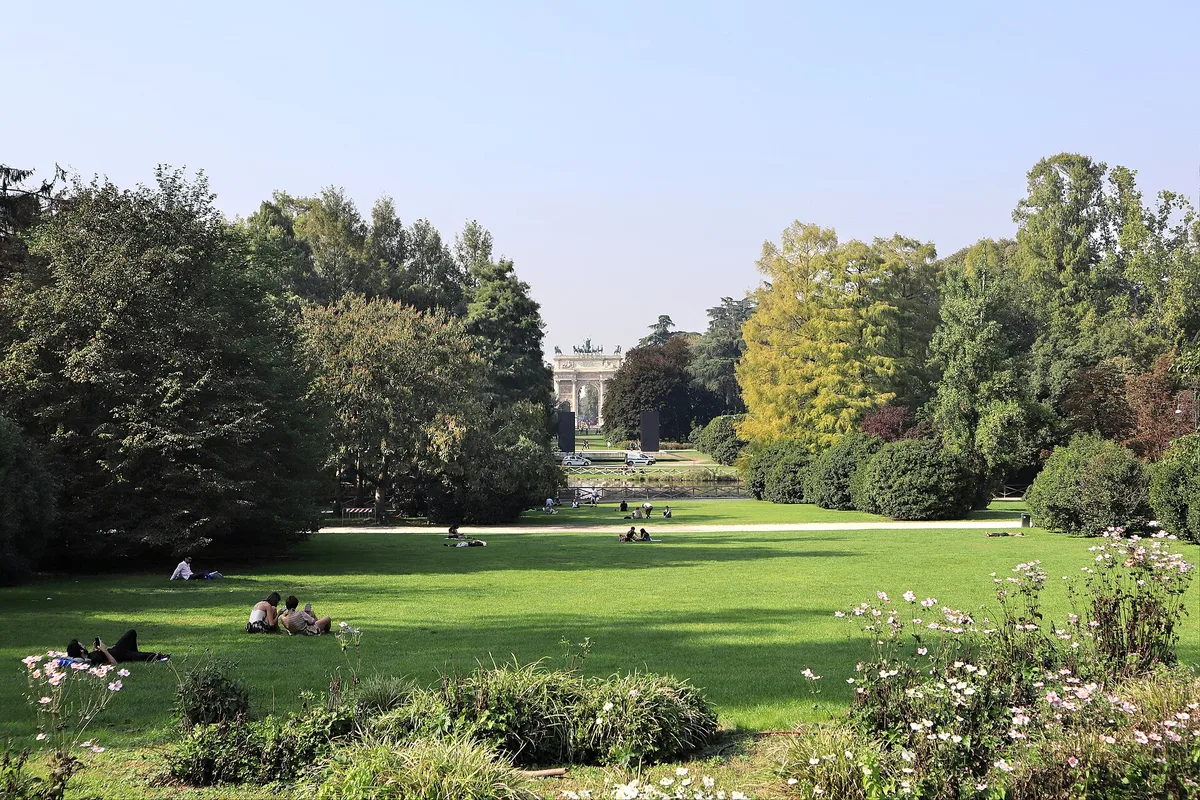
The traditional heart of the festival is the GAM — Galleria d'Arte Moderna — where two garden stages, Piano Giardino and Piano Laghetto, run continuous daytime programming alongside an evening main stage. Beyond the GAM, recent programming has opened more unusual spaces too: a velodrome for a sunrise concert, design and history museums, and venues that host no music the rest of the year, alongside the expected apartments and courtyards. The range says more about the festival's ambition than any single concert on the bill.
House concerts run throughout the weekend, scattered through residential streets rather than clustered like the institutional venues. Places are limited, and registration opens on the official site shortly before the festival — for the 2026 edition, the afternoon before the first concerts began. They are worth the extra planning: a room built for forty people is a different experience from a courtyard built for four hundred.
Free does not mean unlimited. Access runs until each venue reaches capacity, and some events require booking. A courtyard holding sixty people will fill long before the concert starts, while a park stage will take anyone. Plan around the constraint, not the programme.
Community and Family Programming
Piano City's reach extends past its marquee venues into hospitals, care homes, women's shelters and neighbourhood libraries, under a community-outreach strand the festival calls Armonie di comunità — bringing performers into settings that rarely host live music at all. It is one of the features that separates Piano City from a standard festival programme: the free, walk-in format applies as much to a concert in an institutional ward as it does to a courtyard in Brera.
The festival also runs a dedicated children's programme, with interactive workshops, a toy piano orchestra and concerts staged in nursery schools in the run-up to the weekend. None of it requires a ticket, though workshop sessions for children typically ask for registration through the official site given limited capacity.
How to Plan a Route
The mistake is treating the programme as a list of concerts to pick from. With 265 events across three days, you are building a walking route through a district and taking whatever is on it.
| District | Character | Getting there |
|---|---|---|
| Brera | Historic courtyards, the densest cluster | M2 Lanza or M3 Montenapoleone |
| Isola | Contemporary, smaller venues | M5 Isola |
| Navigli | Canalside, later programming | M2 Porta Genova |
| Centro | Institutional stages and museums | M1 or M3 Duomo |
- Pick a neighbourhood per session, not a concert. Brera, the Navigli, Isola and the centro each carry a cluster of venues within walking distance.
- Anchor on one booked event if something specific matters, then fill around it with walk-ins.
- Go early for the small venues. Courtyards and apartments are the ones worth the effort and the ones that close first.
- Keep the late slots loose. Some editions run overnight programming; the atmosphere after dark in an open courtyard is the thing people remember.
Milan is flat and compact, and the Metro covers the gaps between districts. Walking between two or three venues in one area beats crossing the city for a name on a programme.
Practical Considerations
Programming spreads across all nine of Milan's municipal zones, though density concentrates in the four districts in the table above. Comfortable shoes matter more than a tight schedule — a single session on foot can cover three or four venues, and the whole point is to wander rather than rush between fixed seats.
Most individual concerts run twenty to forty minutes, with first-come seating; once seats fill, standing at the back is normal and rarely a compromise. That short format is what makes the neighbourhood-hopping strategy work — sessions turn over quickly enough to catch two or three sets in one area without missing much.
Late May afternoons in Milan can turn warm, and outdoor performances are occasionally moved indoors or rescheduled if it rains, with updates posted on the festival's own channels. Most concerts need no reservation at all — walk in and take a seat if there's one. House concerts and a handful of headline evening events are the exceptions, and both fill from the official booking listing rather than from turning up on the day.
May Is Milan's Best Month, and Its Cheapest Good One
May in Milan is warm without the July heat, and — crucially — it is well clear of Design Week in April, the one week when the city's hotel market genuinely breaks. Piano City delivers a major cultural event in a month with normal accommodation pricing, which is a combination Milan otherwise does not offer.
It also opens the city's outdoor season. Estate al Castello starts in June and runs the Castello Sforzesco's courtyard through to September, and MITO SettembreMusica closes the warm months in September. Between them, Milan is programmed continuously from mid-May to late September — which is not what most visitors assume about a city with this reputation for being all business. The Milan festival calendar sets out the year.
Frequently Asked Questions
When is Piano City Milano?
A long weekend in mid-May. The 16th edition ran 15 to 17 May 2026. Later editions are expected to follow the same mid-May pattern, computed from the recurrence rather than confirmed — the festival publishes each year's dates on its own site.
Is Piano City Milano free?
Nearly all of it. Entry is free with unrestricted access until each venue reaches capacity, unless the programme indicates otherwise — some events require advance booking. The practical constraint is space, not price.
How many concerts are there?
The 2026 edition programmed more than 265 concerts with over 250 artists across roughly 140 locations, spanning institutional stages, museums, gardens, parks, private courtyards and apartments.
What is the best way to attend?
Pick a neighbourhood per session rather than a concert, and walk a route through it. Brera, the Navigli, Isola and the centro each hold a cluster of venues. Anchor on one booked event if something specific matters, then take walk-ins around it, and go early for the small courtyard and apartment concerts.
Is May a good time to visit Milan?
It is the best combination of weather and price. May is warm without July's heat and well clear of Design Week in April, when Milan's hotel market breaks. Piano City gives a major free cultural event in a month with normal accommodation rates.