
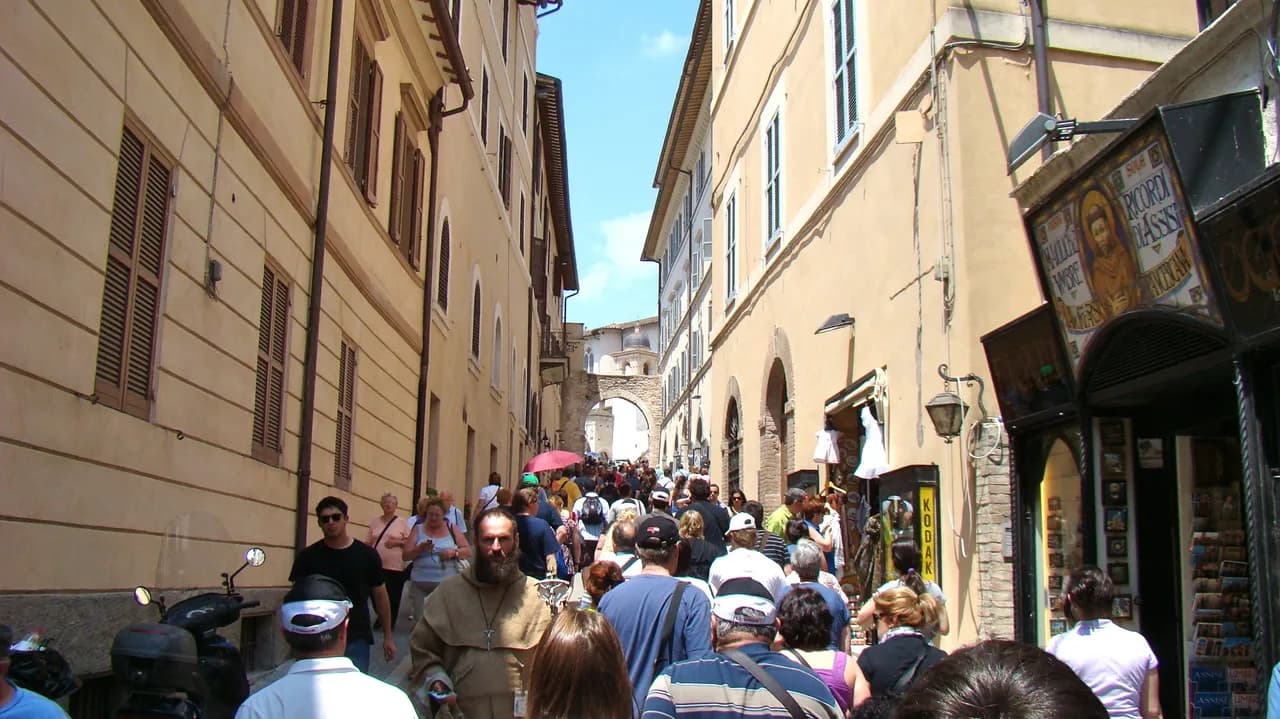
The Perdono d'Assisi, or Pardon of Assisi, is a special plenary indulgence associated with St. Francis of Assisi. Unlike a secular festival, it is a religious devotion that draws pilgrims to Assisi each year. The indulgence is tied to the Porziuncola, a small chapel now enclosed within the Basilica of St. Mary of the Angels, located at the foot of the town.
This guide explains the historical origins of the Perdono, the conditions for receiving the indulgence, and practical information for pilgrims. It also addresses common misconceptions, such as the availability of the indulgence beyond the two August days. For a broader view of Assisi's cultural events, you might also consult our Calendimaggio Assisi festival guide, though the Perdono itself remains a spiritual observance.
What Is the Perdono d'Assisi?
The Perdono d'Assisi is a plenary indulgence, meaning the remission of temporal punishment due to sin, offered to the faithful who fulfill certain conditions. It is also called the Porziuncola Indulgence or the Pardon of Assisi. The indulgence is closely linked to the Feast of Our Lady of the Angels, celebrated on August 2, and the chapel named after her.
Pope Leo XIV described the Perdono as "a great gift" and encouraged the faithful to treasure it, especially during the centenary year of St. Francis's death. This devotion is not a public spectacle but a personal spiritual practice, though it attracts visitors to Assisi who wish to pray at the Porziuncola.
The Historical Origin: St. Francis and the 1216 Vision
According to traditional accounts, in July 1216, St. Francis was praying at the Porziuncola when he had a vision of Jesus and the Virgin Mary surrounded by angels. Mary asked what grace he desired, and Francis requested the complete forgiveness of all sins for anyone who entered his beloved chapel. She told him to present his request to Pope Honorius III.
The Porziuncola was a small chapel that St. Francis had restored, and it held great significance for him. It was there that he heard the Gospel of Matthew and understood his calling. St. Clare also received her religious habit from Francis at this spot in 1211, and centuries later, St. Francis himself died nearby in 1226.
Papal Approval: Pope Honorius III and the Indulgence
St. Francis traveled to Rome to meet Pope Honorius III, who approved the indulgence in 1216. Initially, the indulgence was limited to the Porziuncola chapel and could be gained only on August 2. This made it unique because plenary indulgences were previously reserved for pilgrimage sites like Jerusalem, Rome, and Santiago de Compostela, which were costly to visit.
Over the centuries, the privilege was extended. First, it was granted to all Franciscan churches worldwide for the same date, and later it was broadened to include any Catholic parish church. The Pope's approval and the subsequent extensions are documented in sources like the Secular Franciscan organization and Catholic travel guides.
When and Where: August 1-2 at the Porziuncola in Assisi
The Perdono is observed each year from vespers on August 1 until sundown on August 2, coinciding with the Feast of Our Lady of the Angels. The primary location is the Porziuncola chapel inside the Basilica of St. Mary of the Angels in Assisi. This basilica was built in the 16th century to enclose the tiny chapel, which remains a focal point for pilgrims.
For those unable to travel to Assisi, the indulgence is also available on these days at any Franciscan church or, according to some sources, any Catholic parish church worldwide, provided the conditions are met. It is advisable to verify with local parishes, as the extension may vary.
Conditions for Receiving the Plenary Indulgence
To obtain the plenary indulgence, a person must be in a state of grace, which typically requires sacramental confession. This confession can be made within eight days before or after the main act. Participation in Holy Mass and reception of the Eucharist are also required, and these too can be fulfilled within the same eight-day window.
Additionally, the devotee must visit a church, recite the Apostles Creed, the Our Father, and pray for the Pope's intentions. The indulgence can be gained for oneself or for a departed soul. For example, the Secular Franciscan Order explains that these conditions are standard for the Perdono. The Catholic Travel Guide similarly outlines the requirements, specifying that Mass and Eucharist may also be within eight days.
The Indulgence Beyond Assisi: Franciscan and Parish Churches
Though the Perdono originated at the Porziuncola, its availability has expanded. Today, on August 1-2, one may receive the indulgence by visiting a Franciscan church or, as noted by some Catholic guides, any parish church throughout the world. This extension reflects the Church's desire to make spiritual graces accessible to all.
Moreover, the indulgence can be obtained any day of the year at the Porziuncola itself. This year-round availability is a distinctive feature that differentiates the Perdono from other indulgences tied to specific dates. Pilgrims planning a visit to Assisi at any time can still seek this grace.
Visiting the Basilica of St. Mary of the Angels: The Porziuncola Chapel
The Basilica of St. Mary of the Angels is located in the plain below Assisi, about three kilometers from the hilltop town. It houses the Porziuncola, a small stone chapel that is now protected under the basilica's dome. Visitors can see the chapel and the adjacent chapel of the Transito, where St. Francis died.
The basilica is open to visitors throughout the year, though hours may vary. Since the Perdono draws many pilgrims, it is wise to check the official schedule for Masses and confessions beforehand, especially if you plan to participate in the August devotion. Confession times are often extended during this period.
Planning Your Pilgrimage: What to Know Before You Go
If you intend to visit Assisi for the Perdono, the key is to prepare both spiritually and practically. Confirm the exact dates and times with official local sources, as the observance begins with vespers on August 1. Consider reviewing the town's other events, such as the Palio di San Rufino in Assisi, which sometimes coincides with the August season.
Accommodation in Assisi fills quickly for the August days, so book well in advance. For a fuller picture of Italian celebrations, you might peruse the Festival calendar on Festroam. Always verify any scheduling details with official tourism and church channels, as published information can change.
Plan Your Visit
The Perdono d'Assisi remains a profound expression of Franciscan spirituality and the Church's belief in God's mercy. Whether you attend during the August days or visit the Porziuncola at any time of year, understanding its history and conditions enriches the experience.
For travelers, Assisi offers a chance to immerse in the peaceful atmosphere of this saint's hometown. Since the Perdono is a religious observance, it is not a festival in the usual sense, but it provides a unique opportunity for contemplation and grace.
As you plan, always check with official sources for the most current liturgical information and any changes. The Perdono is a timeless invitation to forgiveness, awaiting all who seek it with a contrite heart.
More festivals in Italy
Frequently Asked Questions
What is the Perdono d'Assisi?
The Perdono d'Assisi, or Pardon of Assisi, is a plenary indulgence that St. Francis of Assisi received from Jesus in a vision in 1216 and later approved by Pope Honorius III. It offers the complete remission of temporal punishment for sins to those who fulfill specific conditions.
When is the Perdono d'Assisi celebrated?
The Perdono d'Assisi is celebrated from vespers on August 1 until sundown on August 2 each year, coinciding with the Feast of Our Lady of the Angels. This period is the primary time to obtain the indulgence outside of Assisi.
How can I obtain the Plenary Indulgence of Assisi?
To gain the indulgence, you must: make a sacramental confession within eight days before or after the visit, participate in Mass and receive the Eucharist, visit a church (such as a Franciscan church or parish church on August 1-2, or the Porziuncola any day of the year), recite the Creed and Our Father, and pray for the Pope's intentions.
What is the origin of the Pardon of Assisi?
According to tradition, in 1216 St. Francis was praying at the Porziuncola when Jesus and Mary appeared, and he asked for a plenary indulgence for all who entered the chapel. Jesus granted this request, and Pope Honorius III approved it.
Where is the Porziuncola chapel?
The Porziuncola is located inside the Basilica of St. Mary of the Angels in Assisi, Italy. The basilica was built in the 16th century to enclose this small, historic chapel.