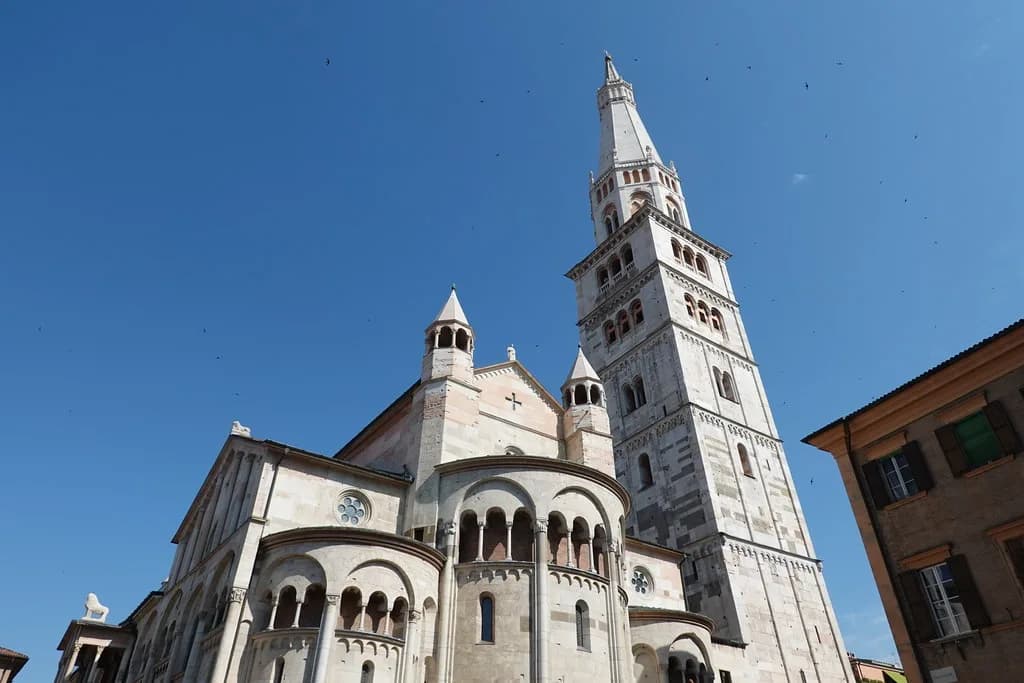
Every 31 January, Modena celebrates its patron saint San Geminiano with a blend of religious ceremony and civic festivity that has marked the city for centuries. The feast coincides with the traditional San Geminiano Fair, which fills Piazza Grande and the historic centre with stalls and activity, while the Cathedral opens the tomb of the saint for veneration. It is a moment when Modena's heritage becomes unusually accessible, with Unesco-listed monuments offering free entry and special guided tours.
The festival is sometimes confused with the similarly named San Gimignano celebrations in Tuscany, but it belongs entirely to Modena, where the fourth-century bishop is honoured as the city's protector. The local World Heritage office coordinates the day's cultural programme, making it distinct from the medieval tower town that bears a different saint's name.
Who Was San Geminiano? Patron Saint of Modena
San Geminiano served as bishop of Modena in the fourth century and is credited with defending the city during the invasions of Attila the Hun. Legend holds that his prayers and presence saved Modena from destruction, cementing his status as the city's patron saint and spiritual guardian.
His feast day on 31 January has been observed for centuries, and the faithful believe his intercession continues to protect the community. The veneration centres on his tomb, which is kept inside Modena Cathedral and opened to the public only during the festival period.
When Does the Festival Take Place? Date and Annual Tradition
The festival is held every year on 31 January, following the liturgical calendar of Saint Geminianus. In 2025, the official programme unfolded around that date, with the tomb of the saint opened for veneration on Saturday 18 January and the main feast day ferial events on 31 January itself.
Because the festival is tied to a fixed calendar date rather than Easter or another movable observance, it offers a dependable anchor for a winter trip to Modena. Travellers should always check the official programme for the exact year they plan to visit, as ancillary events may shift slightly even though the feast day itself never varies.
The San Geminiano Fair: Where to Find It and What to Expect
On the morning of 31 January, Piazza Grande and the surrounding streets of Modena's historic centre fill with the traditional San Geminiano Fair. Vendors set up stalls selling local produce, winter clothing, and festive goods, creating a lively atmosphere that draws residents and visitors alike into the heart of the city.
The fair is as much a social occasion as a shopping one, with families strolling between the stalls and stopping at cafes for a warm drink. While the exact layout and vendors can vary, the fair consistently spreads through the area around the cathedral and the Ghirlandina Tower, making it easy to weave into a day of sightseeing.
The Opening of the Saint's Tomb at the Cathedral
A highlight of the festival is the solemn opening of the tomb of San Geminiano, which normally remains closed to visitors. During the feast period, the faithful and curious alike can pay their respects at the shrine inside Modena Cathedral, an opportunity that draws pilgrims from across the region.
In 2025, the tomb was opened on 18 January, several days before the feast itself, allowing for extended veneration. The exact dates for any given year are determined by the cathedral authorities and announced in advance, so planning travellers should confirm the schedule through the official World Heritage office or the cathedral's own channels.
Free Visits to Modena's Unesco World Heritage Sites on 31 January
On 31 January, the sites that make up Modena's Unesco World Heritage listing—the Cathedral, the Ghirlandina Civic Tower, and the surrounding Piazza Grande—open their doors to the public free of charge. This gesture makes the city's architectural treasures unusually accessible, allowing visitors to explore medieval masterpieces without the usual admission fee.
Reservations are typically required, with the official booking platform for the 2025 edition being visitmodena.it. Visitors should secure their slots in advance, as capacity is often limited and the free entry attracts a steady stream of locals and tourists alike.
The Civic Museum of Modena: Free Admission and Guided Tours
The Civic Museum of Modena joins the festival by offering free admission on the feast day, with extended opening hours from 10 a.m. to 7 p.m. and guided tours on specified themes at 10:30 a.m., 4 p.m., and 5:30 p.m. These tours provide a structured way to explore the museum's collections, which range from Roman artefacts to works by local artists.
Because the museum is a short walk from the cathedral complex, it fits neatly into a festival itinerary. The special offers and tour times are confirmed each year by the institution, so visitors should glance at the official programme to see what is on offer when they arrive.
Highlights from the 2025 Edition: The Bells of the Ghirlandina
One of the most evocative moments of the 2025 feast came from the Ghirlandina Civic Tower, whose bells were rung manually for the first time in nearly 80 years. The Associazione Unione Campanari Modenesi, a local association of bell ringers, revived this ancient skill to mark the feast, filling the city centre with the sound of bronze bells worked by hand.
This type of manual ringing does not happen every year; it was a special addition to the 2025 programme. For future editions, visitors should listen for announcements about the bells, as the association may perform again, but the routine ringing remains mechanical for day-to-day hours.
Practical Tips for Visiting the Festival: Reservations and Getting Around
Planning ahead is essential for a smooth festival visit, as reservations for the free Unesco site visits are normally required and can fill quickly. The booking platform, visitmodena.it, was used for the 2025 edition, and the same portal is likely to be used in the future, though travelers should verify the official links for the year they travel.
Modena's historic centre is compact and best explored on foot, though the city is also served by a bus network that connects the main square with the train station. For those arriving from beyond the city, the high-speed rail link from Bologna makes Modena an easy day-trip or a base for exploring Emilia-Romagna.
Parking can be challenging on festival days, so consider leaving the car at a peripheral lot or using public transport. Dress warmly, as late January in northern Italy is cold, and be ready for the fair to dominate the central streets, which may close to vehicular traffic during the day.
What to See and Do in Modena Beyond the Festival
While the San Geminiano festival is a compelling reason to visit, Modena offers year-round attractions that round out a winter trip. The city is renowned for its gastronomy—think balsamic vinegar, Parmigiano-Reggiano cheese, and tortellini—and is also home to a lively arts scene, including the Teatro Comunale, which hosts an opera season. If you're a culture lover, you can explore the Modena opera season Teatro Comunale guide to plan a performance.
Beyond the opera house, the city's museums, galleries, and historic palaces provide plenty to fill a weekend. For a broader view of when to visit, the Festival calendar for Italy highlights cultural events throughout the year, helping you align your trip with other festivities.
Don't miss the Mercato Albinelli, a historic covered market where you can sample local cheeses, cured meats, and fresh pasta. For car enthusiasts, the Enzo Ferrari Museum and the Panini Maserati collection are just a short drive or a moderate walk from the centre.
Plan Your Visit
The San Geminiano festival is a memorable way to experience Modena in winter, blending religious tradition with civic celebration and extraordinary access to the city's heritage. By reserving your spot for the Unesco site visits and timing your arrival around the 31 January fair, you can enjoy the best of what the day offers without the summer crowds.
Before you go, confirm the year's exact programme with the Modena World Heritage office or the municipality's tourism channels, as details such as the tomb opening date and guided tour times may change. With a little preparation, a January visit to Modena will leave you with a deep appreciation for the city's history and a taste of its enduring traditions.
More festivals in Italy
Frequently Asked Questions
What is the San Geminiano festival in Modena?
The San Geminiano festival is Modena's annual celebration of its patron saint, held on 31 January. It includes a traditional fair in the historic centre, the opening of the saint's tomb, and free access to the city's Unesco World Heritage sites.
When is the feast of San Geminiano celebrated?
The feast is always on 31 January. In 2025, the tomb opened on 18 January, and the main fair and visits took place on 31 January. Dates for future editions are announced by the organisers.
Where does the San Geminiano fair take place?
The fair fills Piazza Grande and the adjacent streets of Modena's historic centre, creating a lively market atmosphere around the cathedral and the Ghirlandina Tower.
Is the Modena Cathedral open during the festival?
Yes, the cathedral opens for the festival, and the tomb of San Geminiano is solemnly opened for veneration, though the exact days can vary. Free visits to the cathedral are offered on 31 January by reservation.
How can I visit the Unesco sites during the festival?
On 31 January, the Unesco sites open free of charge, but visitors must usually reserve in advance through the official booking platform, which in 2025 was visitmodena.it. Check the official programme for current details.