On July 2 each year, the southern Italian city of Matera stops for its most important celebration: the Festa della Madonna della Bruna. For many locals, this festival of the city's patron saint outweighs even Christmas and New Year in significance. Visitors come from across Italy and abroad to witness a day that blends religious devotion, historical pageantry, and a famously chaotic climax.
The festival centers on a decorated papier-mâché cart carrying the statue of the Madonna, which is paraded through the streets before being destroyed by the crowd in the main square. The event traces back centuries and is deeply woven into Matera's identity. This guide walks through the entire day's sequence—morning procession, afternoon parade, evening assault—and offers practical advice for making the most of your visit.
History and Legends of the Festival
The Festa della Bruna appears to date to the 14th century, when a bishop of Matera proposed introducing a festival of the Visitation of the Blessed Virgin Mary to foster peace in the city's political and religious life. Over the centuries it evolved into a grand annual celebration. One source notes that the tradition has been renewed every year for over 630 years, highlighting its deep roots in the community.
Three legends explain the festival's origins. The most popular tells of a shepherdess who appeared to a worker near Matera and asked for a ride in his cart. Upon reaching the city gates, she transformed into the statue of the Madonna, whispering that she wished to enter the city on a decorated cart every year. Another legend ties the custom to an attack by Saracens, during which Materans destroyed their own wagons to prevent icons from being stolen. A third legend involves Count Tramontano, a local lord who promised to donate a new float each year; to hold him to that promise, the people destroyed the float annually. Whichever story you prefer, the festival's spirit of renewal and devotion remains central.
When and Where: Date, Location, and Significance
The Festa della Madonna della Bruna takes place on July 2 every year in Matera, a city in the Basilicata region of southern Italy. Matera is famous for its ancient cave dwellings, the Sassi, and the festival adds a lively cultural layer to a visit in early summer. The main events unfold around the historic center, with the cathedral and Piazza Duomo as key locations.
For locals, the festival is a highlight of the year, sometimes compared to Christmas and New Year in importance. It is also a significant draw for tourists. The city's official tourism pages and local organizers publish the full program each year, so check those sources close to your visit for the updated schedule.
The Morning: Procession of the Shepherdess
The festival day typically begins with a morning procession that commemorates the legendary shepherdess. Participants in historical costumes reenact the moment the young woman encountered the worker and later revealed herself as the Madonna. This religious and folkloric pageant moves through the streets, setting the tone for the day's sacred celebrations.
This early procession is less crowded than the afternoon events, offering a chance to see Matera's traditions up close. Photography is usually welcomed, but be respectful of the devotional atmosphere. The exact route and start time vary from year to year—check the official program published by the local diocese or the city's tourist office to confirm details.
The Afternoon: The Decorated Cart and Cavalry Procession
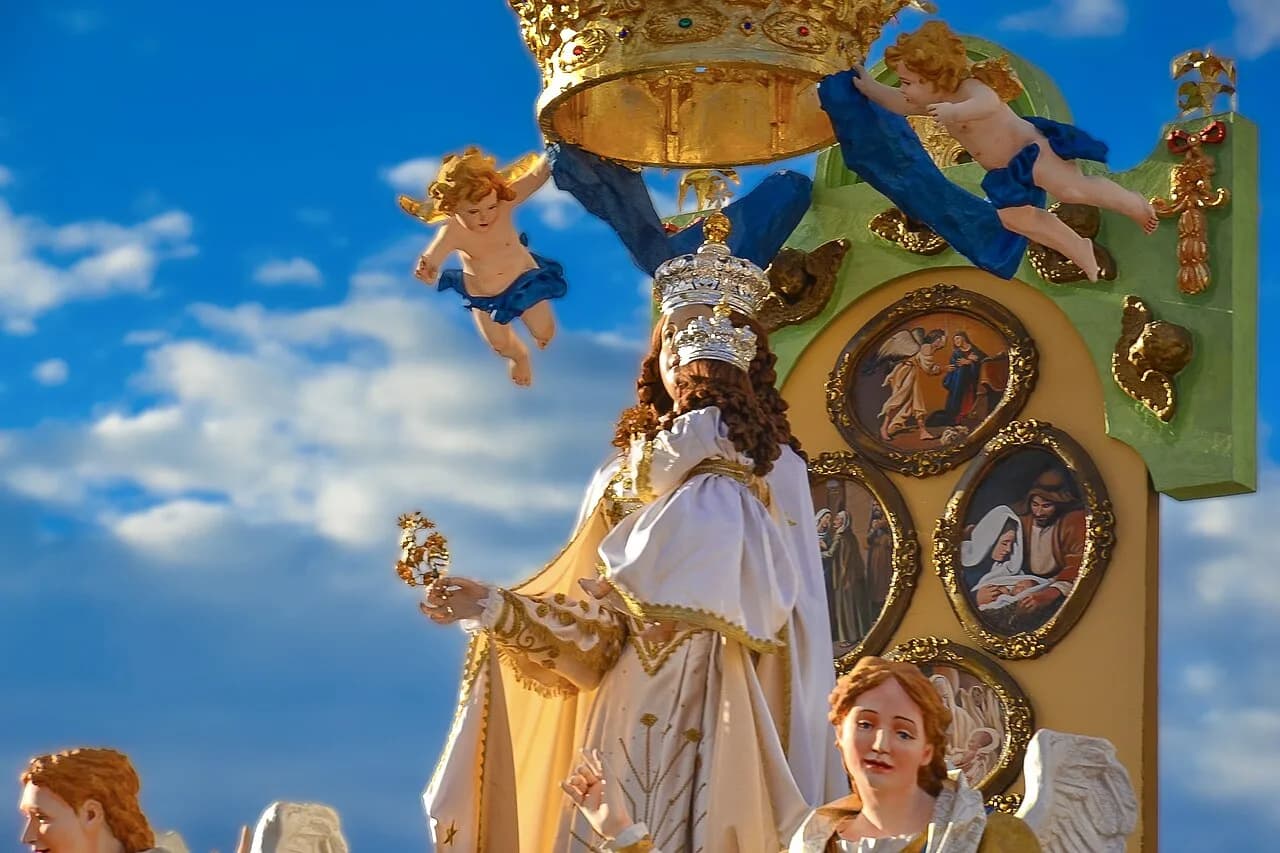
The heart of the festival is the decorated float, known as the carro. Each year a local artist designs it with papier-mâché scenes depicting a Christian religious theme. The cart is pulled by mules and escorted by dozens of horses and riders dressed in historical costumes, with musicians adding to the spectacle as the procession winds through the town.
The float carries the statue of the Madonna della Bruna, and the parade is the centerpiece of the afternoon. Craftsmanship is key: artists spend many months building the elaborate structure. If you are curious about how these carts are created, the tradition is passed down among local artisans, and you can often see sketches or smaller works in the weeks before the festival.
The Evening: The Three Laps in Piazza Duomo and the 'Assalto'
In the evening, the cart reaches the main cathedral, where the statue of the Madonna is left. The float then continues to Piazza Duomo, where it completes three laps—this is a symbolic gesture representing the Madonna's possession of the city. The three laps are a formal, orderly moment, and they build anticipation for what follows.
After the three laps, the crowd attacks the cart in what is known as the 'assalto'. Thousands of people surge forward to tear apart the float, reducing it to a bare wooden skeleton within minutes. The frenzy is intense, and police in riot gear are present to maintain order—or at least to ensure the cart reaches the square before being dismantled. This is considered one of the most exciting (and, for some, dangerous) moments of any European festival.
The Tradition of Grabbing Pieces of the Cart
Why do locals and visitors alike eagerly grab fragments of the destroyed cart? The tradition holds that any piece—whether a papier-mâché statue, a frame, or even a scrap of paper—brings good luck and blessing for the coming year. People rush to collect these souvenirs, and the atmosphere is one of joyful chaos.
After the assault, the wooden skeleton is preserved to be redecorated for the following year. This cycle of destruction and renewal is central to the festival's meaning. At the end of the day, participants often say, 'A mogghj a mogghj all'onn c' van',' which translates roughly to 'next year we will do even better.' It is a promise to continue the tradition with even greater enthusiasm.
Market Stalls, Food Stands, and Festive Atmosphere
All around the festival, the city fills with market stalls and food stands, where visitors can taste local specialties from Basilicata and beyond. This adds a vibrant, earthy dimension to the religious celebration, making it a full sensory experience. Whether it's a quick snack or a sit-down meal, the festival offers plenty of ways to sample regional cuisine.
The presence of these stalls and the influx of visitors create a lively, crowded atmosphere. Plan to explore the markets before the main procession, as they often open early and stay open late. For a detailed look at what to eat and where to find the best stands, local food blogs and the official tourism site offer current recommendations.
Evening Light Displays and Fireworks
Once the cart is destroyed and the crowds begin to scatter, the evening continues with spectacular light displays and fireworks. These illuminations highlight Matera's ancient stone buildings, creating a magical backdrop to the end of the festival day. The fireworks are typically launched from a vantage point overlooking the Sassi, and the show draws eyes skyward across the city.
The exact schedule for the fireworks and light shows is published by the organizers each year. It is worth hanging around after the assault to enjoy this calmer, more reflective part of the celebration, when the fervor of the afternoon gives way to communal awe under the night sky.
Planning Your Visit: Tips for Travelers
Attending the Festa della Bruna is an unforgettable experience, but it requires planning. The event draws large crowds, so you'll want to arrive early to secure a good viewing spot. Since specific times for the processions and the assault are not fixed publicly until closer to the date, check the official program on Matera's tourism website or from the local diocese shortly before July 2.
Comfortable shoes are essential, as you'll likely be standing for hours and navigating cobbled streets. Keep your valuables secure in the crowd, and be prepared for the possibility of being separated from your group during the assault—agree on a meeting point beforehand. If you're not keen on being in the thick of the crowd, consider watching the procession from a balcony or a higher vantage point in the Sassi.
For a deeper understanding of the festival's logistics—such as access points, seating, and any ticket requirements for reserved areas—check our dedicated guide on Matera Bruna festival tickets and access. It will help you navigate the practicalities of the event.
How the Festival Affects Travel Logistics in Matera
Matera's infrastructure is tested on July 2. The influx of visitors means that accommodation, restaurants, and public services are busier than usual. Most attendees travel to Matera by train or bus from major Italian cities, and local transport within the city may be limited or rerouted during the festival processions. It's wise to confirm schedules with the provider well in advance.
Parking is notoriously difficult in Matera, and on festival day many streets are closed for the processions. If you're driving, book a parking spot outside the historic center and be prepared to walk. Alternatively, use public transport to reach the city. Because the festival is so important to locals, many shops and businesses close in the afternoon to allow employees to participate—plan your errands for the morning or the day before.
Conclusion: The Spirit of the Festa
The Festa della Madonna della Bruna is more than a tourist attraction; it is a profound expression of Matera's identity. From the morning procession of the shepherdess to the chaotic, joyful destruction of the float, the festival weaves together faith, history, and community. The tradition of grabbing pieces of the cart—and the promise to do better next year—captures a spirit of renewal that defines this ancient city.
Whether you come for the religious significance, the artistic cart, or the sheer spectacle, you'll leave with memories of a unique celebration. Matera itself, a UNESCO World Heritage site, offers plenty to explore beyond the festival. Use the rest of your trip to wander the Sassi, taste local cuisine, and appreciate why this festival has endured for over six centuries.
Plan Your Visit
If you're planning to attend the Festa della Madonna della Bruna, keep in mind that the festival is held annually on July 2. Make your lodging reservations months in advance, as Matera fills up quickly during this period. Monitor the official tourism channels for the detailed program, and consider joining a guided tour to gain deeper insights into the traditions.
Above all, come with an open mind and a willingness to crowd-surge—when the cart is destroyed, you'll see firsthand how much this tradition means to the people of Matera. And if you manage to grab a piece of the float, cherish it for the luck it's said to bring.
Related festival guides
Frequently Asked Questions
When is the Festa della Madonna della Bruna?
The Festa della Bruna is held every year on July 2 in Matera. The date is fixed, and the event lasts throughout the day, starting in the morning and culminating in the evening. For the exact schedule of events, check the official program published by the city or the local diocese, as specific times are announced closer to the date.
What happens during the Festa della Bruna?
The festival begins with a morning procession reenacting the legend of the shepherdess. In the afternoon, a decorated papier-mâché cart carrying the Madonna's statue is paraded through the streets, accompanied by horses and musicians. In the evening, the cart performs three laps in Piazza Duomo and is then destroyed by the crowd, who battle for pieces as souvenirs.
Why is the cart destroyed?
The destruction of the cart symbolizes renewal and good fortune. According to local legend, the crowd destroys the float to force Count Tramontano to provide a new one each year, while another story links it to preventing icons from being desecrated during a Saracen attack. Believers also grab pieces for luck in the coming year.
Where does the procession take place?
The procession winds through the historic center of Matera, culminating at Piazza Duomo, where the Madonna statue is returned to the cathedral. The 'three laps' and the destruction of the cart occur in or near this square. Spectators can line the streets along the route, which is best viewed from elevated spots.
Is the festival dangerous?
The 'assalto' is an intense and crowded event, but organizers take precautions. Police in riot gear are present to manage the crowd and ensure the cart reaches the square. There is a risk of being caught in a crush, especially near the cart, so it's wise to keep a safe distance if you prefer not to participate. Some rank it as one of Europe's more hazardous festival moments, so exercise caution.
What should I know before attending?
Arrive early to secure a good spot, wear comfortable shoes, and stay hydrated. The city is busy, so book lodging well in advance and plan for possible road closures. Check the official program for event times and any access restrictions. If you want reserved viewing areas, look for ticket information released closer to the date.