

Putignano Carnival is one of Italy’s most distinctive celebrations, rooted in satire and ritual rather than just glitz. Held in the town of Putignano in Puglia, it runs from late December through Shrove Tuesday, making it one of the longest carnivals in the country. For first-time visitors, understanding its unique traditions—from the opening Propaggini to the final funeral—helps you appreciate what you’re watching.
Unlike Venice’s masked elegance or Viareggio’s grand floats, Putignano’s carnival is a collective, irreverent affair. Locals take to the streets to mock politicians, social groups, and even themselves through poetry and papier-mâché art. It’s a festival where the audience becomes part of the show, and every alley can host a spontaneous performance.
How It All Begins: The Festa delle Propaggini on December 26
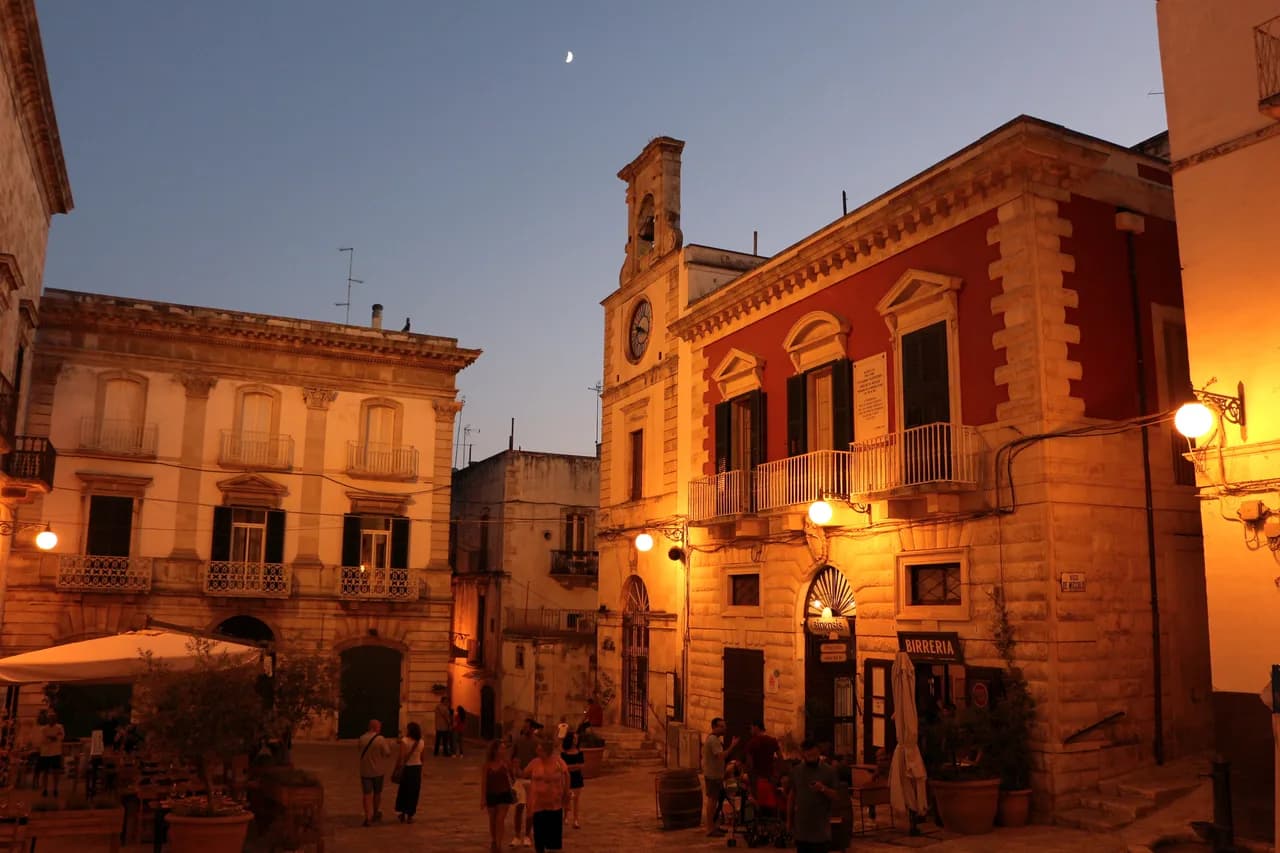
Putignano Carnival traditionally kicks off on December 26, the feast of Santo Stefano, with the Festa delle Propaggini. The name comes from the ancient grafting technique used in vineyards, and the celebration recalls how local peasants left their fields to welcome the relics of Saint Stephen in 1394. Today, groups of citizens dressed in peasant clothes parade through the historic center, improvising satirical verses in dialect—a practice that still anchors the festival’s spirit.
The highlight of the day is the planting of the cèppone, a symbolic vine that also carries a mischievous double meaning in the local dialect. The ritual takes place in Piazza Plebiscito, where a popular jury later awards the group with the most original verses. If you arrive on December 26, you’ll witness the carnival’s first act—a blend of history, humor, and community that sets the tone for the months ahead.
The Satirical Thursdays: From Sant’Antonio to the 'Cuckolds' Rite
Starting around January 17, the feast of Sant’Antonio, Putignano dedicates each Thursday to a different social group. Priests and nuns, widowers, bachelors, and married men all become targets of affectionate mockery. These gatherings are less formal than the main parades, often taking place in piazzas and alleys, where poets and citizens trade barbs in rhyme.
One of the most curious traditions is the Thursday of the “cuckolds,” when a group of men wears horned headdresses and visits the home of the “Great Horned of the Year”—a surprise choice. The procession ends in Piazza Plebiscito with a symbolic cutting of the horns, a purification rite meant to ward off infidelity. It’s a playful, irreverent spectacle that you won’t find at most other carnivals.
Meet Farinella: The Town’s Legendary Mask
Farinella is Putignano’s iconic mask, named after a flour made from roasted chickpeas and barley. According to legend, a baker named Farinella saved the town from Saracen invaders by covering citizens in the powder to feign a plague, scaring off the attackers. Other tales paint him as a simple drunkard, but either way, he’s become the jester-like symbol of the carnival.
The modern Farinella, as depicted in a 1950s drawing, wears a multicolored patched dress, a red and blue skirt, and a three-pointed hat with bells that represent the town’s three hills. During the carnival, you’ll see his image everywhere—on posters, costumes, and even edible versions. He’s a far cry from the elegant Venetian masks, and that’s part of his charm.
The Heart of the Festival: Allegorical Papier-Mâché Floats
The grand parades of allegorical floats are the carnival’s centerpiece, typically held on the Sundays before Lent and on Shrove Tuesday. Local artisans spend months crafting these massive structures from papier-mâché, layering newspaper strips soaked in flour glue over plaster molds. Each float is a rolling editorial, satirizing everything from local politics to global issues.
Floats have only been part of Putignano’s carnival since the early 1900s, but they’ve become its most visible symbol. Walking through the crowds, you’ll see towering figures with exaggerated features, all moving to the rhythm of marching bands and street performers. For the best views, check the parade route in advance—it winds through the main streets, with Piazza Plebiscito as a focal point.
Beyond the floats, don’t miss the bear ritual on Candlemas, when a local dressed as a bear is paraded through the streets to predict the weather. And almost every day, there’s food and drink to enjoy, especially chiacchiere—fried strips of dough dusted with powdered sugar, a carnival staple across Italy.
The Grand Finale: Shrove Tuesday and the Burial of the Pig
Putignano Carnival ends on Shrove Tuesday, also known as Fat Tuesday, with a funeral procession that marks the transition to Lent. A papier-mâché pig—a symbol of the fatty foods about to be given up—is paraded through town and ultimately burned. It’s a dramatic, cathartic ritual that mirrors the ancient roots of carnival as a final feast before austerity.
The ceremony is bittersweet for locals, who say goodbye to the carnival until December returns. In some years, the event has also featured priests running through the streets with brooms, symbolically “cleaning” the town of carnival excess. As the pig goes up in flames, you’ll understand why this festival is more than just a party—it’s a shared emotional release.
Planning Your Visit: Practical Tips for First-Timers
If you’re planning to attend Putignano Carnival, be aware that exact dates vary each year, as they depend on Easter. The main parades typically fall in January and February, with the final events on Shrove Tuesday. For the latest schedule and any ticket requirements, check the official carnival website, as details are announced closer to the season.
Accommodation in Putignano can book out quickly, especially for the final weekend, so it’s wise to reserve months ahead. If you’re arriving from Bari, the town is about a 25-minute drive or a short train ride away. Once there, wear comfortable shoes—you’ll be on your feet for hours, moving between piazzas and side streets.
While the parades are free to watch from the streets, some events might require tickets. Rather than guessing, it’s best to consult the organizer’s official channels for up-to-date pricing and access. Also, note that attending the carnival in costume is part of the fun—locals will appreciate your effort, even if you don’t look like Farinella.
What Sets Putignano Apart from Other Carnivals
Putignano is often called the “oldest carnival” in Europe, but that claim is disputed, so it’s safer to call it one of the oldest. What’s undeniable is its length: from December 26 to Shrove Tuesday, it can last over two months, far longer than Viareggio or Venice. This extended timeline allows for a deep, layered exploration of satire and ritual that shorter carnivals can’t replicate.
Another key difference is the focus on local, participatory traditions—those Thursday gatherings, the masked processions, the intimate poetry battles. While Venice dazzles with masquerade balls and Viareggio with celebrity-laden floats, Putignano feels more authentic, more tied to the community’s identity. For many travelers, that’s the real appeal.
Plan Your Visit
Putignano Carnival is a unique blend of history, satire, and communal joy that you won’t find elsewhere. From the Propaggini on December 26 to the burning of the pig on Shrove Tuesday, every stage offers a glimpse into a town that has perfected the art of laughing at itself. Plan your visit around the main parade dates, and don’t forget to taste the local chiacchiere.
For the most accurate and current information, always refer to the official Carnevale di Putignano website, which publishes schedules, ticketing, and any special announcements. Whether you come for the floats or the ritual, you’ll leave with memories of a festival that truly lives in paradox—ancient yet contemporary, lighthearted yet profound.
Frequently Asked Questions
What is the Putignano Carnival?
Putignano Carnival is an annual festival held in Putignano, Puglia, Italy. It is one of the oldest carnivals in Europe, dating back to 1394, and is known for its long season, satirical poetry, allegorical floats, and unique rituals like the Propaggini and the burning of a papier-mâché pig.
When does Putignano Carnival take place?
Putignano Carnival typically begins on December 26 with the Festa delle Propaggini and ends on Shrove Tuesday, which is the day before Ash Wednesday. Because Easter dates change each year, the exact end date varies. The main parades usually occur on the Sundays before Lent and on Shrove Tuesday.
What are the traditions of Putignano Carnival?
Traditions include the December 26 Propaggini festival with satirical poetry and the planting of the cèppone, themed Thursdays with satirical events for different social groups, parades of allegorical papier-mâché floats, the Farinella mask, and a funeral procession on Shrove Tuesday that ends with the burning of a pig.
What does Farinella represent?
Farinella is the traditional mask of Putignano Carnival, named after a flour of roasted chickpeas and barley. According to legend, he saved the town by covering citizens in the flour to scare off invaders. He represents the spirit of satire and local identity, often depicted in colorful patched clothing.
How long is Putignano Carnival?
Putignano Carnival can last for over two months, from December 26 to Shrove Tuesday, making it one of the longest carnivals in Italy. The exact length depends on the date of Easter, which determines when Lent begins.
What is the Propaggini festival?
The Propaggini is the opening event of Putignano Carnival on December 26. It commemorates the arrival of Saint Stephen's relics in 1394. Participants dress in peasant clothes and recite satirical verses in dialect, after which a symbolic vine (cèppone) is planted in Piazza Plebiscito.
How does the Putignano Carnival end?
The carnival ends on Shrove Tuesday with a funeral procession. A papier-mâché pig is paraded through the streets and eventually burned to symbolize the end of feasting and the start of Lent. This ritual is both a farewell and a purification for the community.