
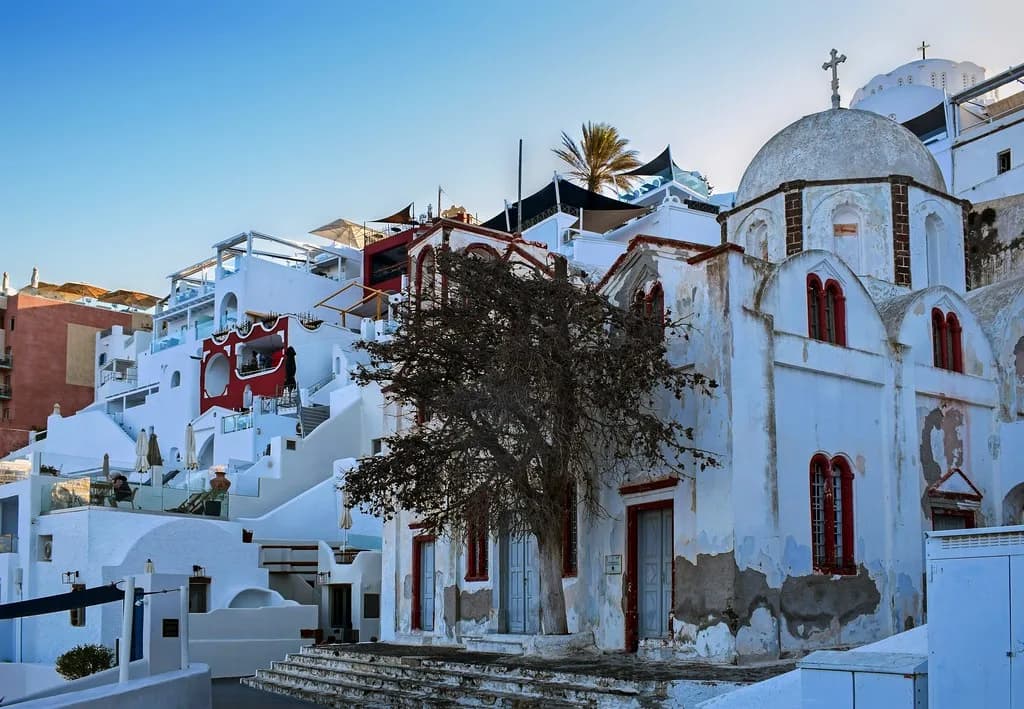
Every summer, villages across Santorini come alive with panigiria — traditional open-air festivals held on the feast day of a local Orthodox saint. Rooted in ancient gatherings, these celebrations blend religious observance with live music, circle dancing, and communal feasting, offering visitors a genuine glimpse of island culture.
Unlike commercial events such as the caldera fireworks show, panigiria are community-led, free, and welcoming to all. They typically take place in a church courtyard or village square, with tables set out, a band playing traditional tunes, and locals and visitors dancing together until late. Some sources describe the atmosphere as the most authentic cultural experience Greece offers, with no tickets and no stage.
Panigiria are not commercial events; there are no tickets, stages, or tourist infrastructure. They are simply a village gathering to honour the local saint, with the best music and food the community can provide. For visitors, this makes them one of the most direct ways to experience local life on the island.
What Is a Panigiri?
The word panigiri comes from the ancient Greek panégyris, meaning an assembly of all the people. In classical times these were grand public festivals; today they centre on the feast day of a village's patron saint, combining a morning church liturgy with an evening of celebration.
Every Orthodox church is dedicated to a saint or a religious event, and on that feast day the community gathers. The panigiri usually unfolds in the church courtyard, the village square, or on a hillside near a chapel, with tables set up, a band taking its place, and food and drink served throughout the evening.
The format is consistent across Greece: a formal liturgy in the morning, then music and dancing from around 9 or 10 pm until the early hours. Greeks who do not attend the liturgy still join the evening festivities, which are designed for the entire community regardless of piety.
Music, Dancing, and Feasting: The Heart of a Panigiri
Live music is the defining feature of a panigiri, with bands playing regional styles that vary across Greece. On Santorini and the Cyclades, you will typically hear violin and lauto, accompanying dances such as the syrtos and kalamatianos, while other regions favour clarinet, bagpipes, or the Cretan lyra.
Dancing is participatory — you join a circle of dancers holding hands or linking pinkies, following the lead dancer's steps. The basic kalamatianos step is a twelve-beat pattern that visitors can learn in a few minutes by watching, and the slower syrtos is even easier to follow.
Food is cooked by the community — often roasted lamb or goat, village salad, bread, and local cheese, with wine, tsipouro, or ouzo. Some panigiria charge a set amount per person, others serve à la carte, and some are entirely free with food donated by villagers; it's best to ask how it works when you arrive.
Key Panigiria by Village
Several villages across Santorini host well-known panigiria on their patron saint's feast day. In Pyrgos, the island's highest village, the Prophet Elias festival on July 20 is a highlight, celebrated with services and festivities at the hilltop chapel. Megalochori honours Agioi Anargyri on July 1, while Emporio celebrates Agios Averkios, the patron of wines, on October 22.
Akrotiri marks Agia Markella with an evening festival on July 22, and Oia hosts the Holy Seven Children on August 4. In Fira and neighbouring villages, the Transfiguration on August 6 and the Dormition of the Virgin on August 15 bring major celebrations. For a full village-by-village list, consult a current festival guide such as the one from Xenones Filotera.
Fira's church festivals, particularly the feast of the Assumption on August 15, attract large crowds. To learn more about the religious context and how these celebrations unfold, see the guide to Fira church festivals and the feast of the Assumption.
The Panigiri Calendar: Notable Dates and Locations
Panigiria follow the Orthodox calendar, so each celebration repeats annually on the same saint's feast day. While specific dates are fixed, they can shift slightly when a feast coincides with Easter, as with Saint George in Imerovigli, which moves to the Monday after Easter if Easter falls after April 23.
Notable summer panigiria on Santorini include May 5 for Agia Irini in Imerovigli, June 29 for the Holy Apostles in various villages, July 20 for Prophet Elias in Pyrgos and Fira, and August 15 for the Dormition of the Virgin celebrated at Panagia Episkopi and in Akrotiri, Firostefani, and Imerovigli. Autumn brings Agios Ioannis in Fira on September 26 and Saint Matrona's festival in Finikia on October 20, which is described as one of the island's most popular.
A comprehensive list published by Spiridakos Sailing details panigiria by month, from April's Saint George in Imerovigli through to November's Agios Minas in Fira and Agios Ioannis Chrysostomos in Imerovigli. Some sources list additional celebrations, so cross-check with local organisers or your accommodation for the most current schedule.
How to Experience a Panigiri as a Visitor
Panigiria are free and open to everyone, with no tickets or reserved seating. To find one, ask at your hotel, check local noticeboards, or look for churches decorated with flags and greenery on a saint's day. Many celebrations begin with a vesper service around 7 pm, followed by music and dancing from about 9 pm.
Arrive early to find a spot and observe the etiquette. You can simply watch, but joining the dancing is encouraged — just wait for the line to pass, make eye contact, and extend your hand to the last dancer. The community welcomes visitors who are eager to participate, even if you are learning the steps.
For a broader context on Greek religious festivals and how they tie into Easter celebrations, see the guide to experiencing Greek Orthodox Easter on Santorini.
Festival Etiquette: How to Join the Dancing
Greek circle dances are participatory, and panigiri etiquette is relaxed: you can join a dance at any time, though it's polite to wait for a natural break. The most common dances you'll encounter are the syrtos and kalamatianos, both easy to follow after a few minutes of watching.
The lead dancer improvises at the front of the line while others follow the basic step. If you are new, position yourself at the end of the line and mimic the steps. Your neighbours will be patient, and you won't be the only beginner, as Greek children learn these dances from a young age but individual variation is universally accepted.
Food and Drink at Santorini Panigiria
The food at a panigiri is home-style, cooked by locals in huge pots or wood-fired ovens. Expect dishes like roasted lamb, village salad, local cheese, and bread, often accompanied by the island's own wine or a traditional spirit. At Saint Matrona's festival in Finikia, locals prepare xelouristo (codfish with onions and potatoes) and gamopilafo (rice dish), as described by Xenones Filotera.
Some panigiria charge a set amount per person covering food and unlimited drink, while others are free with donations from the community. There is no set price list, so ask a local how the food is served when you arrive.
Beyond Panigiria: Other Summer Festivals in Santorini
Alongside the panigiria, Santorini hosts commercial festivals geared to international crowds. In July, the Santorini Jazz Festival brings international and emerging artists, and in September the Ifestia Festival commemorates the island's volcanic eruption with fireworks and music. However, these should not be confused with the traditional panigiria, which are community-led and free.
The International Music Festival of Santorini, organised by the Friends of Santorini Cultural Association, runs for three weeks in September with classical performances. For a full overview of Greece's festival scene, consult the comprehensive guide to festivals in Greece.
Practical Tips for Planning Your Visit
To catch a panigiri, plan your trip around the Orthodox feast days, which repeat annually. Because some dates vary with Easter, verify with local organisers or your accommodation. Panigiria are outdoor events, so be prepared for evening temperatures and sometimes crowded squares.
There is no central calendar; check local tourism offices, church noticeboards, or ask residents. Since panigiria are spontaneous community gatherings, they may not be listed in official tourist brochures. A genuine panigiri is worth seeking out — it offers an authentic slice of island life that no organised tour can replicate.
Plan Your Visit
Santorini's panigiria offer a rare window into the island's living traditions, where faith, music, and food come together in communal celebration. Unlike polished tourist shows, these festivals are intimate and welcoming, inviting you to join the circle and dance until the early hours.
To make the most of your trip, pair your panigiri visit with other cultural experiences, such as the santorini orthodox easter traditions if you're visiting in spring. Always confirm dates locally, as the Orthodox calendar can shift, and embrace the spontaneity of village life.
For a comprehensive guide to Greek festivals beyond Santorini, explore the festivals in Greece hub, which covers events across the country. And when you find yourself in a village square as the music starts, step forward and join the dance — it's the heart of the panigiri experience.
Frequently Asked Questions
What are some popular festivals in Santorini?
Popular traditional festivals include panigiria for Prophet Elias in Pyrgos, Agia Irini in Imerovigli, and Saint Matrona in Finikia. August 15 is a major celebration day. Commercial events like the Ifestia Festival and the Santorini Jazz Festival also draw visitors.
What is a panigiri festival?
A panigiri is a traditional Greek village festival held on the feast day of a local Orthodox saint. It combines a morning church liturgy with an evening of live music, circle dancing, and communal food, typically in the church courtyard or village square, and is free and open to all.
How can tourists attend a panigiri in Santorini?
Tourists can simply show up; panigiria are free and open to everyone. To find them, ask at your hotel, check local noticeboards, or look for churches decorated for a saint's day. Arrive early to observe and feel free to join the dancing when the line passes.
What time do panigiria start?
The religious service often begins late afternoon or early evening, with music and dancing starting around 9 or 10 pm and continuing into the early hours. Specific times can vary by village and event, so check locally.
Do you need tickets for a panigiri?
No, panigiria are free and do not require tickets. Some may offer food for a set price, but entry is always open. Always ask how the food is served when you arrive.
What food is served at Santorini panigiria?
Food is community-cooked and often includes roasted lamb, village salad, local cheese, and bread, with dishes like codfish and gamopilafo at specific festivals. Wine and local spirits are typically available. Prices vary, so ask locally.