
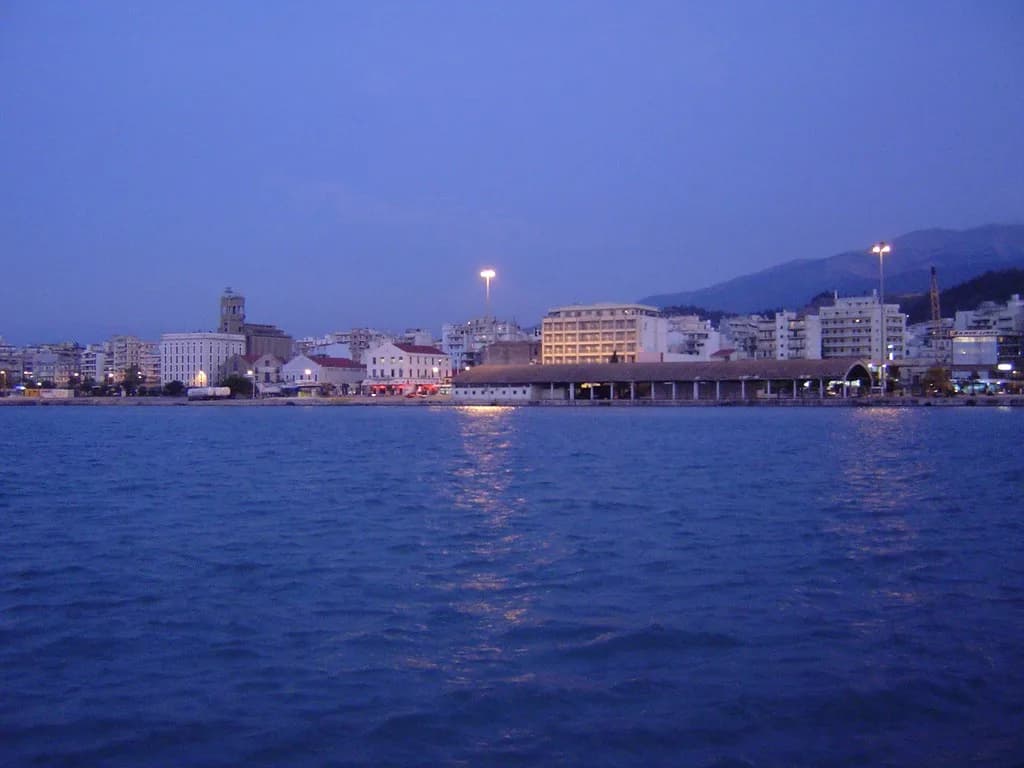
The Patras Carnival is Greece's biggest annual street party, filling the streets of this port city with costumed crowds, allegorical floats and non-stop events for weeks before Orthodox Lent. Carnival in Patras is so central to local identity that the city is often called the capital of the Greek carnival, with thousands of participants joining the main parades.
Seeing it well means planning ahead: knowing roughly when the season falls, how the date changes from year to year, and where to base yourself. You will also want a costume, comfortable shoes and an appetite for late nights, because the festivities spill from the official programme into bars and streets across the centre.
When is the Patras Carnival? Timing and how dates are set
The Patras Carnival takes place every year between January and March, building from an opening ceremony in mid-January through weeks of balls, concerts and street events. It always climaxes on the last weekend before Clean Monday, the start of Orthodox Lent, so the exact dates shift annually depending on the Orthodox calendar.
To pin down the precise days for your trip, consult the official programme published at carnivalpatras.gr, as travel.gr advises when recommending planning well ahead because crowds can become chaotic. Our dedicated guide to the Patras Carnival Dates & Schedule explains how to read that programme and what usually falls on which weekend.
Understanding Apokries and the carnival's cultural roots
The carnival season is known in Greek as Apokries, a period of masquerades, dances and open satire that runs for roughly three weeks before Lent. The word translates roughly as 'goodbye to meat', foreshadowing the fasting ahead, but in practice Apokries is when social rules relax and playful teasing is expected.
Patras claims one of the longest carnival traditions in Greece, with travel.gr noting that celebrations are closely tied to ancient Dionysian customs. While the source describes Patras as the capital of the Greek apokreas, official histories point to roots reaching back several centuries, which is why the city's carnival is regarded as a national reference point.
The highlights: Night Parade, Grand Parade, Children's Parade, and the burning of the carnival king
The final weekend follows a familiar pattern each year. On Saturday, crews march in a lively Night Parade that tends to be more interactive and raucous than the Sunday spectacle, often featuring satirical and political floats.
Sunday brings the Grand Parade, a huge procession of elaborately decorated floats and thousands of costumed participants that winds through the city centre. On the Saturday before, the Children's Parade gives younger visitors their own moment to shine, with school groups and families joining in costume.
The season closes with the ceremonial burning of the carnival king at the port, a symbolic farewell to indulgence before Lent. For a deeper look at these events and the traditions around them, our guide to Patras Carnival parades and Treasure Hunt covers what you'll see at each one.
Where to watch: Best areas for the parades and street parties
The heart of the action is the pedestrianised centre, particularly Riga Feraiou, Gerokostopoulou and Iroon Polytechniou, as travel.gr describes. Arrive early to claim a spot near the barriers; the best views of the floats are along the wider stretches of these streets, while the narrow lanes near the coast host impromptu gatherings.
If you want to see the climax of the Carnival King's burning, make your way towards the port area near Agios Nikolaou Street, where crowds gather for the fiery finale. For the Grand Parade, consider spots slightly away from the very centre, where you can still catch the floats without being packed in.
How to get around Patras during the carnival
Patras is a walkable city, especially its compact centre, and walking is usually your best option because streets close to traffic during the parades. The local bus network connects the centre with the university, hospital and outlying districts, as well as the beach at Plaz, so you can hop on and off between events.
Driving is best avoided on carnival weekends because parking is extremely scarce and some roads are blocked for festivities. If you're coming from outside, park on the edge of town and walk in, or rely on taxis to reach the party zone.
Where to stay: Should you book central or outside the city?
Book your accommodation well ahead, as travel.gr warns that demand is huge and rooms vanish quickly. Staying in the centre means stepping out straight into the action, but you'll pay more and parking is a nightmare; peripheral locations offer cheaper rates and quieter nights, but require a bus or taxi ride to the events.
For a balance, look for hotels near the coastal road or just outside the centre, still within walking distance of the main parade route. If you prefer to combine carnival with a seaside escape, consider staying in nearby villages along the gulf and travelling in for the day.
What to eat and drink: Carnival fuel and local specialties
You'll need stamina for hours of dancing and walking, so fuel up on quick bites from street vendors or tavernas in the centre. Traditional dishes like cod with skordalia (garlic potato puree) and goat stew with potatoes appear on carnival menus; for a sweet treat, try loukoumi, a soft confection that is a Patras specialty.
To drink like a local, order a glass of mavrodafni, a dark, sweet wine produced in the region and often enjoyed as a dessert wine. Coffee culture is strong too, with cafés along the pedestrian streets serving fuel from morning until late.
Carnival costumes and etiquette: What to wear and how to join in
Wearing a costume is part of the fun, and you'll find shops across Patras selling masks, wigs and accessories in the weeks before carnival. Travel.gr advises bringing anything specific from home, since local shops may not have your size or idea.
Expect a permissive atmosphere where anything goes, but keep pranks good-natured and respect personal space in the dense crowds. Satire and teasing are central to the carnival spirit, so cheer for the crews and join in the dancing if you feel the rhythm.
Beyond the carnival: Other things to see in Patras
If you have time before or after the parade, Patras offers historical and cultural sights that are easy to combine with a carnival trip. Climb to the medieval Kastro for sweeping views of the city and the Gulf of Corinth, and visit the Basilica of St Andrew, one of Greece's most important pilgrimage churches.
The Archaeological Museum displays impressive Roman mosaics, while the neoclassical Georgiou Square is a pleasant spot for a coffee between events. For a modern marvel, the Rio-Antirrio Bridge stretches across the gulf and offers a scenic walk or drive.
Practical FAQs: Crowds, weather, and how to find the official program
Expect large crowds, especially during the final weekend, and keep valuables secure in packed spaces. Weather in late winter can be cold and rainy, so pack layers and a waterproof jacket; the carnival goes on regardless of rain, and locals are used to dancing in the drizzle.
Before travelling to Greece, browse other destinations on our hub for festivals in Greece to see what else might coincide with your trip. The only authoritative source for the current carnival programme is the official website at carnivalpatras.gr, where you'll find parade times, routes and any changes as they are announced.
Plan Your Visit
The Patras Carnival is an unforgettable experience, combining centuries-old tradition with an irresistible street-party energy. Book your accommodation early, check the official programme for the exact dates, and decide whether to stay in the centre or on the quieter outskirts.
Pack a costume (or buy one there), wear shoes that can handle hours of standing, and bring an open mind for the playful, satirical spirit of Apokries. With a little planning, you'll have everything you need to enjoy the biggest carnival in Greece to the fullest.
Related festival guides
Frequently Asked Questions
Is Patras worth visiting for tourists?
Yes, Patras is worth visiting, especially during Carnival when the city fills with music, costumes and parades. Even outside Carnival, it has historic sites like the Kastro and the Basilica of St Andrew, plus a lively waterfront and local specialties such as mavrodafni wine and loukoumi.
What is Patras best known for?
Patras is best known for its Carnival, the largest in Greece, and for being a major port and university city. It also has a rich history, with landmarks like the medieval Kastro, the Roman Odeon, and the Rio-Antirrio Bridge nearby.
What does patra mean in Greek?
In Greek, 'Patra' (Πάτρα) is simply the name of the city and does not have a common meaning in modern language. Historically, the city was called Patrae in Latin and has been known by that name for centuries.
What can you do in Patras?
In Patras, you can explore the medieval Kastro, visit the Basilica of St Andrew, see the Roman Odeon, and wander through the neoclassical centre around Georgiou Square. You can also enjoy local food and wine, and, if you time it right, join the famous Patras Carnival.