Every December, the French city of Lyon turns into an open-air gallery of light, drawing millions of visitors to its annual Fête des Lumières. For four nights, architectural landmarks and public squares become canvases for projections and installations created by local and international artists. With the right preparation, you can navigate the crowds and see the most spectacular displays without feeling overwhelmed.
What is the Lyon Festival of Lights?
The Fête des Lumières is a public event that takes place in Lyon each winter, stretching over roughly 20 kilometers from the first installation near the cathedral to the last in the south. The city's squares, including Place des Terreaux and Place des Jacobins, along with the banks of the Saône and the Parc de la Tête d'Or, host creative works by designers and collectives. Beyond the main installations, the event is part of a broader culture of urban lighting in Lyon, where many monuments are illuminated year-round.
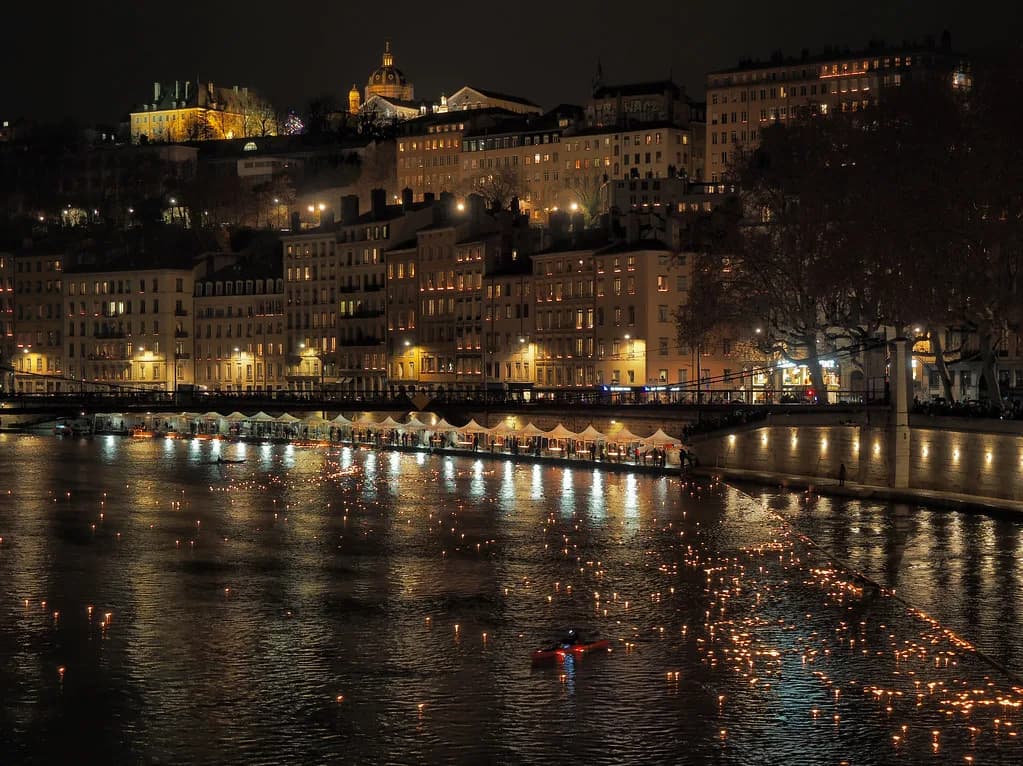
The festival originated in 1852, when Lyon residents spontaneously placed candles in their windows after a planned religious ceremony was delayed by flooding. That tradition persists today, with locals and visitors alike setting out small lanterns called lumignons on the evening of December 8. The modern festival, with organized light shows and a full program, began in 1989 and expanded to its current four-day format in 1999.
Typical Dates and Hours
The Lyon Festival of Lights is held each year over four days in early December, always culminating around the December 8 religious feast. For instance, the 2026 edition runs from Saturday, December 5 through Tuesday, December 8. This schedule reflects the festival's historical anchor to the December 8 ceremonies, even though the exact dates can shift slightly from year to year.
Opening hours for the installations follow a general pattern: displays run from 7 p.m. to 11 p.m. from Thursday to Saturday, and from 6 p.m. to 10 p.m. on Sunday. There is no fixed closing time mentioned for the final evening, but it typically mirrors the earlier weekdays. Some venues, such as Parc Blandan, may open as early as 5:30 p.m. and close by 9:30 p.m., with the park entrance closing 30 minutes before the end.
Always confirm the exact dates and hours on the official festival website, as they can be adjusted due to weather or other considerations. For example, in previous editions, the Sunday hours were shorter to allow for family-friendly viewing earlier in the evening. Checking the official schedule a few weeks before your trip will give you the most up-to-date information.
History and Origins: From 1852 to Today
The story begins in the 17th century, when the city council prayed to the Virgin Mary to spare Lyon from a plague epidemic, leading to an annual September pilgrimage. In 1852, a statue of the Virgin was to be inaugurated on Fourvière Hill during that pilgrimage, but flooding along the Saône delayed the ceremony until December 8. On that evening, heavy rain threatened the event again, yet the skies cleared, and the faithful lit candles in their windows in gratitude.
Over the following decades, the tradition of placing small candles, known as lumignons, on windowsills spread across the city. It became a common practice for all residents, regardless of faith, to illuminate their homes on the night of December 8. In 1989, the mayor at the time, Michel Noir, initiated the first official light installations on key monuments, laying the groundwork for the international festival we know today.
Since 1999, the event has expanded to four full evenings, with artists from around the world contributing to a program that blends tradition with cutting-edge technology. The festival has also inspired similar events in other cities, such as Dubai and Montreal, underlining its global reputation. While the emphasis today is on artistic creativity, the religious and civic meanings of the original celebration remain present, especially through the December 8 procession.
Access and Cost: Is the Festival Free?
Most of the installations at the Lyon Festival of Lights are completely free and open to the public. You can wander from square to square and along the riverbanks without needing to buy a ticket. However, certain special venues, such as indoor performances or unique attractions, may require an admission fee and advance booking, as noted in the MEININGER Hotels guide. Always check the official festival website for details on any ticketed events.
Accessibility is a priority, with the city providing routes that accommodate visitors with reduced mobility at major sites. In past editions, Parc de la Tête d'Or and Parc Blandan have been highlighted for family-friendly installations and more spacious layouts. To avoid disappointment, verify the accessibility options and any special entrance requirements for your chosen sites before you arrive.
Top Sites and Installations to See
Place des Terreaux is often the grand opening venue, with a show that draws huge crowds. The square is surrounded by the Hôtel de Ville and the Musée des Beaux-Arts, creating a majestic backdrop for projections. Expect one-way pedestrian flow here, with entry and exit from opposite ends, similar to the system used at Cathédrale Saint-Jean.
Cathédrale Saint-Jean-Baptiste, located in the heart of the UNESCO-listed Old Town, is a highlight for its Gothic and Romanesque architecture. The cathedral's façade often features a video mapping show, and on December 8 it serves as the departure point for the religious procession up to the Basilica of Fourvière. The square in front can be extremely crowded, so arrive early or watch from a side street.
The banks of the Saône River provide a more relaxed viewing area with installations along the water and food stalls offering warm snacks and drinks. Likewise, Place des Jacobins often hosts a large-scale projection, and the surrounding shopping streets can be a pleasant stroll. For families, the Parc de la Tête d'Or typically has multiple installations spread over a large area, allowing more space for children to move around.
Fourvière Hill, home to the Basilica of Notre-Dame de Fourvière, offers not only a light show on its façade but also panoramic views over the city. The climb might be steep, but the vista of Lyon glittering below is worth the effort. This is also where the procession culminates on December 8, adding a layer of community spirit to the visual spectacle.
How to Beat the Crowds
The Fête des Lumières attracts between 1.8 and 2 million visitors over four days, according to local estimates, making crowd management a real consideration. The city implements one-way pedestrian flows at the most popular squares, such as Place des Terreaux and in front of the cathedral, to prevent bottlenecks. Attendees are funneled in one side and out the other, with police allowing new groups to enter only once the space has cleared.
One effective strategy is to attend during the 'light tests' that occur on a few evenings before the official opening. These unpublicized trials give you a preview of some installations with far fewer people around. If you're not lucky enough to catch a test, aim for less popular hours, such as early evening on weeknights, and prioritize the smaller streets and tucked-away corners that still have artistic touches.
Another approach is to concentrate on the outer edges of the festival route—places like Parc de la Tête d'Or or the Saône riverbanks often feel less packed than the central squares. Since the installations are spread over roughly 20 kilometers, you can design your own route and avoid the main crush. Check the festival map in advance and plot a course that balances your must-see sites with open, navigable spaces.
Practical Tips for Your Visit
Dressing warmly is essential because December evenings in Lyon are cold and damp near the two rivers. Layered clothing, a good coat, and comfortable walking shoes will make the difference between a memorable night and a miserable one. It's also wise to bring gloves that allow you to use your phone for photos—you'll want to capture the scenes without freezing your fingers.
Mulled wine (vin chaud) is the quintessential festival drink, sold at numerous stalls along the promenades, often alongside crêpes and other quick bites. Savoring a cup adds to the festive spirit, but be prepared to stand in line at busy stands. For a sweet treat, try a praline brioche bun, a local specialty that pairs perfectly with the spiced wine.
Embrace the lumignon tradition by purchasing a packet of candles and placing them on a windowsill or safe ledge as a nod to the local custom. Participating in this ritual connects you to the deeper meaning of the festival, beyond the high-tech shows. It's also free and family-friendly, making it a good activity for children.
Where to Stay and How to Get Around
Many visitors choose to stay in the Presqu'île, the historic peninsula between the Saône and Rhône, for easy access to several festival sites. Hotels near Place des Terreaux or in Vieux Lyon put you in the heart of the action, but they book out months ahead. Consider staying in quieter neighborhoods like Croix-Rousse, which still has charming installations and connects well to the center by metro or funicular.
Lyon's public transport network—metro, tram, and bus—runs late during the festival, but services can be crowded. Walking is often the best way to move between installations, but be prepared for distances of up to 20 kilometers if you attempt the full route. Taxis and ride-sharing are options, though streets around major squares may be closed to traffic in the evenings.
If you're visiting from afar, Lyon-Saint Exupéry airport is well-connected by tram to the city center, and the TGV train network links Lyon to Paris in about two hours. During the festival, advance booking for trains and accommodation is crucial. For other cultural events in the city, you might also consider checking the schedules of festivals in France, such as the Lyon Contemporary Art Biennale, which runs in even years and offers unique experiences.
Plan Your Visit
With its mix of tradition and innovation, the Fête des Lumières offers a winter experience unlike any other in Europe. To make the most of your trip, book your stay early, dress for the cold, and plan your evening routes with the festival map in hand. Always confirm the official dates and any ticketed events on the festival website, as programs can evolve.
Related festival guides
Frequently Asked Questions
What is the Festival of Lights in Lyon?
The Fête des Lumières is an annual event in Lyon, France, held over four nights in early December. It features light installations, projections, and performances across the city's landmarks, rivers, and public squares, attracting millions of visitors. It originated from a 19th-century tradition of placing candles in windows on December 8.
What are the dates for the Lyon Festival of Lights?
The festival typically runs from early December, always culminating on December 8. For example, the 2026 edition is scheduled for December 5 to 8. Opening hours are generally from 7 PM to 11 PM on weekdays, with a special 6 PM to 10 PM slot on Sunday. Check official sources for exact dates each year.
Is the Lyon Festival of Lights free?
Yes, the vast majority of installations and displays are free and do not require a ticket. However, some special indoor exhibitions or performances may charge an admission fee and require advance booking. It is advisable to check the official festival website for information on any paid events before your visit.
Where are the best viewpoints?
Fourvière Hill offers a panoramic view of Lyon at night, and the Basilica itself often hosts a light show. The banks of the Saône provide scenic views of the Old Town facades. Pedestrian bridges over the rivers also offer unique perspectives; however, these areas can be crowded, so plan to visit at off-peak times.
How can I avoid the crowds?
Attend the light tests that occur before the official opening, or visit less central installations like Parc de la Tête d'Or. During peak hours, expect one-way pedestrian flows at major squares, which can slow movement. Starting your tour from the southern end of the festival route or visiting on Sunday afternoon can also help reduce congestion.
What should I wear?
Dress in warm, layered clothing because December nights in Lyon are cold and often damp near the rivers. Comfortable, waterproof walking shoes are essential as you'll be on your feet for hours. Gloves that allow smartphone use are also recommended for taking photos without exposing your hands to the cold.
Is the festival suitable for children?
Yes, the festival is family-friendly, with many installations designed to be enjoyed by all ages. Interactive displays and the lumignon tradition are particularly appealing to children. Some parks, such as Parc Blandan, have dedicated family-friendly areas with early opening hours, but be aware that crowds can be intense at main sites, so keep a close watch on young ones.