The Fêtes Johanniques de Reims, now officially branded Reims, l'Épopée Légendaire, is a free annual festival celebrating the coronation of Charles VII, with Joan of Arc at his side. Its centerpiece, the Grande Parade, turns the city's historic axis into a living tableau. For first-time visitors, understanding the parade route is the key to a relaxed and memorable evening.
The parade typically starts at 21:00 from the parvis of the Basilique Saint-Remi and progresses along the Voie des Sacres to the Cathédrale Notre-Dame. The entire event is free and open to the public, with no tickets required. Past editions have drawn large crowds, so arriving early—around 20:00—is often recommended to find a good spot.
The Grande Parade Route: From Basilique Saint-Remi to Cathédrale Notre-Dame
The Grande Parade follows a linear route of roughly 2.5 kilometers along the Voie des Sacres, a historic processional axis. It departs from the parvis of the Basilique Saint-Remi, where the medieval cortège gathers, and moves northeast toward the cathedral. In past editions, the parade has featured tableaux of Saint Louis, Charles VII, and Joan of Arc on horseback, with the route ending near the cathedral parvis.
This path is not just a convenience; it echoes the traditional journey of the Holy Ampulla from the abbey of Saint-Remi to the cathedral, where French kings were anointed. The recently renovated Voie des Sacres offers wider sidewalks and improved accessibility, making it easier for spectators to line the route. Because the parade is a moving spectacle, you can choose to watch from a fixed point or follow along the sidewalks.
Understanding the Voie des Sacres: A 2.5 km Historic Axis
The Voie des Sacres is more than a street; it is a historic processional way that has linked the Basilique Saint-Remi to the Cathédrale Notre-Dame for centuries. It earned its name from the coronation ceremonies, during which the archbishop carried the Holy Ampoule along this path. Today, the avenue is lined with shops, cafés, and landmarks, offering a pleasant walk of about 30 minutes between the two monuments.
In 2025, the city completed a large-scale renovation of the Voie des Sacres, costing around 33 million euros. This project created wider stone sidewalks, new underground utilities, and improved lighting, making it easier for crowds to gather. The renovation was timed to enhance the experience of the festival, ensuring that the grand route feels both historic and modern.
Best Viewing Spots Along the Route
Choosing where to watch depends on your priorities. Near the start, at the Basilique Saint-Remi, you can see the procession assemble and depart, but you may miss the finale. Mid-route locations such as Place Royale offer a lively atmosphere with baroque architecture as a backdrop. Near the Cathédrale, you can enjoy the final tableau and the sound-and-light show, but expect the largest crowds near the parvis.
For a family-friendly spot, consider the sections along the Voie des Sacres between the basilica and Place Royale, where the crowd tends to be thinner. The renovated sidewalks provide more space, but be mindful of street furniture and raised curbs. If you prefer a view of the cathedral's facade, arrive early to secure a place in front of the parvis, where the final spectacle is projected.
Near the Basilique Saint-Remi (Start)
Watching near the beginning allows you to see the parade as it forms and steps off. The parvis of the basilica is a large open area, offering room for crowds, but it can get busy quickly. You will see the horses, costumed performers, and giant puppets file past in their freshest state, and you can move away easily if you wish to see more elsewhere.
Mid-Route: Place Royale and the Porte de Mars Area
Mid-route, the parade passes through some of Reims' most photogenic streets. Place Royale, with its statue of Louis XV, provides an elegant backdrop, while the area near the Porte de Mars offers a slice of Roman history. These sections tend to have slightly narrower sidewalks, so you may need to stand closer together. However, they also offer more opportunities to slip into a café or shop before or after the parade.
Near Cathédrale Notre-Dame and the Final Show
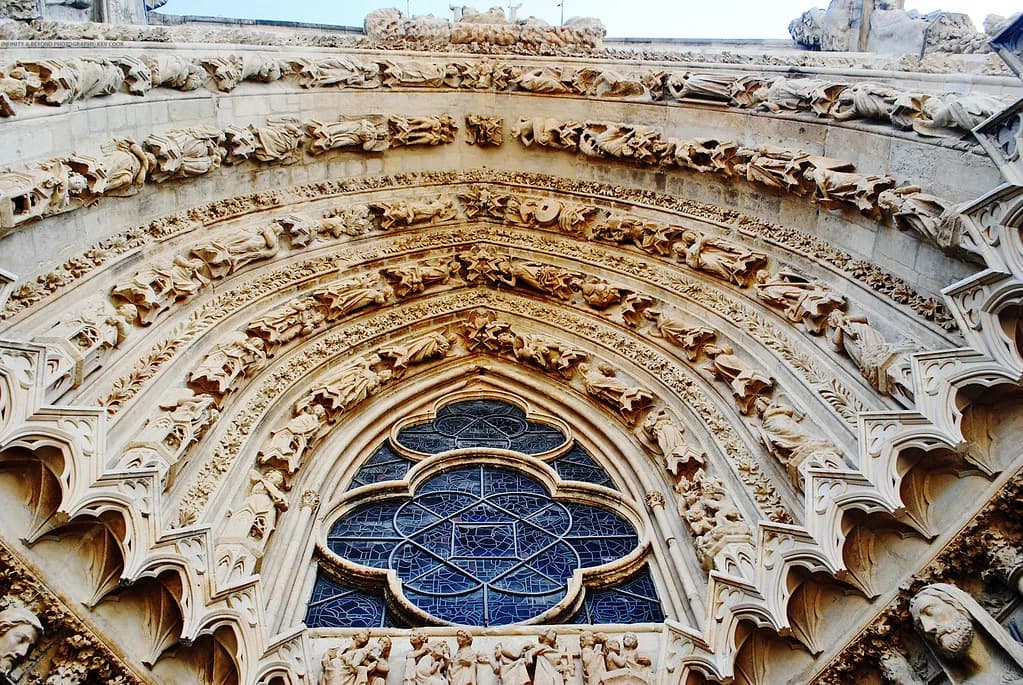
The cathedral parvis is the climax of the parade, where the procession often culminates with a son et lumière show projected onto the Gothic facade. This is undoubtedly a magical spot, but it attracts the largest crowds. To get a good view, arrive at least an hour before the parade's end. The wide parvis can hold many people, but it fills up, and latecomers may find themselves far from the front.
Grandstands and Accessibility Considerations
In some past editions, free grandstands have been installed along the route, offering guaranteed views for those who reserve or arrive early. However, the availability of such stands is not always confirmed in advance, and they are not a permanent feature. It is safest to assume general free access and plan to stand or sit along the sidewalks.
For visitors with reduced mobility, the renovated Voie des Sacres has improved accessibility with level sidewalks and dropped curbs, but crowds can still pose challenges. There is usually a designated area for wheelchair users near the cathedral parvis, though its exact location varies. Check the official festival website for the most current accessibility information before your visit.
Crowd Management: How Many People Attend and What to Expect
The festival can attract up to 200,000 spectators over the weekend, according to some estimates. On Saturday evening, the parade alone may draw over 50,000 people, packing the sidewalks along the entire route. Expect dense crowds, especially near the cathedral, and prepare to walk slowly or stand for extended periods.
Despite the numbers, the event is generally well-managed, with crowd control barriers and security personnel positioned along the route. Still, you should stay alert and keep personal belongings secure. The atmosphere is festive, with medieval music and street performers adding to the experience, but you will need patience and a good spot to enjoy the parade comfortably.
Street Closures and Transport Tips: Tram, Park-and-Ride, and Walking
Street closures around the parade route begin several hours before the start, often from Friday afternoon for set-up. Driving within the city center on parade day is not recommended, as many roads are blocked. The most convenient way to reach the route is the tram, with lines A and B stopping at Cathédrale and Opéra, both a short walk from the action.
For those arriving by car, park-and-ride facilities on the outskirts of Reims offer free parking with tram connections. Look for signs or check the city's official transport website for current park-and-ride locations. If you are staying in the city center, walking is the best option—the route is compact and easily navigable on foot.
Arrival Timing and How to Secure a Good Spot
To get a good spot along the Voie des Sacres, plan to arrive at least one hour before the parade starts, which is typically around 20:00 for a 21:00 start. This gives you time to find a place with a clear view and to settle in. Near the cathedral, you may need to arrive even earlier, as the crowds form quickly there.
If you prefer to avoid the initial rush, consider arriving after the parade has started—you can often find space at the rear of the crowds, though views may be limited to the backs of heads. Another strategy is to position yourself near the start, where the parade is slower to get underway, and then move along the route as it passes. Always watch for barriers and follow instructions from stewards.
What to Bring and What to Avoid for Comfort
Since the parade takes place in the evening, bring a light jacket or sweater, as temperatures can cool down. Comfortable shoes are essential, as you will likely stand or walk for hours. A small blanket or portable seat cushion can make waiting on the pavement more comfortable, but be sure to keep the aisles clear.
Avoid bringing large bags or coolers, as they can be inconvenient in the crowd and may be subject to security checks. Mobile phone charging is wise, as you will likely take many photos. Also, remember to stay hydrated and have a snack, but note that food vendors are plentiful along the route and in the medieval markets.
Alternative Ways to Watch: The Final Spectacle and Other Festival Events
If you cannot find a spot along the parade route, consider watching from a terrace or a bar with a view of the cathedral. Some cafés offer prime vantage points, though they fill up quickly and may have minimum consumption requirements. Alternatively, you can watch the parade's finale live from the cathedral parvis or on large screens that are sometimes set up in adjacent squares.
Beyond the parade, the festival includes medieval markets, craft demonstrations, and concerts. The markets are usually open from 11:00 to 18:00 on Saturday, and from 10:00 to 18:00 on Sunday, with a wider range of activities. For families, special kid-focused events are often organized, and the cathedral offers free admission during the weekend.
Day-by-Day Summary for First-Timers
For first-timers, planning a complete weekend is the best way to soak in the atmosphere. On Saturday, arrive early to explore the medieval markets, then secure a spot for the parade by 20:00. If you want to see the basilica, visit in the morning before the crowds arrive.
Sunday is more relaxed, with the markets reopening and the Musée Saint-Remi often open for free. Use this day to explore the city's other sights, such as the champagne cellars or the Palais du Tau, if it is open. Check the official program for this year's confirmed schedule and any weather-related changes.
Myths and Misconceptions About the Parade
A common misconception is that the parade is a reenactment of a single battle or a religious ceremony. In reality, it is a theatrical spectacle that recreates the spirit of medieval coronations, with a focus on Joan of Arc's role. It is not a solemn procession but a festive, family-friendly show with music and colorful costumes.
Another myth is that the festival is named after a specific saint's day. While the Fêtes Johanniques traditionally honored Joan of Arc ('Johannique' derives from Jeanne), the event has evolved and is now called Reims, l'Épopée Légendaire. This broader name reflects its coverage of many royal coronations, from Saint Louis to Charles X.
Frequently Asked Questions
For quick answers, consult the FAQ below. For the most current details, always check the official city of Reims festival page.
Plan Your Visit
The Fêtes Johanniques—now Reims, l'Épopée Légendaire—offer a rare chance to see history come alive in the streets of a UNESCO-listed city. By understanding the parade route and planning your spot in advance, you can enjoy the spectacle without stress.
Remember to verify the exact parade date and any changes on the official website, as details can evolve. For more ideas on exploring France's festival scene, explore our guide to festivals in France.
Frequently Asked Questions
What is the parade route for the Fêtes Johanniques?
The Grande Parade typically starts at the Basilique Saint-Remi and proceeds along the Voie des Sacres to the Cathédrale Notre-Dame, covering about 2.5 kilometers. This route may vary, so always check the latest official program.
Where is the best place to watch the Grande Parade in Reims?
The best spot depends on your preference. Near the start, you see the parade assemble and depart. Mid-route, near Place Royale, offers a lively backdrop. The cathedral parvis is spectacular for the finale but very crowded. Arrive early to secure a place.
What time does the parade start?
The parade has historically started at 21:00, but this is not guaranteed. Verify the exact time on the official city of Reims website for the current edition.
Are there grandstands along the parade route?
Grandstands are not always available. Past editions have included some free stands, but they require early reservation. It is safest to expect general open access along the sidewalks.
Are there street closures during the festival?
Yes, many streets along the parade route are closed during the event. Plan to use public transport, such as the tram, or park in peripheral lots and walk. Always check the latest traffic information.
How big is the crowd at the Fêtes Johanniques?
Attendance figures vary, but estimates range from 100,000 to 200,000 over the weekend. The parade alone can draw tens of thousands, so expect very dense crowds, particularly near the cathedral.
Can I drive to the parade?
Driving into the city center on the day is not advisable due to closures. Park at a park-and-ride on the outskirts and take the tram to the Cathédrale or Opéra stops.